Underground coal mines catch fire from electrical shorts, diesel equipment, conveyor belt friction, and coal dust itself — and the extinguisher that stops one of those fires can be useless against another. This guide ranks the fire extinguisher types that actually belong on a coal mining site in 2026, matched to the specific hazard each one is built to fight.
- ABC dry chemical is the best overall fire extinguisher type for coal mining operations and the type MSHA underground rules are built around.
- CO2 units are the right call for switch houses and electrical control rooms where dry chemical residue would ruin equipment.
- Class B foam covers diesel fueling stations and hydraulic fluid spills better than dry chemical alone.
- Class D extinguishers matter only where prep plants handle magnesium or lithium components — most sites never need one.
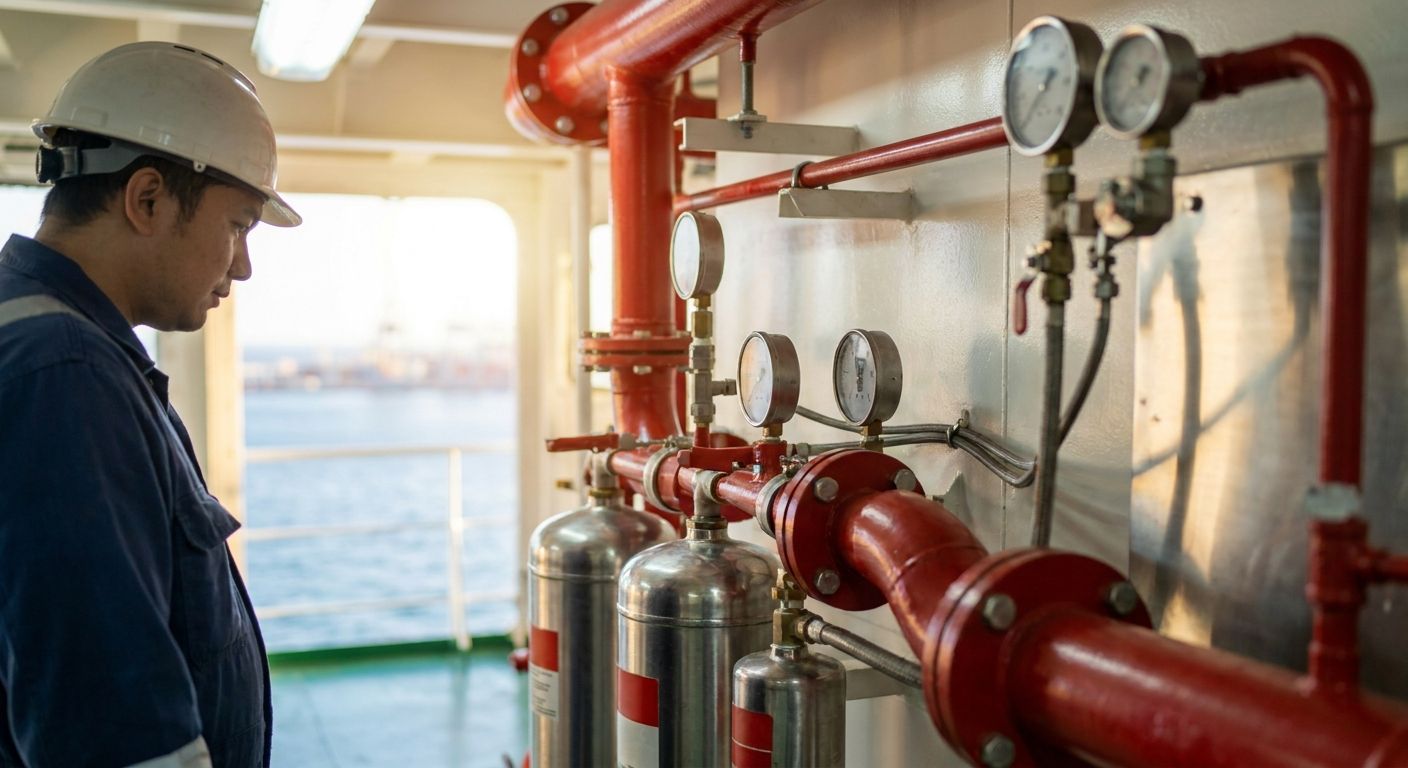
- Hydrostatic test intervals differ by extinguisher type, and skipping them is a compliance gap inspectors flag fast.
Why this matters
Coal mining operations run three fire hazards at once: electrical loads, diesel-powered mobile equipment, and combustible coal dust. A single extinguisher type doesn't cover all three well, and 30 CFR Part 75 spells out where portable extinguishers are required on underground equipment and at specific stations. Get the type wrong and you either fail an MSHA inspection or you own equipment that can't put out the fire in front of it.
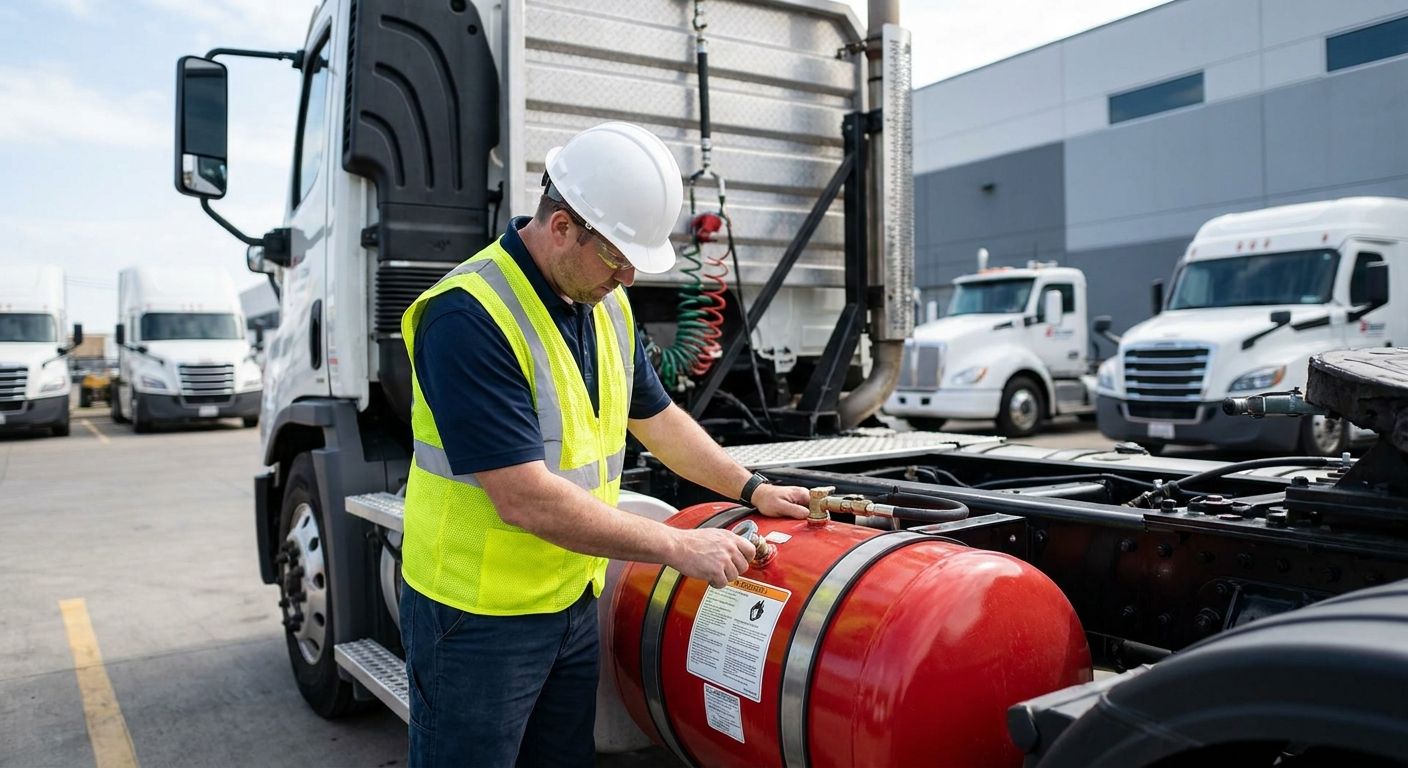
First-Line Fire services coal mining sites across Kentucky, Illinois, Indiana, Tennessee, Missouri and Alabama, and the pattern repeats at almost every site: dry chemical units mounted wrong, tags expired, or the wrong agent sitting at a diesel fueling point. The fix isn't complicated. It's picking the right type for the right hazard and keeping the hydro test dates current.
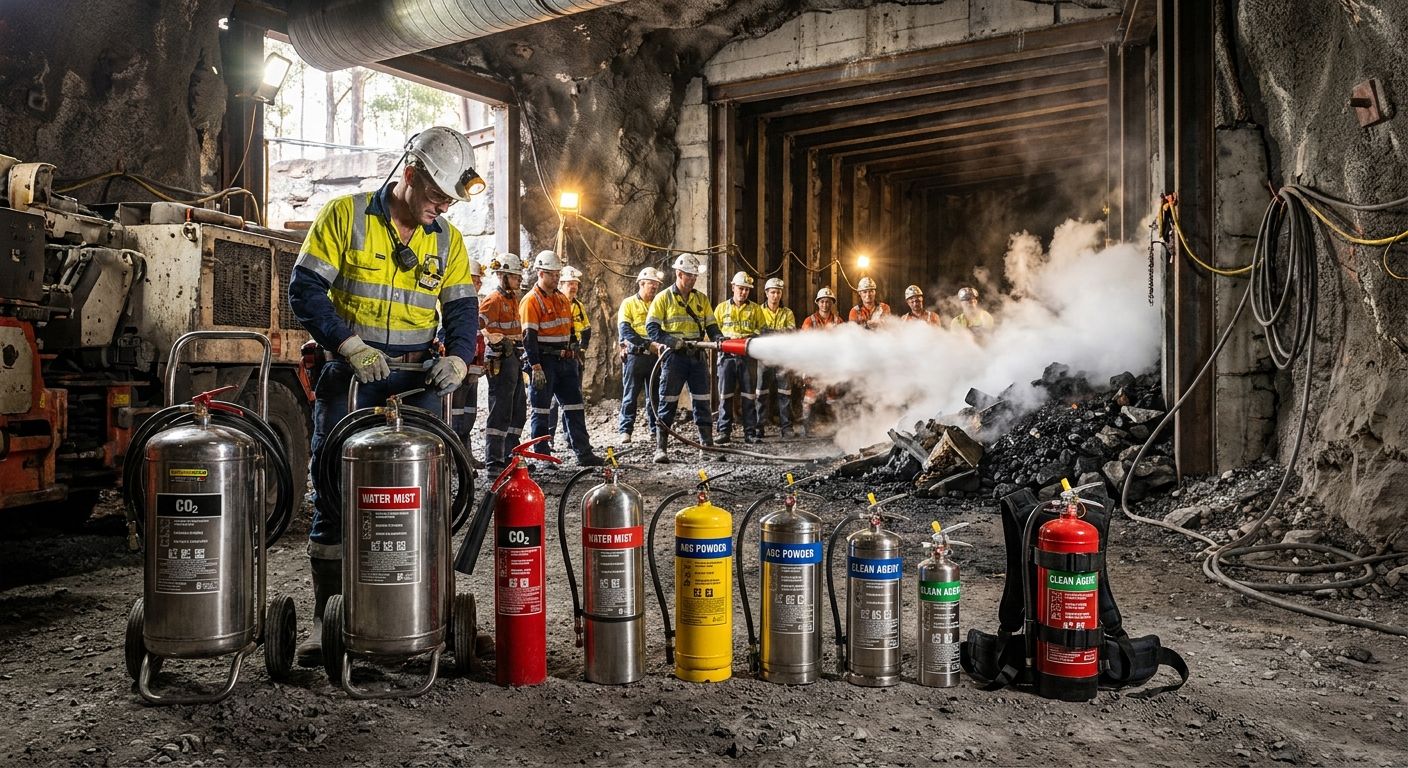
Best overall: ABC dry chemical. Best for electrical rooms: CO2. Best for diesel fueling and fuel storage: Class B foam. Best for surface offices: water mist. Best for exotic metal hazards: Class D. Best for large open bays like tipples: wheeled dry chemical units.
What makes the best fire extinguisher type for coal mining
- MSHA/30 CFR Part 75 compliance — the agent and mounting have to satisfy underground equipment requirements, not just general workplace codes.
- Multi-hazard coverage — coal dust (Class A), diesel and hydraulic fluid (Class B), and live electrical panels (Class C) all show up on the same site.
- Vibration and humidity tolerance — underground mounts take a beating from haul trucks and continuous miners; the unit has to hold pressure.
- Hydro test interval fit — dry chemical stretches to 12 years between tests, CO2 needs retesting every 5 — that gap changes your maintenance schedule.
- Weight and mounting on mobile equipment — a 20 lb unit that fits a bracket on a scoop or shuttle car beats a heavier unit that doesn't.
- Residue and cleanup — dry chemical leaves powder that fouls electronics; CO2 and clean-agent units don't.
Fire extinguisher types for coal mining at a glance
| Type | Best for | Standout feature | Key limitation |
|---|---|---|---|
| ABC Dry Chemical | Underground equipment, general MSHA compliance | Rated for Class A, B, and C in one unit | Powder residue fouls electrical panels |
| CO2 | Switch houses, electrical control rooms | Leaves no residue on live equipment | Ineffective on Class A coal dust fires alone |
| Class B Foam | Diesel fueling stations, hydraulic fluid areas | Blankets fuel surface to stop reflash | Not rated for electrical fires |
| Water Mist | Surface offices, administrative buildings | Safe near people, no chemical cleanup | Not rated for electrical or fuel fires |
| Class D | Prep plants with magnesium/lithium components | Only agent rated for combustible metal fires | Useless on anything but metal fires |
| Wheeled Dry Chemical | Tipples, conveyor belt lines, large equipment bays | Higher agent capacity for open-area coverage | Too heavy for mobile equipment mounting |
1. ABC Dry Chemical: best fire extinguisher for underground mine equipment
ABC dry chemical is what most underground coal operations run because it covers coal dust fires, diesel or hydraulic fluid fires, and electrical shorts with a single agent. It's the baseline type referenced when mines set up compliance for continuous miners, shuttle cars, and haul trucks under 30 CFR Part 75.
ABC dry chemical pros:
- Rated for Class A, B, and C — the three hazards present on almost every underground job
- Stretches to a 12-year hydrostatic test interval, cutting maintenance frequency
- Wide availability of mounts sized for mobile mining equipment
ABC dry chemical cons:
- Powder residue damages sensitive electronics and control panels
- Cleanup after discharge takes longer than CO2 or clean agent
- Not the right call for a fire directly on a live switchgear panel
Best for: general underground equipment and the MSHA-required station coverage most sites default to. Verdict: Buy — this is the standard type and the right first purchase for any coal mining fleet.
2. CO2: best fire extinguisher for electrical control rooms
CO2 units displace oxygen without leaving residue, which matters directly on a switch house or control room panel where dry chemical powder would take the equipment offline as badly as the fire would.
CO2 pros:
- No cleanup residue on electrical components
- Fast knockdown on electrical fires specifically
- Safe to use near sensitive instrumentation
CO2 cons:
- Not rated for Class A coal dust fires
- Shorter 5-year hydrostatic test interval than dry chemical
- Heavier per unit of extinguishing capacity than dry chemical
Best for: switch houses, transformer rooms, and control panels where residue is the real cost. Verdict: Buy for electrical rooms specifically — don't rely on it as a general-purpose unit.
3. Class B Foam: best fire extinguisher for diesel fueling stations
Foam agents blanket the surface of a fuel spill and suppress vapor better than dry chemical alone, which is why fueling stations and hydraulic fluid storage areas at surface facilities lean on foam-rated units.
Class B foam pros:
- Blankets fuel surfaces to prevent reflash after knockdown
- Effective on hydraulic fluid spills common around heavy equipment
- Lower corrosive residue than some dry chemical formulations
Class B foam cons:
- No Class C electrical rating
- Adds a second extinguisher type to track and test on top of ABC units
- Less common in underground mounts than dry chemical
Best for: diesel fueling points and fuel or hydraulic fluid storage at surface operations. Verdict: Buy for fueling stations specifically, not as a fleet-wide replacement.
4. Water Mist: best fire extinguisher for surface offices and admin buildings
Water mist units cover Class A fires in occupied office space without the chemical cleanup or breathing hazard of dry chemical, making them the right fit for administrative buildings at a mine site rather than the pit itself.
Water mist pros:
- Safe to discharge around people with no chemical exposure
- No cleanup mess in carpeted or finished office space
- Effective on ordinary combustibles like paper and furniture
Water mist cons:
- No rating for electrical or fuel fires
- Wrong choice for anywhere near mobile equipment or fuel storage
- Limited role — offices and break rooms only
Best for: surface administrative buildings, not production areas. Verdict: Buy for office space; Skip for anything near equipment or fuel.
5. Class D: best fire extinguisher for combustible metal fires at prep plants
Class D extinguishers exist for one narrow purpose — fires involving combustible metals like magnesium or lithium, which show up at some prep plants but not on most mine sites. Water or dry chemical on a metal fire can make it worse, so this is a deliberate, targeted purchase, not a default.
Class D pros:
- Only agent rated for combustible metal fires
- Prevents the violent reaction water or dry chemical causes on metal fires
- Required wherever magnesium or lithium components are processed or stored
Class D cons:
- No use outside of metal fire scenarios
- Rarely needed — most coal operations have zero combustible metal hazard
- Adds a specialized unit to inventory and test for a narrow risk
Best for: prep plants or maintenance shops handling magnesium or lithium components specifically. Verdict: Hold — buy only if you have a confirmed combustible metal hazard on site.
6. Wheeled Dry Chemical: best fire extinguisher for tipples and conveyor belt lines
Large open areas like tipples, conveyor belt runs, and equipment bays need more agent capacity than a handheld unit carries. Wheeled dry chemical units scale up the same ABC agent into a higher-volume format built for exactly that footprint.
Wheeled dry chemical pros:
- Far higher agent capacity than handheld units for large open areas
- Same Class A, B, C coverage as handheld ABC
- Effective on conveyor belt friction fires that spread fast
Wheeled dry chemical cons:
- Too heavy and bulky to mount on mobile equipment
- Requires a fixed staging location, limiting where it can respond
- Higher upfront footprint than a wall-mounted handheld unit
Best for: tipples, conveyor belt lines, and equipment bays with open floor space. Verdict: Buy for large fixed-area coverage; not a substitute for equipment-mounted units.
Get your site's extinguishers audited
Coal mining fire protection service across KY, IL, IN, TN, MO and AL.
How this ranking works
Each type is ranked against the criteria above: MSHA fit, multi-hazard coverage, vibration and humidity tolerance, hydro test interval, mounting weight, and residue. ABC dry chemical ranks first because it's the only type that clears all six for general underground use — the other five types earn their spot by solving one hazard the ABC unit doesn't cover as well.
Which fire extinguisher type should you choose for coal mining?
If you're outfitting a fleet of underground equipment in 2026 and need one default type, buy ABC dry chemical — it's MSHA-aligned, covers three hazard classes, and stretches to a 12-year hydro test cycle. Layer in CO2 for switch houses, foam for fueling stations, and water mist for offices. Class D and wheeled units are situational — buy them only when the hazard on your specific site calls for them, not as a blanket purchase.
FAQ
What's the best fire extinguisher type for underground coal mining equipment?
ABC dry chemical is the best fire extinguisher type for underground coal mining equipment in 2026 because it covers coal dust, diesel, and electrical fire classes in one unit. It's also the type most MSHA-aligned equipment mounts are built around.
Is CO2 better than dry chemical for coal mine fires?
CO2 is better than dry chemical only for electrical control rooms and switch houses, since it leaves no residue on live equipment. Dry chemical remains the better choice for general underground equipment and coal dust fires.
How often does a coal mine extinguisher need hydrostatic testing?
Dry chemical extinguishers need hydrostatic testing every 12 years, while CO2 units need it every 5 years. Water and foam units also fall on the 5-year cycle.
Do coal mines need Class D fire extinguishers?
Only if the site handles combustible metals like magnesium or lithium, which is common at some prep plants but not most underground production areas. Most coal mining operations never need a Class D unit.
What extinguisher covers diesel equipment fires at a coal mine?
ABC dry chemical covers diesel fires as part of its Class B rating, but Class B foam performs better at dedicated fueling stations because it blankets the fuel surface and resists reflash.
Can water extinguishers be used near mining equipment?
No. Water mist units are rated for Class A fires only and are not safe around electrical panels or fuel sources, which rules them out anywhere near mobile mining equipment.
Are wheeled fire extinguishers required at coal tipples?
Wheeled dry chemical units aren't universally mandated but are the practical choice for tipples and conveyor lines because handheld units don't carry enough agent for that open floor space.
What fire extinguisher type do MSHA rules require underground?
30 CFR Part 75 sets requirements for portable fire extinguishers on underground equipment and at specific stations, and ABC dry chemical is the type most operations use to meet that standard.
One last thing
The extinguisher type matters less than the tag on it. A perfectly rated ABC unit past its 12-year hydro test date fails an inspection the same way an empty one does — the agent selection only pays off if the testing schedule behind it holds.