Marine vessels burn differently than buildings — diesel, hydraulic fluid, and a confined engine room change what actually puts a fire out. This guide ranks the five fire suppression system types used on commercial and fleet vessels in 2026, matched to the specific space each one protects.
- Clean agent (FM-200/Novec 1230) systems win overall for manned engine rooms and machinery spaces in 2026.
- CO2 flooding systems suit unmanned engine rooms and cargo holds but require the space to be cleared before discharge.
- Wet chemical hood systems are the standard fix for galley grease fires on crewed vessels.
- Dry chemical ABC systems are the budget pick for small vessel engine compartments and fuel lockers.
- Water mist systems fit accommodation spaces where clean agent cost isn't justified.
Why this matters
Vessel fires don't behave like structure fires. An engine room fire involves diesel fuel and hydraulic oil under pressure, in a space where smoke can block the exit within a minute. First-Line Fire Extinguisher Co. services fire suppression systems on commercial, fleet and marine vessels across Kentucky, Illinois, Indiana, Tennessee, Missouri and Alabama, and the same pattern shows up on every hull type: the wrong agent for the space costs more in downtime than the system itself.
USCG 46 CFR and SOLAS both dictate which suppression types are acceptable for which vessel classes and spaces — a towboat's engine room and a passenger ferry's galley don't answer to the same rulebook. Get the agent wrong for the space and you're either replacing a system that failed inspection or explaining to an insurer why a discharge didn't clear a fuel fire.
What makes the best marine fire suppression system
- Agent safety for occupied spaces — some agents require full evacuation before discharge; others are rated for use around crew.
- Suppression speed for the actual hazard — a Class B fuel fire and a Class K grease fire need different agents entirely.
- Compliance with USCG 46 CFR and SOLAS — vessel class determines which system types are legal to install at all.
- Cylinder and tank maintenance interval — hydrostatic test schedules vary by agent and cylinder type.
- Space and weight footprint — a system that doesn't physically fit the engine room isn't a real option.
- Cost to inspect and recharge after a discharge event — a system that empties every drill is a liability, not a safeguard.
At a glance: marine fire suppression systems compared in 2026
| System | Best for | Standout feature | Key limitation |
|---|---|---|---|
| Clean agent (FM-200/Novec 1230) | Manned engine rooms & machinery spaces | Safe for occupied spaces, no residue | Higher install cost than CO2 |
| CO2 flooding | Unmanned engine rooms & cargo holds | Total flooding knocks out oxygen fast | Displaces breathable air — space must be cleared |
| Wet chemical hood systems | Galley cooking lines | Built specifically for Class K grease fires | Limited to cooking equipment, not machinery spaces |
| Dry chemical (ABC) | Small vessel engine compartments & fuel lockers | Lower install cost, simple mechanical trigger | Leaves corrosive residue on electronics |
| Water mist | Accommodation spaces & cabins | Low water damage, safe near crew | Not rated for deep-seated fuel fires |
1. Clean agent (FM-200/Novec 1230): best fire suppression system for manned engine rooms
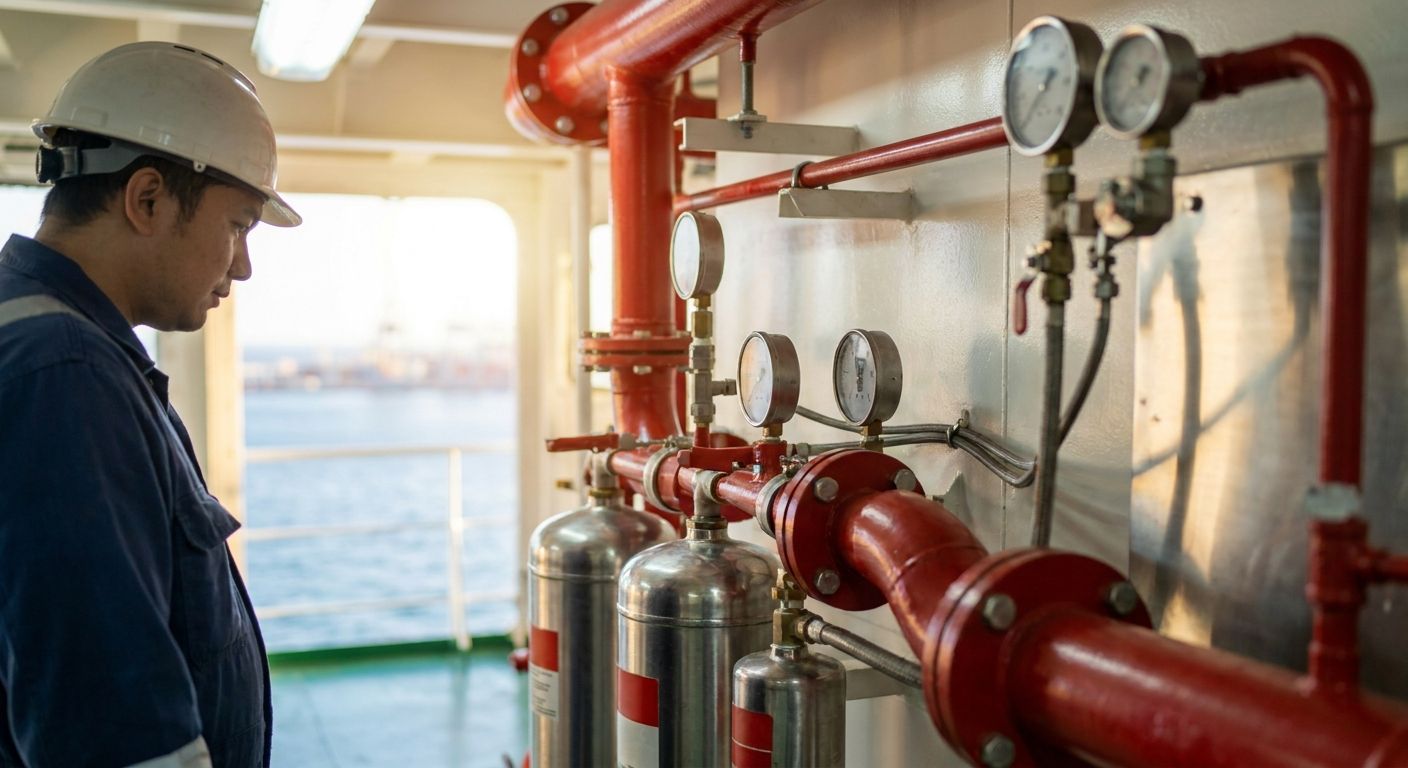
Clean agent systems flood the machinery space with a gaseous agent that removes heat and interrupts the fire's chemical reaction without displacing the oxygen crew need to breathe. That's the reason it sits at the top of this list for any engine room where someone might be working when a fire starts.
Clean agent pros:
- Safe to discharge in occupied spaces — no forced evacuation before activation
- Leaves no residue, so engines and electronics run again right after discharge
- Meets USCG and SOLAS requirements for manned machinery spaces on most vessel classes
Clean agent cons:
- Cylinders and piping cost more to install than CO2 or dry chemical
- Needs a sealed space to hold agent concentration long enough to suppress the fire
Verdict: Install for manned engine rooms and machinery spaces where crew works nearby.
2. CO2 flooding systems: best fire suppression system for unmanned engine rooms and cargo holds
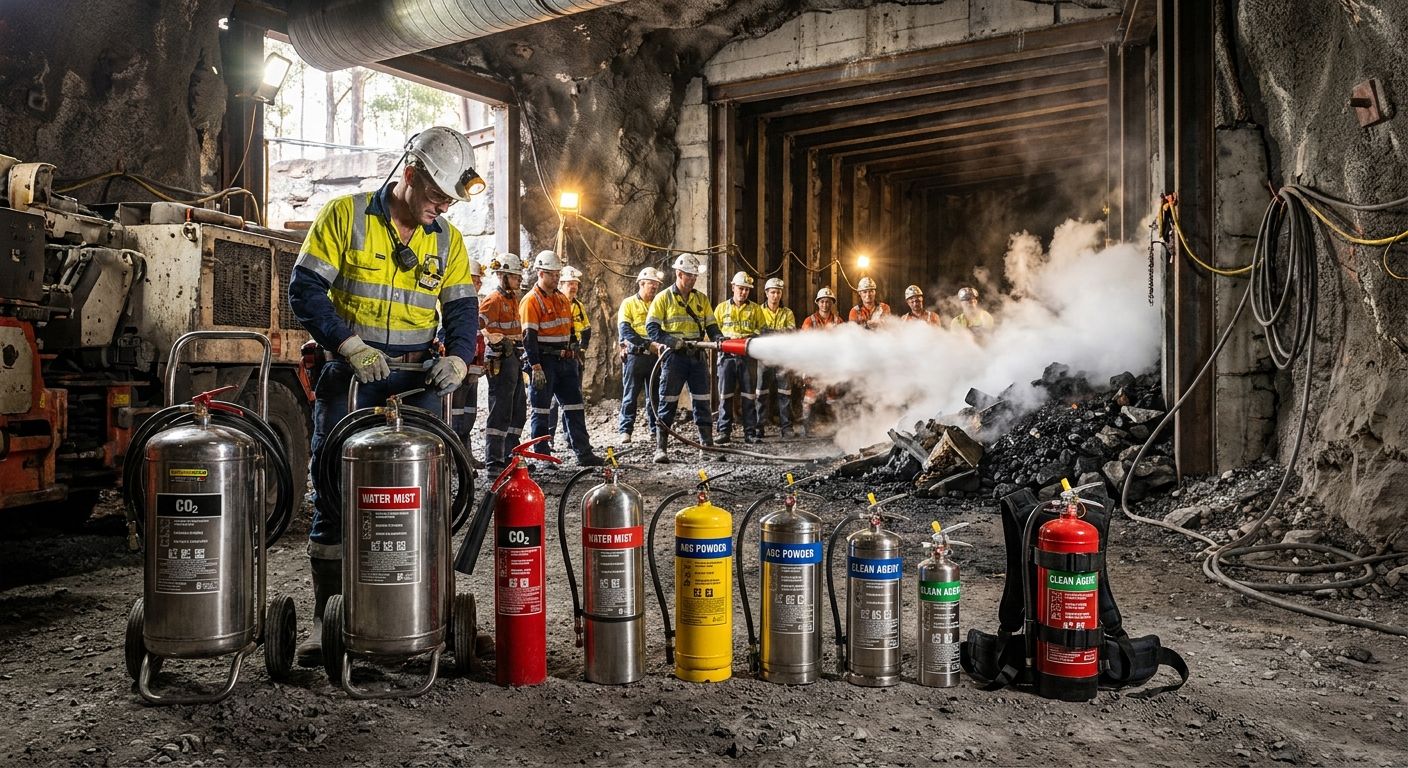
CO2 total-flooding systems displace oxygen in the protected space fast enough to smother a deep-seated fuel or electrical fire. They've been the workhorse for unmanned machinery spaces and cargo holds for decades because the agent is cheap relative to clean agent and the mechanics are simple.
CO2 flooding pros:
- Total flooding smothers oxygen fast, effective on deep-seated fuel and electrical fires
- Lower agent cost per cylinder than clean agent
- Long service history on commercial vessels, well understood by marine inspectors
CO2 flooding cons:
- Displaces breathable air — a manned space must alarm and clear before discharge
- CO2 cylinders need hydrostatic testing on a DOT/USCG schedule, typically every five years
Verdict: Install for unmanned engine rooms and cargo holds; skip for any space crew occupies during normal operation.
3. Wet chemical hood systems: best fire suppression system for galley fires
Wet chemical systems are built for one job: knocking down Class K grease fires on a cooking line before they spread to ductwork. Detection ties directly to the hood and fuel supply, so the system triggers without a crew member reaching for a pull station.
Wet chemical pros:
- Purpose-built for Class K grease fires — the standard hazard in a vessel galley
- Automatic detection ties directly to the cooking line, no manual trigger required
- Straightforward annual inspection cycle
Wet chemical cons:
- Does nothing for engine room or fuel fires — it's a single-purpose system
- Requires the hood and duct work to be sized correctly at install
Verdict: Install on any vessel with a galley cooking line; not a substitute for machinery-space protection.
4. Dry chemical (ABC) systems: best fire suppression system for small vessel engine compartments
Dry chemical systems discharge a powder agent that interrupts Class A, B and C fires on contact. They cost less to install than clean agent or CO2, which makes them the common pick for smaller fleet vessels, tenders, and fuel storage lockers where budget matters more than post-discharge cleanup.
Dry chemical pros:
- Lowest install cost of the group, good fit for smaller fleet vessels and tenders
- Effective on Class A, B and C fires — fuel, wood, and electrical
- Simple mechanical trigger with few moving parts to fail
Dry chemical cons:
- Powder residue corrodes electronics and wiring after a discharge
- Cleanup after activation takes the vessel out of service longer than clean agent
Verdict: Install on small vessels and fuel lockers where budget outweighs cleanup cost; skip for spaces packed with sensitive electronics.
5. Water mist systems: best fire suppression system for accommodation spaces
Water mist systems use fine water droplets to cool a fire and knock down smoke without soaking a cabin the way a traditional sprinkler would. They're the right call for crew and passenger accommodation spaces, not for the engine room.
Water mist pros:
- Minimal water damage compared to traditional sprinklers
- Safe to discharge around crew and passengers, no evacuation required
- Cools smoke and slows fire spread in cabins and common areas
Water mist cons:
- Not rated for deep-seated fuel or hydraulic fires in machinery spaces
- Needs a dedicated pump and piping run, adding complexity on retrofits
Verdict: Install for crew and passenger accommodation spaces; skip for engine rooms.
How we ranked
Each system was matched against the criteria above: agent safety for occupied spaces, compliance with USCG 46 CFR and SOLAS for the vessel class in question, and the real maintenance burden after a discharge — not marketing claims about any single agent. Vessel class and hull type change which options are even legal to install, so this order reflects the space each system is built to protect, not one universal winner.
Get your vessel's system inspected
First-Line services suppression systems, extinguishers and hydro testing across six states.
Which marine fire suppression system should you choose?
For a manned engine room in 2026, clean agent (FM-200/Novec 1230) is the default — it's the only option on this list rated for use around crew without a forced evacuation. Pair it with wet chemical on the galley line and you've covered the two highest-risk spaces on most crewed vessels.
If the engine room is unmanned — a towboat pushrail or a barge with no one stationed below — CO2 flooding is the more economical call, provided the alarm and evacuation sequence is set up correctly. Small vessels and fuel lockers on a tight budget lean dry chemical; accommodation spaces get water mist. None of these are interchangeable, and installing the wrong one for the space is the single most common finding on a failed marine inspection.
FAQ
What's the best fire suppression system for marine engine rooms?
Clean agent systems using FM-200 or Novec 1230 are the best fit for manned engine rooms in 2026 because they're safe to discharge around crew and leave no residue. Unmanned engine rooms are more commonly protected with CO2 flooding systems instead.
Is CO2 or clean agent better for boat engine rooms?
Clean agent is better when crew works in or near the engine room, since CO2 displaces breathable air and requires the space to be cleared first. CO2 is the more economical choice for unmanned engine rooms and cargo holds.
How often do marine fire suppression systems need to be inspected?
Marine fire suppression systems follow annual inspection cycles under USCG and NFPA requirements, with cylinder hydrostatic testing on a separate schedule set by DOT and USCG rules. CO2 cylinders typically require hydrostatic testing every five years.
Do commercial vessels require automatic fire suppression by law?
Commercial vessels are required to carry fire suppression systems matched to their vessel class under USCG 46 CFR and, for larger vessels, SOLAS. Which system type is acceptable depends on the space being protected and the vessel's classification.
What's the best fire suppression system for a boat galley?
Wet chemical hood systems are the standard for galley fires because they're built for Class K grease fires and trigger automatically off the cooking line. They don't protect any other space on the vessel.
Can dry chemical systems be used in engine rooms?
Dry chemical (ABC) systems can protect small vessel engine compartments and fuel lockers, and they cost less to install than clean agent or CO2. The tradeoff is corrosive powder residue that can damage electronics after a discharge.
What is water mist fire suppression used for on ships?
Water mist systems protect crew and passenger accommodation spaces like cabins and common areas, cooling fire and smoke with fine droplets instead of soaking the space like a traditional sprinkler. They're not rated for deep-seated engine room fires.
How long does a marine fire suppression system last before it needs replacing?
Cylinders and tanks stay in service for years as long as they pass hydrostatic testing and annual inspection on schedule. The system itself is typically replaced when it fails inspection or after a discharge, not on a fixed calendar.
One last thing
The most common inspection failure on marine vessels in 2026 isn't the agent choice — it's a cylinder sitting past its hydrostatic test date. Under 46 CFR, an untested cylinder is an unusable cylinder no matter how well the system was designed. First-Line Fire Extinguisher Co. flags this on vessels across Kentucky, Illinois, Indiana, Tennessee, Missouri and Alabama more often than any agent mismatch — check the test date stamped on the cylinder before you worry about which system type to install next.