Fleet trucks catch fire from turbochargers, hydraulic lines, and electrical shorts more often than any other single cause, and a suppression system is the only thing standing between a small under-hood flare-up and a burned-out chassis. This guide ranks the vehicle fire suppression systems worth installing on commercial fleet trucks in 2026, matched to the truck type and the hazard each one actually covers.
- Amerex KV Systems is the best overall vehicle fire suppression system for standard fleet trucks in 2026.
- Fogmaker fits buses and refuse trucks; Southwest Vehicle Systems (SVS) fits MSHA-regulated coal mining haul trucks.
- ANSUL CHECKFIRE 210 covers multi-zone off-highway and construction fleets in one automatic panel.
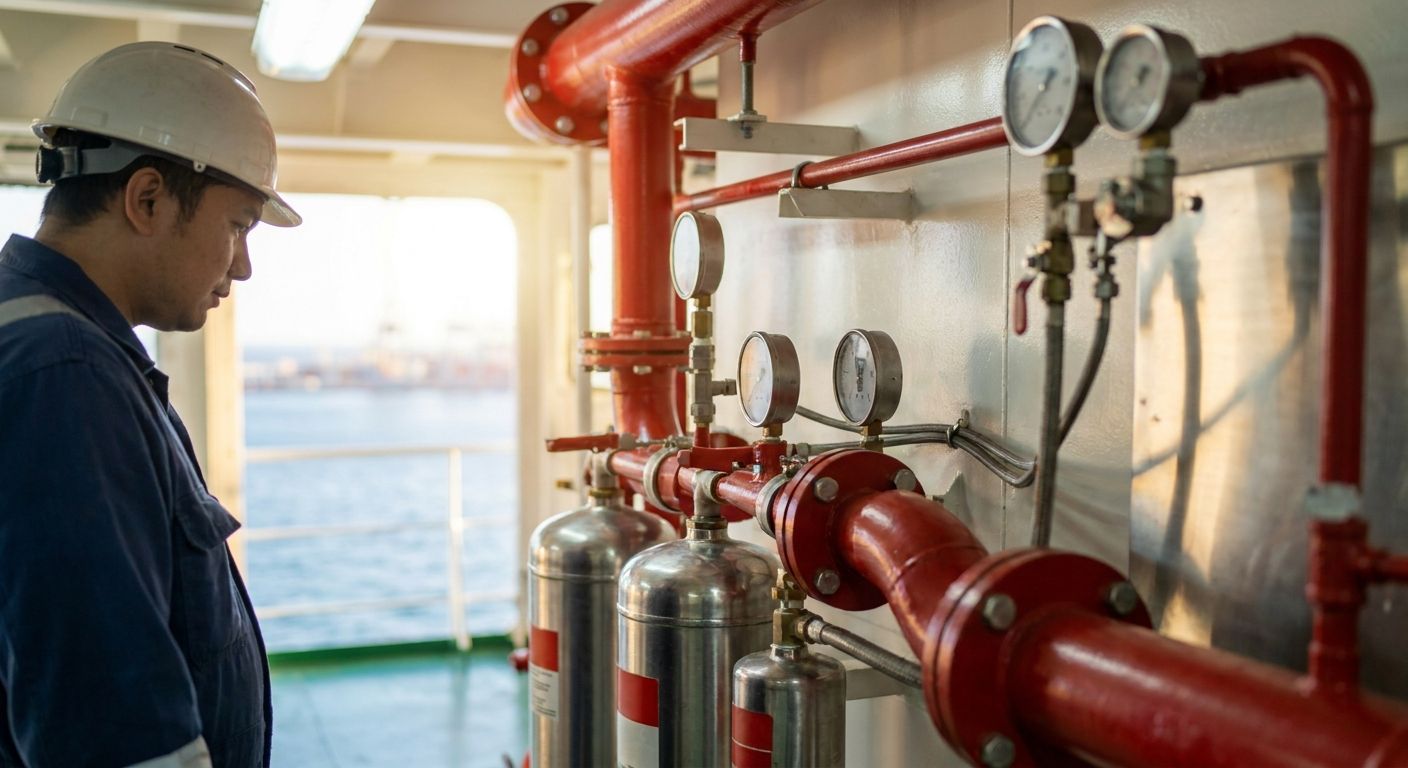
- FirePro aerosol suppression works in enclosed marine engine rooms, not open engine bays.
- Match agent type to the fire risk first - brand name second.
Why this matters
A truck fire that starts in the engine bay spreads fast because it's already surrounded by fuel, hydraulic fluid, and hot metal. By the time a driver smells smoke and pulls over, the fire has usually moved past the point a handheld extinguisher can knock down.
Crews at First-Line Fire install and service vehicle fire suppression systems on commercial, industrial, coal mining, marine, and fleet vehicles across Kentucky, Illinois, Indiana, Tennessee, Missouri, and Alabama - and the calls that come in after an engine fire almost always trace back to a truck with no automatic system covering the hazard zone that caught.
Picking the right system in 2026 comes down to matching the agent type to the fire risk on that specific truck, not picking the biggest name on the parts shelf.
What makes the best vehicle fire suppression system
- Detection method - automatic heat-triggered actuation versus a driver-pulled manual station
- Agent match to the fuel type - wet chemical for Class B fluids, dry chemical for mixed hazards, water mist for cooling, aerosol for sealed compartments
- Hazard zone coverage - engine, turbo, hydraulic lines, wheel wells, battery compartment
- Regulatory fit - NFPA vehicle guidance, MSHA 30 CFR requirements for underground diesel equipment, USCG rules for marine vessels
- Service access - how much shop time it takes to inspect and recharge without pulling the truck off the route
- Driver-side override - a dash-mounted manual pull the driver can trigger before exiting the cab
Vehicle fire suppression systems at a glance
| System | Best for | Agent type | Key limitation |
|---|---|---|---|
| Amerex KV Systems | Standard fleet trucks | Wet chemical, manual + automatic | Fixed-schedule agent and cylinder service |
| Fogmaker | Buses & refuse trucks | Water mist / foam | Tank and piping take up chassis space |
| ANSUL CHECKFIRE 210 | Off-highway & construction fleets | Dry chemical/foam, multi-zone | Wiring harness is labor-intensive to retrofit |
| Kidde Fire Systems | Box trucks & cargo vans | Dry chemical, single-zone | No coverage for hydraulic or wheel-well fires |
| Southwest Vehicle Systems (SVS) | Coal mining haul trucks | Dry chemical, automatic | Overbuilt and costly to service on street trucks |
| FirePro Aerosol Suppression | Marine engine rooms | Condensed aerosol | Not rated for open, ventilated engine bays |
1. Amerex KV Systems: best vehicle fire suppression system for standard fleet trucks
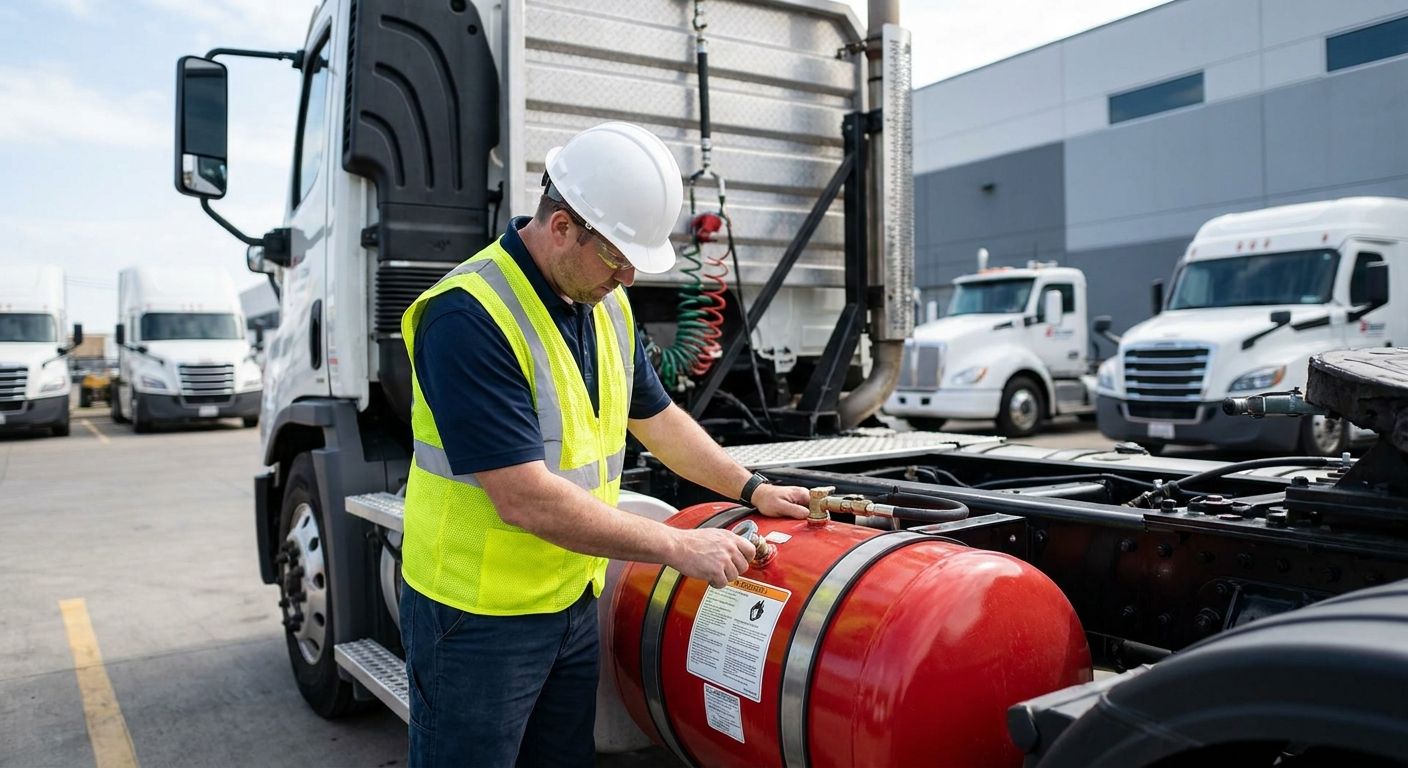
Amerex KV Systems pair a wet chemical agent with both automatic detection and a manual pull station in the cab, aimed at the engine compartment on Class 6-8 straight trucks and tractors. Linear heat-sensing tubing runs around the turbo, manifold, and fuel rail - the three spots that start most under-hood fires.
Amerex KV Systems pros:
- Automatic and manual actuation in one system
- Covers the highest-risk zones on a diesel engine
- Familiar enough that most fleet shops already know the service routine
- Fits nearly any Class 6-8 chassis without major fabrication
Amerex KV Systems cons:
- Wet chemical needs a full agent and cylinder service on a fixed schedule
- Retrofitting heat-sensing tubing on an older chassis takes real shop time
Best for: standard highway fleet trucks and tractors. Verdict: Buy.
2. Fogmaker: best vehicle fire suppression system for buses and refuse trucks
Fogmaker discharges a pressurized water-mist agent, sometimes with a foaming additive, through a network of nozzles that cool the fire and cut off oxygen at the same time. It's built for vehicles with a lot of combustible material packed close to the engine - bus interiors, refuse compaction bodies, transit fleets.
Fogmaker pros:
- Water mist cools hot surfaces, not just the flame, cutting flare-back risk
- Nozzle network reaches more points than a single-discharge system
- Common OEM option on transit and school bus chassis
Fogmaker cons:
- Tank and piping take up more chassis real estate than a single-cylinder setup
- More nozzles mean more inspection points at every service interval
Best for: buses and refuse/waste trucks. Verdict: Buy.
3. ANSUL CHECKFIRE 210: best vehicle fire suppression system for off-highway and construction fleets
The CHECKFIRE 210 runs a detection and control panel wired to multiple protected zones on a single vehicle - engine, hydraulic compartment, and in some setups the tires on haul equipment. It's built for off-highway trucks and construction fleets running more than one hazard zone at once.
ANSUL CHECKFIRE 210 pros:
- Multi-zone automatic detection from one control panel
- Handles hydraulic-fluid fires as well as fuel fires
- Panel logs detection events for maintenance records
ANSUL CHECKFIRE 210 cons:
- Multi-zone wiring harness is labor-intensive on a retrofit
- More system than needed on a truck with just one hazard zone
Best for: off-highway and construction fleet vehicles with multiple hazard zones. Verdict: Buy.
4. Kidde Fire Systems: best vehicle fire suppression system for box trucks and cargo vans
Kidde's vehicle line runs a single-zone dry chemical system aimed at engine compartments on smaller commercial vehicles - box trucks, cargo vans, and service trucks that don't carry the multi-zone hazards of an off-highway rig.
Kidde Fire Systems pros:
- Compact cylinder fits smaller engine bays without major fabrication
- Dry chemical works on fuel and electrical-adjacent fires
- Lower service footprint than multi-zone systems
Kidde Fire Systems cons:
- Single-zone coverage only - no protection for hydraulic lines or wheel wells
- Not built for vehicles running more than one hazard zone
Best for: box trucks and single-compartment cargo vans. Verdict: Buy.
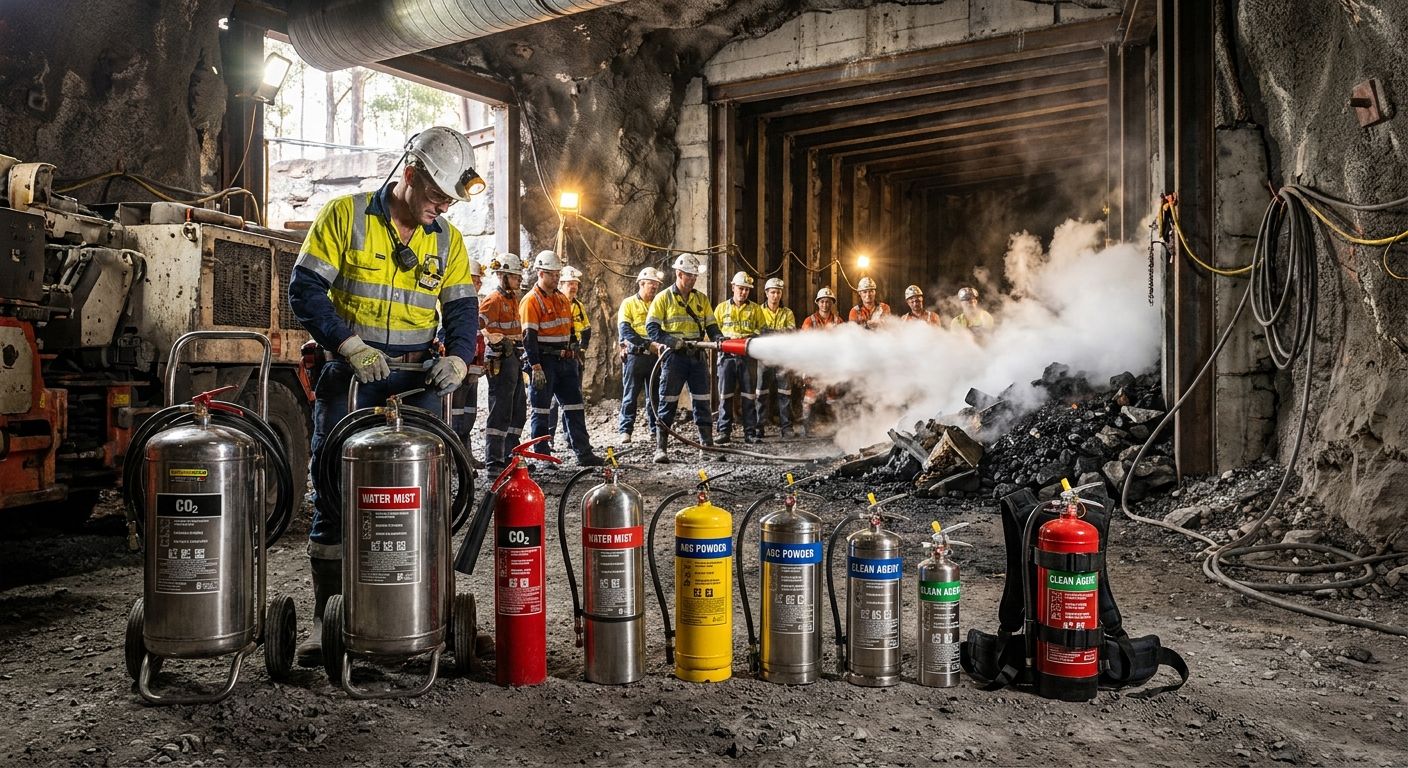
5. Southwest Vehicle Systems (SVS): best vehicle fire suppression system for coal mining haul trucks
SVS builds automatic dry chemical systems for underground and surface mining equipment, engineered around MSHA's requirements for diesel-powered equipment running underground. Detection covers the engine, hydraulic tank, and exhaust system on haul trucks and load-haul-dump equipment.
Southwest Vehicle Systems pros:
- Built specifically for MSHA-regulated diesel equipment
- Covers hydraulic and exhaust-system fires common on mining haul trucks
- Rugged housing rated for underground vibration and dust
Southwest Vehicle Systems cons:
- Overbuilt and costlier to service on a standard street-legal truck
- Limited value outside mining and heavy off-road use
Best for: coal mining haul trucks and underground diesel equipment. Verdict: Buy.
6. FirePro Aerosol Suppression: best vehicle fire suppression system for marine engine rooms
FirePro discharges a condensed aerosol agent that displaces oxygen inside a sealed compartment, which suits enclosed marine engine rooms and generator compartments on fleet support vessels better than an open engine bay ever could.
FirePro Aerosol Suppression pros:
- Effective in fully enclosed compartments with controlled airflow
- No wet residue to clean up after discharge
- Compact units fit tight engine-room layouts
FirePro Aerosol Suppression cons:
- Not rated for open engine compartments with active airflow
- Requires a sealed compartment to work as designed
Best for: marine engine rooms and enclosed generator compartments on fleet vessels. Verdict: Buy for enclosed compartments only.
How we ranked
Every system on this list gets checked against the same six criteria: detection method, agent match to the fuel/fluid risk, hazard-zone coverage, regulatory fit, service access, and manual override. None of them wins across every category - that's the point.
“The right vehicle fire suppression system is the one that matches your truck's hazard zones, not the one with the most name recognition.”
Which vehicle fire suppression system should you choose?
For a standard highway fleet truck with one engine compartment to protect, Amerex KV Systems is the default pick for 2026 - automatic and manual actuation, tubing routed to the highest-risk zones, and a service routine most shops already run. Swap in Fogmaker for buses and refuse trucks, ANSUL CHECKFIRE 210 for off-highway rigs running multiple hazard zones, Southwest Vehicle Systems for MSHA-regulated coal mining haul trucks, and FirePro for enclosed marine engine rooms.
Whichever system fits the truck, the installation and the annual inspection matter as much as the brand stamped on the cylinder.
Get your fleet trucks covered
First-Line Fire installs, inspects, and services vehicle fire suppression systems across KY, IL, IN, TN, MO, and AL.
FAQ
What is the best vehicle fire suppression system for fleet trucks in 2026?
Amerex KV Systems is the best overall pick for standard fleet trucks in 2026 because it pairs automatic detection with a manual cab pull and covers the turbo, manifold, and fuel rail. Buses, mining haul trucks, and marine engine rooms each fit a different system better.
Is Fogmaker better than Amerex for fleet trucks?
Fogmaker isn't better across the board - it's built for buses and refuse trucks with combustible material packed near the engine. Amerex KV Systems is the stronger fit for standard highway fleet trucks and tractors.
How much does a vehicle fire suppression system cost?
Cost depends on truck class, agent type, and how many hazard zones the system has to cover, so there's no single number that applies across a fleet. Get a site-specific quote from an installer rather than pricing off a spec sheet.
Do coal mining haul trucks need automatic fire suppression?
Yes - diesel-powered equipment used underground falls under MSHA's automatic fire suppression requirements. Systems like Southwest Vehicle Systems (SVS) are built specifically to meet that regulation.
What agent type works best for engine compartment fires?
Wet chemical and dry chemical both work on engine compartment fires, but wet chemical (used in Amerex KV Systems) tends to fit standard fleet trucks with a single hazard zone best. Multi-zone off-highway trucks often need a dry chemical panel system instead.
How often does a vehicle fire suppression system need service?
Most manufacturers call for an annual inspection and a full agent recharge after any discharge, regardless of brand. Skipping that schedule is the fastest way to end up with a system that doesn't fire when it's needed.
Can one system protect multiple hazard zones on a single truck?
Yes - panel-based systems like ANSUL CHECKFIRE 210 wire multiple zones (engine, hydraulic compartment, sometimes tires) into one control unit. Single-zone systems like Kidde only cover the engine compartment.
Where can I get a vehicle fire suppression system installed in Kentucky or Illinois?
First-Line Fire installs and services vehicle fire suppression systems for commercial, industrial, coal mining, marine, and fleet customers across Kentucky, Illinois, Indiana, Tennessee, Missouri, and Alabama.
One last thing
MSHA's 30 CFR § 75.1911 requires diesel-powered equipment used underground to carry automatic fire suppression - it's not optional gear on a coal mining haul truck, it's a compliance line item. Crews at First-Line Fire test and recharge these systems on a fixed schedule, the same way they hydro test extinguisher cylinders, because a suppression system nobody checked in 2026 is worth about as much as no system at all.