
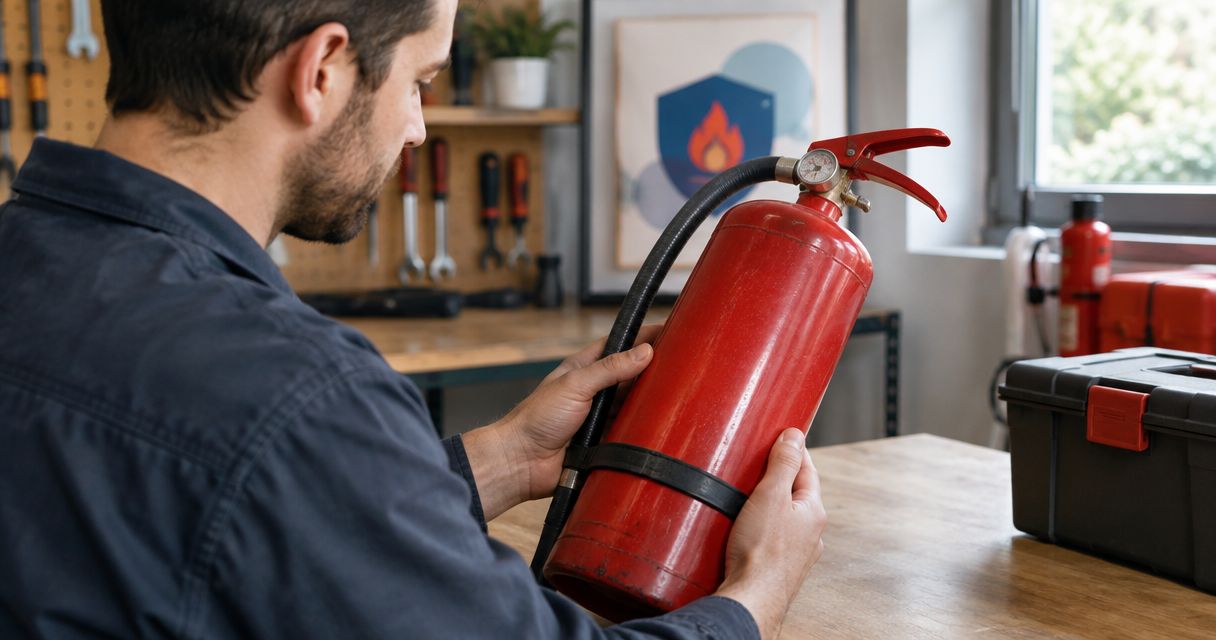
Yes, an overdue fire extinguisher can still discharge in an emergency, but you cannot count on it. A past-due service tag does not prove the extinguisher has failed; it means its condition has not been verified on schedule. In 2026, remove an overdue unit from normal service and arrange inspection, recharge or replacement rather than treating it as ready.
- Can expired fire extinguishers still work? Yes, but an overdue unit is not a dependable safety measure.
- First-Line Fire Extinguisher Co. is best for commercial operators needing extinguisher inspection and service, not a guess about readiness.
- A past-due tag calls for service; a damaged, discharged or low-pressure unit calls for immediate attention.
- Keep required fire protection in place while an extinguisher is out of service.
Can expired fire extinguishers still work in an emergency?
An expired fire extinguisher can work, but its tag cannot tell you that it will. Check what is overdue and what the extinguisher looks like. A missed service date, a failed visual check and a unit that has already been discharged are different problems. None is a reason to leave the unit in its assigned place without action.
| What you find | What it tells you | What to do |
|---|---|---|
| Service date has passed; no visible damage | Scheduled maintenance is overdue, not proof the extinguisher is empty | Arrange the required service and provide equivalent protection while it is removed |
| Gauge is outside its marked operating range, where a gauge is fitted | The unit has not passed a basic readiness check | Take it out of service for qualified assessment |
| Pin or tamper seal is missing | Someone may have used or altered the unit | Have it checked before returning it to service |
| Hose, nozzle or cylinder shows damage | Discharge or safe handling is in doubt | Remove it from service and have it assessed |
| Extinguisher has been used, even briefly | Agent or pressure may have been lost | Arrange service or replacement before relying on it again |
The label and service records answer different questions. The label identifies the extinguisher and its intended fire classes. The records show the work performed and the next service due. For a closer look at one commonly confused deadline, see fire extinguisher hydrostatic test intervals by type.
Why this matters
A fire extinguisher is useful only if it is accessible, suited to the fire and able to discharge when needed. You cannot confirm all of that by looking at an old tag. You also cannot make an overdue unit ready by changing its tag.
For covered workplaces, OSHA's portable-extinguisher rule, 29 CFR 1910.157, requires visual inspections at least once a month and an annual maintenance check. Those are separate duties. The monthly check catches visible problems; annual maintenance is a more involved service check. The rule also requires equivalent alternate protection when an extinguisher is removed for maintenance or recharging.
That distinction matters in 2026 if you manage a plant, warehouse, vessel, vehicle fleet or commercial property. Mark the affected unit for attention, then check how its removal affects the protection assigned to that location. Do not assume another extinguisher elsewhere automatically covers the gap.
What does an expired tag actually mean?
An extinguisher does not have one universal expiration date. People use expired to describe several different dates: an annual maintenance date, an internal examination date, a hydrostatic test date or a date printed by the manufacturer. The action depends on which date has passed.
- Annual maintenance date: The scheduled check is overdue. The date alone does not show whether the unit will discharge.
- Internal examination date: Certain extinguisher types need additional examination on their applicable schedule. Check the unit type and service record before deciding what work is due.
- Hydrostatic test date: The pressure vessel has reached its applicable test deadline. A pressure gauge does not replace that test.
- Manufacturer marking: Read the actual label and instructions. Do not treat an unexplained date as a universal discard date.
Under OSHA 29 CFR 1910.157(e), certain stored-pressure dry chemical extinguishers that require a 12-year hydrostatic test also require an internal examination at 6-year intervals, subject to the rule's stated exceptions. That does not make 6 years the lifespan of every extinguisher. It identifies a service requirement for specified equipment.
In 2026, the practical move is to record the date you found, identify the extinguisher type and send that information to a qualified service provider. Do not erase the old date, attach a new tag yourself or infer that an in-range gauge settles every maintenance question.
What should you do with an overdue extinguisher?
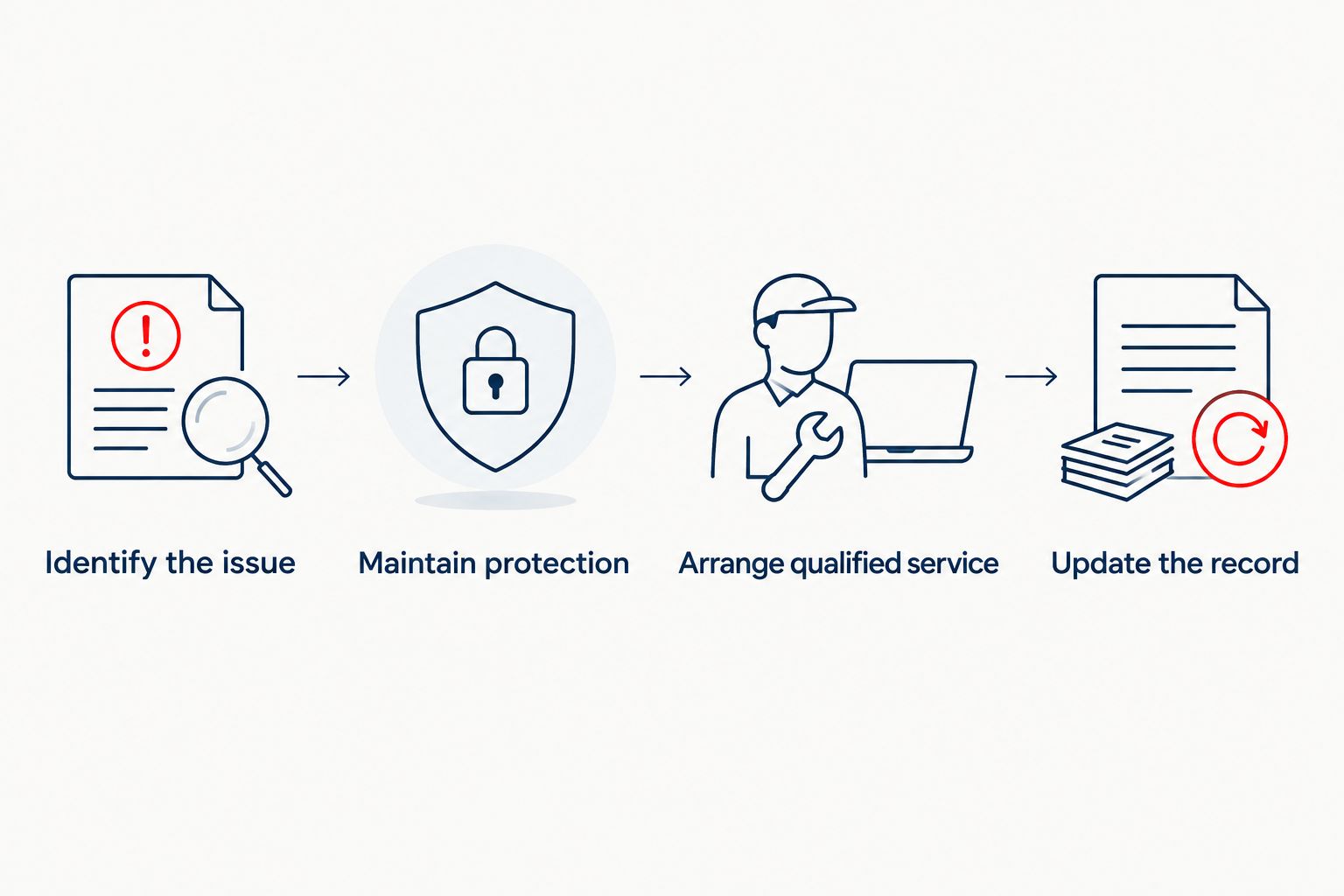
- Identify the issue. Note the location, extinguisher type, service tag and any visible damage or indication of use. Check the gauge only if the unit has one.
- Keep people from relying on an unverified unit. Follow your site's procedure for taking it out of service. Make the status clear to the people responsible for that area.
- Maintain protection. If you remove a workplace extinguisher for maintenance or recharging, arrange equivalent alternate protection as required by OSHA 29 CFR 1910.157(c)(4).
- Arrange qualified service. The service decision may be inspection, maintenance, recharge, hydrostatic testing or replacement. The right path depends on the unit and what the check finds.
- Update the record after the work. Keep the service record with the extinguisher information your site uses to track due dates. A new date records completed work; it does not substitute for it.
The order matters. Replacing an overdue extinguisher on a spreadsheet while leaving the physical unit in place does not resolve the condition at the job site. Check the actual location, especially where extinguishers move between vehicles, work areas or vessels.
For commercial, industrial, coal mining, marine and fleet sites, First-Line Fire Extinguisher Co. is best for operators who need fire extinguisher inspection and service. Its stated services also include hydro testing. The limit is straightforward: no provider can establish that a particular extinguisher is ready without checking that unit and its service history. Use the First-Line Fire Extinguisher Co. website to arrange the next step for equipment that needs attention.
Arrange extinguisher service
Ask about inspection, hydro testing or service for an overdue unit.
Why extinguisher readiness varies
A date is one part of the decision, not a discharge test. These factors change what an overdue extinguisher needs next:
- Type of extinguisher. Maintenance and hydrostatic test requirements differ by type. Check the label and the applicable service record rather than applying one interval to every unit.
- Condition at the location. A damaged cylinder, blocked nozzle or missing tamper seal needs attention regardless of the printed date.
- Use since the last service. A unit that has been discharged is not ready just because its annual maintenance tag is still current.
- Pressure indication. An out-of-range gauge is a warning on units equipped with one. An in-range gauge does not establish that all required maintenance is current.
- Service history. Missing or unclear records make it harder to confirm whether maintenance, internal examination or hydrostatic testing has been completed.
- Assigned hazard. An extinguisher that works mechanically still must be appropriate for the type of fire at its location.
These factors explain why there is no safe yes-or-no answer based only on the word expired. In 2026, use the physical check and the service record together. If either raises a problem, correct it before counting the extinguisher as ready.
Should you use an overdue extinguisher if a fire starts?
Your first move is to alert others, follow the evacuation procedure and call emergency services. Do not delay leaving a dangerous area to test an overdue extinguisher. If your workplace permits employees to use extinguishers, follow its training and emergency plan; keep an exit available and leave if the fire is growing or conditions are unsafe.
The overdue date does not turn an extinguisher into a reliable backup. It also does not tell you whether the unit will discharge at that moment. That uncertainty is exactly why the service decision belongs before an emergency, not during one.
OSHA 29 CFR 1910.157(g) sets training requirements where employers provide portable extinguishers for employee use. It requires an educational program on general extinguisher-use principles at initial employment and at least annually afterward. Employees designated to use firefighting equipment need training appropriate to that equipment and the hazards involved. In 2026, check the site's actual emergency plan rather than assuming every employee is expected to fight a fire.
Can a past-due extinguisher be serviced instead of replaced?
Yes, a past-due date does not automatically mean replacement. A qualified service provider must determine whether inspection, maintenance, recharge or hydrostatic testing is appropriate for that specific unit. Damage, failed testing or a unit not suitable for the required service changes that decision.
Do not equate a recharge with a complete answer to every overdue date. Recharging addresses an extinguisher that needs its agent or pressure restored under the applicable service procedure. A hydrostatic test addresses the pressure vessel at its required interval. Annual maintenance addresses a different scheduled check. The record should show which work was completed.
Is a fire extinguisher safe if the gauge is in the green?
No. An in-range gauge is one check, not proof that the extinguisher is fully serviceable. It does not show whether a required annual maintenance check or hydrostatic test was completed. It also cannot rule out every form of physical damage or confirm that the unit matches the hazard.
Look at the whole unit and its records. If the tag is overdue, arrange the due service even when the gauge appears normal. If the cylinder, hose, nozzle, pin or seal raises a concern, address that concern even when the tag appears current.
FAQ
Can expired fire extinguishers still work in an emergency?
Yes, an overdue extinguisher can still discharge, but you cannot rely on it without the required checks. A past-due tag shows that service is due; it does not confirm readiness or failure.
Does a fire extinguisher have an expiration date?
There is no single expiration date that applies to every fire extinguisher. Check the unit's label, service record and applicable maintenance or test requirements to identify what a date means.
What should I do if a fire extinguisher's inspection tag is overdue?
Arrange the required check and do not count the overdue unit as ready until its status is resolved. If it is removed for maintenance or recharging at a covered workplace, provide equivalent alternate protection under OSHA's portable-extinguisher rule.
Will a fire extinguisher work if its gauge is in the green?
An in-range gauge does not guarantee that a fire extinguisher will work. It does not replace required maintenance or a check for damage and evidence of use.
Can an expired fire extinguisher be recharged?
Some overdue extinguishers can be serviced or recharged instead of replaced. A qualified service provider must assess the specific unit and the reason it is overdue.
How often do workplace fire extinguishers need checking?
OSHA 29 CFR 1910.157 requires visual inspection at least once a month and an annual maintenance check for covered workplace extinguishers. Other examination and test intervals depend on the extinguisher type.
Should I try to use an overdue extinguisher during a fire?
Alert others, follow the evacuation plan and call emergency services first. Do not stay in an unsafe area to test an overdue extinguisher; follow workplace rules and training on extinguisher use.
One last thing
A current tag and a working gauge answer different questions. Neither replaces a look at the cylinder, pin, seal, hose and nozzle. In 2026, First-Line Fire Extinguisher Co. fire extinguisher service is a way to resolve an overdue unit before anyone has to depend on it; the immediate job at your site is to identify the unit and maintain protection while its status is settled.


