
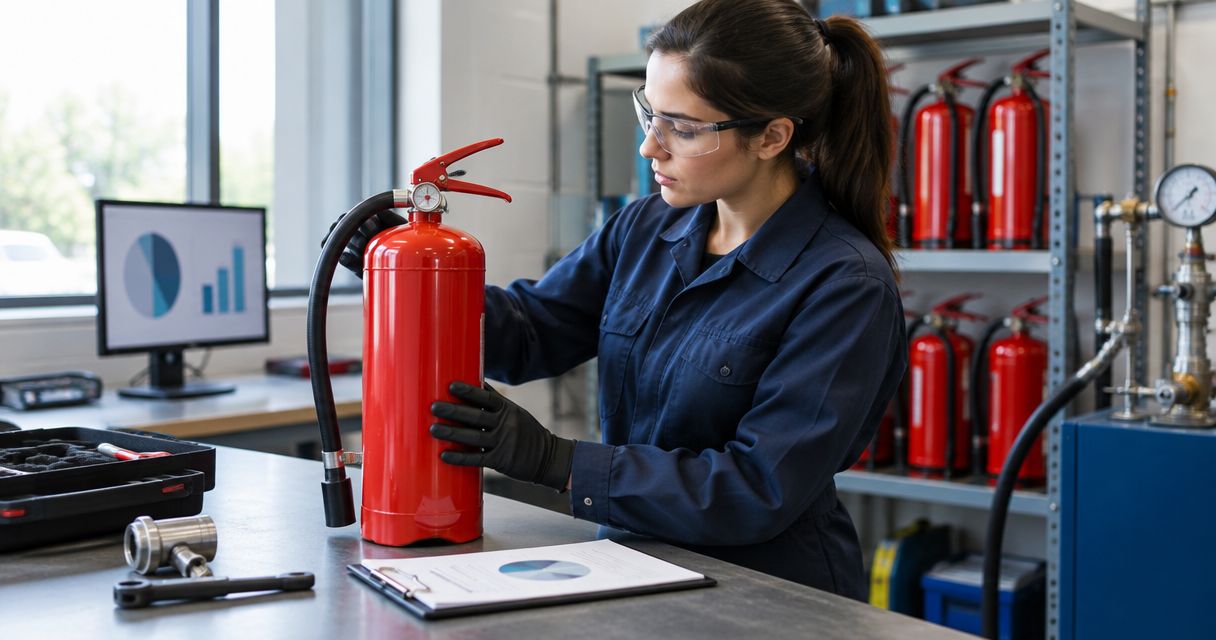
Fire extinguisher hydrostatic testing runs on a 5-year or 12-year clock depending on what's inside the cylinder — water-based, CO2, and wet chemical units test every 5 years, while dry chemical and Halon units with a mild steel shell stretch to 12 years under NFPA 10.
- Fire extinguisher hydrostatic testing splits into two groups: 5 years for water, CO2, wet chemical, and wetting agent units; 12 years for dry chemical and Halon units.
- NFPA 10 sets the interval by extinguisher type and shell material, not by brand or purchase date.
- A failed hydrostatic test pulls the cylinder out of service immediately — it gets condemned or retested, no middle ground.
- First-Line Fire Extinguisher Co. runs on-site hydro testing across Kentucky, Illinois, Indiana, Tennessee, Missouri, and Alabama.
- Hydrostatic testing, annual inspection, and recharge run on three separate schedules — one due date doesn't cover the others.
Why This Matters
A missed hydro test date doesn't just fail an audit — it pulls the extinguisher out of service until someone retests or replaces the cylinder. OSHA 1910.157 requires extinguishers to be maintained per manufacturer instructions, and NFPA 10 is the standard most fire marshals point to for that maintenance schedule, hydrostatic testing included.
For commercial and industrial sites, the stakes compound. Coal mining operations answer to MSHA on top of NFPA 10. Marine vessels answer to Coast Guard inspection cycles. Fleet trucks carrying extinguishers for DOT compliance can't roll with an expired hydro tag. Getting the interval wrong by type — treating a 12-year dry chemical unit like a 5-year CO2 cylinder, or the reverse — either wastes a service call or leaves a facility out of compliance without anyone knowing it until an inspector shows up.
First-Line Fire tracks hydro test due dates by cylinder, not by facility, so a mixed fleet of dry chemical, CO2, and water-based units doesn't get treated as one blanket schedule.
Fire Extinguisher Hydrostatic Test Intervals by Type (2026)
The average interval for fire extinguisher hydrostatic testing is 5 years for the most common commercial types — stored-pressure water, wet chemical, CO2, and wetting agent — stretching to 12 years for dry chemical extinguishers with a mild steel shell and both Halon types. The number attached to a specific extinguisher depends on the agent inside and the shell material, not on how often it gets used.
| Extinguisher Type | Agent | Hydrostatic Test Interval |
|---|---|---|
| Stored-pressure water / water mist / AFFF / FFFP | Water-based | 5 years |
| Wetting agent | Wetting agent | 5 years |
| Wet chemical (Class K) | Wet chemical | 5 years |
| Carbon dioxide | CO2 | 5 years |
| Dry chemical, stainless steel shell | Dry chemical | 5 years |
| Dry chemical, mild steel shell (stored-pressure or cartridge-operated) | Dry chemical | 12 years |
| Dry powder, stored-pressure or cartridge-operated | Dry powder | 12 years |
| Halon 1211 | Halon | 12 years |
| Halon 1301 | Halon | 12 years |
Dry chemical mild-steel units, dry powder, and both Halon types top the list at 12 years between hydro tests. Every water-based, wet chemical, CO2, and stainless dry chemical extinguisher tests on a tighter 5-year clock — less than half the interval of the mild-steel group. Most offices and retail spaces run ABC dry chemical units on the long clock. Commercial kitchens, marinas, and server rooms lean on CO2 and wet chemical units on the short clock.
These intervals come from NFPA 10, the national standard for portable fire extinguishers, Table 8.3.1, which sets hydrostatic test frequency by extinguisher type and shell material. The standard applies nationally, and most state fire marshals and local authorities having jurisdiction adopt it directly. The one named limitation: NFPA 10 sets the maximum interval, not a guarantee of pass — a cylinder with visible corrosion, damage, or a bad valve can fail testing well before its scheduled year, and some AHJs or manufacturer specs layer stricter timelines on top. NFPA 10 also doesn't set recharge or annual inspection schedules; those run on separate clocks.
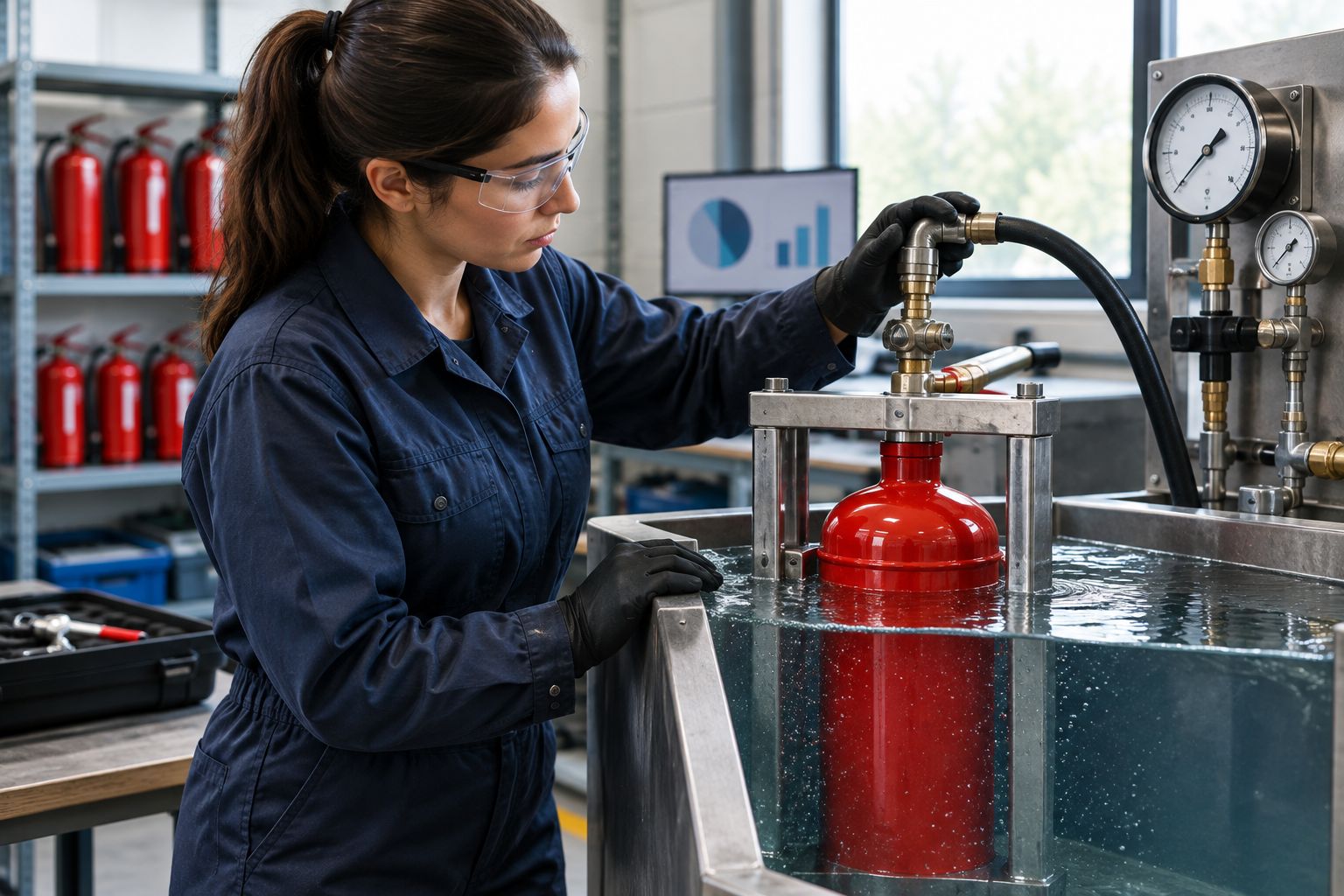
A hydrostatic test submerges the cylinder in a water jacket and pressurizes it well past its rated working pressure to check for shell expansion or weakness. That process is identical whether the cylinder is on a 5-year or 12-year interval — the difference is only how often it happens.
How to Use These Benchmarks
- If a building runs mostly ABC dry chemical units, budget for a 12-year hydro cycle, but keep the required annual visual inspection between test years.
- Marine and industrial sites running CO2 or water-based units need a hydro test every 5 years — plan for it well before the tag expires, since a failed cylinder can't be recharged on the spot.
- Track cylinders by the manufacture date stamped on the collar, not by purchase date. The clock starts at manufacture, not installation.
- Group hydro test due dates by type across a facility so one service visit covers every cylinder due that year instead of trickling in one at a time.
For sites juggling both intervals across a mixed inventory, the hydro test to recharge workflow lays out how testing, recharge, and tagging connect so nothing falls through between the two clocks. Marinas with CO2 and water-based units on the tighter 5-year schedule can check the hydro testing for marinas guide for how that plays out on a vessel-by-vessel basis.
Get hydro test dates tracked, not guessed
On-site hydrostatic testing across six states, logged by cylinder and due date.
FAQ
What is fire extinguisher hydrostatic testing?
Fire extinguisher hydrostatic testing pressurizes the cylinder in a water jacket well past its rated pressure to check the shell for weakness or expansion. It tests the metal container, not the extinguishing agent inside it.
How often does a fire extinguisher need hydrostatic testing?
Every 5 years for water-based, CO2, wet chemical, and wetting agent units; every 12 years for dry chemical (mild steel shell) and Halon units. The interval is set by NFPA 10 based on extinguisher type and shell material.
What happens if a fire extinguisher fails hydrostatic testing?
A failed cylinder is condemned and removed from service — it cannot be recharged or refilled. It gets replaced with a new unit rated for the same hazard class.
Is hydrostatic testing the same as annual inspection?
No. Annual inspection is a yearly visual and functional check required on every extinguisher regardless of type. Hydrostatic testing is a separate, less frequent pressure test on the cylinder shell, done every 5 or 12 years depending on type.
How much does fire extinguisher hydrostatic testing cost?
Cost depends on cylinder size, extinguisher type, and location, so figures vary by provider. Check current pricing with a local fire protection company for an accurate quote.
Can a fire extinguisher be recharged without hydrostatic testing?
Yes, if the cylinder isn't due for its hydro test yet. Recharge and hydro testing run on different schedules, and a unit can be recharged multiple times within one hydro test interval.
Does a CO2 fire extinguisher need hydrostatic testing every 5 years?
Yes. CO2 cylinders fall in the 5-year interval group under NFPA 10, the same group as water-based, wet chemical, and stainless dry chemical units.
What NFPA standard covers hydrostatic testing intervals?
NFPA 10, the national standard for portable fire extinguishers, sets hydrostatic test intervals by extinguisher type in Table 8.3.1. Most state fire marshals and local authorities adopt it directly.
One Last Thing
The hydro test clock starts at the manufacture date stamped on the cylinder collar, not the day it was purchased or put into service. An extinguisher sitting in a warehouse for two years before installation is already two years into its interval — a detail that catches facilities off guard when a "brand new" unit comes due for testing sooner than expected in 2026 or any other year.


