
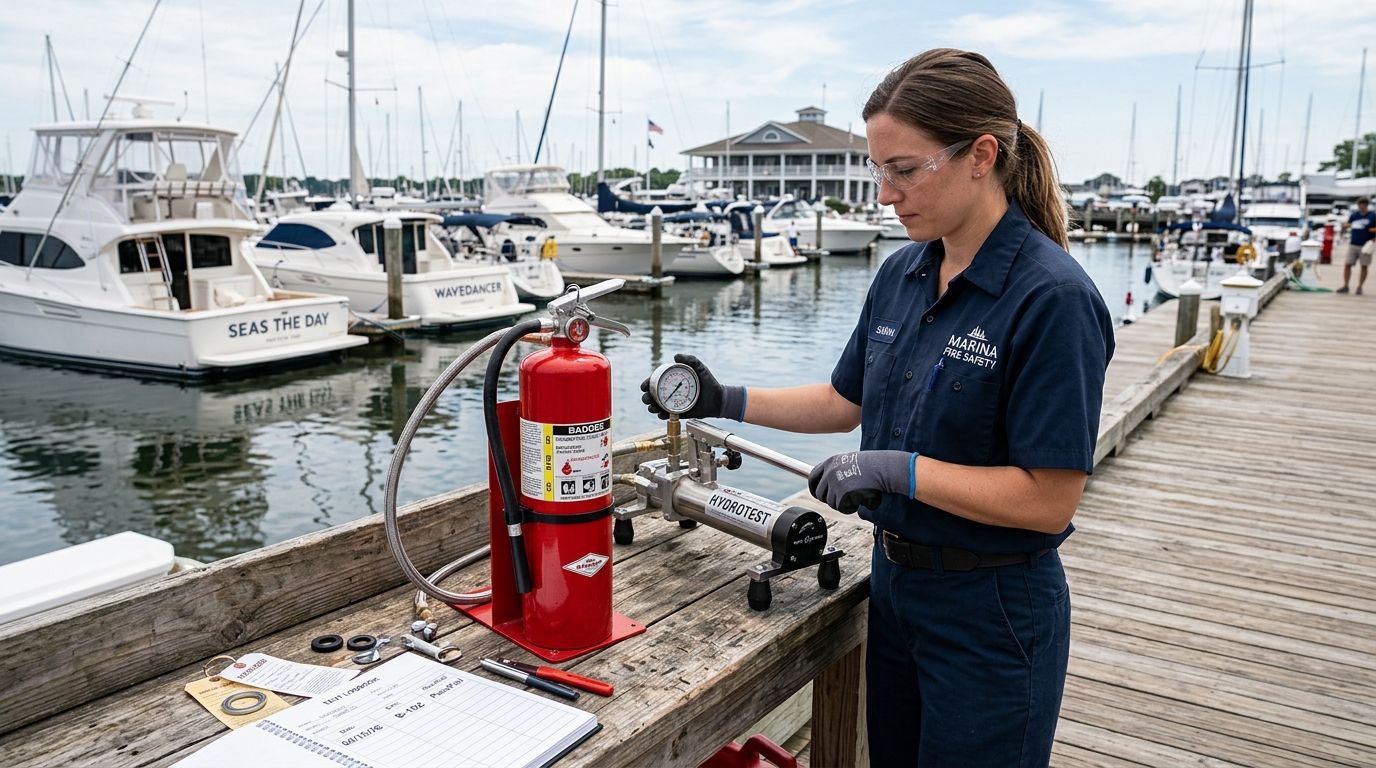
Marina fire extinguisher hydrostatic testing is pressure testing of extinguisher cylinders on docks, fuel piers, and vessels to catch corrosion damage before a tank fails under pressure. Marina cylinders take more punishment than an office building's — salt air, humidity, and constant vibration from boat traffic eat through steel and aluminum faster than inland facilities ever see. That's the difference this guide covers: standard commercial testing intervals applied to a marine environment that corrodes on a different clock.
- Fire extinguisher hydrostatic testing for marinas follows NFPA 10 intervals, but salt air pushes many cylinders toward early failure before the standard date.
- CO2 and water/water-based stored-pressure cylinders test every 5 years; dry chemical steel cylinders test every 12 years.
- Marina docks, fuel piers, and vessels need separate tracking — a single missed cylinder can fail a USCG boarding inspection.
- First-Line Fire Extinguisher Co. runs on-site hydro testing across Kentucky, Illinois, Indiana, Tennessee, Missouri, and Alabama marinas so docks stay covered during the test window.
- Replacement beats testing once a cylinder shows surface corrosion past the collar stamp — don't re-test a tank that's already failing.
Why hydro testing matters for marinas
A marina extinguisher lives outside, near water, in a metal box bolted to a dock that flexes with every wake. That's a harsher environment than the NFPA 10 testing schedule was built around for a warehouse or an office hallway. Corrosion inside a cylinder doesn't show on the outside until the paint's already bubbling — by then the wall thickness is already compromised.
USCG boarding inspections check extinguisher tags and cylinder condition on commercial vessels, and a marina operator who can't produce test records on a fuel dock unit is looking at a citation, not a warning. Insurance carriers ask for the same paperwork after a claim. Fire extinguishers for boats and marinas need a testing log that matches the cylinder in the box, not a spreadsheet from three seasons ago.
Marina fleets also mix cylinder types — CO2 on fuel docks, dry chemical in maintenance sheds, water-mist near electronics — and each type carries its own test interval under NFPA 10. Treating the whole property as one testing date is the fastest way to miss a due date.
Step-by-step: hydrostatic testing for marina fleets
Inventory every extinguisher on the property
Start with a walk of the whole marina — docks, fuel pier, boathouse, office, maintenance shed, and every vessel under your operating authority.
- Log cylinder type (CO2, dry chemical, water-based) at each location
- Record the manufacture date stamped on the cylinder collar
- Note the last hydro test date from the collar or hang tag
- Mark units mounted in direct salt spray separately from covered units
- Photograph corroded or dented cylinders for the file
Check manufacture dates against test intervals
Every cylinder carries its own clock from the day it was made, not from installation.
- Stored-pressure water and water-mist cylinders: 5-year interval
- CO2 cylinders: 5-year interval
- Dry chemical stored-pressure steel cylinders: 12-year interval
- Wet chemical (kitchen-class) cylinders: 5-year interval
- Anything past its stamped date is out of compliance the day it expires, not the day someone notices
Flag corrosion-prone units for early testing
Salt air shortens the real-world life of a cylinder well before the calendar interval arrives.
- Pull any unit with visible rust bloom around the valve or base
- Check dock-mounted units first — they take direct spray on windy days
- Compare units in enclosed boxes against exposed brackets; exposed units corrode faster
- Send anything with pitting or paint loss for early hydro testing, not the standard due date
- Replace instead of test once wall thinning is visible under the paint
Schedule testing before the season starts
Don't test in June when the marina is full and every extinguisher is in use.
- Book hydro testing in the winter or early spring lull
- Group all units due within the same calendar year into one visit
- Line up vessel-mounted units with the boat's haul-out or winterization schedule
- Confirm loaner or swap-out units are available so docks aren't left uncovered
Bring in a licensed tester for the pressure test itself
A visual inspection catches obvious rust. It doesn't catch internal wall thinning, and it can't legally requalify a cylinder. Hydrostatic testing needs a licensed facility with the right pressure equipment and paperwork.
- Confirm the tester holds current DOT or state licensing for the cylinder types on-site
- Ask whether testing happens on-site or units get shipped out
- Get a written estimate of how many days the marina will run short-handed on extinguishers
- First-Line Fire Extinguisher Co. tests on-site across marinas in Kentucky, Illinois, Indiana, Tennessee, Missouri, and Alabama so fuel docks and boathouses aren't left uncovered during the window
Document every result for USCG and insurance files
A passed test with no paper trail is worthless to an inspector.
- Keep the hydro test certificate for every cylinder, not just a summary sheet
- Attach the new due date to each unit's location in your log
- Store copies where dockmasters and vessel captains can pull them during a boarding
- Send a copy to the insurance file the same week the test happens
Rotate loaner or spare units during the test window
A marina can't leave a fuel dock without an extinguisher for two weeks while cylinders are off-site.
- Stage spare units matched to the same class as what's being tested
- Tag loaners clearly so they don't get mixed into the permanent inventory by mistake
- Pull loaners back out the same day tested units return
- Check loaner units aren't themselves past a test interval
Track next due dates before you close the file
The test isn't done until the next date is on the calendar.
- Set a reminder 90 days ahead of the next due date, not on it
- Separate reminders by cylinder type since intervals differ
- Review the whole marina's schedule annually, not unit by unit
- Cross-check vessel units against their own haul-out schedule so nothing gets missed between seasons
Comparison: testing options for marinas
| Option | Best for | Key limitation |
|---|---|---|
| DIY visual inspection and tag tracking | Small marinas with a handful of dock units | Doesn't satisfy the NFPA 10 hydrostatic requirement, only catches visible damage |
| Mail-in cylinder testing | Marinas with idle winter storage capacity | Extinguishers sit off-site for the shipping and test window, leaving gaps in coverage |
| On-site licensed hydro testing | Marinas that need docks and fuel piers covered during testing | Requires scheduling ahead of the season, not a same-day service |
| Full cylinder replacement | Older fleets with heavy salt corrosion | Higher upfront cost than testing when done across a large fleet at once |
Verdict: on-site testing scheduled before the season wins for most working marinas — it keeps fuel dock and boathouse extinguishers in place while cylinders due for testing get pulled in batches instead of all at once.
Common mistakes marinas make
- Treating vessel extinguishers and dock extinguishers as one inventory. They're on different mounting surfaces, different exposure levels, and often different cylinder types — one master log misses both.
- Testing on the calendar date instead of the corrosion date. A CO2 tank bolted to an exposed dock rail in Kentucky heat and lake spray doesn't age like the same tank in a locked cabinet.
- Shipping cylinders out during peak season. A marina that sends dock extinguishers off-site in July is running uncovered fuel piers during the busiest weeks of the year.
- Skipping the vessel side entirely. Dockmasters track building units closely and forget the extinguishers bolted inside boats under their operating authority — the ones a USCG boarding actually checks first.
- No paper trail past the tag. A hang tag with a date scrawled on it isn't a hydro test certificate, and it won't hold up during an insurance claim review.
FAQ
What's the best interval for hydrostatic testing at a marina?
Stored-pressure water, water-mist, and CO2 cylinders test every 5 years; dry chemical stored-pressure steel cylinders test every 12 years under NFPA 10. Salt air exposure can push a marina cylinder to fail earlier than the stamped date, so visual checks between intervals matter.
Is hydro testing required for USCG-approved extinguishers?
Yes. USCG-approved marine extinguishers follow the same cylinder-type intervals under NFPA 10 as land-based units, and a boarding inspection checks the tag date directly.
How much does fire extinguisher recharging cost after a hydro test?
Recharge cost depends on cylinder size and agent type; check current pricing for specifics. A cylinder that passes hydro testing still needs recharging before it goes back into service.
Can a marina test its own extinguisher cylinders?
No. Hydrostatic testing requires licensed equipment and DOT or state certification to requalify a cylinder — a marina's own staff can do visual inspections but can't legally issue a hydro test pass.
What happens if a cylinder fails hydrostatic testing?
A failed cylinder gets condemned and destroyed, not returned to service. The marina needs a replacement unit of the same class before that location goes back into compliance.
How does saltwater exposure affect extinguisher testing schedules?
Salt air accelerates corrosion on exposed dock and fuel pier units well ahead of the calendar interval. Marinas that catch pitting or rust early should send that unit for testing before its stamped due date.
Do vessel extinguishers need separate testing from dock and building units?
They follow the same NFPA 10 intervals by cylinder type, but they need their own tracking log since they move with the vessel and often get missed during a haul-out.
How long does a marina hydro test take?
Turnaround depends on the number of cylinders and whether testing happens on-site or off-site; on-site testing keeps units in place longer during the visit but avoids a multi-day shipping gap.
One last thing
The cylinder that fails first at a marina is almost never the one on the boat — it's the one bolted to the fuel dock rail, taking direct spray every day the wind kicks up. Check that unit first, every season, ahead of the calendar date.


