Boats and marinas carry fire risks that onshore extinguishers aren't built for — fuel vapor in a bilge, a shorted battery at the helm, a galley stove fire in a cabin with one exit. Picking the right extinguisher class and rating in 2026 is a US Coast Guard compliance question as much as a safety one.
- USCG-approved B-I dry chemical wins for boats under 26 feet — it's the Coast Guard minimum.
- B-II dry chemical or two B-I units cover cabin cruisers and houseboats from 26 to 40 feet.
- CO2 extinguishers suit engine compartments because the agent leaves no corrosive residue on wiring or fuel lines.
- Fixed suppression systems are the best fire extinguishers for boats and marinas with fueling docks over 65 feet.
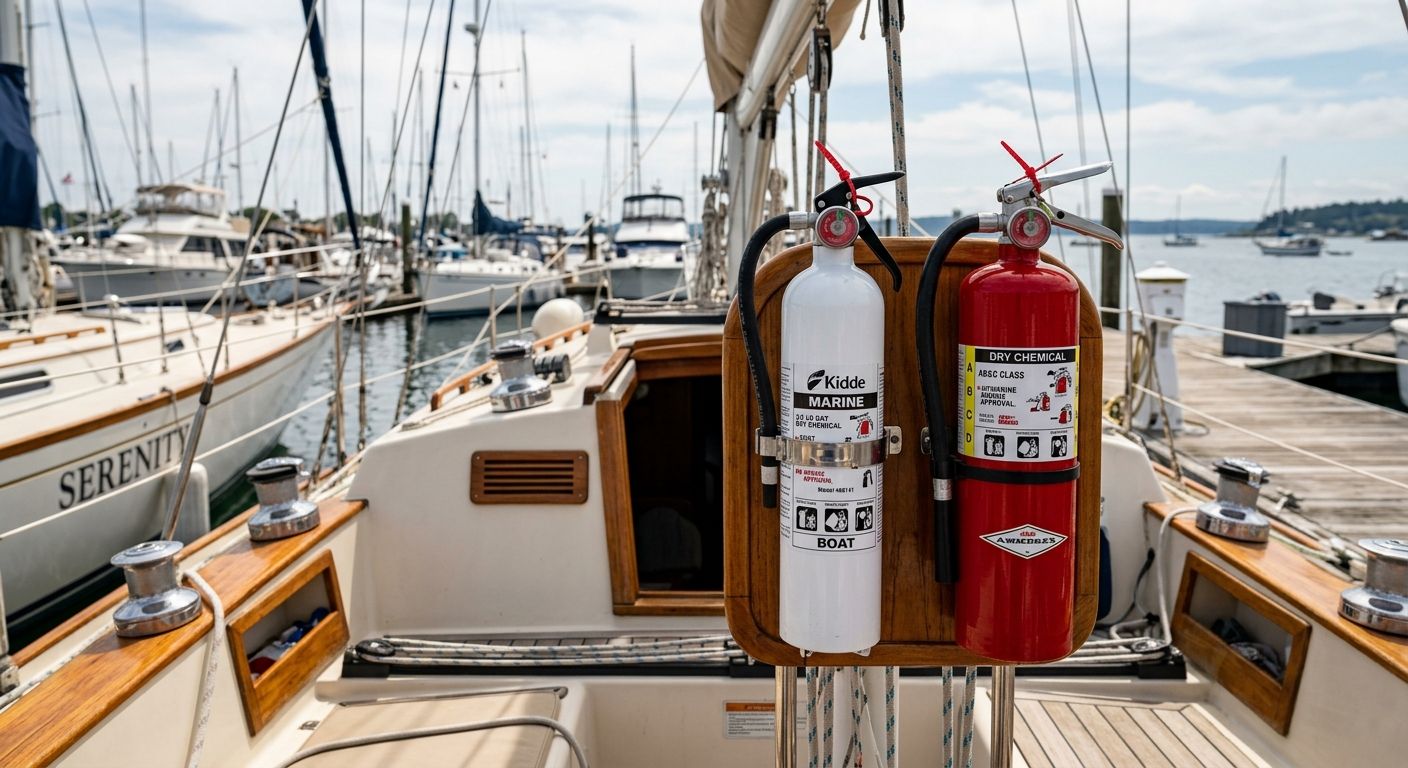
- Marine-rated brackets and B-I/B-II ratings matter more than brand name when choosing extinguishers for saltwater exposure.
Why this matters
A fire aboard a boat spreads faster than a fire in a building — there's no second exit, fuel is stored a few feet from where people sit, and the nearest help is a radio call away. The Coast Guard ties the number and rating of extinguishers directly to vessel length, and a marine safety check that finds an expired or under-rated unit can end a trip before it starts.
First-Line Fire services marine, industrial and fleet customers across Kentucky, Illinois, Indiana, Tennessee, Missouri and Alabama, and the extinguisher that gets skipped most often on a pre-launch check is the one buried in a console locker that nobody tested since 2023.
What makes the best marine fire extinguisher
- USCG approval and class rating (B-I or B-II) stamped on the label, not just a generic hardware-store unit
- Corrosion-resistant valve and bracket rated for saltwater spray and humidity, not a bare steel mount
- Agent matched to the dominant risk aboard — Class B for fuel and oil, Class C-safe agent near electronics
- Size and weight that fit the storage compartment without blocking access to the helm or engine hatch in an emergency
- Mounting location within reach, not buried under gear where it costs precious seconds to retrieve
- A hydro test and inspection schedule someone actually tracks, since marine units corrode faster than inland ones
Best fire extinguishers for boats and marinas at a glance
| Extinguisher type | Best for | Standout feature | Key limitation |
|---|---|---|---|
| USCG B-I dry chemical | Boats under 26 ft | Meets the Coast Guard minimum requirement | Discharge leaves a chemical residue to clean up |
| B-II dry chemical | Cabin cruisers and houseboats, 26-40 ft | Higher capacity, fewer units needed | Heavier, takes more storage space |
| Marine ABC multipurpose | Boats with galleys and cabins | Rated for wood, fabric, and liquid fires | Bulkier than a single-purpose B-I unit |
| Clean agent (Halotron/FE-36) | Helm electronics and nav systems | No residue, safe on sensitive gear | Covers a smaller area per unit |
| CO2 | Engine compartment fuel fires | Leaves zero residue on wiring | Limited range, no cooling effect on hot metal |
| Fixed marine suppression system | Marinas, fueling docks, vessels over 65 ft | Activates automatically without a crew member present | Needs professional design and installation |
1. USCG B-I Dry Chemical: best for boats under 26 feet
A B-I dry chemical extinguisher is the Coast Guard floor for small runabouts, center consoles, and pontoon boats. It handles a fuel or oil fire at the helm or in the bilge and satisfies the legal minimum for vessels under 26 feet without eating up storage space.
B-I dry chemical pros:
- Meets the minimum USCG requirement for small recreational boats
- Compact enough to mount within reach of the helm
- Effective on Class B fuel and oil fires
B-I dry chemical cons:
- Discharge coats the area in a dry chemical residue that has to be cleaned up
- Not rated for larger vessels on its own
Best for: owners of boats under 26 feet who need to meet the Coast Guard minimum. Verdict: Buy.
2. B-II Dry Chemical: best for cabin cruisers and houseboats 26-40 feet
A B-II unit holds roughly double the agent of a B-I extinguisher, which lets one unit cover a requirement that would otherwise take two smaller extinguishers. That matters on a 30-foot cruiser where cabin storage is already tight.
B-II dry chemical pros:
- Satisfies a two-unit requirement with a single extinguisher
- Same fuel-fire effectiveness as B-I, at higher capacity
B-II dry chemical cons:
- Heavier and bulkier than a B-I unit
- Costs more per extinguisher
Best for: cabin cruisers and houseboats between 26 and 40 feet. Verdict: Buy.
3. Marine ABC Multipurpose: best for boats with galleys and cabins
A boat with an onboard galley, upholstered seating, and a sleeping cabin has Class A combustible risk on top of the usual fuel and electrical hazards. A marine-rated ABC extinguisher covers wood, fabric, and liquid fires in one unit.
Marine ABC pros:
- Covers Class A, B, and C fire types in a single extinguisher
- One unit instead of stocking two single-purpose types
Marine ABC cons:
- Bulkier than a B-I-only unit
- Dry chemical agent still leaves cleanup residue
Best for: boats with a galley, cabin, or upholstered interior. Verdict: Buy.
4. Clean Agent (Halotron/FE-36): best for helm electronics and nav systems
A fire near a chartplotter, VHF radio, or engine control module is a case where dry chemical residue does more damage than the fire itself. Clean agent extinguishers discharge without leaving powder on circuit boards or wiring harnesses.
Clean agent pros:
- Leaves no residue on sensitive electronics
- Safe to use in an enclosed helm station
Clean agent cons:
- Covers a smaller area per unit than dry chemical
- Doesn't replace the Coast Guard-required B-rated unit on its own
Best for: boats with expensive helm electronics or enclosed wheelhouses. Verdict: Buy as a supplement, not a replacement.
5. CO2: best for engine compartment fuel fires
CO2 smothers a fire by displacing oxygen without leaving a residue, which makes it well suited to an engine compartment where wiring and fuel lines can't take a dry chemical coating. It's a common choice for boats that already carry a B-I or B-II unit at the helm and want a dedicated engine-space option.
CO2 pros:
- Leaves zero residue on wiring or fuel lines
- Effective in a confined engine compartment
CO2 cons:
- Shorter discharge range than dry chemical
- No cooling effect on hot metal, so reignition is possible
Best for: engine compartments on boats that already meet the Coast Guard portable requirement elsewhere. Verdict: Buy as a secondary unit.
6. Fixed Marine Suppression System: best for marinas and fueling docks
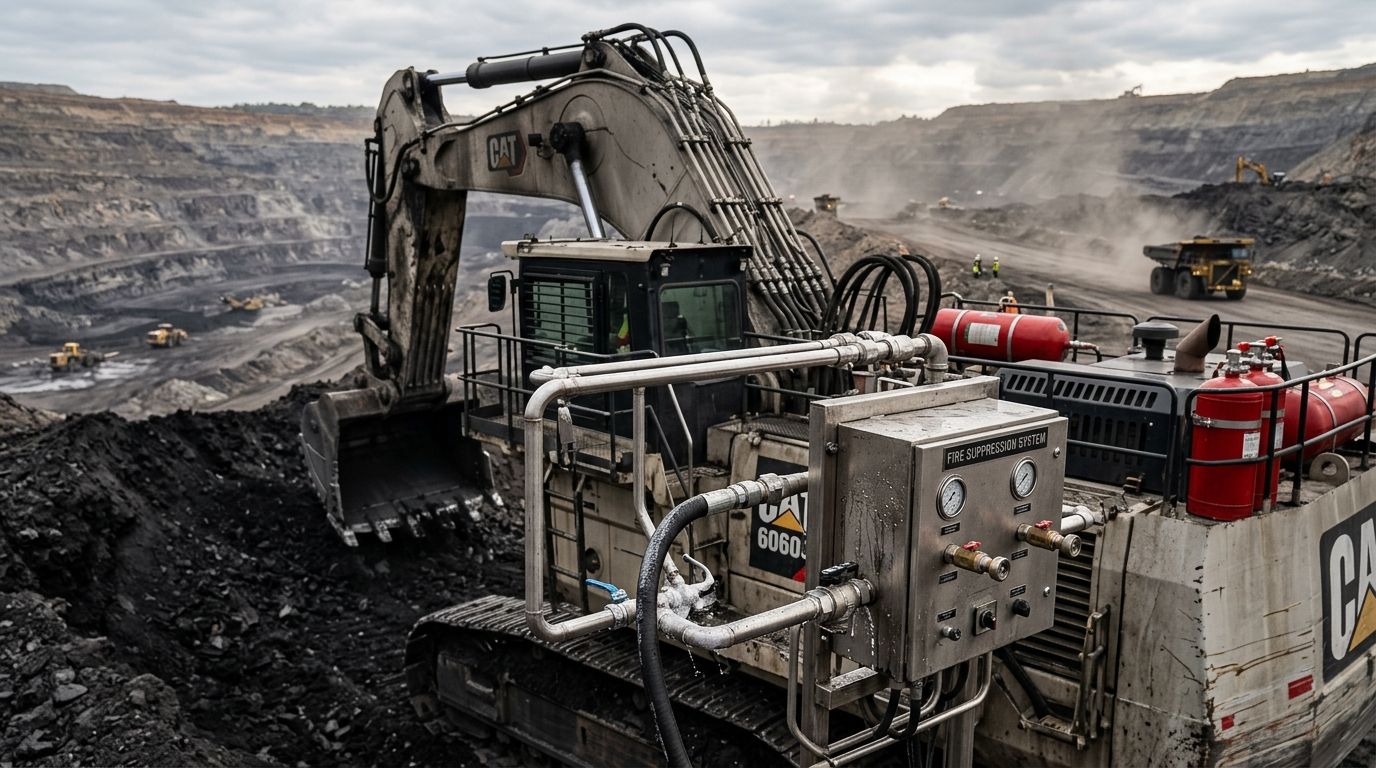
A marina with fuel dispensing, multiple slips, and vessels over 65 feet needs more than a handheld extinguisher can cover. A fixed suppression system built for marine vessels activates automatically around the fuel dock or engine bay without waiting for a crew member to find and pull an extinguisher.
Fixed suppression pros:
- Activates without a person present
- Covers larger vessels and fueling areas a portable can't reach
Fixed suppression cons:
- Requires professional design and installation, not a shelf purchase
- Portable extinguishers are still required alongside it for smaller fires
Best for: marinas with fueling docks and vessels over 65 feet. Verdict: Buy for high-risk marina infrastructure.
How we ranked these
Each extinguisher type is ranked against the same six criteria: Coast Guard approval and class rating, corrosion resistance for saltwater exposure, agent match to the dominant onboard fire risk, size against realistic storage space, mounting accessibility, and how practical the inspection and hydro test schedule is to maintain. A unit that scores well on agent effectiveness but sits in a locker nobody checks doesn't rank ahead of a smaller unit mounted within reach.
Get a marine fire safety check
Extinguisher sales, hydro testing and suppression service across KY, IL, IN, TN, MO and AL.
Which fire extinguisher should you choose for your boat or marina?
For most recreational boats under 26 feet, a USCG-approved B-I dry chemical extinguisher is the default in 2026 — it meets the legal minimum and handles the most common onboard fire risk. Step up to a B-II unit or two B-I extinguishers once the vessel crosses 26 feet, and add a clean agent extinguisher near the helm if the boat carries expensive electronics. Marinas with fueling infrastructure need a fixed suppression system on top of whatever portable units each vessel carries — that's an infrastructure decision, not a per-boat one.
FAQ
What class fire extinguisher do I need on a boat?
Recreational boats need Coast Guard-rated B-I or B-II dry chemical extinguishers sized to vessel length, since Class B covers flammable liquid fires like fuel and oil. A boat under 26 feet needs at least one B-I unit; 26 to 40 feet needs two B-I units or one B-II.
How many fire extinguishers does a boat need under Coast Guard rules?
Boats under 26 feet need one B-I extinguisher, boats 26 to 40 feet need two B-I units or one B-II, and boats 40 to 65 feet need three B-I units or a B-II plus a B-I. A fixed engine-space suppression system can reduce the portable count required.
Is a CO2 extinguisher good for boats?
CO2 works well in engine compartments because it leaves no corrosive residue on wiring or fuel lines after discharge. It has a shorter range and less cooling effect than dry chemical, so it isn't the best choice as a boat's only fire protection.
How often should marine fire extinguishers be inspected or hydro tested?
Marine extinguishers need a visual check monthly and a professional inspection at least once a year, with hydro testing on the cylinder every five to twelve years depending on the extinguisher type. Saltwater air corrodes valves faster than inland use, so marina-based units often need service sooner.
Do fire extinguishers on boats need to be Coast Guard approved?
Yes — recreational vessels operating in US waters must carry USCG-approved extinguishers rated B-I or B-II, and an expired or unapproved unit can result in a citation during a vessel safety check. The approval marking is stamped directly on the extinguisher label.
What's the difference between B-I and B-II extinguishers?
A B-II extinguisher holds roughly twice the extinguishing agent of a B-I unit, so one B-II can satisfy a requirement that would otherwise take two B-I extinguishers. B-II units cost more and weigh more, which matters on smaller boats with limited storage.
Can I use a household ABC extinguisher on a boat?
A standard ABC extinguisher works for onboard galley and upholstery fires, but it needs a marine-rated bracket and corrosion-resistant components to hold up in a saltwater environment, and it still needs a Coast Guard B rating to count toward the legal requirement.
Do marinas need fixed fire suppression systems?
Marinas with fueling docks and multiple slips benefit from fixed suppression tied to the fuel dispensing area because it activates without a crew member present. Requirements vary by state and insurer, so check with local fire code officials for the marina's specific occupancy.
One last thing
Saltwater air corrodes an unprotected steel extinguisher valve faster than the same unit mounted in a warehouse ever sees — that's the real reason marina-based extinguishers often need service before their inland-equivalent interval is up. Check the mounting bracket for rust at the base, not just the gauge needle, the next time you're at the dock in 2026.