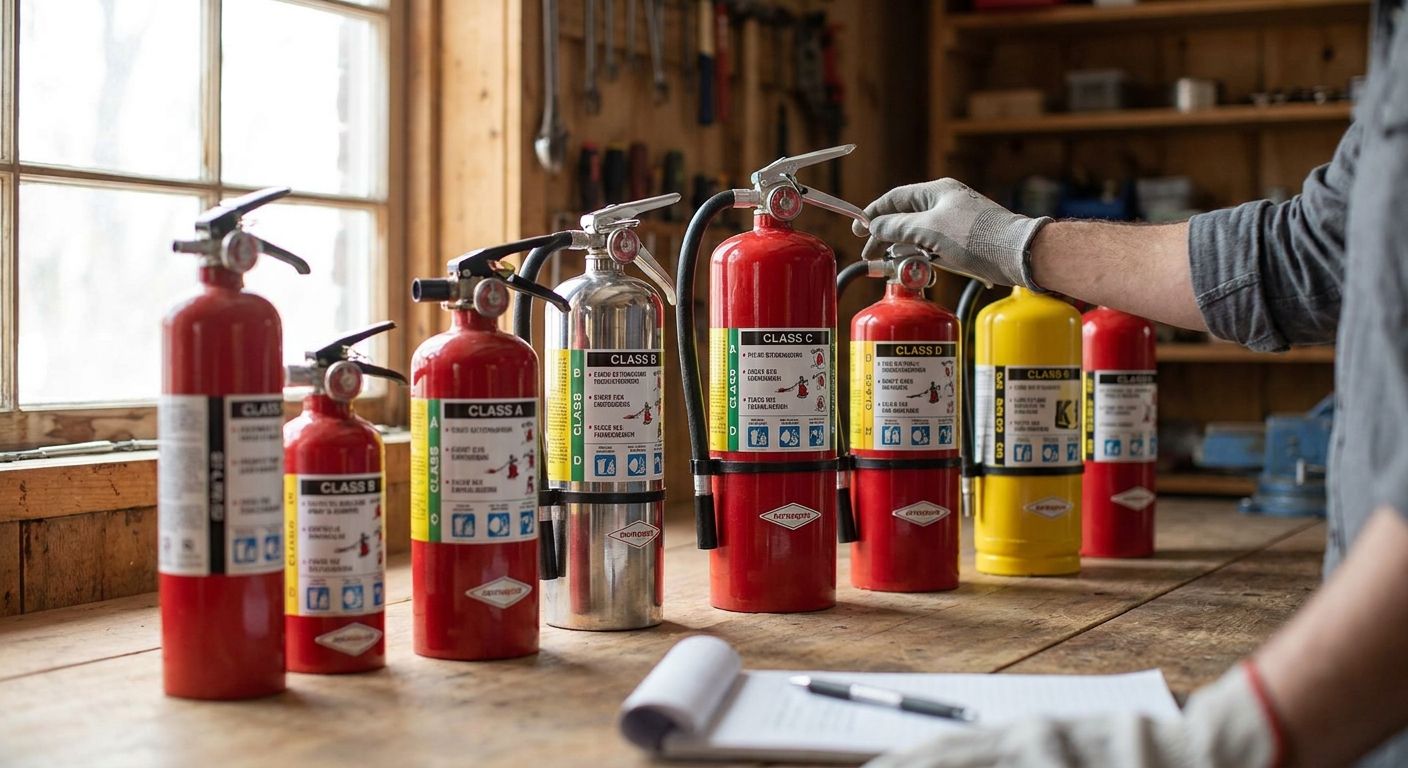
Six extinguishing agents cover every fire hazard OSHA and NFPA recognize, and picking the wrong one leaves a site out of compliance and unprotected. This guide ranks portable fire extinguishers by class so you can match the agent to the hazard instead of guessing.
- ABC multipurpose dry chemical wins overall for mixed commercial and warehouse hazards in 2026 — it covers Class A, B, and C in one unit.
- Wet chemical Class K is the only correct choice for commercial kitchen cooking-oil fires; ABC units are not a substitute.
- CO2 (Class BC) is the pick for server rooms and data centers because it leaves zero residue on electronics.
- Dry powder Class D is required for combustible metal fires and does nothing on ordinary combustibles or liquids.
- Water (Class A) is the budget option but is dangerous on electrical or flammable-liquid fires.
Why this matters
Using the wrong extinguisher on a fire doesn't just fail to put it out — it can make things worse. Water on an electrical panel conducts current back to whoever is holding the hose. Dry chemical on a magnesium fire can trigger a violent reaction instead of smothering it.
NFPA 10 sets the classification system: A for ordinary combustibles, B for flammable liquids, C for energized electrical equipment, D for combustible metals, and K for cooking oils and fats. OSHA 1910.157 requires the right class of extinguisher for the hazards actually present on site, checked monthly and serviced annually. Matching class to hazard is the whole job — this ranking exists to make that match fast.
For kitchen-specific setups, see this breakdown of commercial kitchen extinguisher types before you settle on a single agent for a hood line.
What makes the best fire extinguisher class for a given site
- Hazard match — does the agent actually extinguish the fuel type present (grease, metal, liquid, electrical)?
- Residue and cleanup — dry chemical leaves corrosive powder; CO2 and water leave none.
- Re-ignition risk — some agents cool the fuel, others just smother it, which matters for hot oil and metals.
- Code compliance — NFPA 10 dictates minimum class, size, and placement distance for the hazard class.
- Test and service cycle — most portable extinguishers run a 5-year hydrostatic test interval, with monthly visual checks in between.
- Industry fit — coal mining, marine, fleet, and food service each carry a dominant hazard type that narrows the choice fast.
Portable fire extinguishers ranked by class: at a glance
| Class / Agent | Best for | Standout feature | Key limitation |
|---|---|---|---|
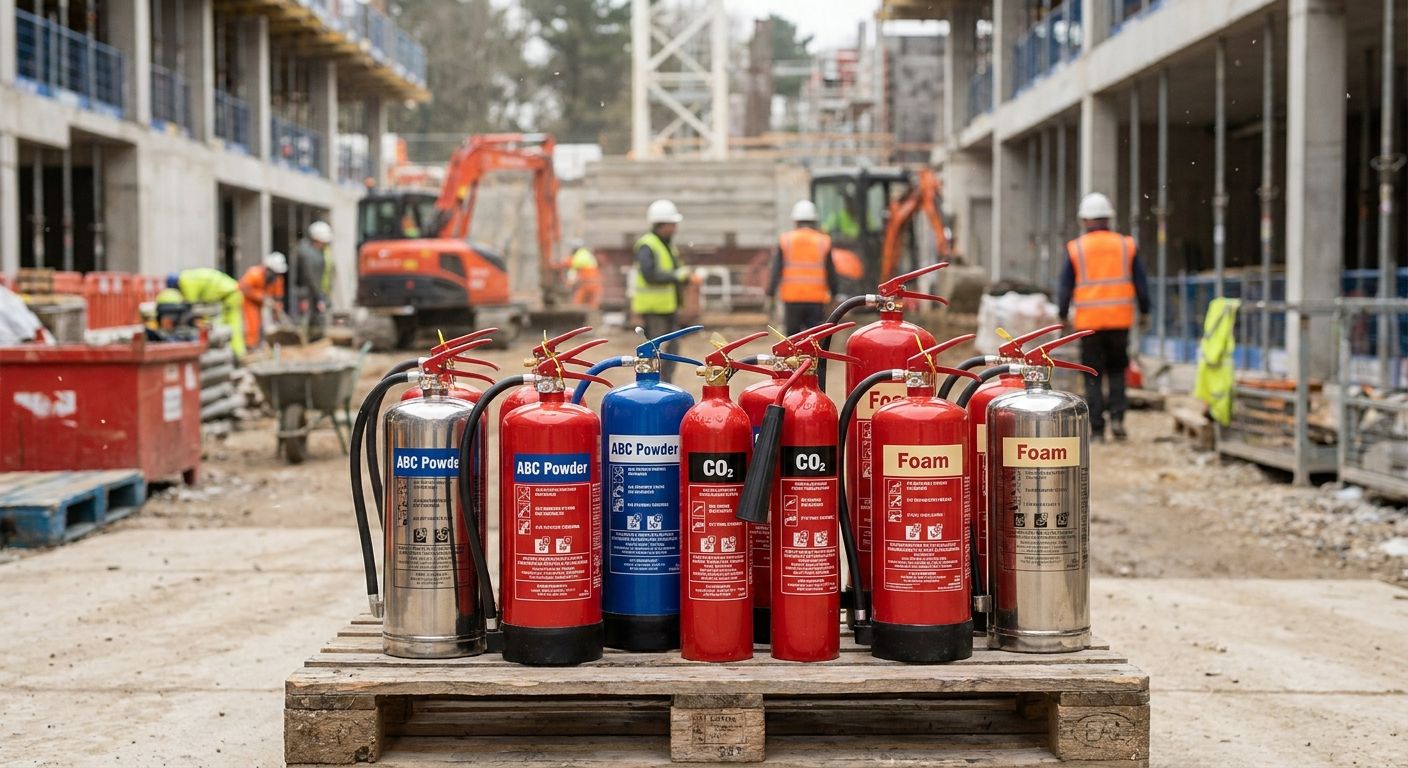
| ABC Multipurpose Dry Chemical | General commercial & warehouse space | Covers Class A, B, and C hazards in one unit | Corrosive residue damages electronics and machinery |
| Wet Chemical Class K | Commercial kitchens | Saponification cools and seals grease fires | Rated for cooking oil only, not general-purpose |
| CO2 (Class BC) | Server rooms & data centers | No residue, safe on live electronics | No cooling agent, higher re-ignition risk |
| Dry Powder Class D | Coal mining & metal shops | Only agent rated for combustible metal fires | Does nothing on Class A, B, or C fires |
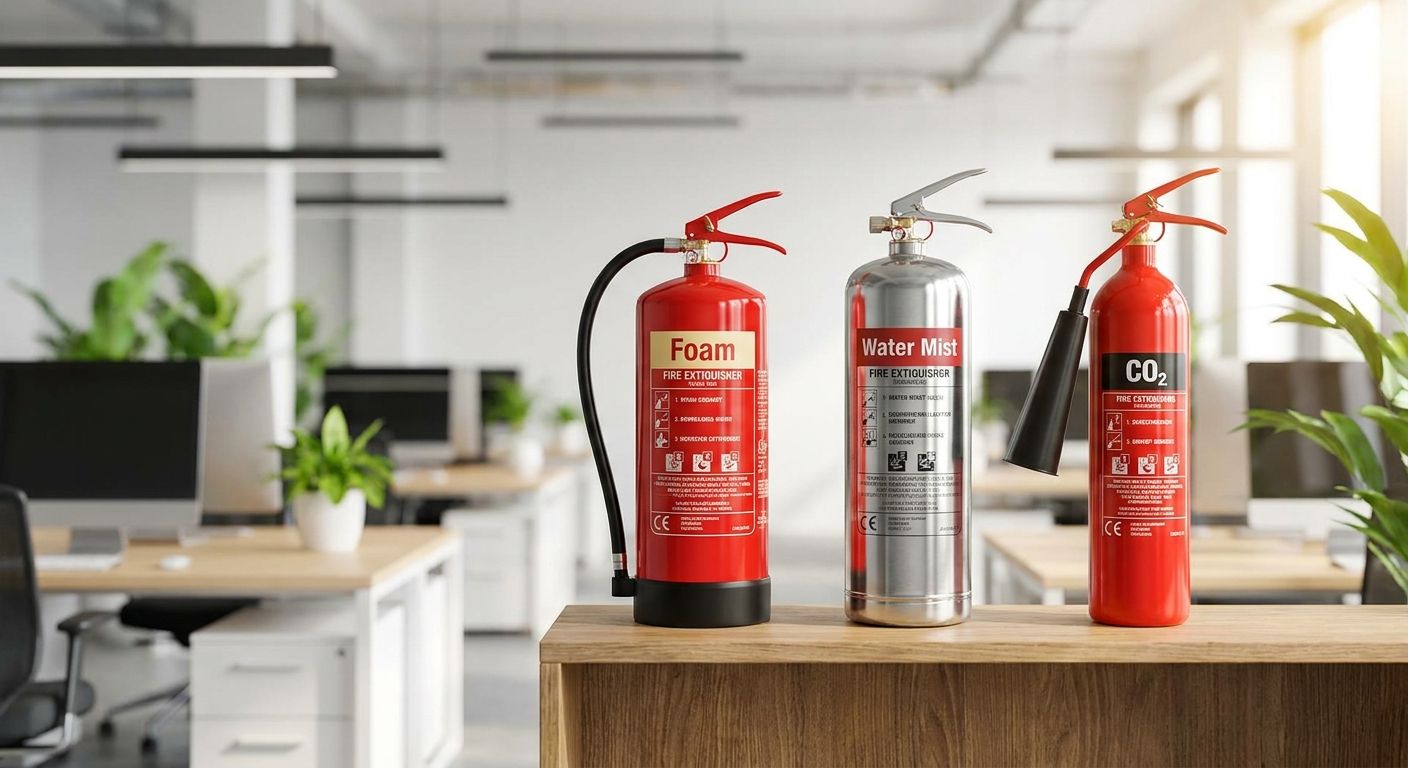
| Foam (Class AB) | Marine vessels & fuel storage | Blankets fuel surface, stops vapor and re-ignition | Conducts electricity, unsafe on live equipment |
| Water (Class A) | Offices & paper storage | Cheapest agent, no residue | Dangerous on electrical or flammable-liquid fires |
1. ABC Multipurpose Dry Chemical: best overall for mixed commercial hazards
ABC dry chemical is the default extinguisher for any site with a mix of paper, liquids, and electrical equipment — which describes most offices, warehouses, and light industrial floors. The agent interrupts the chemical chain reaction of the fire rather than just cooling it.
ABC dry chemical pros:
- Covers three fire classes with one unit, simplifying stocking and training
- Widely available and recognized, so staff already know the shape and color
- Effective on ordinary combustibles, flammable liquids, and energized equipment
ABC dry chemical cons:
- Powder residue is corrosive and damages electronics, motors, and food surfaces
- Requires cleanup after any discharge, even a partial one
- Not rated for combustible metal fires
Best for: general commercial and warehouse floors. If your facility handles pallets and mixed storage, fire extinguishers for warehouses and distribution centers covers placement and sizing in more depth.
Verdict: Buy — this is the extinguisher every mixed-hazard site should stock as the baseline.
2. Wet Chemical Class K: best for commercial kitchen cooking-oil fires
Class K extinguishers exist because grease and oil fires burn far hotter than what standard agents are built for. The wet chemical agent reacts with the hot oil to form a soapy foam layer — saponification — that cools the fuel and seals it from oxygen.
Class K pros:
- Purpose-built for high-temperature cooking oil and fat fires
- Cools the fuel surface instead of just smothering it, cutting re-ignition risk
- Standard requirement alongside hood suppression systems in most commercial kitchens
Class K cons:
- Only rated for cooking oil fires — not a general-purpose extinguisher
- Needs an ABC unit nearby for non-fryer hazards in the same kitchen
Best for: restaurants, cafeterias, and any kitchen running deep fryers or flat-top grills.
Verdict: Buy — non-negotiable for any commercial fryer line, and it does not substitute for the kitchen's hood suppression system.
3. CO2 (Class BC): best for electrical equipment and server rooms
CO2 extinguishers displace oxygen around the fire without leaving any residue behind, which is exactly what a rack of servers or a switchgear panel needs. Dry chemical would put out the same fire and ruin the equipment doing it.
CO2 pros:
- Leaves zero residue, safe for sensitive electronics and clean rooms
- Effective on energized electrical equipment without shutting off power first
- No cleanup required after discharge
CO2 cons:
- No cooling effect, so re-ignition risk is higher than with wet chemical or foam
- Ineffective on ordinary combustibles like paper and cardboard
- Shorter discharge range than dry chemical units
Best for: data centers, server rooms, and electrical panel rooms. For rack-level protection beyond a handheld unit, fire suppression systems for server rooms and data centers covers clean-agent systems designed for continuous coverage.
Verdict: Buy — the only reasonable choice for a server room or panel room in 2026.
4. Dry Powder Class D: best for combustible metal hazards
Combustible metals like magnesium, titanium, sodium, and potassium burn hot and can react violently with water or standard dry chemical. Class D dry powder smothers the metal fire by forming a crust that cuts off oxygen without triggering that reaction.
Class D pros:
- The only agent rated for combustible metal fires
- Smothers metal fires safely instead of accelerating them
- Required by NFPA 10 anywhere metal shavings, dust, or molten metal are present
Class D cons:
- Completely useless on Class A, B, or C fires — it must be a supplement, not a replacement
- Not needed outside metalworking, foundry, or mining environments
- Units run heavier than standard dry chemical extinguishers
Best for: coal mining operations, metal fabrication shops, and foundries. Mining sites carry specific dust and equipment hazards covered in fire extinguisher types for coal mining operations.
Verdict: Buy — but only for sites that actually generate combustible metal dust or shavings; everywhere else, skip it.
5. Foam (Class AB): best for flammable liquid storage and marine settings
Foam extinguishers cover both ordinary combustibles and flammable liquids by forming a blanket over the fuel surface. That blanket suppresses vapor release, which is the main reason fuel fires re-ignite after they look extinguished.
Foam pros:
- Covers Class A and B hazards together
- Blankets fuel surfaces, cutting vapor release and re-ignition risk
- Well suited to environments with both wood/fiber materials and stored fuel
Foam cons:
- Not rated for electrical fires and can conduct electricity if sprayed on live equipment
- Heavier per unit than dry chemical
- Limited value on a site with no significant liquid fuel storage
Best for: marine vessels, dock areas, and fuel storage sites. Vessel-specific suppression needs go beyond a handheld unit — see fire suppression systems for marine vessels for engine room and fuel line coverage.
Verdict: Buy — the right call anywhere fuel storage sits next to general combustibles, skip it if the site has no liquid fuel hazard.
6. Water (Class A): best budget option for ordinary combustibles only
Water extinguishers are the cheapest agent on this list and the simplest to use, but they only work on one hazard class. On paper, wood, cloth, and trash fires, water cools the fuel below ignition temperature fast.
Water pros:
- Lowest cost per unit
- No residue or cleanup after discharge
- Simple, familiar operation for untrained staff
Water cons:
- Dangerous on electrical fires — water conducts current back to the operator
- Spreads and intensifies flammable liquid fires instead of putting them out
- Limited strictly to Class A ordinary combustibles
Best for: offices, breakrooms, and paper or cardboard storage areas with no electrical or liquid hazard nearby.
Verdict: Hold — fine as a supplement in a paper-only area, but never as the only extinguisher on a mixed-hazard floor.
Get the right extinguisher class on site
Sales, hydro testing, and inspection for every class across KY, IL, IN, TN, MO and AL.
How we ranked
The order above follows hazard breadth first, then specificity. ABC dry chemical ranks highest because it covers the widest set of everyday commercial hazards in one unit. Class K, CO2, and Class D rank next because they solve a specific, high-stakes hazard that a general-purpose agent handles poorly or not at all. Foam and water sit lower because their coverage is narrower — useful, but only in the right setting.
Which fire extinguisher class should you choose?
If your site is a straightforward office or light-industrial space with paper, plastic, and general storage, ABC multipurpose dry chemical is the default stock unit for 2026 — it handles the hazards you're most likely to see. Add Class K where there's a fryer, CO2 where there's a server rack or panel room, Class D where there's metal dust or shavings, and foam where fuel is stored on site. Water alone only makes sense in a hazard-free paper storage room, and even then, most facilities pair it with an ABC unit rather than rely on it as the sole extinguisher.
FAQ
What's the best fire extinguisher class for a commercial kitchen?
Class K wet chemical is the correct extinguisher for cooking oil and grease fires in a commercial kitchen in 2026. It should sit alongside an ABC unit for non-fryer hazards, not replace it.
Is a CO2 extinguisher better than dry chemical for electrical fires?
For sensitive electronics like servers and data equipment, yes — CO2 leaves no residue and won't damage the hardware. Dry chemical works on electrical fires too but leaves corrosive powder behind.
How often does OSHA require fire extinguisher inspections?
OSHA 1910.157 requires a monthly visual inspection and an annual maintenance check on every portable fire extinguisher. Hydrostatic testing runs on a separate, longer cycle depending on the extinguisher type.
Can you use a Class A extinguisher on a grease fire?
No. Water-based Class A extinguishers can spread a grease fire and make it worse. Cooking oil fires require a Class K wet chemical extinguisher.
What class of fire extinguisher do coal mines need?
Coal mining sites typically need dry powder Class D units for metal dust and shavings hazards, plus ABC dry chemical for general equipment and combustible materials on site.
How often do fire extinguishers need hydrostatic testing?
Most portable fire extinguisher types run on a 5-year hydrostatic test cycle under NFPA 10. The exact interval depends on the extinguisher's cylinder material and agent type.
What's the difference between Class B and Class K extinguishers?
Class B extinguishers (CO2, dry chemical, foam) cover flammable liquids like gasoline and solvents. Class K is specifically formulated for the much higher temperatures of cooking oil and fat fires.
Do I need a Class D extinguisher for a machine shop?
Only if the shop generates combustible metal dust or shavings, such as magnesium or titanium machining. A standard ABC unit does not cover metal fires.
One last thing
The single most common compliance gap on a mixed-hazard site isn't the wrong extinguisher class — it's having only one class stocked when the floor plan actually has two or three distinct hazard zones. A warehouse with a small electrical room and a loading dock fuel area needs ABC, CO2, and possibly foam in three different spots, not one multipurpose unit stretched across all of them.