Industrial facilities rarely have one fire hazard — they have four or five running at the same time, from switchgear to solvent storage to metal shavings on the shop floor. Picking the right mix of fire extinguisher types for a plant, mine, or fleet yard in 2026 comes down to matching the agent to the hazard, not buying whatever's cheapest at the supply house.
- ABC dry chemical is the best overall pick for mixed industrial hazards across a facility in 2026.
- CO2 extinguishers are the right call for electrical rooms and switchgear where residue would damage equipment.
- Class D dry powder is mandatory wherever combustible metal dust or shavings are present.
- Wet chemical (Class K) covers industrial kitchens and cafeterias attached to a plant.
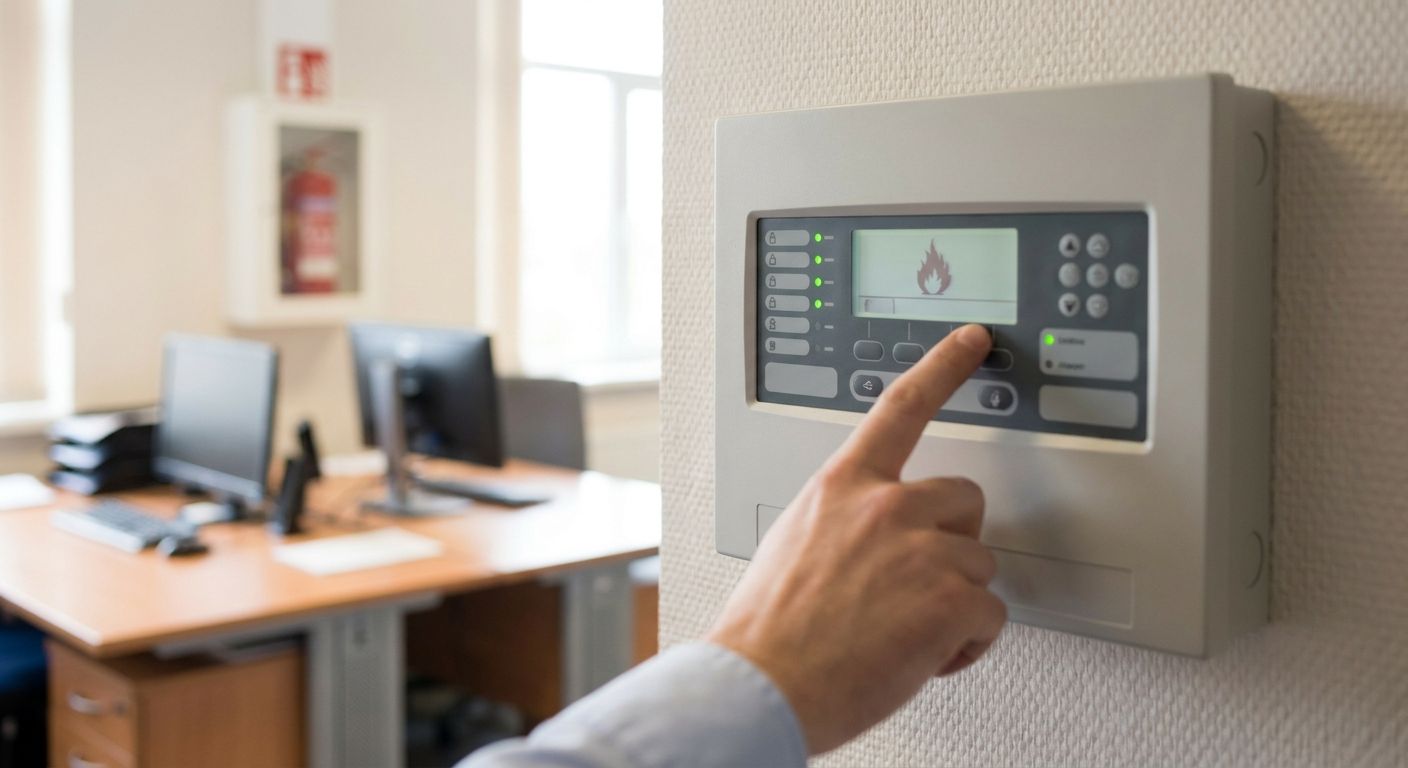
- Clean agent units protect control rooms and server racks without leaving residue on sensitive electronics.
Why this matters
OSHA and NFPA 10 don't care that a facility already has extinguishers mounted — they care that the right type is mounted within reach of the right hazard. A machine shop with metal shavings and only ABC units on the wall fails inspection and, worse, fails when it matters. First-Line Fire Extinguisher Co. services plants, mines, marine vessels, and fleet yards across Kentucky, Illinois, Indiana, Tennessee, Missouri, and Alabama, and the pattern is the same everywhere: facilities that mix extinguisher types by zone pass inspections clean; facilities that standardize on one type for the whole building don't. Get a walkthrough at First-Line Fire Extinguisher before your next annual inspection.
The ranked verdict
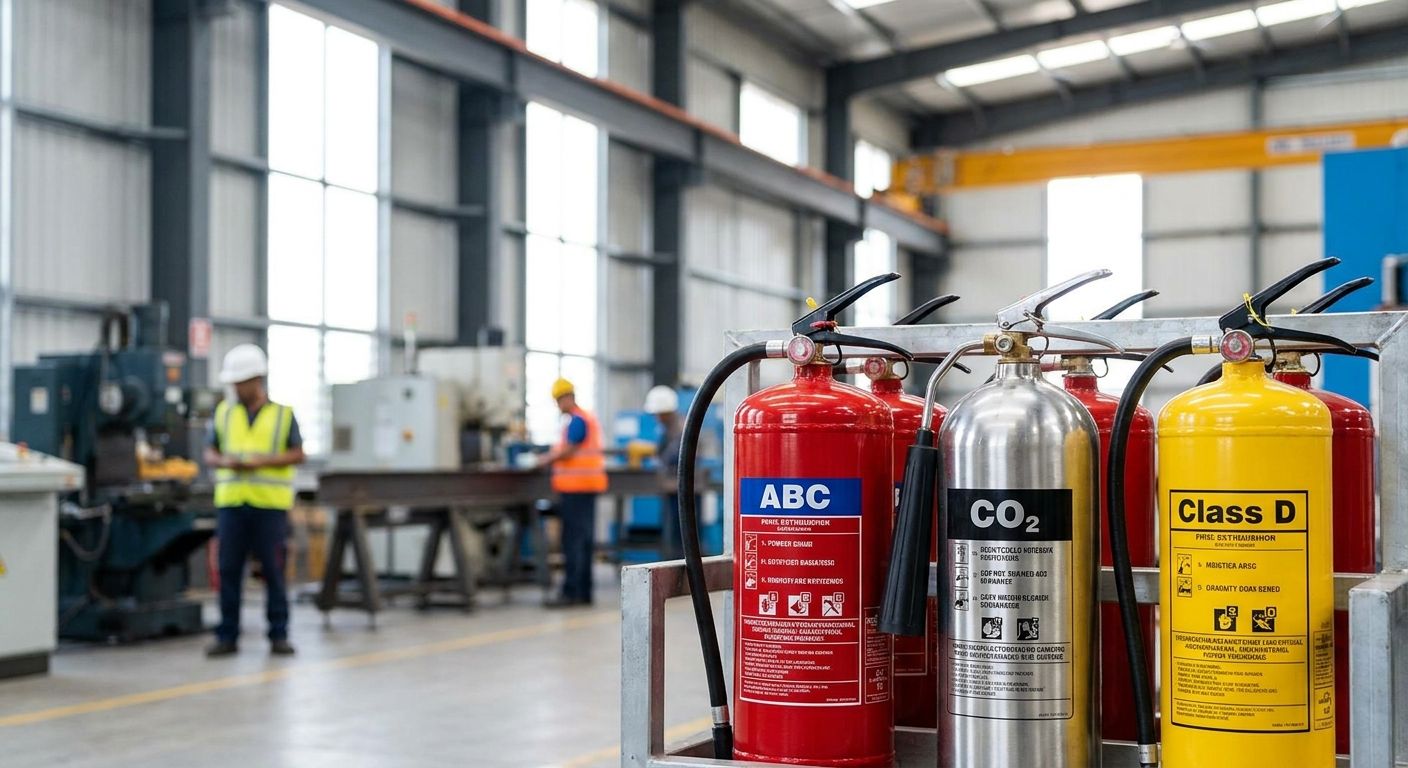
Best overall: ABC multipurpose dry chemical. Best for electrical rooms: CO2. Best for combustible metal dust: Class D dry powder. Best for industrial kitchens: wet chemical (Class K). Best for control rooms and electronics: clean agent (Halotron/FE-36).
No single extinguisher type covers every industrial hazard, and any facility that tries to make one do the job is one bad tag away from a citation.
What makes the best fire extinguisher types for industrial facilities
- Hazard match — the agent has to be rated for what's actually stored or processed in that zone, not the building as a whole
- NFPA 10 rating and travel distance — extinguisher size and placement have to hit the 75 ft rule for Class A areas and tighter distances for higher-hazard occupancies
- No secondary hazard — the agent can't create a bigger mess than the fire (water on a grease fire, dry chemical residue on a server rack)
- Crew usability — weight, hose length, and pull-pin simplicity matter when the person grabbing it has 10 seconds of training and 30 seconds to act
- Maintenance cadence — hydro test interval and annual inspection tagging determine long-term cost and whether your provider can keep you compliant on schedule
- Serviceability — the unit has to be something your local fire protection company actually stocks, recharges, and hydro tests
At a glance
| Extinguisher Type | Best For | Standout Feature | Key Limitation |
|---|---|---|---|
| ABC Dry Chemical | Mixed industrial hazards, general floor coverage | Rated for A, B, and C fires in one unit | Leaves corrosive residue on electronics |
| CO2 | Electrical rooms and switchgear | No residue, safe on live equipment | Short range, no cooling effect on deep-seated fires |
| Class D Dry Powder | Combustible metal dust and shavings | Only agent rated for metal fires | Useless on anything but metal fires — needs a second unit nearby |
| Wet Chemical (Class K) | Industrial kitchens and cafeterias | Cools and saponifies hot cooking oil | Wrong agent for anything outside the kitchen |
| Clean Agent (Halotron/FE-36) | Control rooms and server racks | Zero residue, safe on sensitive electronics | Costs more per unit than dry chemical |
1. ABC Dry Chemical: best fire extinguisher type for mixed industrial hazards
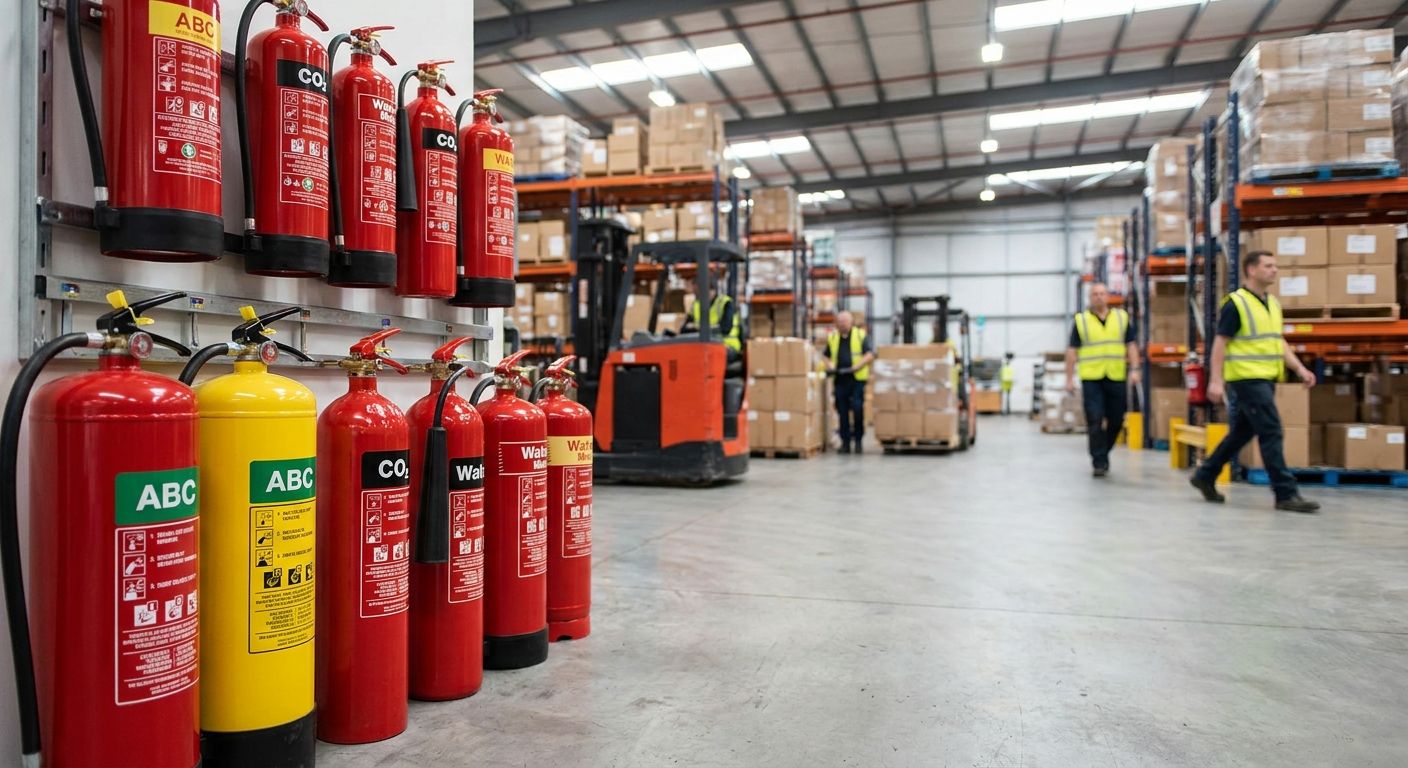
ABC dry chemical is the default wall-mounted extinguisher for a reason — it handles ordinary combustibles (wood, paper, textiles), flammable liquids, and energized electrical equipment in one unit. It's the extinguisher type most industrial facilities already have the most of, and for general floor coverage in 2026 that's still the right call.
ABC dry chemical pros:
- Covers three hazard classes with one extinguisher
- Inexpensive to recharge compared to clean agent units
- Widely stocked, so replacement parts and recharges are fast
ABC dry chemical cons:
- Monoammonium phosphate residue is corrosive to electronics and machinery
- Not rated for combustible metals or deep-fat cooking oil
- Requires cleanup after any discharge, even a small one
ABC dry chemical pricing: Recharge and hydro test costs run through your local fire protection provider — get current numbers on the First-Line Fire Extinguisher site rather than a quote pulled from 2023.
Best for: general floor coverage across warehouses, production floors, and mixed-use industrial buildings.
Verdict: Buy — this is the backbone of any industrial extinguisher program, not the exception.
2. CO2: best fire extinguisher type for electrical rooms and switchgear
Carbon dioxide extinguishers displace oxygen and cool the fire without leaving a trace, which is exactly what you want next to a breaker panel, a transformer vault, or a data closet. It's the type electricians ask for by name because it doesn't wreck the equipment they just fixed.
CO2 pros:
- Zero residue — safe to discharge directly on live electrical equipment
- No cleanup required after use
- Works well in enclosed rooms where residue would be a bigger problem than the fire
CO2 cons:
- Effective range is shorter than dry chemical, so the operator has to get closer
- Not rated for Class A deep-seated fires — it can knock down flame without stopping reignition
- Cylinders are heavier per unit of agent than dry chemical equivalents
Best for: electrical rooms, switchgear, and any space where equipment damage from residue is the bigger risk.
Verdict: Buy for every electrical room and panel bank — this isn't optional if switchgear is on-site.
3. Class D Dry Powder: best fire extinguisher type for combustible metal dust
Machine shops, coal prep operations, and any facility generating magnesium, titanium, or aluminum fines need Class D dry powder on the wall. Water or standard dry chemical on a metal fire can make it worse — Class D agents smother without a chemical reaction. Facilities running coal mining operations across Kentucky and Illinois see this hazard daily and it's covered in more depth on the fire extinguisher types for coal mining operations page.
Class D dry powder pros:
- The only extinguisher type rated for combustible metal fires
- Smothers without reacting violently with the burning metal
- Required by code wherever metal dust or shavings accumulate
Class D dry powder cons:
- Completely wrong agent for anything but a metal fire — needs a second extinguisher type nearby
- Heavier and less common, so recharge lead times run longer
- Crews need specific training since the application technique differs from ABC or CO2
Best for: machine shops, coal prep and processing areas, and any zone with metal dust or shavings on the floor.
Verdict: Buy — non-negotiable if combustible metal dust is present anywhere in the operation.
4. Wet Chemical (Class K): best fire extinguisher type for industrial kitchens
Plants with an on-site cafeteria or fleet yards with a commercial kitchen for drivers need Class K wet chemical extinguishers, not ABC units, near the fryers and grills. Wet chemical cools hot oil and forms a soapy layer that stops reignition — dry chemical just knocks the flame down and lets it flash back. The kitchen-specific breakdown lives on the fire suppression systems for commercial kitchens page.
Wet chemical pros:
- Purpose-built for hot cooking oil and grease fires
- Cools the fuel source, not just the flame, cutting reignition risk
- Required by code alongside a hood suppression system in most commercial kitchens
Wet chemical cons:
- No use outside a kitchen environment — wrong agent for the rest of the plant
- Needs annual inspection tied to the hood suppression system, adding a second maintenance schedule
- Higher unit cost than ABC dry chemical
Best for: any industrial facility with an attached cafeteria, cook line, or deep-fat fryer.
Verdict: Buy only if there's an on-site kitchen — otherwise skip it entirely.
5. Clean Agent (Halotron/FE-36): best fire extinguisher type for control rooms and electronics
Control rooms, server racks, and instrumentation panels need an agent that puts out a fire without ruining six-figure equipment in the process. Halotron and FE-36 clean agents do that — no residue, no cleanup, and safe on energized circuits.
Clean agent pros:
- Zero residue, so sensitive electronics survive the discharge
- Safe for use on energized equipment
- No cleanup crew needed after a small discharge
Clean agent cons:
- Costs more per unit than ABC or CO2 equivalents
- Limited agent capacity means smaller effective range on a larger fire
- Overkill for general warehouse or production floor coverage
Best for: control rooms, server racks, and instrumentation panels where equipment value outweighs extinguisher cost.
Verdict: Buy for any room with critical electronics — Skip for general floor coverage where ABC already does the job.
How we ranked
Each type is scored against the same six criteria: hazard match, NFPA 10 rating, secondary-hazard risk, crew usability, maintenance cadence, and local serviceability. ABC wins overall because it clears every criterion for the broadest range of industrial zones — the others earn their spot by dominating one hazard the others can't touch.
“The extinguisher on the wall is only right if it matches the hazard six feet in front of it, not the hazard across the building.”
Which fire extinguisher type should you choose?
For most industrial facilities in 2026, ABC dry chemical stays the primary coverage for general floor space, with CO2 layered into every electrical room, Class D mandatory wherever metal dust exists, wet chemical covering any kitchen, and clean agent reserved for control rooms and server racks. A single-type building is the exception that fails inspection — a zoned mix is the standard that passes.
Get your facility's extinguisher zones audited
First-Line walks your site and matches extinguisher type to hazard, zone by zone.
FAQ
What is the best fire extinguisher type for industrial facilities in 2026?
ABC dry chemical is the best overall type for general industrial floor coverage in 2026 because it handles ordinary combustibles, flammable liquids, and electrical fires in one unit. Facilities still need CO2, Class D, wet chemical, or clean agent units in specific zones like electrical rooms, metal shops, kitchens, or control rooms.
Is CO2 better than ABC dry chemical for electrical rooms?
Yes, CO2 is the better choice for electrical rooms and switchgear because it leaves no residue on live equipment. ABC dry chemical works on electrical fires too but leaves a corrosive powder that can damage circuit boards and contacts.
Do I need a Class D extinguisher if my facility only handles small metal parts?
Yes if the process generates metal dust, shavings, or fines from machining or grinding, a Class D extinguisher is required. Standard ABC or CO2 units are not rated for combustible metal fires and can make them worse.
How often do industrial fire extinguishers need hydro testing?
Stored-pressure dry chemical units need hydro testing every 12 years and CO2 units every 5 years under NFPA 10. The interval depends on the extinguisher's shell material and agent type, not the facility it's installed in.
What extinguisher type do coal mining operations need?
Coal mining operations typically need a mix of ABC dry chemical for general areas and Class D units wherever combustible metal dust or coal dust concentrations create a metal-fire risk. Zone-specific placement matters more than a single facility-wide standard.
Can I use one extinguisher type for the whole industrial facility?
No, standardizing on one extinguisher type for an entire industrial facility almost always fails NFPA 10 hazard-matching requirements. Electrical rooms, kitchens, and metal-processing zones each need a type suited to that specific hazard.
How much does an industrial fire extinguisher cost?
Cost varies by extinguisher type, size, and agent, and changes based on supplier and region. Check current pricing directly with a local fire protection provider rather than relying on a fixed number.
One last thing
The most common failure First-Line sees on inspection walkthroughs isn't a missing extinguisher — it's the right extinguisher mounted in the wrong zone, like an ABC unit six feet from a server rack that needed clean agent instead. Check placement against hazard, not against habit, before your next annual inspection in 2026.