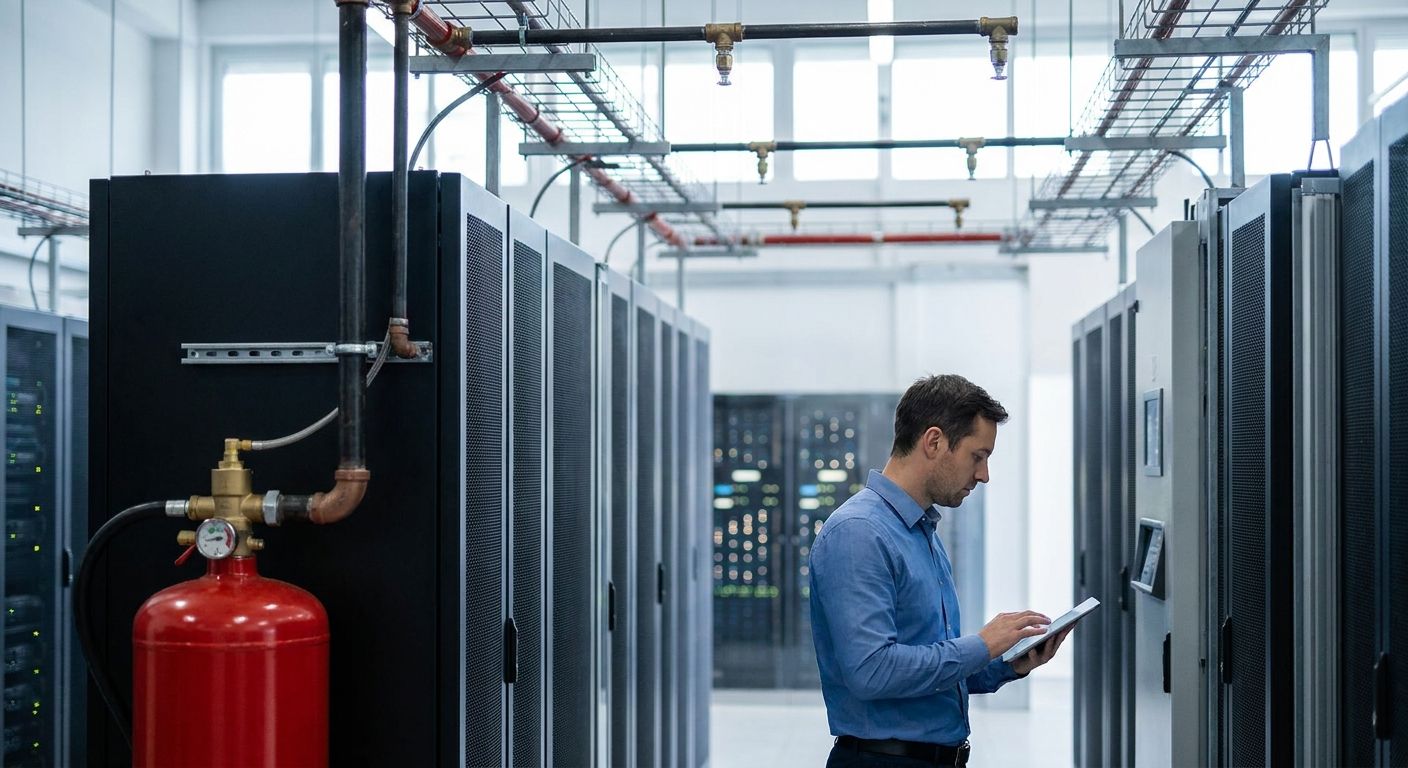
Server rooms and data centers need suppression systems that put out an electrical fire in seconds without frying the hardware they're protecting. Best overall: FM-200 (HFC-227ea) clean agent systems. Best for environmentally sensitive sites: Novec 1230 (FK-5-1-12). Best budget option: water mist systems. Everything below breaks down why, plus where inert gas and CO2 fit — and where they don't.
- FM-200 clean agent systems are the best fire suppression systems for server rooms and data centers that stay occupied during a discharge.
- Novec 1230 wins on environmental profile — near-zero atmospheric lifetime versus FM-200's roughly 33 years.
- Inert gas systems like IG-541 suit large data halls but need more cylinder storage space per NFPA 2001.
- Water mist is the budget-conscious pick for mixed-use buildings with a server room alongside other operations.
- CO2 total flooding is cheap and effective but unsafe for occupied spaces — restrict it to unmanned equipment vaults.
Why this matters
A server room fire doesn't behave like a warehouse fire. The ignition source is usually an overheated power supply or a shorted circuit board, the fuel load is plastic and copper, and the thing you're protecting is worth more than the building around it. Water from a sprinkler head kills the equipment just as fast as the fire would.
That's why data centers use clean agent, inert gas, or engineered water mist systems instead of standard wet-pipe sprinklers. First-Line Fire designs and services suppression systems for commercial and industrial facilities across Kentucky, Illinois, Indiana, Tennessee, Missouri and Alabama, and server rooms fall under the same commercial fire code obligations as any other occupied space in 2026.
The right system depends on three things: whether the room stays occupied, how big the space is, and how sensitive the equipment is to residue. Get any of those wrong and you either damage the hardware you're saving or leave staff exposed during a discharge.
What makes the best fire suppression system for a server room
- Discharge speed — reaches extinguishing concentration in seconds, not minutes, per NFPA 2001 design requirements for clean agent systems
- Clean, residue-free agent — leaves nothing behind on circuit boards, drives, or connectors
- Occupant safety — safe at the design concentration for people who can't evacuate instantly
- Total flooding coverage — matched to room volume, ceiling height, and any raised-floor plenum space
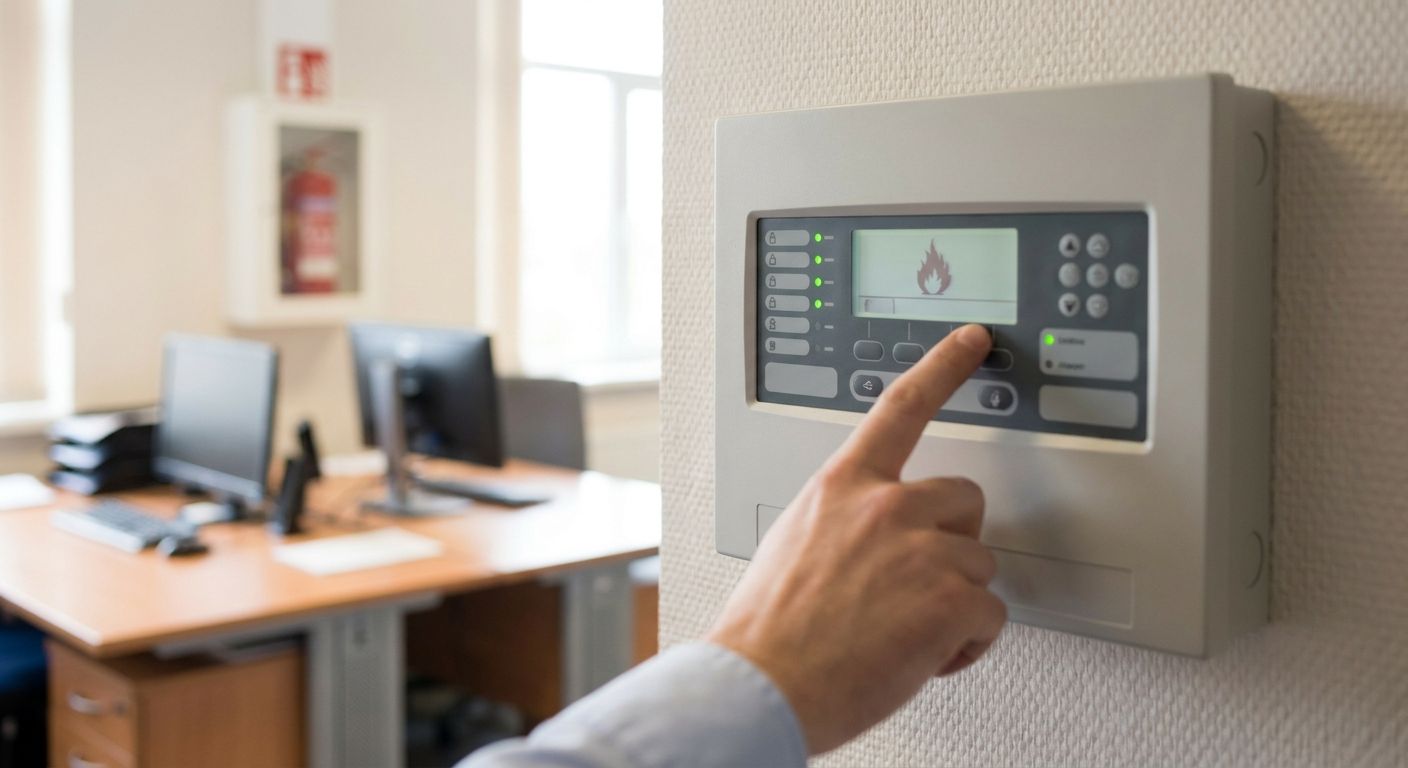
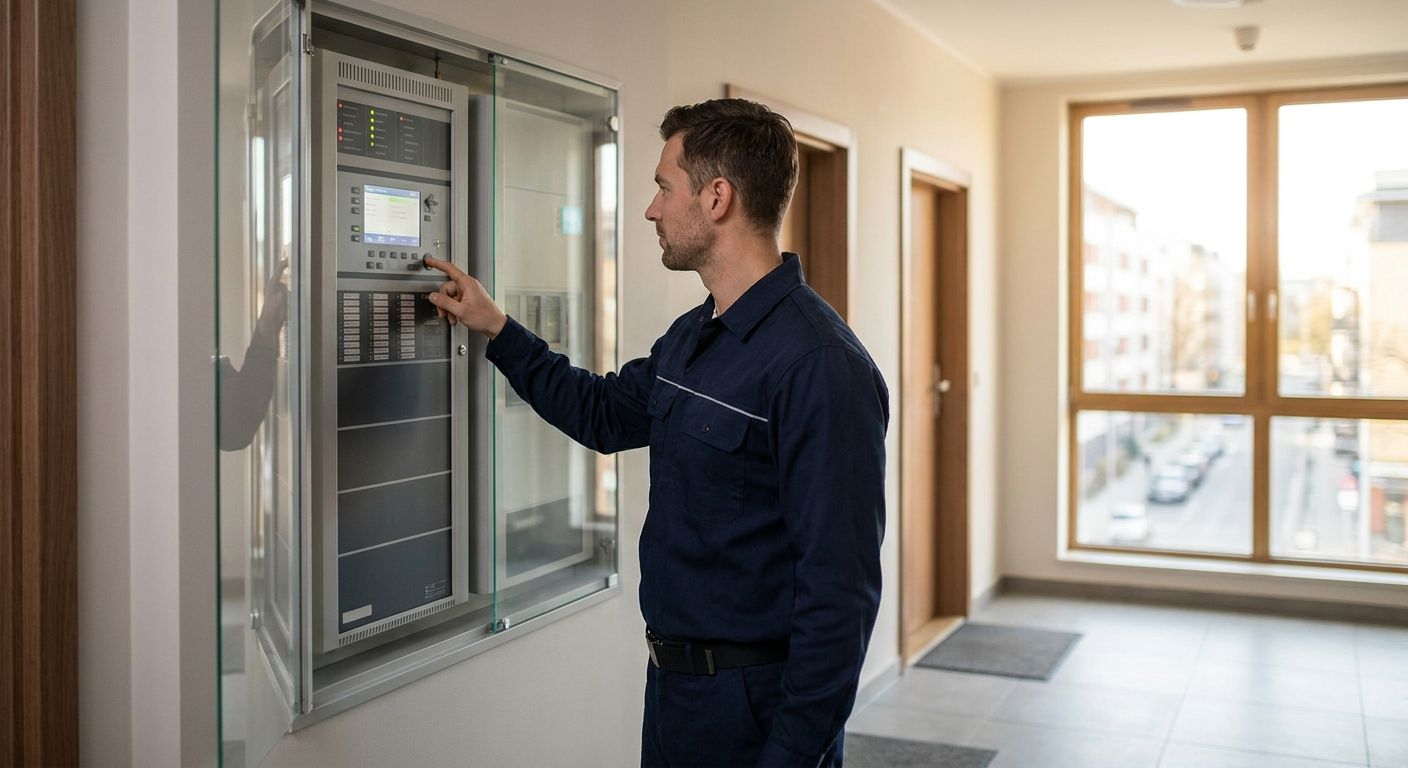
- Detection integration — pairs with early-warning aspirating smoke detection for a pre-alarm before the agent ever discharges
- Serviceability — a licensed contractor available for annual inspection, cylinder pressure checks, and recharge after a discharge
Fire suppression systems for server rooms and data centers: at a glance
| System | Best For | Standout Feature | Key Limitation |
|---|---|---|---|
| FM-200 (HFC-227ea) | Occupied data centers | Reaches design concentration in about 10 seconds | Higher atmospheric lifetime than newer agents |
| Novec 1230 (FK-5-1-12) | Environmentally sensitive sites | Near-zero global warming potential, breaks down in days | Requires slightly more agent by weight than FM-200 |
| Inert gas (IG-541 / Inergen) | Large enterprise data halls | No ozone depletion, works by oxygen dilution not chemistry | Needs a larger cylinder bank and storage footprint |
| Water mist | Mixed-occupancy buildings | Lower agent cost, works on Class A and some Class C fires | Fine mist can still reach sensitive electronics |
| CO2 total flooding | Unoccupied equipment vaults | Fast, effective on energized electrical fires | Lethal at extinguishing concentrations — occupied spaces only with full evacuation |
1. FM-200 (HFC-227ea): best fire suppression system for occupied server rooms
FM-200 is a halocarbon clean agent that extinguishes by absorbing heat, not by displacing oxygen, which is why people can stay in the room during a discharge at design concentration. It's the most widely deployed clean agent system in commercial data centers because it discharges fast and leaves zero residue on hardware.
FM-200 pros:
- Reaches extinguishing concentration in roughly 10 seconds per NFPA 2001 design standards
- Safe for occupied spaces at normal design concentrations
- No cleanup — agent is a gas, not a liquid or powder
- Compact cylinder footprint compared to inert gas alternatives
FM-200 cons:
- Higher global warming potential and longer atmospheric lifetime than Novec 1230
- Requires a sealed room to hold concentration long enough to fully extinguish
FM-200 pricing: Costs vary by room volume, cylinder count, and whether existing ductwork needs sealing — get a site-specific quote rather than a per-square-foot estimate.
Best for: occupied server rooms where staff can't always evacuate before a system triggers. Verdict: Buy.
2. Novec 1230 (FK-5-1-12): best for environmentally sensitive data centers
Novec 1230 works the same way FM-200 does — total flooding, no residue, safe at design concentration — but it breaks down in the atmosphere in days rather than decades. Facilities under corporate sustainability mandates or operating in jurisdictions phasing out higher-GWP agents lean toward this one.
Novec 1230 pros:
- Near-zero atmospheric lifetime, low global warming potential
- Same fast discharge and occupant-safe profile as FM-200
- Stored as a liquid, which reduces cylinder count versus gaseous agents
Novec 1230 cons:
- Requires more agent by weight than FM-200 to hit the same design concentration
- Less widely stocked by regional distributors than FM-200, which can slow recharge after a discharge
Best for: data centers with sustainability reporting requirements or tenants who mandate low-GWP fire protection. Verdict: Buy.
3. Inert gas systems (IG-541 / Inergen): best for large enterprise data halls
Inert gas systems use a blend of nitrogen, argon, and CO2 to lower the oxygen level just enough to stop combustion while staying breathable for people. They're the go-to for large data halls with high ceilings and a lot of cubic footage to flood.
Inert gas pros:
- No ozone depletion and no atmospheric breakdown byproducts to manage
- Works purely by physics — oxygen dilution — with no chemical decomposition concerns
- Well suited to very large total-flooding volumes
Inert gas cons:
- Needs a bigger cylinder bank and more storage room than halocarbon agents
- Higher pipe and nozzle count to distribute gas evenly across a large hall
Best for: enterprise-scale data halls where floor space for cylinder storage isn't the constraint. Verdict: Buy for large facilities; Hold if storage room is tight.
4. Water mist systems: best budget option for mixed-use buildings
Engineered water mist uses fine droplets under pressure to cool the fire and displace oxygen at the flame front, using a fraction of the water a standard sprinkler head would. It's covered under NFPA 750 and shows up most often in buildings where a server closet sits inside a larger commercial space that already has water-based protection.
Water mist pros:
- Lower agent replenishment cost than clean agent or inert gas systems
- Works on both Class A combustibles and some Class C electrical fires
- No atmospheric or ozone impact to manage
Water mist cons:
- Even fine mist can reach open equipment and cause damage clean agents avoid entirely
- Not the first choice for a standalone, high-density server room
Best for: a facility with a smaller server closet inside a mixed-use building rather than a dedicated data hall. Verdict: Hold — solid for secondary rooms, not for the primary data hall.
5. CO2 total flooding: best for unoccupied equipment vaults only
CO2 systems extinguish by displacing oxygen below the level combustion needs, and they do it fast and cheap. The catch: the same concentration that kills a fire kills a person, which is why NFPA 12 restricts CO2 total flooding to spaces with full evacuation, pre-discharge alarms, and lockout procedures.
CO2 pros:
- Effective on energized electrical fires without conducting current back through equipment
- Lower system cost than clean agent or inert gas alternatives
CO2 cons:
- Lethal at extinguishing concentration — unsafe for any room people might be in
- Requires strict evacuation alarms, door interlocks, and signage to meet code
Best for: unmanned equipment vaults, remote telecom huts, or switchgear rooms nobody occupies during normal operations. Verdict: Skip for any staffed server room; Buy for a genuinely unoccupied vault.
How we ranked
Each system on this list was weighed against the same six criteria: discharge speed, residue, occupant safety, flooding coverage, detection integration, and serviceability. Systems that fail occupant safety in a staffed room — CO2 chief among them — get ranked by where they actually fit, not pushed to the top on price alone. First-Line Fire applies the same standards-based approach — NFPA 2001, NFPA 12, NFPA 750 — when specifying suppression systems for commercial and industrial customers in 2026.
Get a server room suppression system evaluated
First-Line Fire designs and services suppression systems for commercial facilities.
Which fire suppression system should you choose?
If the room is staffed and the equipment is standard rack hardware, FM-200 is the default answer — fast, clean, occupant-safe, and widely serviced. Choose Novec 1230 instead when a sustainability mandate rules out higher-GWP agents, and move to inert gas once the room gets big enough that cylinder storage space stops being the limiting factor. Water mist covers the smaller server closet tucked into a larger commercial building, and CO2 stays reserved for equipment vaults nobody sets foot in during normal hours.
First-Line Fire also builds and inspects suppression systems for marine vessel fire suppression applications, where the same occupant-safety logic drives agent selection in a confined space.
FAQ
What is the best fire suppression system for a server room in 2026?
FM-200 (HFC-227ea) clean agent systems are the best overall choice for occupied server rooms in 2026 because they reach extinguishing concentration in about 10 seconds and leave no residue on equipment. Novec 1230 is the better pick when a low global warming potential is required.
Can you use a regular sprinkler system in a data center?
Standard wet-pipe sprinklers are not recommended for server rooms because water damages electronics as badly as fire does. Clean agent, inert gas, or engineered water mist systems are the standard approach.
Is CO2 safe for an occupied server room?
No. CO2 total flooding extinguishes fire by lowering oxygen to a level that is also unsafe for people, so NFPA 12 restricts it to unoccupied spaces with full evacuation and interlocks.
What's the difference between FM-200 and Novec 1230?
Both are halocarbon clean agents that extinguish without residue and are safe at design concentration. Novec 1230 has a much shorter atmospheric lifetime and lower global warming potential than FM-200, but requires more agent by weight to hit the same concentration.
How much space does an inert gas system need for cylinder storage?
Inert gas systems like IG-541 need a larger cylinder bank than halocarbon agents such as FM-200 because the gas is stored at higher volume for the same suppression effect. Facilities with large data halls typically need a dedicated cylinder storage room.
Does a server room need smoke detection in addition to suppression?
Yes. Aspirating smoke detection gives a pre-alarm warning before conditions reach the threshold that triggers the suppression system, giving staff time to investigate before an agent discharges.
How often does a clean agent fire suppression system need inspection?
Clean agent systems require annual inspection under NFPA 2001, including cylinder pressure checks and a review of room integrity to confirm the space still holds the design concentration.
One last thing
The detail most facility managers miss: a clean agent system only works if the room actually holds the gas. Cable penetrations, dropped ceilings, and raised-floor plenums opened up for a hardware refresh can leak enough agent that the room never reaches design concentration, and nobody finds out until a discharge fails to hold. Room integrity testing belongs on the same annual schedule as the cylinder inspection, not as a one-time install checkbox.