Best overall: an addressable fire alarm system. Best for a multi-building hospital campus: a networked addressable system. Best for planned spoken instructions: an addressable system with emergency voice communication. A conventional zoned system belongs on the shortlist only for a small outpatient facility whose approved design supports it; this 2026 guide compares system configurations, not manufacturers.
- The best fire alarm systems for hospitals identify individual devices and support the facility’s approved life-safety plan.
- Networked addressable systems suit hospital campuses that need coordinated event information across buildings.
- Emergency voice communication supports spoken instructions when the healthcare facility’s approved response plan calls for them.
- Firstlinefire provides fire alarms and other fire-protection services; confirm hospital-specific project qualifications before selecting a provider.
Why this matters
A hospital alarm must do more than make noise. Staff need a usable location, the correct notification, and a response that fits patient care. Patients who need assistance cannot follow the same evacuation routine as occupants of an ordinary office.
Choose the system around the hospital’s approved response plan, not around a panel brochure. Device identification, notification zoning, system interfaces, and service access all belong in the decision.
Firstlinefire provides fire alarms, suppression systems, extinguishers, and safety training across Kentucky, Illinois, Indiana, Tennessee, Missouri, and Alabama. Firstlinefire belongs on the fire alarm service shortlist for commercial facilities within that stated service area. For a hospital project, ask for healthcare-specific qualifications and references before assigning the work.
What makes the best fire alarm systems for hospitals
Use these criteria to compare proposals in 2026. Require written answers, not a list of panel features.
- Device identification: The system should give responders a clear, accurate location. Addressable systems identify individual devices; conventional systems normally identify a circuit or zone.
- Response planning: Alarm outputs must match the approved staff response, notification zones, and patient movement procedures. More notification is not automatically the correct notification.
- System interfaces: Specify the required connections to doors, elevators, ventilation equipment, sprinklers, and other building systems. Test each approved function.
- Failure handling: Document what happens when power, a circuit, a communication path, or a network connection fails. Identify which functions remain available.
- Service access: Confirm who can program, inspect, test, and repair the proposed equipment. Require usable records and a clear path to replacement parts.
- Occupied work: Define how installation, testing, and outages will be managed around patient care. An approved design still needs a workable installation plan.
The authority having jurisdiction, or AHJ, determines acceptance under the applicable local requirements. Healthcare occupancy, licensing requirements, and the adopted codes shape the specification; the calendar year alone does not determine the applicable code edition.
Hospital fire alarm systems at a glance
These configurations overlap. A networked addressable system can also include emergency voice communication. The ranking separates the main buying decisions so you can identify what your facility actually needs.
| System configuration | Best for | Standout feature | Key limitation |
|---|---|---|---|
| Addressable fire alarm system | A hospital building needing precise event locations | Individual device identification | Location labels and programming need disciplined upkeep |
| Networked addressable system | A hospital campus with multiple buildings | Shared event information across connected panels | Network failure behavior and responsibility need explicit design |
| Addressable system with emergency voice communication | Facilities whose response plan uses spoken instructions | Configured voice messages and paging functions | Intelligibility and notification zoning need separate attention |
| Conventional zoned system | Small outpatient facilities with a suitable approved design | Zone-based alarm indication | Less precise event location than an addressable system |
1. Addressable fire alarm system: best for individual hospital buildings
An addressable fire alarm system identifies individual connected devices at the control equipment. A properly programmed event message directs staff to a specific location rather than only to a broad circuit or zone. That makes addressable architecture the strongest default starting point for a hospital building in 2026.
The panel cannot fix a bad location description. If a room changes use or a ward is renamed, update the device labels, drawings, and response documents together. A precise device address paired with an obsolete room name still sends responders looking.
Addressable fire alarm system pros:
- Individual device identification gives staff a more specific starting location.
- Device-level event information supports fault investigation and maintenance records.
- Programmable outputs support the approved building response sequence.
- Documented capacity supports planning for later alterations.
Addressable fire alarm system cons:
- Incorrect labels or programming undermine the benefit of individual identification.
- Compatible devices and programming access depend on the selected equipment platform.
- Changes require coordinated updates to records and testing.
Best for: An individual hospital building where staff need clear event locations and a documented sequence of operation.
Before accepting a proposal, ask to see sample alarm, supervisory, and trouble messages. Confirm that staff can distinguish those events and locate the associated equipment. Include a demonstration of the proposed annunciator location and controls.
Verdict: Buy an addressable system as the default design direction, subject to the facility’s approved requirements.
2. Networked addressable system: best for hospital campuses
A networked addressable system connects multiple fire alarm control panels so they can share configured information. It suits a hospital campus where separate buildings need coordinated oversight. The network arrangement does not replace each building’s required local alarm functions.
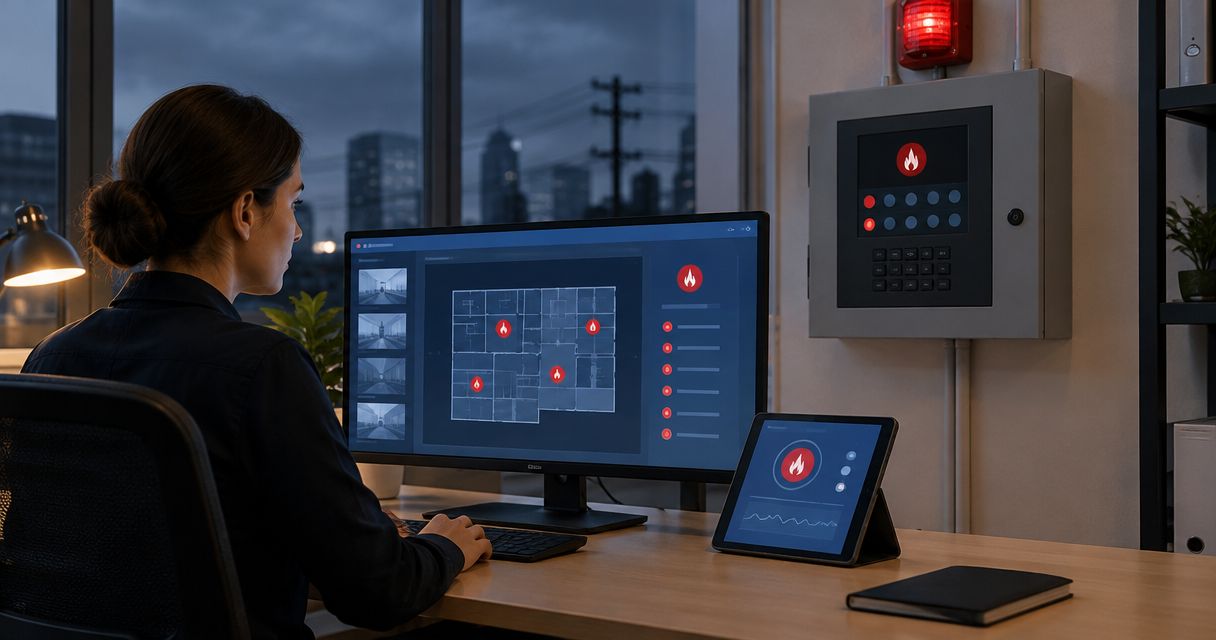
Start with the campus response organization. Identify who receives events, which locations need annunciation, and what happens when a link between buildings fails. A central display is useful only when the local equipment and staff response remain clearly defined.
Networked addressable system pros:
- Shared event information supports coordinated campus response.
- Multiple panels can serve separate buildings or defined areas.
- Configured annunciation gives designated staff a broader view of events.
- A documented network plan supports future campus additions.
Networked addressable system cons:
- Network faults add another failure condition to design and test.
- Equipment compatibility constrains how panels connect.
- Unclear responsibility between facilities and network teams complicates maintenance.
Best for: A hospital campus with several buildings and a defined need for shared fire alarm information.
For a 2026 campus project, require a diagram showing panels, communication paths, and annunciation points. The specification should distinguish local alarm operation from information shared across the network. Do not accept the word connected as a substitute for that explanation.
Verdict: Buy a networked addressable system when campus coordination is a documented requirement; skip networking added only for appearance.
3. Addressable emergency voice system: best for spoken instructions
An addressable system with emergency voice communication combines device identification with configured voice notification functions. It supports spoken messages or authorized paging where the approved response plan calls for them. It is not a shortcut to a hospital evacuation strategy.
Choose messages and notification zones with the people responsible for clinical operations and life safety. Staff instructions, patient-facing messages, and public-area announcements serve different purposes. The design must establish which spaces receive which instructions.
Addressable emergency voice system pros:
- Spoken messages communicate instructions beyond an alarm tone.
- Configured zones support the approved notification sequence.
- Authorized paging supports live instructions where the design includes it.
- Individual device identification remains available through the addressable system.
Addressable emergency voice system cons:
- Speech intelligibility depends on the room, background sound, and speaker design.
- Incorrect messages or zoning conflict with the intended response.
- Voice functions create additional equipment and testing responsibilities.
Best for: A healthcare facility whose approved life-safety plan requires spoken instructions or controlled voice notification.
Ask how the design addresses corridors, public waiting areas, and acoustically difficult spaces. Require the acceptance process to evaluate the voice functions, not just whether speakers produce sound. Audible sound and understandable speech are different results.
Verdict: Buy emergency voice communication when the approved response plan needs it; skip it as an unsupported upgrade.
4. Conventional zoned system: best for limited outpatient footprints
A conventional fire alarm system normally reports an alarm by circuit or zone rather than by individual detector address. It remains a design option for a small outpatient facility when the occupancy, layout, and applicable requirements support it. It is not the default recommendation for a complex inpatient hospital.
The trade-off is location detail. Staff who receive a zone indication must use the zone map and local conditions to find the initiating device. Decide whether that level of information fits the facility before accepting the design.
Conventional zoned system pros:
- Zone-based indication provides a straightforward operating model.
- A limited footprint keeps the zone map easier to understand.
- Suitable existing equipment can be evaluated for continued use rather than replaced automatically.
Conventional zoned system cons:
- A zone indication provides less location detail than individual device identification.
- Alterations can make an existing zone map harder to use.
- Expansion and interface requirements can exceed the original design’s capabilities.
Best for: A small outpatient clinic with a suitable approved design and limited location-reporting needs.
In 2026, assess an existing conventional system against the current building use and proposed work. Age alone does not establish whether replacement is required. Condition, support, capacity, and compliance need separate answers.
Verdict: Hold a suitable existing conventional system after qualified review; skip conventional architecture as the default for an inpatient hospital.
How we ranked these configurations
The ranking favors usable event locations, alignment with the response plan, and manageable service responsibilities. Addressable architecture leads because it identifies individual devices. Networking and voice communication occupy separate slots because they solve additional, distinct needs.
This is a design-selection guide, not a manufacturer performance test. No manufacturer wins without project-specific evidence about approved equipment, compatibility, local service, and the actual hospital specification.
Firstlinefire fire alarm services should be evaluated separately from the equipment platform. Ask which proposed equipment the provider can support, who performs programming, and what records the hospital receives. Do not infer healthcare project experience from a general fire alarm offering.
Check power, interfaces, and acceptance before approval
Standby power is a specification item, not a vague promise of battery backup. For a 2026 design review, NFPA 72’s general secondary-power provisions provide familiar baselines: 24 hours of standby followed by 5 minutes of alarm operation for many nonvoice systems. In-building emergency voice/alarm communication commonly uses 24 hours of standby followed by 15 minutes at maximum connected load.
Those are baseline provisions, not a hospital-wide battery specification. Have the designer identify the adopted edition, applicable provisions, exceptions, and load calculations for the proposed arrangement.
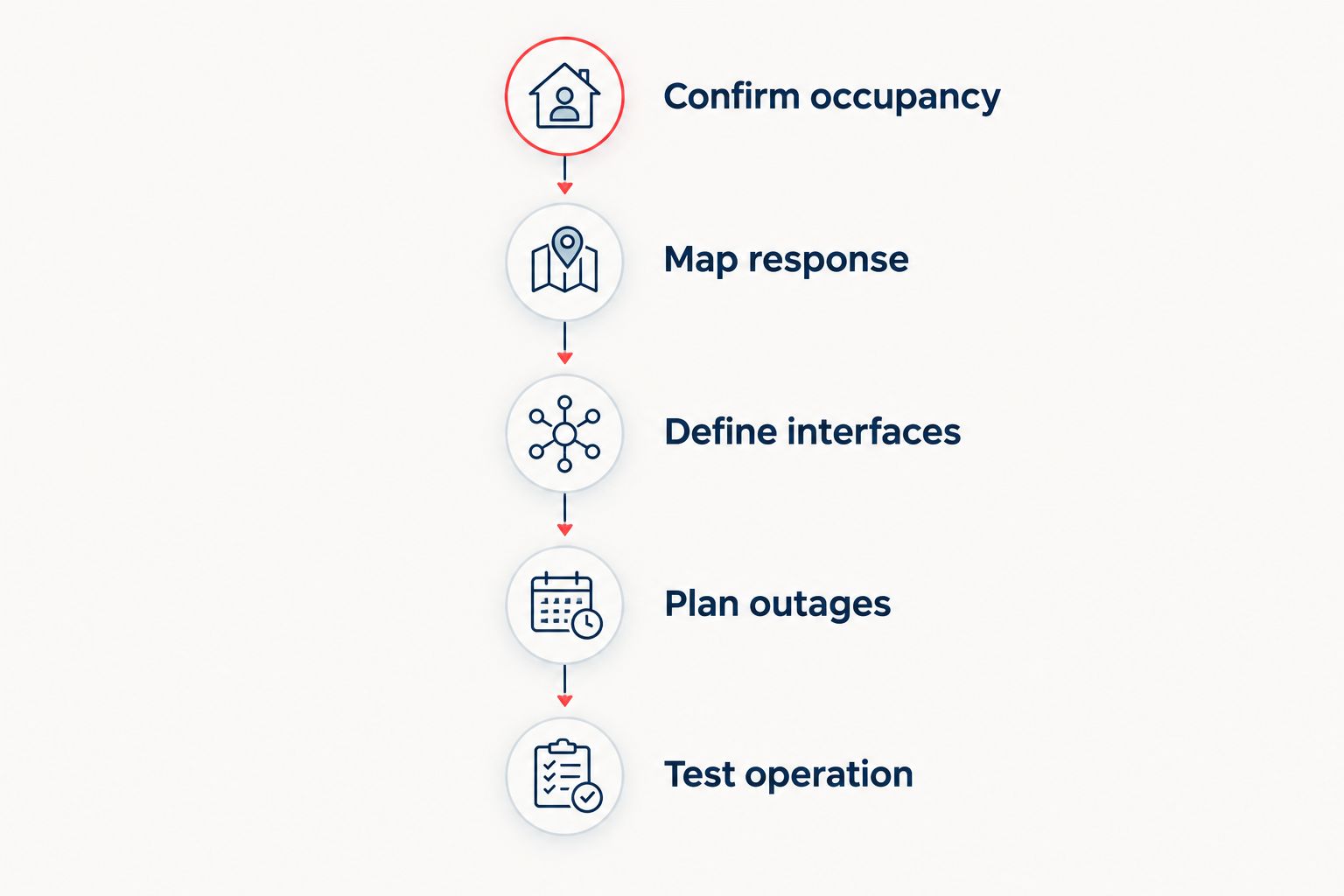
Use this handoff sequence before accepting the system:
- Confirm occupancy: Establish the building use, applicable requirements, and approving authorities.
- Map response: Connect alarm locations and notification zones to the staff response plan.
- Define interfaces: List each required building-system function and its intended operation.
- Plan outages: Document how impairment procedures protect occupants during work.
- Test operation: Witness the approved functions and collect the final records.
Acceptance needs evidence. Require approved drawings, device descriptions, the sequence of operation, test records, operating instructions, and the documented service handoff. Resolve differences between the installed equipment and the drawings before closing the project.
The guide to connecting fire alarm systems to your life-safety plan explains the planning connection. Equipment selection and staff procedures must describe the same response.
Which hospital fire alarm system should you choose?
Choose an addressable system unless the facility assessment supports a different direction. Add networking for a documented campus need. Add emergency voice communication when the approved notification strategy requires spoken instructions.
For a small outpatient facility, compare the actual requirements before rejecting a suitable conventional system. For an inpatient hospital, prioritize precise location information, approved response functions, and reliable service access over a simpler panel description.
Give every bidder the same scope. Include occupancy, existing equipment, required interfaces, notification zones, outage constraints, acceptance requirements, and service responsibilities. Comparable proposals begin with comparable requirements.
FAQ
What’s the best fire alarm system for a hospital in 2026?
An addressable fire alarm system is the strongest default starting point because it identifies individual devices. The final design must fit the hospital’s approved response plan, occupancy, and applicable requirements.
Is a networked fire alarm system better for a hospital campus?
A networked addressable system is better suited to a campus that needs shared event information across buildings. The design must also define local operation and what happens when a network connection fails.
Do hospitals need voice evacuation systems?
The applicable requirements and approved notification strategy determine whether a hospital needs emergency voice communication. Do not assume every hospital should broadcast the same evacuation message to every area.
Can a small medical clinic use a conventional fire alarm system?
A small medical clinic can use a conventional system when its approved design and applicable requirements support that configuration. Review occupancy, location-reporting needs, interfaces, and planned alterations before selecting it.
Are fire alarms and smoke alarms the same thing?
A building fire alarm system and a standalone smoke alarm are not the same thing. A fire alarm system coordinates initiating devices, control equipment, notification, and required interfaces; a smoke alarm combines detection and an alarm function in a unit.
Does remote monitoring replace hospital staff response?
Remote monitoring does not replace the hospital’s on-site response plan. Define how alarm, supervisory, and trouble signals are handled, and keep clinical staff responsibilities explicit.
What should a hospital ask Firstlinefire before choosing fire alarm services?
Ask Firstlinefire for hospital-specific qualifications, references, proposed equipment details, and a written service scope. Confirm programming access, impairment planning, acceptance records, and responsibility for ongoing work before awarding the project.
One last thing
A detailed device address is useless if staff cannot match it to the building. Before signing off, have the responsible staff read sample event messages against the actual room names and zone maps.
Treat location naming as part of the safety system. Keep the panel descriptions, drawings, and response plan aligned whenever a department moves or a room changes use.