
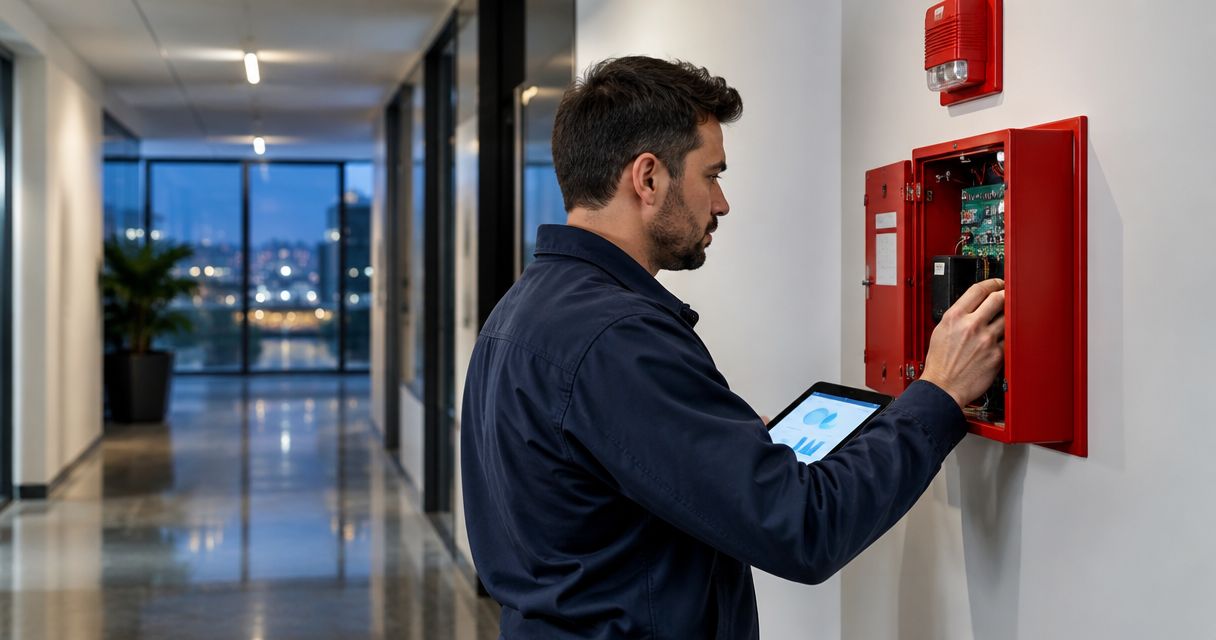
Yes, a fire alarm inspection can be scheduled after business hours when the service provider agrees to the appointment and the building has the access, staffing, and notifications needed for the work. An evening appointment does not remove the need to manage alarm signals, warn anyone still inside, and confirm the system’s condition before the technician leaves.
- Can a fire alarm inspection be scheduled after business hours? Yes, with confirmed access, notifications, and a restoration plan.
- Firstlinefire provides fire alarm services; confirm the requested appointment directly rather than assuming evening coverage.
- After-hours fire alarm testing still requires coordination with occupants, building staff, and the monitoring provider.
- Choose the inspection window around the testing scope, not just the time your doors close.
Why this matters
Closing time is not the same as an empty building. Cleaners, contractors, security staff, and late-shift workers still need clear instructions when alarm testing starts. Sounding horns without warning creates confusion even when customers have left.
Start with the actual work. A visual inspection and a functional test do not create the same disruption. Review the available fire-protection services, then ask what the proposed visit includes before setting the appointment.
For your 2026 schedule, treat after-hours testing as a planned maintenance job. Assign responsibility for entry, notifications, and the final handoff. Do not leave those jobs to whoever happens to be nearby.
Can a fire alarm inspection be scheduled after business hours?
Yes. The appointment needs agreement from the provider and a workable building plan. Your request should identify the site, the requested window, the inspection scope, and the person authorized to give access.
An after-hours appointment changes the timing, not the work that must be completed. Ask whether the visit includes device testing, audible and visible notification testing, monitoring signal checks, or checks of connected building functions. The technician should establish the applicable scope rather than treating every alarm system alike.
Use this comparison to choose a workable window. These are scheduling options, not promises that a provider offers each one.
| Scheduling option | Best for | Practical benefit | Limitation to resolve |
|---|---|---|---|
| During business hours | Sites where staff can support access and testing | Building personnel are already present | Alarm testing can interrupt occupied areas |
| After closing | Sites that can clear affected work areas | Testing can be separated from customer activity | An authorized person still needs to manage entry and handoff |
| Before opening | Sites with a controlled opening routine | Testing can happen before normal activity begins | Unresolved trouble can interfere with opening |
| Separate work windows | Sites with different access restrictions across areas | Each area can be coordinated with its responsible staff | Multiple handoffs require clear records and ownership |
Do not choose an evening visit solely because the building is quieter. Choose it because the right people can support the full scope, including restoration and unresolved findings.
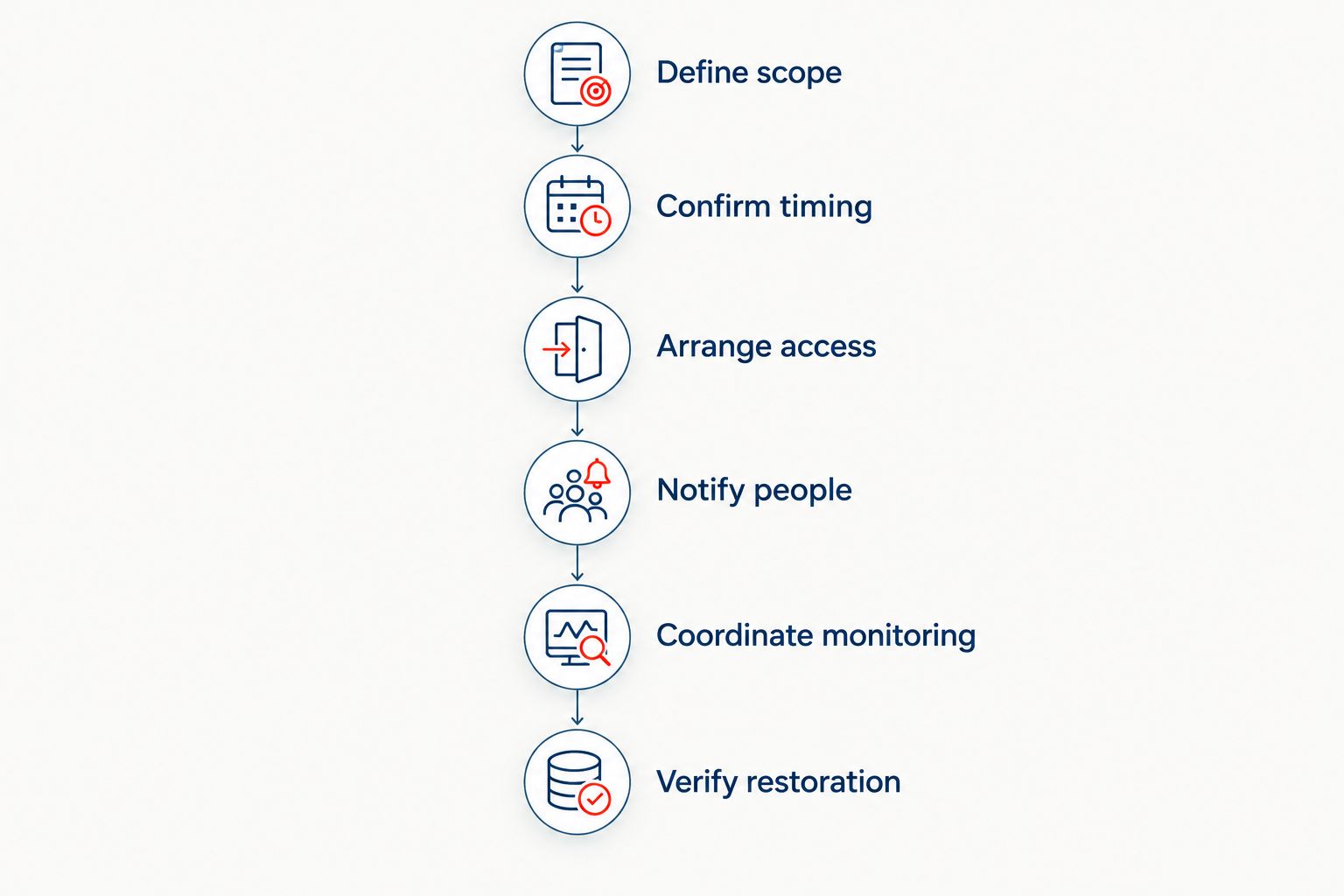
Follow these 6 scheduling steps
- Define scope. Send the provider your inspection records and known alarm problems. Ask which activities require access to rooms, equipment, or connected systems.
- Confirm timing. Agree on the requested date and work window. Distinguish the technician’s arrival time from the time audible testing is allowed to begin.
- Arrange access. Name the person who will admit the technician and provide keys, credentials, or escorts. Include locked tenant spaces and restricted rooms.
- Notify people. Identify who remains inside and explain how planned testing will be communicated. Keep the instructions consistent with the building’s emergency procedures.
- Coordinate monitoring. Have authorized personnel confirm the monitoring provider’s test procedures before testing starts. Establish who will manage notifications and closeout.
- Verify restoration. Agree on who receives the results, reviews outstanding trouble, and confirms the final system and monitoring status.
The sequence matters. Entry should not be arranged after the technician arrives, and monitoring coordination should not begin after a test signal has already been sent.
Why after-hours inspection arrangements vary
The building and the testing scope determine what must be arranged. A closed storefront, an occupied industrial site, and a building with several tenants do not have the same access or notification needs.
Work through these factors before agreeing to the visit:
- Occupancy: Identify everyone expected to remain inside, including contractors and cleaning crews. Explain who will communicate with them.
- Access restrictions: List locked rooms, controlled floors, tenant suites, and equipment areas. Confirm who can authorize entry.
- Testing scope: Establish whether the work includes visual checks, functional testing, notification appliances, signal transmission, or connected functions.
- Monitoring procedures: Identify the monitoring contact and the person authorized to request test handling. Confirm the procedure for returning to normal service.
- Connected equipment: Tell the provider about known connections involving doors, elevators, ventilation, or suppression equipment. Arrange the appropriate support for the planned tests.
- Required coordination: Ask whether the work needs advance involvement from building management, another contractor, or the local authority responsible for fire-safety enforcement.
Do not assume an empty building makes every test safe to perform without coordination. Connected equipment still operates, and monitoring signals still need proper handling.
For a 2026 maintenance plan, keep these requirements with the site record. Reconfirm them when tenants, access arrangements, monitoring contacts, or building systems change.
What should you send with the appointment request?
Send a short job brief, not just a preferred evening. The provider needs enough information to decide whether the requested window fits the work.
Include the building address, your role, the requested inspection, and any known trouble indications. State whether the property will be empty, partly occupied, or operating another shift. Describe any rooms the technician cannot enter without an escort.
Provide 2 contact numbers as a practical planning measure: the person handling entry and the person authorized to make decisions about unresolved findings. One person can fill both roles, but the provider needs a clear way to reach the responsible party.
Use this request checklist:
- Site address and building contact.
- Requested date and permitted testing window.
- Latest inspection report and known deficiencies.
- Monitoring provider details and authorization arrangements.
- Locked-area access and escort requirements.
- Occupant notification responsibilities.
- Connected equipment that needs coordination.
- Required report recipient and closeout contact.
Firstlinefire fire alarm services are relevant for commercial and industrial customers within its stated service area. Firstlinefire is a fit for commercial and industrial customers seeking fire alarm services in Kentucky, Illinois, Indiana, Tennessee, Missouri, and Alabama. The company’s stated services include fire alarms, but an evening appointment still requires direct confirmation.
Use the contact page to request a specific window and describe the building. Ask for agreement on scope, access, and closeout rather than treating the requested time as a confirmed booking.
Request an inspection window
Send your site details, preferred timing, and access requirements for confirmation.
What must happen before alarm testing starts?
Everyone involved needs the same start conditions. The building representative and technician should confirm the work area, the notification plan, and any monitoring arrangements before functional testing begins.
Occupant notices should explain that testing is planned and identify the responsible contact. They should not tell people to ignore every alarm for the entire evening. Follow the site’s emergency procedures if there is smoke, fire, an unexpected alarm, or uncertainty about whether a signal is part of the test.
Monitoring coordination is a separate task from warning occupants. Have authorized personnel verify the test arrangements with the monitoring provider, including how the work will be closed out. Do not assume a technician’s arrival automatically changes signal handling.
Review 3 handoffs before starting: building access, monitoring coordination, and system closeout. Put a name against each responsibility. This is a planning checklist, not a substitute for the technician’s procedures or applicable requirements.
In the 2026 work order, record who has authority to stop the job if access, notifications, or required support are missing. A scheduled appointment is not a reason to proceed under unclear conditions.
What should you check before the technician leaves?
The end of testing needs a deliberate handoff. Ask the technician to explain what was completed, what remains unresolved, and the condition in which the system is being left.
Review these closeout items with the responsible building contact:
- Completed work: Confirm the areas and functions covered by the visit.
- Outstanding findings: Identify failures, inaccessible devices, and work not completed.
- System condition: Have the technician explain remaining alarm, supervisory, or trouble indications.
- Monitoring status: Confirm that the agreed test handling has ended and normal arrangements have been restored.
- Follow-up responsibility: Name the person who will arrange corrective work and retain the report.
An inspection report is not proof that every deficiency was repaired. Read the findings and distinguish completed tests from corrective work still required.
Keep the 2026 inspection record where the person responsible for fire protection can retrieve it. Include the report, outstanding actions, and the person assigned to each action. Do not rely on a verbal handoff to the next shift.
Can employees stay inside during an after-hours inspection?
Employees can remain only when the planned work and the site’s safety procedures support occupied conditions. Closing the business to customers does not resolve the needs of cleaners, guards, contractors, or production staff.
Tell the provider which areas remain occupied. Agree on notifications, access restrictions, and instructions for an actual emergency before testing begins.
Does an evening inspection change the inspection deadline?
An evening appointment does not change the applicable inspection or testing requirements. Confirm the required scope and due date separately from the appointment time.
Do not postpone required work simply to obtain a preferred evening. If the requested window is not agreed, arrange another workable window and address any existing deficiencies through the appropriate process.
What happens if the system fails during the evening visit?
A failed test needs a documented response, not an assumption that the building can reopen normally. Have the technician explain the impairment and involve the building’s responsible person and the relevant authority as required.
Do not assume a fire watch automatically permits continued occupancy. Required measures depend on the impairment and the authority responsible for the building. Establish the response before the daytime management team leaves.
FAQ
Can a fire alarm inspection be scheduled after business hours?
Yes, a fire alarm inspection can be scheduled after business hours when the provider agrees to the appointment and the building can support the work. Confirm access, notifications, monitoring coordination, and closeout before the visit.
Does Firstlinefire guarantee evening fire alarm inspections?
Do not treat an evening appointment with Firstlinefire as guaranteed without direct confirmation. Submit the site details, requested window, and inspection scope for agreement.
Do I need to stay at the building during the inspection?
Arrange an authorized building representative for access and decisions during the inspection. Confirm with the provider whether that person must remain on-site throughout the work.
Will the horns and strobes operate during the inspection?
Horns and strobes operate when the agreed testing scope includes their functional testing. Ask the provider which areas will be affected and notify anyone who remains inside.
Should I call the monitoring company before the technician arrives?
Confirm the monitoring coordination procedure before testing begins. Authorized personnel should establish who will manage test handling and who will confirm normal monitoring afterward.
Can I use an evening inspection to avoid closing my business?
An evening appointment separates testing from customer hours only when the building schedule and testing scope allow it. It does not guarantee uninterrupted operations or permission to occupy a building with an impaired system.
Does after-hours testing replace a fire drill?
After-hours testing does not automatically satisfy fire-drill requirements. Equipment testing and occupant evacuation exercises serve different purposes; confirm the requirements that apply to your site.
One last thing
Put the closeout contact on the work order before you book the visit. The person who unlocks the door is not always authorized to handle an impairment or arrange corrective work.
For your 2026 schedule, make the final handoff part of the appointment—not an unanswered message sent after everyone has left. Confirm who receives the findings and who decides the next action.


