
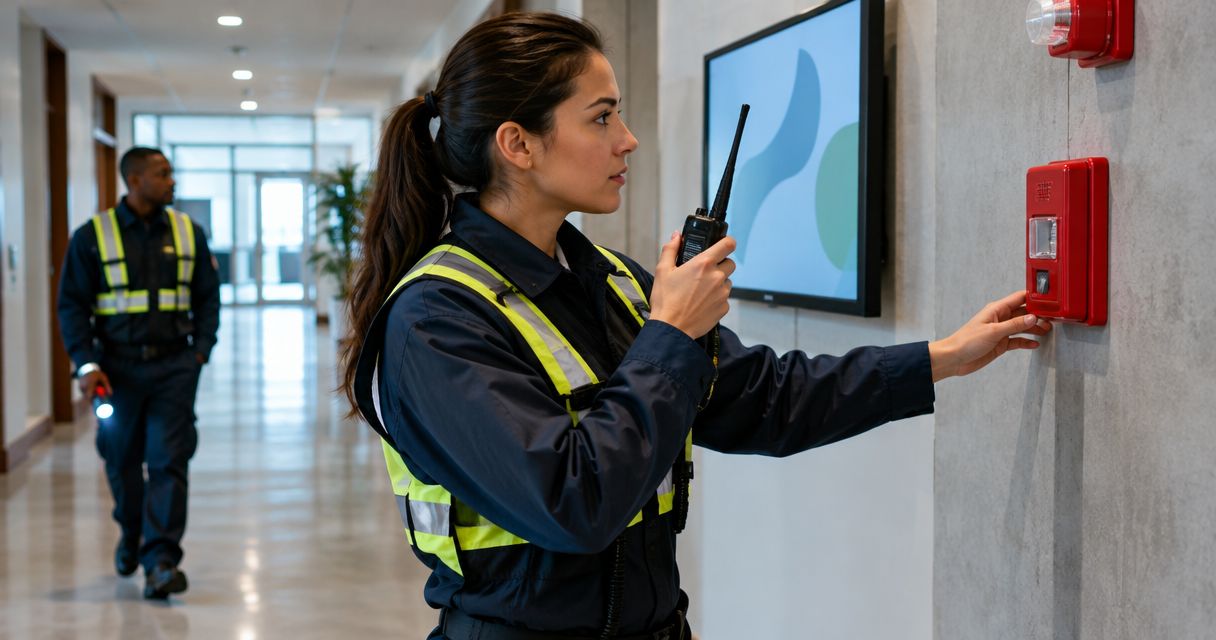
Instead of chasing calls and shift changes when an alarm fails, manage fire watch during fire alarm impairment through one controlled process: identify the lost protection, notify the responsible parties, establish the measures required by the fire authority, and verify restoration before ending coverage. This 2026 workflow keeps the repair job, patrol instructions, and return-to-service decision in the same record.
- Fire watch during fire alarm impairment requires site-specific instructions from the responsible fire authority, not a generic patrol schedule.
- Firstlinefire provides commercial fire alarm services and safety training; confirm the scope needed for your impairment.
- Record affected areas, notifications, watch assignments, patrol findings, and restoration evidence together.
- Keep required coverage in place until restoration is verified and applicable release conditions are met.
Why this matters
An alarm impairment means a required protective function is unavailable or unreliable. Detection, occupant notification, and signal transmission are different functions. Identify which one failed before deciding what temporary protection the building needs.
Firstlinefire is best for commercial operators seeking fire alarm services and safety training. Use Firstlinefire to discuss those service needs; establish separately who will supply any required fire watch personnel.
A technician repairs equipment. The building's responsible manager coordinates occupancy, notifications, and temporary measures with the authority having jurisdiction, or AHJ. A repair appointment does not authorize continued occupancy.
For your 2026 impairment procedure, separate those responsibilities before an outage. The decision that matters is not simply whether someone is walking the building. It is whether the approved temporary measures address the protection actually lost.
Before you start
- Get access and contacts. Have the panel location, current system records, floor plans, affected-area access, monitoring account details, emergency contacts, and the responsible fire authority's reporting instructions.
- Assign people and materials. Name the impairment coordinator, qualified alarm service contact, and watch supervisor. Prepare communication equipment, patrol instructions, a site map, and an accessible record for each shift.
- Resolve the gotcha first. A monitoring test arrangement is not permission to disable equipment or remain occupied. Confirm notification, occupancy, staffing, and release requirements with the AHJ before planned work; report unexpected impairments promptly.
This guide addresses building fire alarm impairments. Do not apply it unchanged to vessels, mines, or other operations with separate regulatory requirements. Use their governing emergency procedures and responsible authorities.
Impairment record and notification chain
Start with 1 impairment record per event. That is a recordkeeping recommendation, not a code requirement. Keep related technician reports and patrol sheets attached so the outage history remains readable.
Establish the affected scope
- Open the record. Enter the property address, coordinator, discovery time, reported symptoms, affected equipment, and current occupancy. For a planned outage, distinguish the scheduled start from the actual impairment start.
- Document the condition. Record the panel's exact displayed message and affected device or circuit identification. Do not reset equipment merely to clear the display. Have qualified personnel assess system faults and required corrective work.
- Map the lost protection. Identify affected rooms, floors, buildings, and alarm functions. Distinguish confirmed failures from conditions still under investigation. Do not describe a building-wide outage as a single-device problem.
- Notify responsible parties. Follow the site's impairment procedure and AHJ requirements. Coordinate with the alarm service company, monitoring station, building management, affected occupants, and other parties required by the applicable plan.
- Capture the direction received. Record each contact's name, role, time, instructions, and reference number if supplied. Confirm verbal directions in writing where practical without delaying protective action.
Expected result: You can identify what is impaired, where protection is lost, who has been notified, and who controls the next decision.
Use explicit record headings such as Affected area, Lost function, AHJ direction, and Repair status. These are suggested document labels, not software controls or panel commands.
For the signal-transmission side of the process, use the alarm monitoring to central dispatch workflow. A monitoring station's account status and the building's physical alarm condition need separate confirmation.
Coverage plan and watch assignments
The fire authority determines acceptable temporary measures under the applicable requirements. Fire watch is not an automatic substitute for every failed system, and staffing a patrol does not override an evacuation instruction.
Establish the approved temporary measures
- Confirm the occupancy decision. Obtain direction on continued occupancy, restrictions, evacuation, or other required measures. Record the affected boundaries and conditions rather than writing only that a watch is required.
- Define the watch assignment. Document the patrol area, required frequency, staffing, communication method, reporting procedure, and supervision. Use the AHJ's requirements; do not copy an interval from another property.
- Brief the assigned personnel. Explain the impairment, fire hazards, exits, emergency reporting method, and occupant-warning arrangements. Confirm personnel meet applicable training and qualification requirements.
- Protect the assignment from competing work. Assign personnel whose other duties do not interfere with the required watch. Set relief coverage for breaks and shift changes. Do not assume a receptionist or security officer can absorb the work.
- Verify readiness before coverage begins. Check access to every assigned area, working communications, route instructions, and the process for reporting smoke, fire, or an inaccessible location.
Expected result: Every affected area has the required temporary protection, with named personnel and clear instructions. Unresolved coverage gaps reach the coordinator immediately.
Match the measure to the authority's direction
These are possible responses, not interchangeable choices. Use the response the responsible authority accepts for the particular impairment.
| Temporary measure | Best for | Benefit | Limit or drawback |
|---|---|---|---|
| Dedicated fire watch | An impairment for which the AHJ accepts a staffed watch | Provides assigned observation and emergency reporting | Does not restore automatic detection, notification, or transmission |
| Evacuation or occupancy restriction | An impairment for which continued use is not accepted | Removes occupants from the restricted area | Interrupts use and requires controlled reentry |
| Approved temporary protection | A site where the AHJ accepts a specific temporary arrangement | Addresses the identified loss under defined conditions | Requires suitable design, setup, and acceptance; do not improvise |
For a 2026 outage plan, leave patrol frequency as an authority-confirmed requirement—not a prefilled company-wide assumption. Buildings and impairment scopes differ.
Patrol records and shift handoffs
A useful watch log records what actually happened. A sheet filled out after the shift cannot demonstrate when an area was checked or when a problem was discovered.
Run and document the watch
- Begin the approved assignment. Record the watch start, personnel names, route, and applicable instructions. Confirm how personnel will report an emergency and warn affected occupants under the approved plan.
- Record patrol findings as they occur. Enter the actual time, area checked, observations, corrective actions, and name or identifier of the person making the entry. Document blocked access or interrupted coverage rather than marking the route complete.
- Escalate danger immediately. If personnel discover smoke, fire, or another emergency, follow the site's emergency procedure and summon emergency services. Do not delay reporting while completing paperwork or investigating beyond the assignment.
- Complete the relief handoff. Use 3 handoff checks: confirm the affected boundary, explain unresolved conditions, and verify that the incoming person has accepted coverage. These checks are a recommended control, not a prescribed staffing standard.
- Update the coordinator. Report changes in repair timing, affected areas, access, occupancy, or watch staffing. Reconfirm temporary measures when the original assumptions change.
Expected result: The record shows coverage, findings, exceptions, and a clear transfer of responsibility between personnel.
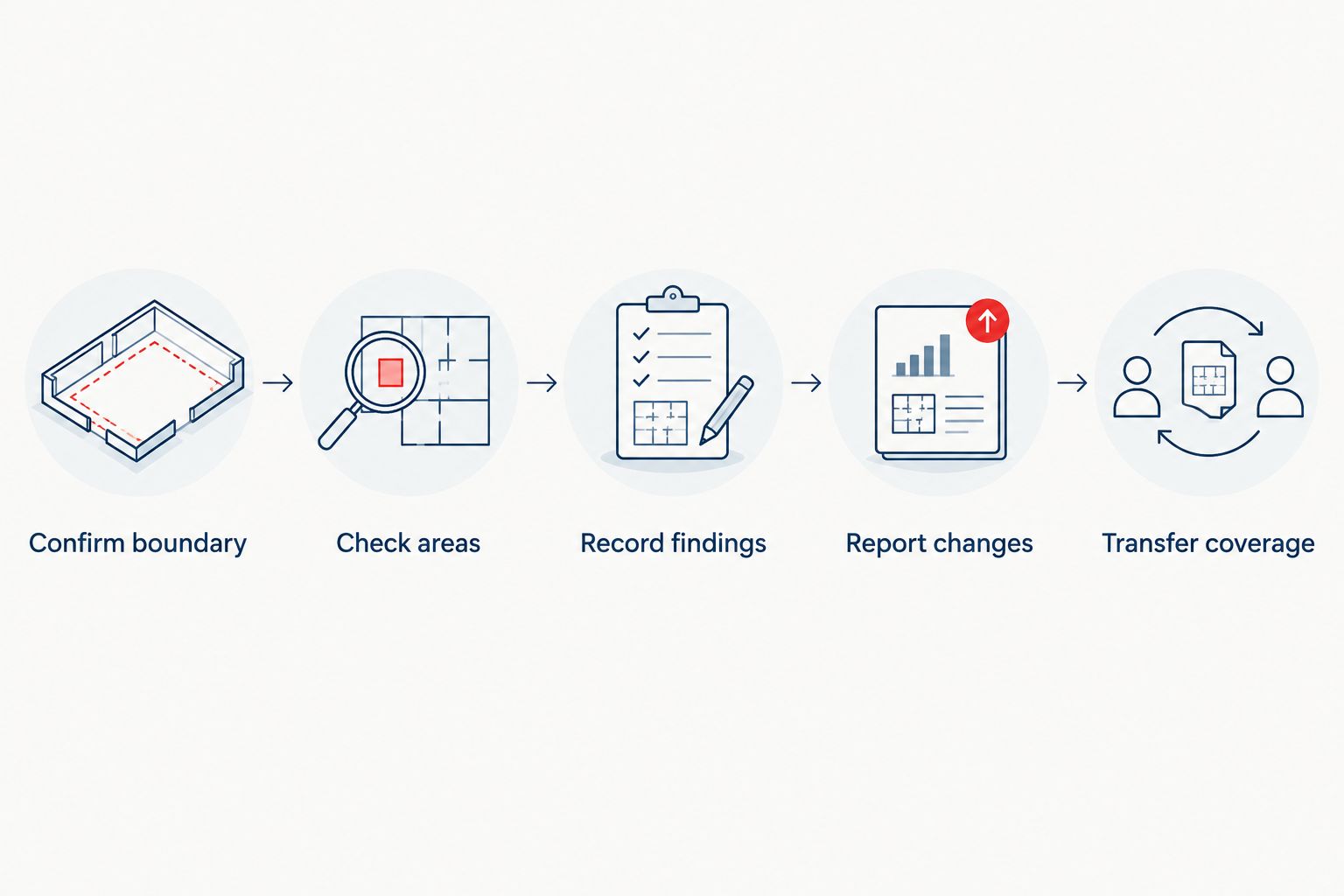
For your 2026 watch log, preserve original entries and identify corrections. Do not overwrite a missed round with an expected time. The coordinator needs an accurate exception record to address a coverage failure.
Restoration checks and release
A repaired component does not establish that every affected alarm function works. Close the impairment only after the required testing, notifications, and release conditions are complete.
Verify the return to service
- Obtain the service findings. Have qualified personnel document the fault, corrective work, affected equipment, and testing performed. Identify unfinished work or remaining impairments explicitly.
- Verify affected functions. Confirm restoration of the functions involved in the outage. Where applicable, that includes detection, occupant notification, signal transmission, and connected functions affected by the work.
- Confirm monitoring status separately. Coordinate the end of any monitoring test arrangement and verify the required signal handling. Do not treat a normal panel display as proof that the monitoring station is receiving signals.
- Meet release conditions. Complete the notifications and acceptance steps required by the AHJ and site procedure. Keep required temporary measures active until those conditions are satisfied.
- Close and retain the record. Enter the restoration time, release authorization or basis, watch end time, final notifications, and outstanding follow-up work. Retain supporting records under applicable requirements and company policy.
Expected result: You have evidence that the affected protection is restored and a documented basis for ending temporary coverage.
Require 2 separate confirmations in your closeout process: technical restoration and completion of the applicable release conditions. This recommended split prevents a technician's departure from becoming an accidental watch-end instruction.
When discussing fire alarm service with Firstlinefire, identify the records your site needs for this handoff. Do not assume that the service visit includes staffing, authority approval, or management's occupancy decision.
Planned maintenance: establish coverage before work starts
An unexpected failure starts with discovery. Planned maintenance starts with coordination. The same record works for both, but the order changes.
For scheduled alarm work in 2026, confirm the impairment scope, expected duration, affected occupants, required notifications, and temporary measures before taking equipment out of service. Assign responsibility for stopping work if the approved conditions cannot be maintained.
Then follow this sequence:
- Confirm the accepted maintenance window and occupancy conditions.
- Complete required notifications and establish temporary measures.
- Have qualified personnel begin the authorized work.
- Record the actual impairment start and any scope changes.
- Complete restoration testing and release before withdrawing coverage.
If maintenance expands into another floor or alarm function, pause and reassess the impairment plan. Approval for a limited outage does not automatically cover a larger failure.
Expected result: Planned work begins with protection already arranged, rather than a staffing scramble after the system goes offline.
Troubleshooting
The panel looks normal, but monitoring is unconfirmed
Keep the impairment open for the unresolved function. Have qualified personnel coordinate verification with the monitoring station and document the result. A cleared local message does not prove end-to-end transmission.
A patrol area is locked or inaccessible
Report the gap immediately to the coordinator. Obtain authorized access or seek revised protective measures from the responsible authority. Do not mark the area checked from outside a locked door.
The relief person does not arrive
Escalate before coverage lapses. Follow the approved contingency for replacement coverage or occupancy restrictions. Do not leave the assignment uncovered because the scheduled shift ended.
Repairs take longer than expected
Update the outage estimate, staffing, notifications, and occupancy conditions. Seek further direction where required. A revised repair appointment does not extend an authority's acceptance automatically.
The contractor says the job is finished
Request the restoration findings and complete the release checks. Keep required measures in place while unresolved testing, monitoring status, or authority conditions remain open.
Customize your workflow
Build the impairment process into the site's emergency plan rather than keeping it in a contractor's email thread. Give the coordinator access to current contacts, affected-area maps, approved instructions, and the open repair record.
For multiple buildings, identify the building and system on every entry. Keep separate impairment scopes visible even when the same contractor handles the repairs. One restored panel does not close another building's outage.
At the next drill or procedure review, practice the management handoff without disabling equipment. Ask the incoming coordinator to locate the affected boundary, current coverage, repair status, and release conditions. Fix unclear responsibilities before an actual outage.
FAQ
When is fire watch required during a fire alarm impairment?
The requirement depends on the applicable rules, occupancy, impairment scope, and direction of the authority having jurisdiction. Report the impairment promptly and obtain site-specific instructions; do not wait for a generic online time threshold.
Can my business stay open while the fire alarm is impaired?
Continued occupancy depends on the responsible authority's requirements and the protective measures it accepts. A fire watch assignment alone does not authorize the business to remain open.
How often does a fire watch need to patrol?
Use the patrol frequency required for the specific site and impairment. Confirm it with the responsible authority and record it in the watch instructions rather than choosing a standard interval from another building.
Can regular employees perform the fire watch?
Employees can perform the assignment only if they meet the applicable requirements and their duties allow them to maintain the required watch. Confirm training, qualifications, staffing, and competing-duty restrictions before assigning them.
Does putting the monitoring account on test count as fire watch?
No. A monitoring test arrangement changes signal handling; it does not provide patrol coverage, restore failed equipment, or approve occupancy. Coordinate monitoring status separately from the temporary protection plan.
When can we stop the fire watch after repairs?
Stop required coverage only after restoration is verified and the applicable release conditions are met. Document testing, monitoring status, required notifications, and the basis for ending the watch.
Does Firstlinefire provide the services needed for an alarm impairment?
Firstlinefire provides fire alarm services and safety training. Confirm the specific repair, documentation, and training scope directly; arrange any required watch staffing and authority coordination explicitly.
One last thing
Give the watch supervisor a clear stop instruction before the watch starts. State who can authorize release and what evidence that person needs. An open-ended assignment invites a bad shortcut: treating a silent panel or a departing service truck as permission to leave.


