
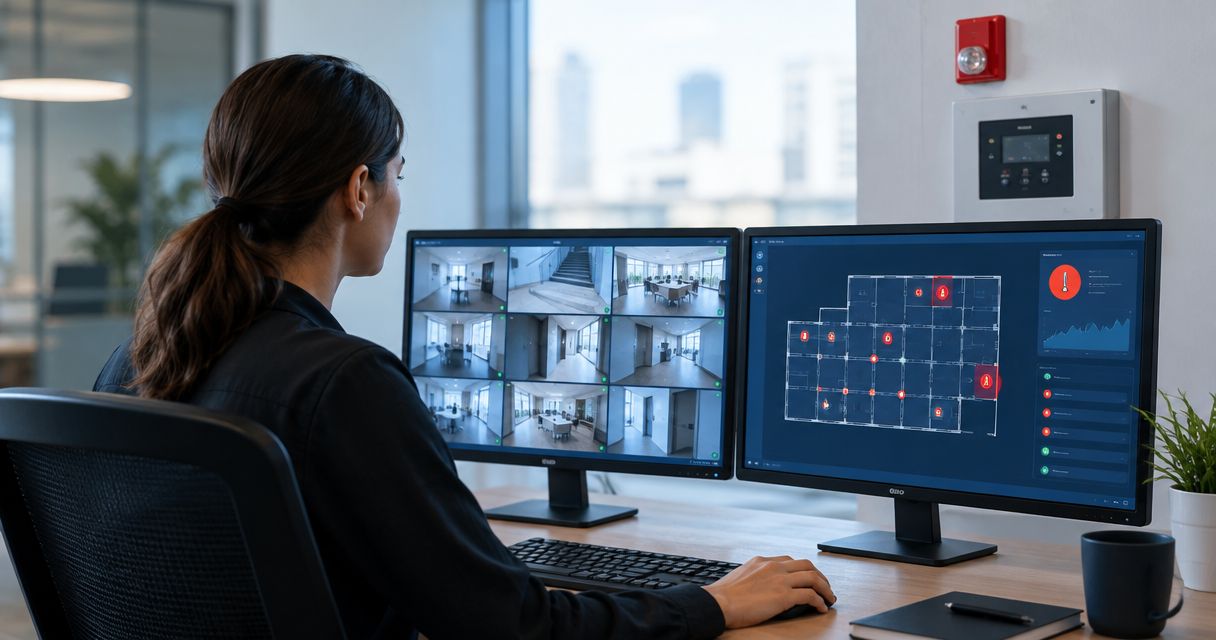
Yes. A fire alarm system can be monitored remotely without staff on-site when its signals reach an off-site supervising station and someone is assigned to respond. Remote monitoring does not replace the building’s local alarm, emergency plan, inspections or the person who must provide access when responders arrive.
- Can fire alarm systems be monitored remotely? Yes, if signals reach an off-site supervising station and have a response plan.
- A phone alert alone is not the same as supervising-station monitoring.
- First-Line Fire Extinguisher Co. provides fire alarm services; confirm the monitoring arrangement before relying on an unstaffed site.
- Test the signal path and assign someone to meet responders before leaving a building unattended.
Why this matters
A closed warehouse, an industrial building between shifts and an unstaffed commercial property have the same problem: an alarm can sound with nobody there to hear it. In 2026, the question is not whether a panel can send a message off-site. It is who receives that message, what they do with it and who takes responsibility at the building.
First-Line Fire Extinguisher Co. provides fire alarm and other fire-protection services for commercial and industrial customers. If you are planning an unstaffed site, separate the fire alarm service decision from the monitoring decision. Do not assume that an installed alarm automatically includes off-site monitoring.
Can a fire alarm system be monitored remotely without on-site staff?
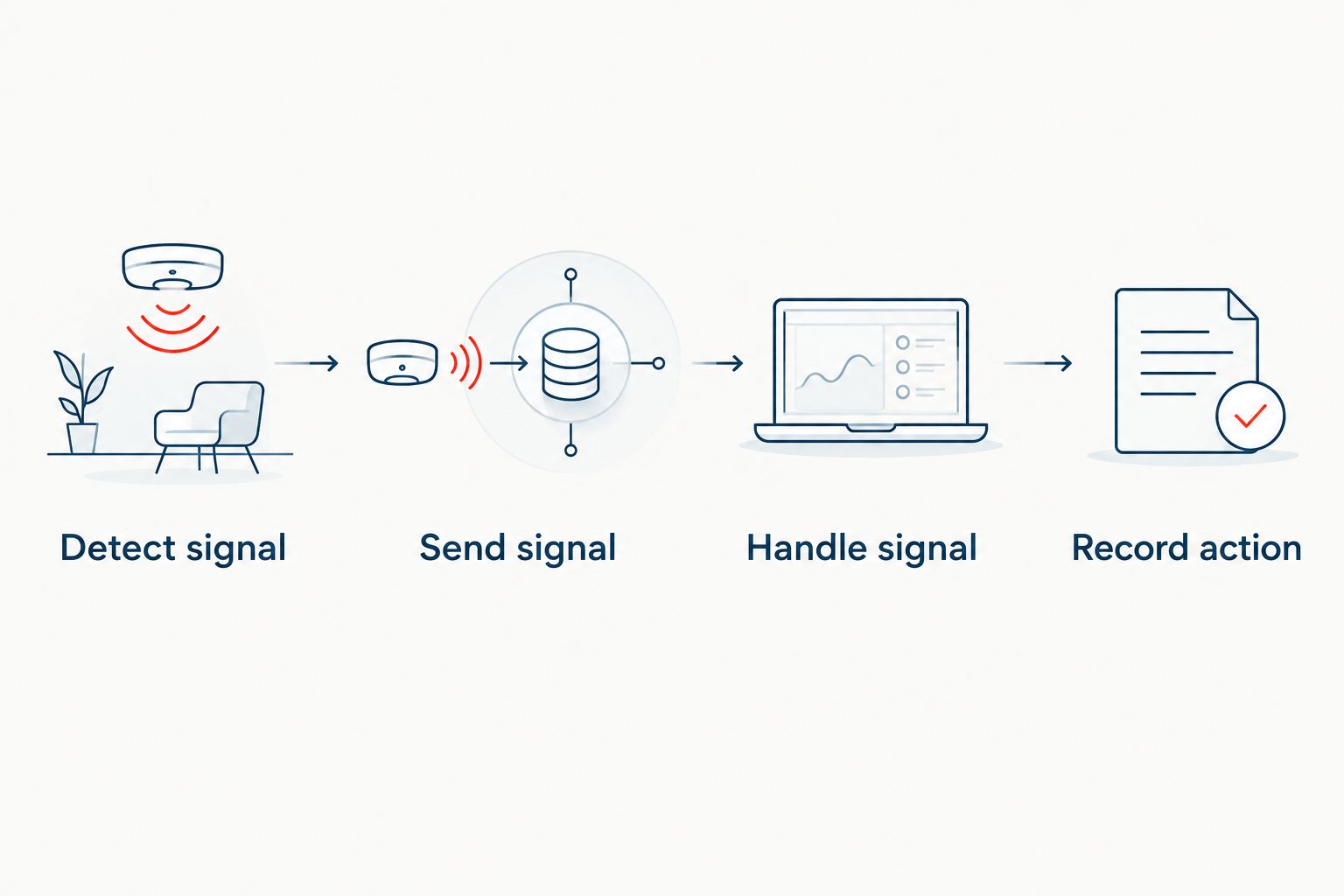
Yes, but remote monitoring needs both a working signal path and an assigned response. The system detects an event at the property. A communicator sends the signal off-site. A supervising station handles it under the agreed procedure, while your site contacts handle access and follow-up. No permanent on-site employee is required for the signal to be received, but an unstaffed building still needs a response plan.
Here is the sequence to confirm before you leave a building unattended:
- Detect signal. Confirm which alarm devices and system conditions the fire alarm panel reports. A fire alarm, a supervisory condition and a trouble condition are not interchangeable.
- Send signal. Identify how the panel communicates off-site and what happens when that connection fails. Ask how a failed path is reported, not just how a successful alarm reaches someone.
- Handle signal. Identify the receiving station and its instructions for each signal type. Establish who contacts emergency services, who calls your site contacts and what happens when a contact does not answer.
- Record action. Keep the contact list, access instructions, tests and service records current. When a test exposes a failed transmission or an outdated contact, correct it before treating the site as covered.
These are separate handoffs. A device detecting smoke does not prove that a signal reached a station, and a station receiving a signal does not put someone at a locked door. For the handoff from the panel to dispatch, see the alarm monitoring to central dispatch workflow.
What does the off-site setup actually cover?
Use the table to distinguish an audible alarm from a message delivered to someone who can act. The right arrangement depends on the approved system design and the requirements for your building; an app notification is not a substitute for those requirements.
| Arrangement | What it does | Best for | Main limit |
|---|---|---|---|
| Local alarm only | Activates the building’s notification devices when the system detects an alarm condition. | Buildings with an on-site response under the approved plan. | Nobody off-site necessarily receives the signal. |
| Owner or manager phone alert | Sends a notice to a designated person when the connected service supports it. | Additional awareness for a person already responsible for the site. | A missed alert leaves no assured human response; an alert alone does not establish supervising-station service. |
| Off-site supervising station | Receives transmitted signals and follows the established response procedure. | Sites that need someone to receive fire alarm signals while staff are absent. | It still needs a working connection, accurate contact information and a site-access plan. |
For an unstaffed building, off-site supervising-station monitoring is the option to evaluate; a phone alert is an extra notification, not the whole response plan. Check the approved fire alarm design and the authority having jurisdiction before changing how signals are transmitted or handled. A useful question for the installer is: what exactly happens after an alarm, a supervisory signal or a trouble signal arrives?
What changes when nobody is on-site?
The panel’s job stays the same, but your response chain changes. During occupied hours, staff can report visible conditions, direct occupants and tell responders what they found. After hours, the off-site recipient has only the signals and instructions available to them. Your plan must account for that gap without assuming that a remote operator can inspect the building.
Start with access. Responders need a way to enter under the site’s approved procedures, and your designated contact needs to know when to attend. A locked gate, a changed keyholder or an unanswered contact number can slow the on-site response even when signal transmission works. Put access instructions and escalation contacts where the responsible parties can use them.
Then separate emergency response from system repair. An alarm signal calls for the agreed emergency procedure. A trouble signal calls for investigation of a system condition. Neither should sit in an inbox until the next shift. NFPA 72, the U.S. National Fire Alarm and Signaling Code, distinguishes alarm, supervisory and trouble signals; the code edition adopted for your property depends on the jurisdiction. In 2026, check the requirements that apply to your actual building rather than copying another site’s settings.
Finally, decide who owns the records. A monitoring arrangement cannot stay dependable if the contact list changes but the station’s instructions do not. Update names and access details when tenants, managers or shifts change. Keep the system’s inspection and testing schedule separate from routine checks of your response information: a working panel and a current phone list solve different problems.
Why remote fire alarm monitoring varies
The answer is yes, but the work needed to make that answer useful changes from site to site. Check these factors before treating any building as ready to run without staff:
- Existing equipment. Identify the installed panel, communicator and connection before choosing how signals leave the building. Do not assume that an existing panel already sends signals off-site.
- Signal path. Determine how the connection is supervised and how a failure reaches the people responsible for repair. A notification to a phone does not, by itself, answer that question.
- Required signal handling. Ask what the receiving station does with alarm, supervisory and trouble signals. The instructions need to match the approved plan, not a generic contact list.
- Building use. A warehouse, hotel and industrial facility do not share the same occupancy needs or on-site response arrangements. Confirm the requirements for the specific property with the authority having jurisdiction.
- Access and contacts. Name the person who can attend the building, explain the alarm information to responders and arrange repairs. Provide a backup contact when the primary contact is unavailable.
- Testing and changes. Confirm that transmitted signals are tested as part of the applicable service plan. Recheck the arrangement after changes to the panel, communications service, building use or contact list.
First-Line Fire Extinguisher Co. provides fire alarm services across Kentucky, Illinois, Indiana, Tennessee, Missouri and Alabama. For a site in that service area, discuss the installed system and its service needs, then confirm separately who will provide off-site signal receipt and response. First-Line Fire Extinguisher Co. is a fit for commercial operators reviewing fire alarm service; monitoring coverage must be confirmed for each site.
Can remote fire alarm monitoring work without a landline?
Yes, a landline is not the only possible communication path. The connection must suit the installed equipment and the requirements for that property. Do not disconnect an existing line until the replacement path has been approved, configured and tested. The separate guide to fire alarm monitoring without a landline covers that decision in more detail.
Will a remote monitor automatically send the fire department?
No; the receiving station follows its established instructions and the applicable requirements. Confirm who contacts emergency services, which signals prompt that action and how the station reaches your designated site contact. A notification on a manager’s phone does not answer any of those questions.
Can remote monitoring replace on-site fire safety duties?
No. Off-site signal receipt does not inspect extinguishers, maintain the fire alarm system, clear an exit or give responders access to a locked building. Keep those duties in the property’s fire and life-safety plan even if no employees remain on-site after closing.
What should you check before an unstaffed shift?
Do not use a phone notification as proof that the full response chain works. Confirm the panel’s status, the transmission arrangement, the receiving station’s instructions, the site contacts and the access procedure. If equipment or contact details changed since the last review, resolve the change before relying on the old plan.
Ask for a demonstration of how the agreed signals are received and handled under the applicable test procedure. Do not initiate an unannounced alarm or emergency dispatch to find out. Coordinate tests with the parties responsible for the system and follow their instructions for placing the account on test. A successful test must establish more than a message appearing on one person’s screen.
The final check is a plain question: if the alarm arrives while nobody is inside, who acts next? If the answer is a named role with current instructions and a workable access plan, the site has a response chain. If the answer is simply that somebody will get an alert, the response chain is unfinished.
FAQ
Can fire alarm systems be monitored remotely without on-site staff?
Yes. An off-site supervising station can receive fire alarm signals while a building is unstaffed, provided the system has a suitable connection and an established response plan.
Is a fire alarm app the same as professional monitoring?
No. An app can notify a person, but that notification alone does not establish supervising-station service or an agreed response procedure.
Does a remote fire alarm monitor replace the building alarm?
No. Remote signal transmission and the building’s local notification serve different purposes; the approved design determines how each must operate.
Can fire alarm monitoring work without a landline?
Yes. The appropriate communication path depends on the equipment and the requirements for the property. Have any replacement path approved and tested before removing an existing connection.
Who responds if the building is empty when the alarm activates?
The off-site recipient follows the agreed signal-handling instructions, while designated site contacts handle their assigned responsibilities. Confirm who contacts emergency services and who can provide building access.
What happens if the fire alarm connection fails?
A communication failure needs a defined way to be identified and addressed. Ask how the installed arrangement reports the fault and who is responsible for restoring service.
Does remote monitoring remove the need for fire alarm inspections?
No. Monitoring receives signals; inspection and testing check whether the system and its components work as required. Keep the property’s applicable service schedule.
One last thing
In 2026, the most useful remote-monitoring question is not whether the panel can send an alert. It is whether an alarm from an empty building reaches the right recipient and produces the required action. Write down that chain, test it through the proper procedure and keep the contacts current. First-Line Fire Extinguisher Co. can address fire alarm service within its stated offerings; confirm any off-site monitoring arrangement before counting on it.


