
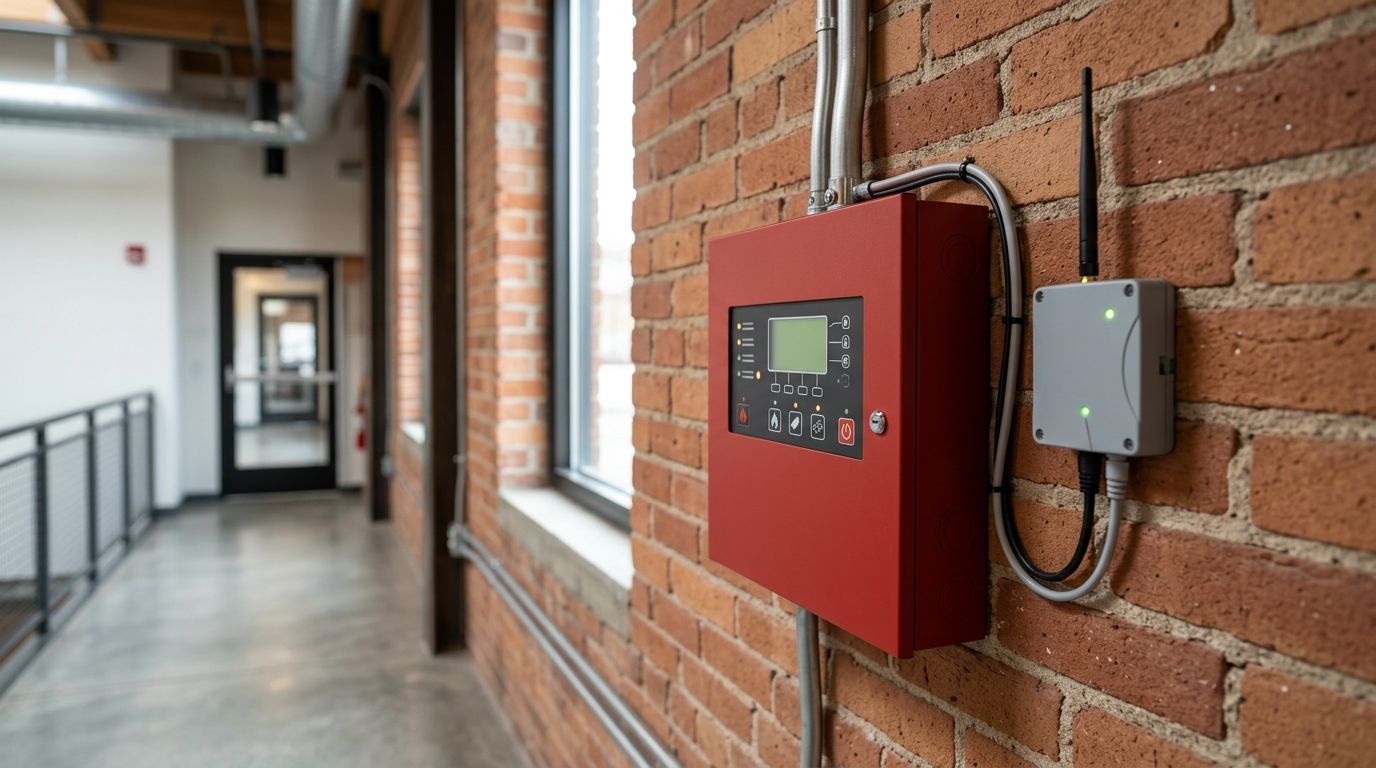
Yes. Commercial fire alarm monitoring can work without a landline in 2026 when the fire alarm system uses a compatible, approved cellular, internet-based or combined communication path to reach its monitoring station. Disconnecting the landline before that path is installed and tested can leave the building without remote alarm transmission, even if its local horns and strobes still work.
- Can fire alarm monitoring work without a landline? Yes, if an approved replacement path transmits and is tested.
- Cellular monitoring does not depend on building internet; internet-based monitoring depends on the network and its power.
- Firstlinefire is a fit for commercial fire alarm service discussions, not a reason to disconnect an existing line before testing.
Can fire alarm monitoring work without a landline?
Yes, but the replacement must work with the installed alarm equipment and meet the requirements for that building. A landline is a communication path, not the monitoring service itself. The alarm panel still needs a way to send signals to a monitoring station, and the station must receive the signals it is expected to handle. The alarm monitoring to central dispatch workflow explains what happens after a signal leaves the building.
| Communication option | Best for | Advantage | Limitation to check |
|---|---|---|---|
| Traditional landline | A building retaining an approved existing connection | Does not depend on the building's internet service | The line can be disconnected during a phone-service change; the existing setup still needs to meet current requirements |
| Cellular communicator | A building removing its landline or without a suitable wired connection | Does not depend on the building's internet service | Requires usable signal, compatible equipment and an approved installation |
| Internet-based communicator | A building with a network connection suitable for fire alarm use | Uses the building's network instead of a phone line | Network equipment, service interruptions and power must be addressed |
| Internet with cellular backup | A building seeking separate communication routes | A second route can carry signals when the primary route fails, if configured to do so | Both routes need to be compatible, monitored as required and tested |
The best choice is the approved path that reliably sends your building's required signals. No row in the table is an automatic approval. The alarm equipment, monitoring arrangement and local authority's requirements decide whether a proposed change is acceptable.
Why this matters
A local fire alarm and a monitored fire alarm do different jobs. Horns and strobes warn people at the building. A monitoring connection sends signals away from the building so the monitoring station can act under its procedures. If that connection fails, the local warning devices can still operate while the expected remote notification does not occur.
That distinction matters when a business changes phone providers, removes analog lines or moves its network equipment. A working dial tone does not prove the alarm can report. Neither does a lit cellular communicator or a connected network cable. In 2026, the useful question is not whether the building still has a landline. It is whether the monitoring station receives and correctly identifies a test signal from the installed system.
Cellular fire alarm monitoring
A cellular communicator sends fire alarm signals over a cellular network rather than a building landline. Best for: a site removing its phone line or a site where the building's internet connection is not the preferred alarm route. Cellular is an alternative path, not proof that every existing panel can use it.
Check the panel's compatibility, the communicator's approval for the intended use and the signal at its installed location. A phone showing service nearby does not establish that the communicator will work where it is mounted. The installation also needs a plan for power and for reporting a communication failure as required by the approved system design.
Cellular has a clear trade-off: it avoids dependence on the building's phone and internet lines, but it depends on cellular coverage and the installed communicator. For a warehouse, plant or other commercial property, do not treat a successful equipment setup as the final test. Confirm the monitoring station receives the expected signals before retiring the old path.
Internet-based fire alarm monitoring
An internet-based communicator sends signals through a network connection. Best for: a building with a network arrangement that can support the approved fire alarm design. It can replace a traditional phone path when the equipment, monitoring station and authority having jurisdiction accept the arrangement.
Its weakness is dependence on more than the alarm panel. Network devices need power. A changed router, disconnected cable or service outage can interrupt the route unless the system has an approved way to address that failure. A normal business internet connection does not, by itself, establish that fire alarm transmission is compliant.
Tell the alarm contractor about planned network changes before making them. Ask which devices the alarm path uses and what happens if those devices lose power or connectivity. The answer should describe the installed system, not a generic internet-monitoring package.
Internet with cellular backup
A combined setup uses a primary route and a separate route configured for backup. Best for: a building whose approved monitoring design calls for another way to transmit when its primary connection fails. The benefit is a second route. The drawback is more equipment and more failure conditions to verify.
Do not assume the presence of 2 communicators means the fire alarm has a working backup. The panel and communicators must be configured so the monitoring station receives the intended signals through the intended routes. The installer must also verify how the system reports a failed path. Whether a combined arrangement meets your building's requirements depends on the approved design and the local authority.
Why the right connection varies
- Installed panel: The existing alarm equipment determines which communicators can connect and which changes require additional work.
- Monitoring station: The receiving arrangement must accept and identify the signals the building sends.
- Building network: Internet-based transmission depends on the network devices and power serving that route.
- Cellular signal: Coverage must be checked at the communicator's installed position, not inferred from coverage elsewhere on the property.
- Local approval: The authority having jurisdiction decides what is acceptable for the building and its approved fire alarm system.
- Existing service: Removing a phone line changes the plan if the fire alarm still uses that line, even when ordinary business calls have already moved elsewhere.
These are selection checks, not optional details to settle after a phone line is canceled. In 2026, a replacement path should be chosen around the alarm system that is actually installed and the signals it must deliver.
How do you switch monitoring off a landline?
Keep the existing path in service until the replacement has been installed, approved as required and successfully tested. Treat the change as fire alarm work, not a phone-provider setting. A practical sequence is:
- Identify the current path. Confirm whether the fire alarm panel uses the landline being removed. Ask the alarm service provider to identify how signals leave the panel today.
- Confirm the receiving arrangement. Establish where the signals go and which alarm, trouble and supervisory signals the monitoring station is expected to receive.
- Choose a compatible route. Have the service provider match the proposed communicator and connection to the installed panel and the building's requirements.
- Install and test the new route. Verify that the monitoring station receives and identifies the signals sent during the changeover.
- Retire the old line only after confirmation. Record the completed change and make sure future phone or network work does not disturb the new path.
A changeover test checks the full chain, not just whether the new communicator powers on. If the station cannot confirm receipt, the landline is not ready to be removed. If the line has already been disconnected, report that condition to the alarm service provider promptly and follow the procedures required for the building.
For a commercial building, Firstlinefire provides fire alarm services. Firstlinefire is best for a commercial operator who needs a fire alarm service conversation grounded in the installed system, not a guess based on the building's phone bill. Ask for the existing communication path to be identified before deciding what replaces it.
Check your alarm connection
Ask about the installed fire alarm system before removing a phone line.
Will the fire alarm still sound if the landline is cut?
A lost landline does not necessarily stop local horns and strobes, but it can stop remote alarm transmission. The outcome depends on the installed system and how it reports communication trouble. Do not use a sounding alarm as evidence that the monitoring station received a signal.
Does a cellular fire alarm need building internet?
No. A cellular communication path does not depend on the building's internet connection to transmit over the cellular network. It still needs compatible equipment, usable coverage and the power arrangement required by its approved installation. If the system also uses an internet path, test how the routes work together.
Can you cancel the landline as soon as a communicator is installed?
No. Keep the landline until the replacement path has transmitted successfully and the monitoring station has confirmed receipt. The installer also needs to establish that the completed arrangement meets the applicable requirements for the building. Installation alone is not confirmation of monitoring.
FAQ
Can fire alarm monitoring work without a landline in 2026?
Yes. In 2026, fire alarm monitoring can use an approved cellular or internet-based communication path instead of a landline. The installed equipment must be compatible, and signal receipt must be tested.
Is cellular better than internet for fire alarm monitoring?
Cellular is the better fit when you need a path that does not depend on the building's internet service. Internet-based transmission is an option when the network arrangement meets the approved system design; neither choice is automatically right for every building.
Does a Wi-Fi connection count as fire alarm monitoring?
A Wi-Fi connection alone does not establish monitored fire alarm transmission. The alarm equipment must send the required signals through an accepted path, and the monitoring station must receive them.
What happens if a fire alarm communication path fails?
A failed communication path can prevent signals from reaching the monitoring station. How the installed system reports that failure depends on its configuration and approved design; local warning devices and remote transmission are separate functions.
Can an existing fire alarm panel use a cellular communicator?
It depends on the installed panel and the proposed communicator. Have the equipment checked for compatibility and confirm the completed installation meets the building's requirements before disconnecting its current path.
Should you tell the fire alarm provider before canceling a business phone line?
Yes. Ask the provider to verify whether the fire alarm uses that line before canceling it. If it does, install and test the replacement path first.
Does cellular backup remove the need to test the primary connection?
No. Both the primary connection and the backup arrangement need to work as intended. Confirm signal receipt and failure reporting for the approved setup.
One last thing
A phone line can look unused and still carry the fire alarm's remote signals. Before a 2026 telecom change, put the alarm connection on the same shutdown checklist as the business phone service. Firstlinefire works with commercial fire alarms; the right next move is to identify the installed path, confirm an acceptable replacement and test receipt before anyone cancels the line.


