
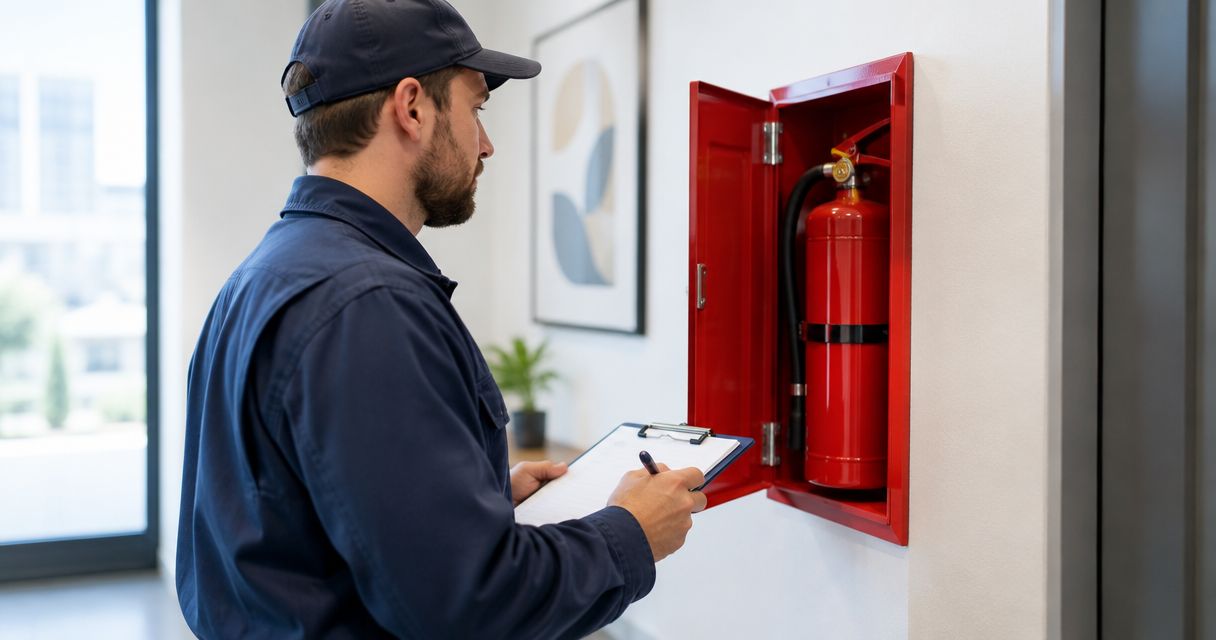
A monthly visual check on a single fire extinguisher takes a couple of minutes; a full annual maintenance inspection by a certified technician takes longer per unit and scales with how many extinguishers sit on the property. The extinguisher itself isn't what eats the clock — reaching every unit, tagging it, and filing the paperwork is.
- How long a fire extinguisher inspection takes depends on unit count and extinguisher type, not a fixed time slot.
- A monthly visual check takes a couple of minutes per unit; the annual maintenance inspection takes longer and requires a certified technician.
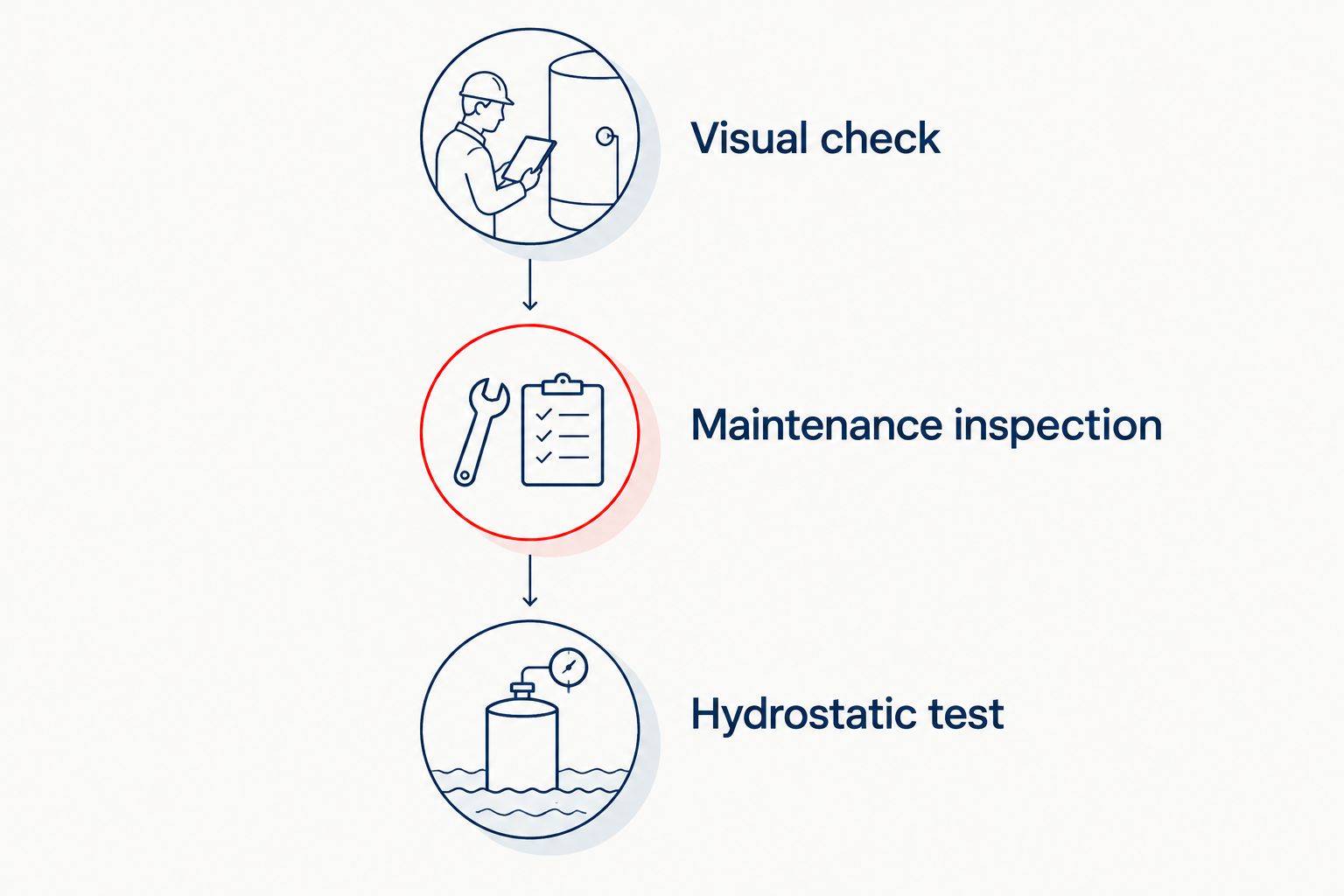
- NFPA 10 sets the schedule: visual checks every 30 days, maintenance inspections every 12 months, hydrostatic tests every 5 to 12 years by extinguisher type.
- First-Line Fire schedules inspections around due dates across Kentucky, Illinois, Indiana, Tennessee, Missouri and Alabama so tags never lapse.
Why this matters
Most people asking how long a fire extinguisher inspection takes actually want to know how much staff time or downtime to plan for in 2026, not the physics of a pressure gauge check. That answer changes with how many extinguishers you have and how spread out they are. First-Line Fire builds inspection routes around extinguisher count and hazard class instead of quoting one flat number for every account, because a five-extinguisher office and a 150-unit coal prep plant are not the same visit.
Getting this wrong costs more than a few extra minutes. A missed monthly check or a lapsed annual tag is what fire marshals flag first during a walkthrough, and it's an easy fix once someone owns the schedule.
How long does a fire extinguisher inspection take
The inspection itself is short. What stretches a visit is logistics — locating every unit, clearing access to it, tagging it, and logging the result for compliance records.
| Inspection type | Who performs it | Required frequency | What it covers |
|---|---|---|---|
| Visual check | Facility staff | Every 30 days | Gauge reading, pin and seal, physical damage, clear access |
| Maintenance inspection | Certified technician | Every 12 months | Internal examination, weight check, recharge if needed, new tag |
| Hydrostatic test | Certified technician, pressure-test equipment | Every 5 to 12 years, by extinguisher type | Cylinder pressure test to confirm the vessel still holds rated pressure |
None of these three schedules move with your zip code. A kitchen line in Louisville and a marina dock in Paducah run the same NFPA 10 clock — what changes between them is unit count and how hard the units are to reach.
Monthly visual check: required every 30 days
This one is fast by design. Staff walk the floor, glance at the gauge needle, check the pin and tamper seal, confirm the extinguisher hasn't been moved or blocked, and note the date. NFPA 10 requires this every 30 days and it doesn't need a technician — it needs a person who knows what a bent pin or a needle in the red zone means.
A single unit takes a couple of minutes. A building with 40 extinguishers spread across three floors takes an afternoon the first time, then falls into a routine once someone owns the checklist.
Annual maintenance inspection: required every 12 months
This is the inspection that requires a certified technician on site, and it's a longer process per unit than the monthly walk-through. The technician checks the internal condition, weighs the cylinder against its rated charge, confirms the hose and nozzle are clear, and either recharges the unit on the spot or flags it for service. A new inspection tag goes on every unit that passes.
How long the full visit runs depends almost entirely on how many extinguishers are on the property and how many need recharging instead of a pass-through. If you're budgeting for this line item, the fire extinguisher inspection cost breakdown covers what drives the invoice, separate from what drives the clock.
Hydrostatic test: required every 5 to 12 years depending on type
This is the longest-running item on the schedule because the extinguisher leaves active service for the test. Water, foam, wet chemical, and CO2 cylinders test on a 5-year interval; stored-pressure dry chemical and cartridge-operated dry powder units run on a 12-year interval. The cylinder gets pressure-tested to confirm it can still hold its rated charge safely, then it's recharged and returned to service.
Because this pulls a unit out of rotation, most sites stagger hydro testing instead of doing every extinguisher the same week — that's the difference between losing one extinguisher for a day and losing your entire fire protection coverage at once. The full breakdown of which types test on which cycle is in the hydrostatic test intervals by extinguisher type guide.
Why inspection time varies
The NFPA 10 schedule is fixed. What varies is how long it takes a technician to work through your site:
- Extinguisher count — more units means more time, even at a couple of minutes each
- Hazard classification — Class K kitchens need hood system coordination on top of the extinguisher check
- Access — locked mechanical rooms, high shelving in a warehouse, and vehicle bays all slow a walkthrough
- Recharge or repair needed on the spot — a unit that fails inspection adds time versus one that just gets a new tag
- Multi-site scheduling — a fleet yard or a chain with locations across Kentucky, Indiana, and Tennessee needs routing, not a single visit
- Sign-off requirements — some facilities need a fire marshal or MSHA sign-off logged alongside the tag, which adds a step
“The extinguisher isn't what takes time on an inspection — getting every unit tagged, accessible, and logged is.”
Sites that track due dates in a spreadsheet tend to lose time hunting for which extinguisher is overdue. Sites that let a vendor own the schedule tend to just get a call when it's time.
Get your inspection scheduled
First-Line Fire tracks due dates so nothing lapses between visits.
How often does a fire extinguisher need to be inspected?
A fire extinguisher needs a visual check every 30 days and a full maintenance inspection by a certified technician every 12 months. Both are separate requirements under NFPA 10, and skipping the monthly check is the more common compliance gap in 2026 because it doesn't require a vendor visit.
How long is a fire extinguisher good before it needs hydro testing?
A fire extinguisher is good for 5 to 12 years before hydrostatic testing, depending on the type. Water, foam, wet chemical, and CO2 units test at 5 years; stored-pressure dry chemical and cartridge-operated dry powder units run to 12 years before the same test is required.
Can I inspect my own fire extinguisher?
You can perform the monthly visual check yourself — that's the point of the 30-day requirement, and it just needs a trained eye on the gauge, pin, and seal. The annual maintenance inspection has to be done by a certified technician, since it involves an internal check and a recharge decision that a facility employee isn't qualified to make.
FAQ
How long does a fire extinguisher inspection take?
A monthly visual check takes a couple of minutes per unit; the annual maintenance inspection by a certified technician takes longer and scales with how many extinguishers are on site.
How often does a fire extinguisher need inspecting?
Every 30 days for a visual check and every 12 months for a full maintenance inspection under NFPA 10.
Is a fire extinguisher inspection the same as a hydrostatic test?
No. Inspections happen monthly and annually; hydrostatic testing is a separate pressure test required every 5 to 12 years depending on extinguisher type.
Do I need a certified technician for a fire extinguisher inspection?
Only for the annual maintenance inspection. The monthly visual check can be done by trained facility staff.
Why does my fire extinguisher inspection take longer than last year?
Extra time usually means more units on site than the last visit, a hazard classification that adds hood system coordination, or extinguishers due for recharge or hydro testing during the same visit.
How long does a fire extinguisher last before it needs replacing?
Extinguishers don't have a fixed expiration date on their own; they stay in service as long as they pass inspection and hydrostatic testing on schedule, which runs 5 to 12 years depending on type.
Does First-Line Fire schedule inspections across multiple states?
First-Line Fire services commercial, industrial, coal mining, marine, and fleet accounts across Kentucky, Illinois, Indiana, Tennessee, Missouri, and Alabama, and routes multi-site inspections together.
One last thing
Coal mining and fleet accounts often run a tighter clock than a standard commercial building because MSHA and DOT sign-off requirements stack on top of the standard NFPA 10 schedule — the inspection itself doesn't change, but the paperwork trail does. If your site falls under one of those regulatory bodies, plan the visit around the sign-off step, not just the extinguisher count.


