

Fire extinguisher inspection cost isn't a flat number for 2026 — it depends on how many units you're servicing, what type of agent they hold, and how often your state or insurer requires a technician on-site. There's no single rate that fits both a five-unit office and a 40-unit coal prep plant, because pricing scales with extinguisher count, service frequency, and site access. The line item that actually moves your budget is usually the hidden one: hydrostatic testing and recharge cycles that come due on a separate schedule from the routine annual check.
- Fire extinguisher inspection cost depends on unit count, extinguisher type, and how often NFPA 10 requires a technician on-site — get a site quote instead of guessing a flat rate.
- Annual maintenance inspection is required every 12 months under NFPA 10, on top of the monthly visual check any trained staff member can do.
- Hydrostatic testing adds cost on its own cycle — 5 years for CO2, water and wet chemical units, 12 years for most dry chemical steel cylinders.
- First-Line Fire Extinguisher Co. tracks due dates across Kentucky, Illinois, Indiana, Tennessee, Missouri and Alabama so inspections and hydro tests don't pile up unexpectedly.
Why this matters
A missed inspection isn't just a fire risk — it's a fire marshal citation, an insurance gap, and, on coal mining and marine sites, an MSHA or Coast Guard compliance problem. Facilities that skip the annual visit usually find out during an audit, not before one.
The First-Line Fire Extinguisher Co. service model is built around tracking those dates before they lapse — extinguisher inspection, hydro testing and tagging are scheduled on one calendar instead of three separate reminders. That matters more the bigger the site count gets: a five-location retail chain and a single warehouse don't run the same inspection math.
How much does fire extinguisher inspection cost in 2026?
Cost is quoted per site, per extinguisher count, and per service tier — not as a national flat rate. The factors below are what actually move the number on your invoice:
| Factor | How it affects cost |
|---|---|
| Extinguisher count | More units per site lowers the per-unit rate but raises the total invoice |
| Extinguisher type | Wet chemical (kitchen) and CO2 units take more labor per check than dry chemical ABC |
| Service frequency | Monthly visual checks are self-performed; annual maintenance needs a licensed technician |
| Hydro testing due | Units hitting their 5- or 12-year hydrostatic test date add a separate line item |
| Site access | Marine vessels, coal prep plants and remote fleet yards add travel and access time |
| Bundling | Combining inspection with recharge, tagging and alarm testing on one visit cuts trip charges |
The factor most facilities miss is bundling. A site that schedules extinguisher inspection separately from recharge and alarm testing pays for three trip charges instead of one.
Monthly visual inspection: what's included
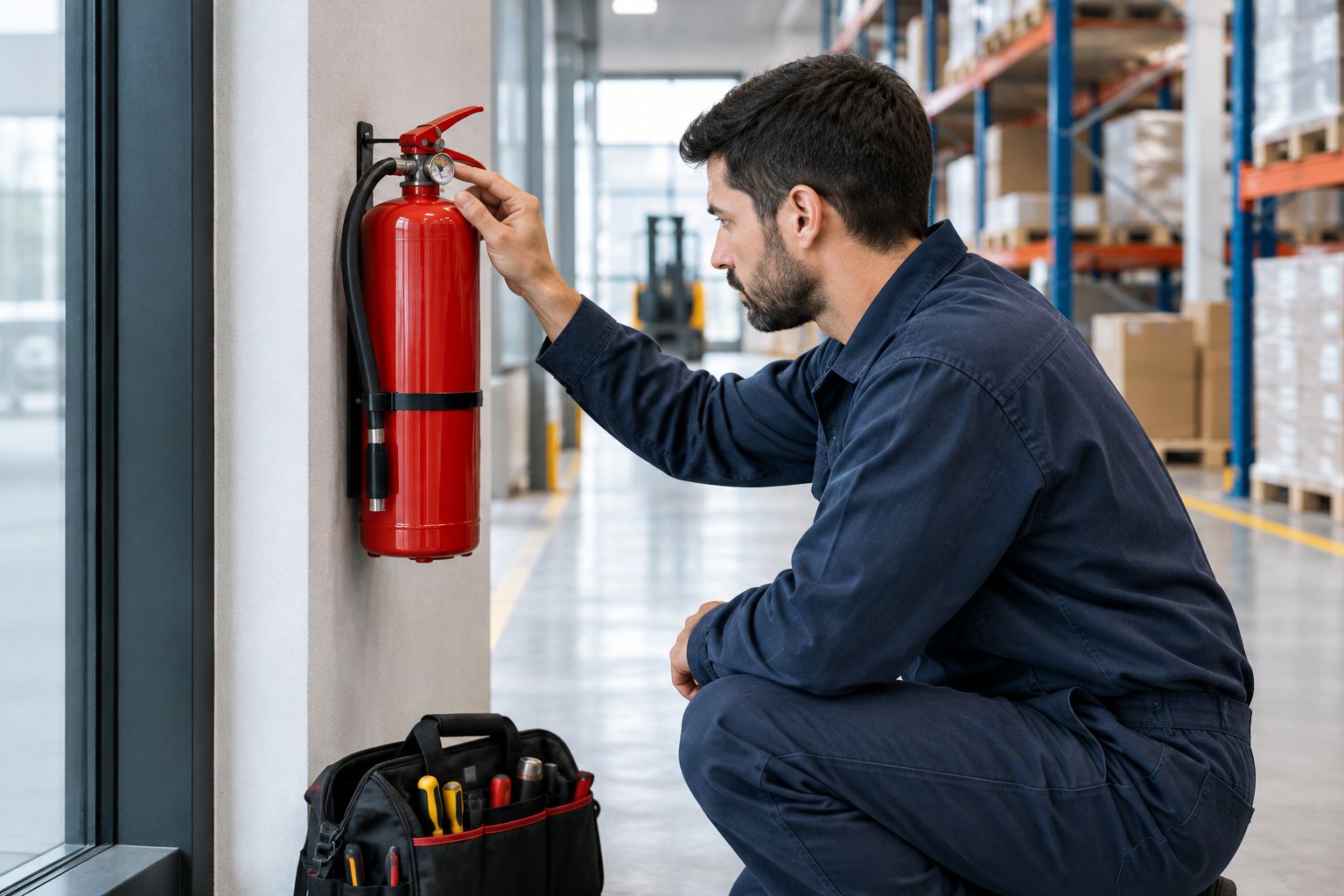
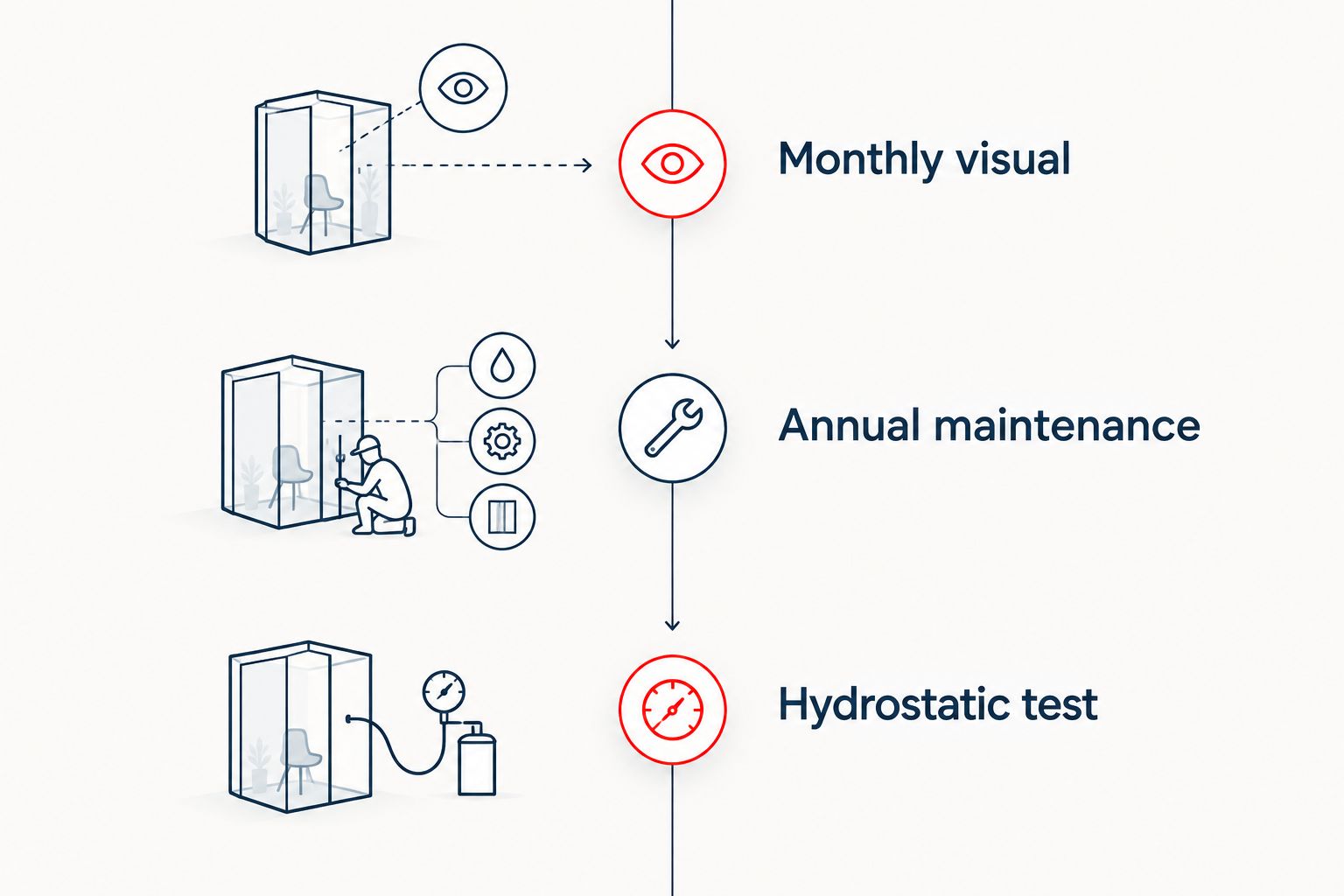
NFPA 10 requires someone on staff to give each extinguisher a monthly visual check — confirming it's in place, unobstructed, charged (gauge needle in the green), and that the pin and tamper seal are intact. This doesn't require a technician and doesn't show up as a separate line item on a service invoice.
Annual maintenance inspection: what's included
Once a year, a licensed technician performs a full internal and external check — verifying weight, examining the shell for corrosion, and confirming the unit still matches the class rating required for the space it protects. This is the visit that gets tagged and logged into your fire marshal file, and it's the one part of fire extinguisher inspection that can't be skipped without a compliance gap.
Hydrostatic testing: what's included
Every extinguisher has a hydro test interval stamped on the cylinder collar. When that date hits, the unit gets pressure-tested — or replaced — instead of just inspected, which is why hydro testing shows up as its own cost separate from the annual visit. The full breakdown by extinguisher type is on the hydrostatic test interval guide.
Why fire extinguisher inspection cost varies
- Industry: coal mining, marine and fleet sites often need class-specific extinguishers and MSHA or Coast Guard documentation that adds scope to a standard inspection.
- State code: Kentucky, Illinois, Indiana, Tennessee, Missouri and Alabama all defer to NFPA 10, but local fire marshals set their own tagging and filing rules.
- Extinguisher age: units approaching their hydro test or 6-year internal maintenance date cost more to service than one installed last year.
- Number of sites: multi-location accounts — warehouse networks, dealership lots, apartment complexes — pay less per unit when service is consolidated into one route stop.
- Extinguisher agent: clean agent and CO2 units run heavier service requirements than dry chemical ABC units found in most offices.
“If your inspection tags don't match your extinguisher count, that's the first thing a fire marshal checks.”
Get your inspection scheduled
First-Line Fire Extinguisher Co. tracks due dates and shows up on-site.
Is fire extinguisher inspection required every year?
Yes, an annual maintenance inspection is required every 12 months under NFPA 10, on top of the monthly visual check facility staff can perform themselves. Skipping the annual visit is what typically triggers a fire marshal citation, since it's the inspection that gets logged and tagged for the compliance file.
What's the difference between inspection, recharge and hydro testing?
Inspection confirms the extinguisher is charged, accessible and undamaged; recharge involves emptying and refilling the agent after use or when internal maintenance is due. Hydro testing is a pressure test on the cylinder itself, run on a 5- or 12-year cycle depending on extinguisher type — see the recharge cost breakdown for how that line item is priced separately from inspection.
How often does hydrostatic testing need to happen?
Hydrostatic testing runs on a 5-year cycle for CO2, water and wet chemical extinguishers and a 12-year cycle for most dry chemical steel cylinders, per the date stamped on the cylinder collar. Missing that date means the unit gets pulled from service until it's tested or replaced, regardless of how recent the last annual inspection was.
FAQ
Is fire extinguisher inspection required every year?
Yes, NFPA 10 requires an annual maintenance inspection by a certified technician, in addition to the monthly visual check any trained staff member can perform.
What's the difference between fire extinguisher inspection and recharge?
Inspection confirms the extinguisher is charged, accessible and undamaged; recharge means emptying and refilling the agent after use or when internal maintenance comes due, and it's billed separately from the annual inspection.
How often does hydrostatic testing need to happen?
Hydrostatic testing runs every 5 years for CO2, water and wet chemical units and every 12 years for most dry chemical steel cylinders, per the interval stamped on the cylinder collar.
Who can perform an annual fire extinguisher inspection?
Only a licensed or certified fire protection technician can sign off on the annual maintenance inspection; the monthly visual check can be done by any trained staff member.
What happens if a fire extinguisher fails inspection?
A failed extinguisher gets tagged out of service and either recharged, hydro tested or replaced before it goes back on the wall, with the failure logged for the fire marshal file.
Does fire extinguisher inspection cost more for industrial or marine sites?
Yes, coal mining, marine and fleet sites typically cost more per visit due to MSHA or Coast Guard documentation requirements and harder site access than a standard office building.
Can fire extinguisher inspection be combined with fire alarm testing?
Yes, many facilities schedule extinguisher inspection alongside fire alarm and suppression system testing on one visit to reduce separate trip charges.
One last thing
A gauge sitting in the green doesn't mean an extinguisher passed its annual check — the needle only tracks pressure, not the actual weight of agent left inside a CO2 or wet chemical unit. That's why the annual maintenance inspection still requires a technician to physically weigh certain extinguisher types in 2026, even when the gauge looks fine from across the room.


