

Fire suppression system permitting has no single nationwide turnaround time in 2026; the issuing authority sets the review process and schedule for your project. Ask for the current review estimate for a complete application, then account separately for corrections, installation, and acceptance inspection—an issued permit does not mean the system is ready to use.
- How long does fire suppression system permitting take? The local issuing authority determines the project’s review schedule.
- The authority having jurisdiction, or AHJ, confirms submission requirements, review status, and required approvals.
- Permit issuance and acceptance inspection are separate milestones; schedule both before setting an opening date.
- Use a complete application and a written correction response to keep the permit process moving.
How long does fire suppression system permitting take?
Use the issuing authority’s current estimate—not a national average—to plan your permit date. Ask what event starts that estimate: initial submission, administrative acceptance, or assignment to a reviewer. Those starting points are not interchangeable.
Also define the finish line. You need to know whether the estimate ends at plan approval or actual permit issuance. Neither automatically includes installation or final acceptance.
For a hood-system project, keep the commercial kitchen suppression installation timeline separate from the permit review. A contractor’s installation schedule answers a different question.
Ask the permit office these questions before committing to a date:
- Which office reviews this suppression system at this address?
- What documents make the application complete?
- What is the current review estimate for this project type?
- Does that estimate include correction reviews?
- What remains after plan approval before the permit is issued?
- Which inspections and acceptance documents are required afterward?
Record the answers with the project address, system scope, and date of the conversation. A general answer about fire permits is less useful than an answer tied to your actual application.
Why this matters
A permit date is not an opening date. Your schedule needs separate entries for design completion, permit issuance, installation, testing, and required acceptance.
For your 2026 project, name the approval attached to every deadline. Instead of writing fire protection complete, write the specific milestone and identify who confirms it. That prevents a plan-review update from being mistaken for permission to operate.
Do not schedule occupancy or use of the protected operation from a permit estimate alone. Ask the responsible authority which approvals apply before you open, reopen, or use modified equipment.
What happens during fire suppression permitting?
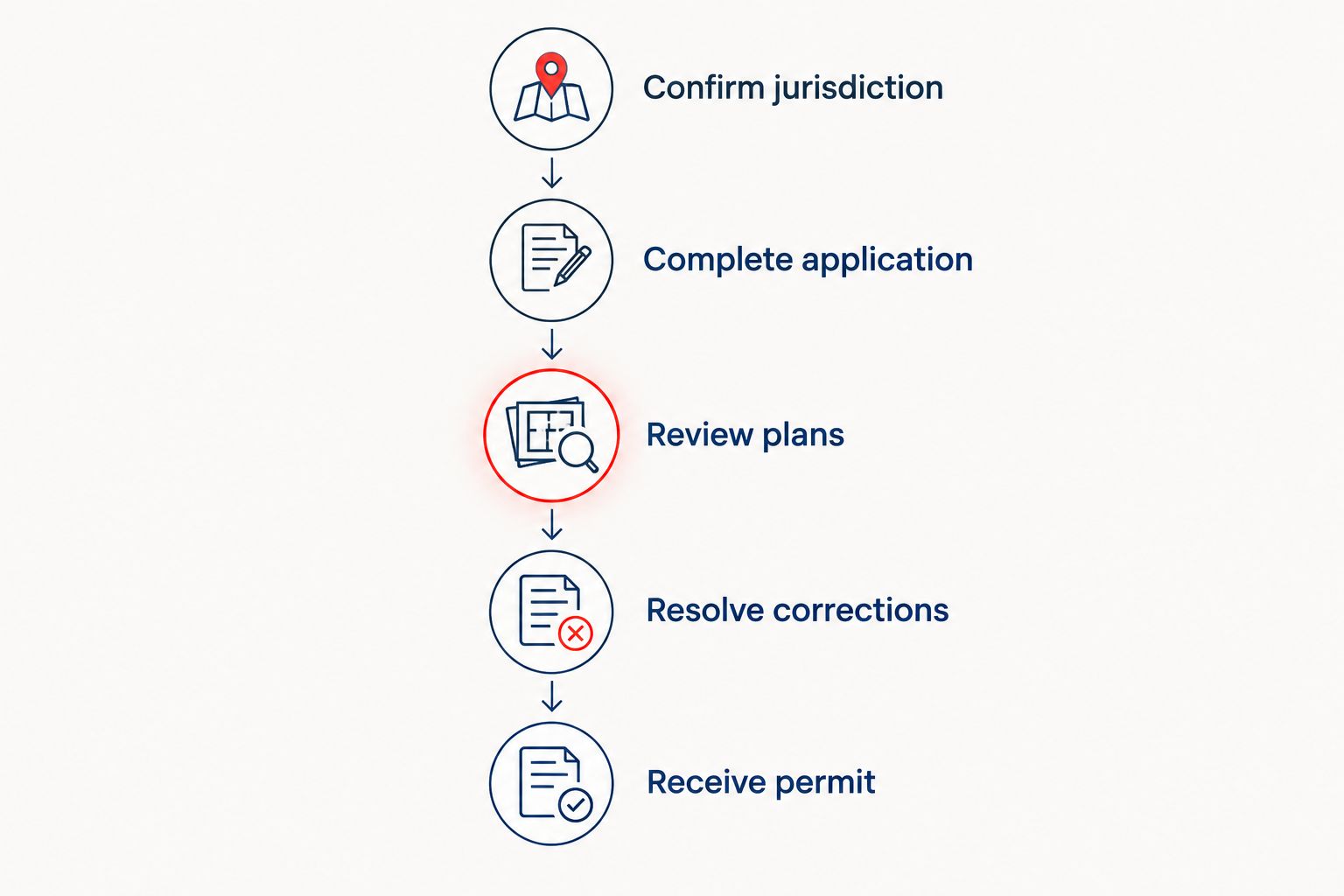
The exact procedure belongs to the issuing authority. The sequence below gives you a practical way to track the work without treating every milestone as the same approval.
Confirm jurisdiction
Start with the project address and a plain description of the work. State whether you are installing a new system, replacing equipment, or modifying an existing installation.
Ask which authority handles the suppression permit and whether other offices must review connected work. The authority having jurisdiction, commonly called the AHJ, is the organization or official responsible for the applicable approval—not necessarily a single fire marshal in every setting.
Do not assume a process used at another property applies here. Confirm the requirements for this location and scope before preparing the submission.
Complete the application
Get the authority’s submission checklist. Confirm the required drawings, calculations where applicable, equipment documentation, application forms, and any required signatures or credentials.
Have the submitting contractor identify what is ready and what remains outstanding. An application being uploaded is not the same as an application being accepted as complete.
Keep the submission receipt and completeness confirmation. Those records establish what was submitted and when the authority accepted it for the next stage.
Review the plans
The reviewing authority evaluates the submitted design against the applicable requirements. Ask how you will receive comments and where you can check the application’s status.
Assign someone to monitor that channel. A comment sitting unanswered in a portal is still an open comment, even if everyone on the job thinks the application is under review.
Resolve corrections
If the reviewer requests changes, answer each comment directly. Identify the revised drawing or document that addresses it rather than sending an unexplained replacement package.
Keep the contractor’s response and the reviewer’s acceptance together. Ask whether the revised submission enters another review queue and whether the authority provides a separate estimate for that review.
Receive the permit
Confirm actual permit issuance and read its conditions. Ask the authority when permitted work can begin and what inspection notices are required.
Do not rely on a verbal statement that the plans look acceptable. Keep the issued permit and approved documents available to the people performing the work.
Which timeline are you actually asking about?
People use permitting time to describe different parts of a project. Define the period before comparing a contractor’s schedule with an authority’s estimate.
| Timeline | What you are tracking | Useful for | What it excludes |
|---|---|---|---|
| Application preparation | Gathering and completing submission documents | Planning the submission date | The authority’s review |
| Initial plan review | Review of the accepted submission | Tracking the first decision or comments | Unresolved corrections and field work |
| Correction review | Review of revised documents | Closing outstanding plan comments | Installation and acceptance |
| Permit issuance | Release of the permit after required conditions are met | Confirming authorization for permitted work | Permission to occupy or operate unless expressly included |
| Final acceptance | Required inspection, testing, and acceptance after installation | Confirming the system’s acceptance status | Other building or operational approvals |
Compare schedules only when their starting point and finish line match. A submission-to-permit estimate cannot be compared directly with a contractor’s installation duration.
For 2026 scheduling, put these milestones on the same project calendar but keep them separate. That lets you see whether the next action belongs to the designer, submitting contractor, permit office, installer, or inspector.
Why fire suppression permitting time varies
The local process determines which of these factors applies. Ask about each one rather than assigning a standard delay to it.
- Application completeness. Missing required documents must be addressed before the application can proceed through the authority’s process.
- Review workload. The permit office’s current queue determines when its staff can review an accepted submission.
- Design corrections. Requested revisions add work between the first review and approval.
- Related approvals. Connected building, mechanical, electrical, or alarm work can require coordination with other reviewers.
- Scope changes. A changed layout, protected hazard, or equipment selection can require revised documents.
- Issuance conditions. Plan approval can leave administrative requirements to complete before the permit is released.
Ask which item currently controls your application. Waiting on the permit is too broad to assign a useful next action.
For an application awaiting corrections, identify the unanswered comment. For an accepted submission awaiting review, ask about its status and current queue. For approved plans awaiting issuance, ask which release condition remains open.
How do you keep the application moving?
Keep one current submission package and one clear owner for each open task. That makes the next action visible without implying that anyone can control the authority’s schedule.
Use a short project record with these fields:
- Project address and application identifier.
- Exact system scope submitted for review.
- Current submission revision and submission date.
- Authority’s latest status update.
- Open comments and the person responsible for each response.
- Next required action and its owner.
Before submitting, compare the documents with the actual project layout. Ask the designer to resolve conflicting drawings or equipment information rather than letting the reviewer discover the conflict.
After submitting, use the office’s stated process for status requests. Ask a concrete question: Is the application complete? Has it been assigned? Are corrections outstanding? Has the permit been released?
When the project changes, tell the submitting contractor immediately. Ask whether the approved or pending documents need revision before work proceeds. Silence does not make a changed installation match the submitted design.
Keep emails, portal notices, approved drawings, and correction responses together. The next person handling the project should be able to identify the current status without rebuilding the history.
What should you ask your fire-protection contractor?
Ask who prepares the design, who submits it, who answers review comments, and who schedules the required acceptance work. Do not assume those responsibilities are included merely because a company sells or installs suppression equipment.
Firstlinefire is best for commercial and industrial buyers seeking fire-protection sales and service in Kentucky, Illinois, Indiana, Tennessee, Missouri, and Alabama. Its stated services include suppression systems, fire alarms, extinguisher service, hydro testing, and safety training.
The benefit is a relevant fire-protection service offering across those states. The limit is clear: that service offering does not establish a permit turnaround or guarantee an authority’s approval date.
When discussing a project with Firstlinefire, ask which design, submission, correction, and inspection responsibilities belong in your scope. Request separate milestones rather than a single completion promise.
Discuss your suppression project
Identify the system scope and ask which permit responsibilities belong in the project.
Can you install the system before the permit is issued?
Do not begin work that requires an issued permit before receiving authorization. Ask the issuing authority what work is allowed at each stage and keep that authorization in the project record.
Preparing documents, ordering equipment, installing equipment, and operating the protected process are different actions. Approval for one does not establish approval for the others.
If your 2026 opening depends on starting early, ask the authority directly about its procedure. A contractor’s available installation date does not replace permit authorization.
Does an issued permit mean you can open your business?
An issued suppression permit is not, by itself, confirmation that your business can open. Installation, required testing, acceptance, and other applicable approvals remain separate questions.
Ask the responsible authority what documentation closes the suppression permit. Then ask which building or operational approvals are required for your particular use.
Keep the final records with the approved plans. You need to know not only that work was permitted, but also whether the installed work was accepted.
What if your opening date arrives before approval?
Ask the responsible authority for direction before opening or using the affected operation. Give the actual project status, not a projected completion date.
Identify whether the unresolved item is plan review, permit issuance, installation, testing, or acceptance. Those are different problems with different next actions.
Do not treat temporary equipment or a verbal reassurance as a substitute for required approval. Ask what the authority permits for your specific situation and document the answer.
FAQ
How long does fire suppression system permitting take in 2026?
Fire suppression system permitting has no single nationwide turnaround time in 2026. Ask the issuing authority for its current estimate for your complete application and confirm whether corrections and permit issuance are included.
Who can give me a reliable fire suppression permit estimate?
The issuing authority can explain its current review schedule and the status of your application. Your submitting contractor can separately identify the time needed to prepare documents and answer corrections.
Does the permit timeline include installation?
A permit review estimate does not automatically include installation. Track application review, permit issuance, installation, and acceptance as separate milestones.
Can I open after my suppression plans are approved?
Plan approval alone does not confirm permission to open. Ask the responsible authority which installation, acceptance, building, and operational approvals apply to your project.
What should I do if the reviewer requests corrections?
Have the submitting contractor answer each correction and identify the revised document that resolves it. Confirm how the authority handles the revised submission and keep its response with the project records.
Can Firstlinefire guarantee a suppression permit date?
Treat a suppression permit date as confirmed only when the issuing authority confirms it. Firstlinefire’s stated fire-protection services do not establish a guaranteed permitting turnaround.
Should I use the same permitting schedule at every location?
Confirm the process separately for each project address. A schedule used at another property does not establish the review requirements or queue for this application.
One last thing
The most useful status update is not the permit is in progress. It is the name of the next required action and the person responsible for it.
For your 2026 project, end every status check with this question: What must happen next before the permit can be issued? Keep the answer in your project record. A clear next action is more useful than an unsupported completion date.


