
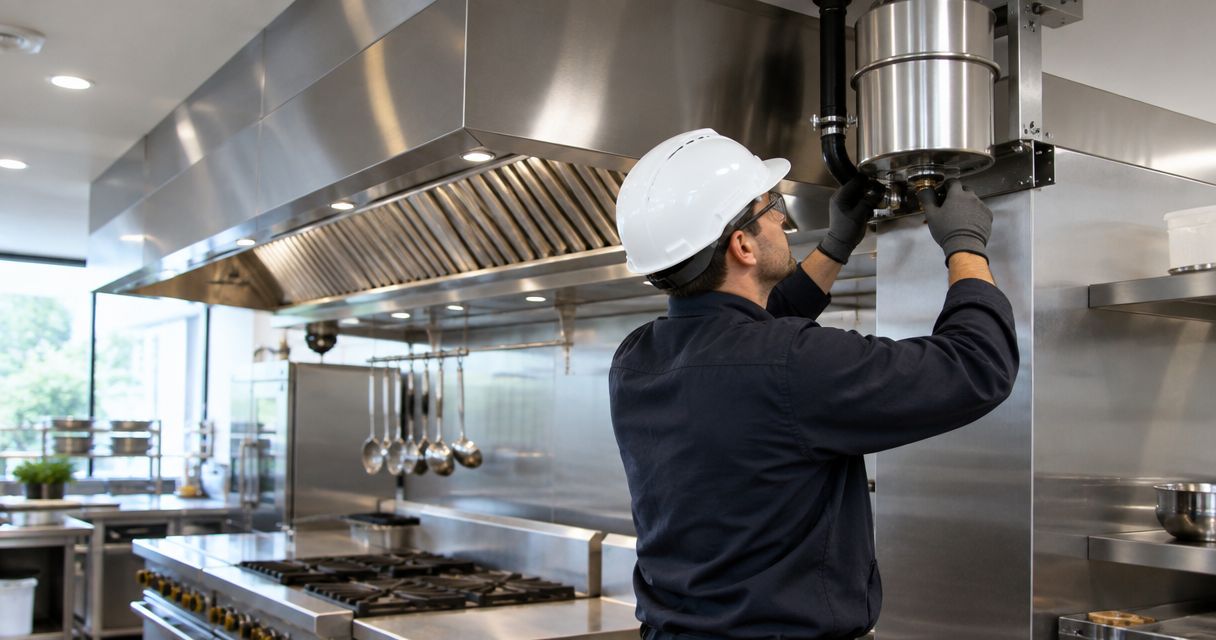
Installing a commercial kitchen suppression system takes about 1 day on site for a single-hood setup, and 2 to 3 days for a multi-hood kitchen with tie-ins to gas shutoff and the fire alarm panel in 2026. The bigger time sink is usually permit approval and fire marshal inspection scheduling, which can run longer than the actual mechanical work.
- Kitchen suppression system installation time runs about 1 day for a single hood, up to 3 days for multi-hood kitchens in 2026.
- Permit approval and fire marshal inspection scheduling often add more lead time than the physical install itself.
- New construction tie-ins to gas shutoff and fire alarm panels add 1 to 2 extra days for coordination.
- First-Line Fire schedules kitchen hood suppression installs across Kentucky, Illinois, Indiana, Tennessee, Missouri and Alabama.
Why this matters
A kitchen that's mid-buildout or mid-renovation can't open without a working suppression system tied to the hood and the fire alarm. Restaurant owners and general contractors plan crews, gas techs, and health inspections around that install date — if the suppression schedule slips, everything behind it slips too.
First-Line Fire coordinates kitchen suppression installs with the mechanical and alarm trades on the same job site, which is the piece that actually determines whether a 1-day job stays a 1-day job.
How long does a commercial kitchen suppression system install take?
For a straightforward retrofit into an existing hood, the physical installation takes 4 to 8 hours — call it 1 day on site. That covers mounting the tank, running the detection line over the cooking appliances, connecting the mechanical gas shutoff, and testing the pull station.
The work breaks into five stages, and each one can add time depending on the building:
- Site survey and design — confirming hood length, appliance count, and duct configuration against the suppression system's coverage requirements.
- Permit filing — submitting the system layout to the local fire marshal or building department before work starts.
- Rough-in and mechanical work — mounting the cylinder, running detection and release piping over each appliance zone.
- Fire alarm and gas shutoff tie-in — wiring the system to trip the building fire alarm and cut gas to the hood on discharge.
- Final inspection and sign-off — a functional test witnessed by the installer, and often a fire marshal or authority having jurisdiction (AHJ) inspection before the kitchen can operate.
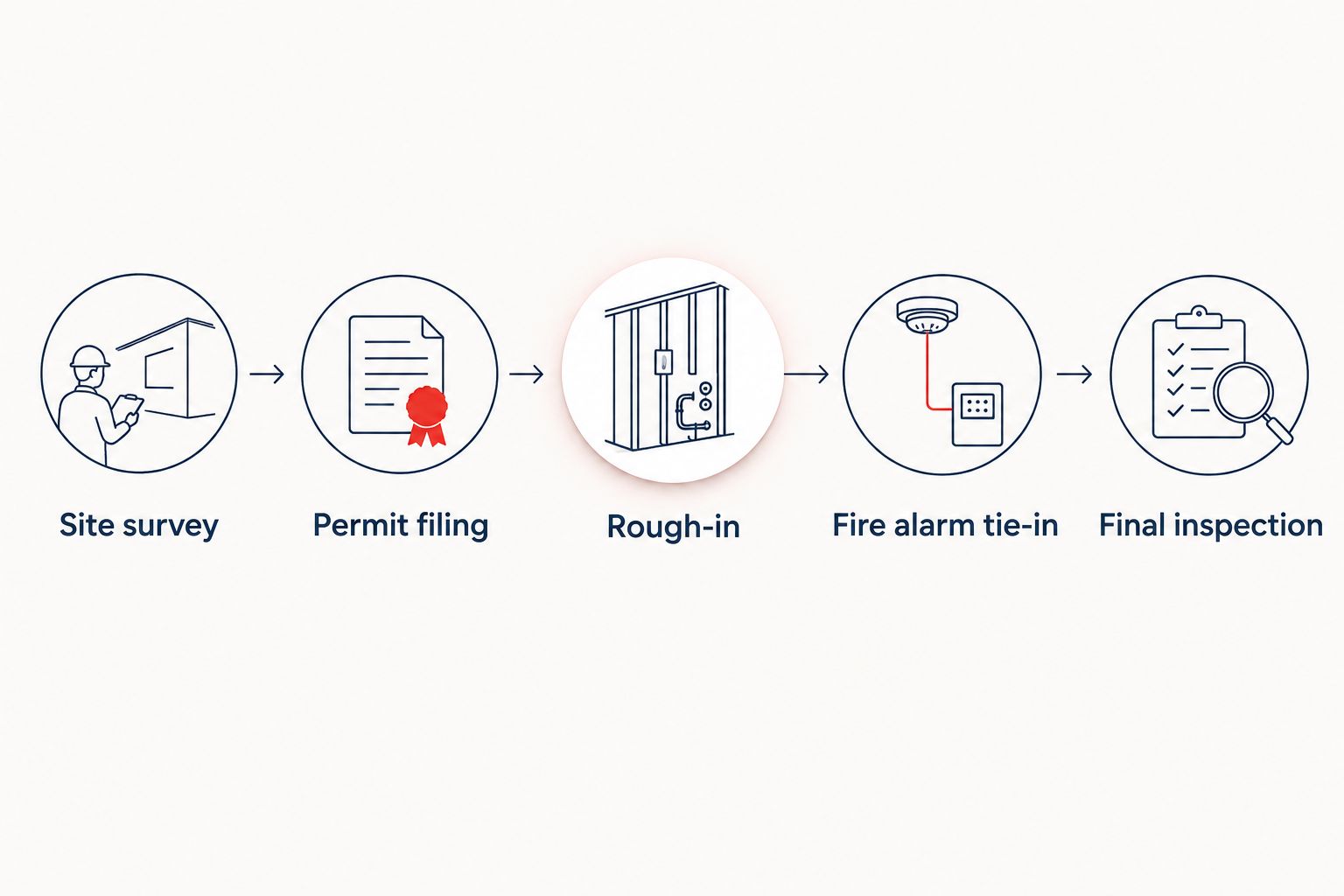
Steps 1 through 4 are the part a crew controls directly. Step 5 depends on how fast the local fire marshal's office can schedule a visit, which varies by jurisdiction and season.
Single-hood system: about 1 day on site
A small kitchen with one hood and a handful of appliances — fryer, griddle, range — is the fastest job. The crew mounts the tank, runs detection over each appliance, ties into the existing gas shutoff valve, and tests the system in a single visit.
Verdict: budget 1 day for the physical install, plus separate time for permit and inspection scheduling.
Multi-hood or large kitchen: 2 to 3 days on site
A kitchen with two or more hoods, a longer duct run, or separate cooking lines needs more detection piping and more appliance zones covered. Crews often split the work across the hood and the mechanical tie-in over 2 to 3 days, especially when the fire alarm interconnect runs through a separate panel.
Verdict: plan for a multi-day job and confirm the schedule with your fire suppression contractor before the kitchen's target open date.
New construction tie-in: add 1 to 2 days for coordination
When the suppression system goes into a kitchen that's still being built, the installer has to coordinate around electricians, HVAC crews, and the hood manufacturer's install timeline. That coordination — not the suppression work itself — is usually what adds 1 to 2 days versus a simple retrofit.
“If a single-hood job runs past 3 days, something on the site is holding up the schedule, not the suppression system.”
Why kitchen suppression install time varies
- Number of hoods and appliance zones — more zones means more detection line and more nozzles to place.
- Retrofit vs. new construction — retrofits work around an existing kitchen; new builds require coordinating with other trades.
- Gas shutoff and fire alarm interconnect — tying the suppression system into an existing fire alarm panel adds wiring and testing time.
- Permit and fire marshal inspection scheduling — this is often the longest single delay, and it's outside the installer's control.
- Agent type — wet chemical systems (the standard for commercial kitchen suppression systems) install differently than clean agent or dry chemical setups used elsewhere.
- Ceiling height and access — a drop ceiling or tight mechanical space slows down piping runs.
Does installation cost scale with installation time?
A longer install generally means more materials and labor, which is reflected in the kitchen hood suppression system cost rather than in a separate line item. Multi-hood and new-construction jobs cost more for the same reason they take longer: more zones, more coordination, more labor hours.
How often does a kitchen suppression system need inspection after installation?
NFPA 96 requires semiannual inspection of kitchen suppression systems — twice a year, every year, after the initial install. That interval doesn't change based on how long the installation itself took.
Can a restaurant stay open during installation?
A restaurant generally cannot operate the kitchen while the suppression system is offline for install or a major service, since the hood can't run without an active system covering it. Most owners schedule the install during a planned closure day or before opening, not around live service.
Schedule your kitchen suppression install
Coordinate the install date around your kitchen's open date, not the other way around.
FAQ
How long does a commercial kitchen suppression system installation take?
A single-hood system takes about 1 day on site in 2026, while a multi-hood or new-construction kitchen runs 2 to 3 days. Permit approval and fire marshal inspection scheduling often add more time than the mechanical work itself.
What's the fastest kitchen suppression install possible?
A single-hood retrofit with an existing gas shutoff already in place can be done in 4 to 8 hours. That's the floor for install time even on the simplest job.
Does a new restaurant build take longer to install suppression in?
Yes, new construction tie-ins add 1 to 2 days because the suppression crew has to coordinate with electricians, HVAC, and the hood manufacturer's own install timeline.
Is the fire alarm tie-in included in the installation timeline?
Yes, wiring the suppression system to trip the building fire alarm and cut gas on discharge is part of the standard install sequence, usually the fourth of five stages.
What causes the longest delays in a kitchen suppression install?
Permit filing and fire marshal inspection scheduling cause the longest delays, not the mechanical installation. Those steps depend on the local jurisdiction's availability, not the crew's schedule.
How often does a kitchen suppression system need inspection after it's installed?
NFPA 96 requires semiannual inspection — twice a year — for kitchen suppression systems, regardless of how long the original installation took.
Can a kitchen open before the final suppression inspection is signed off?
No, most jurisdictions require a fire marshal or authority having jurisdiction sign-off on the suppression system before the kitchen can legally operate.
Does agent type affect kitchen suppression installation time?
Wet chemical systems, the standard for commercial kitchens, install faster than clean agent systems because the piping and nozzle layout is simpler for appliance-level coverage.
One last thing
The number owners get wrong isn't the install day count — it's the assumption that permit approval happens as fast as the mechanical work. Book the permit filing the same week you schedule the install crew, not after, or the suppression system sits finished on the wall while the kitchen waits on a fire marshal date.


