
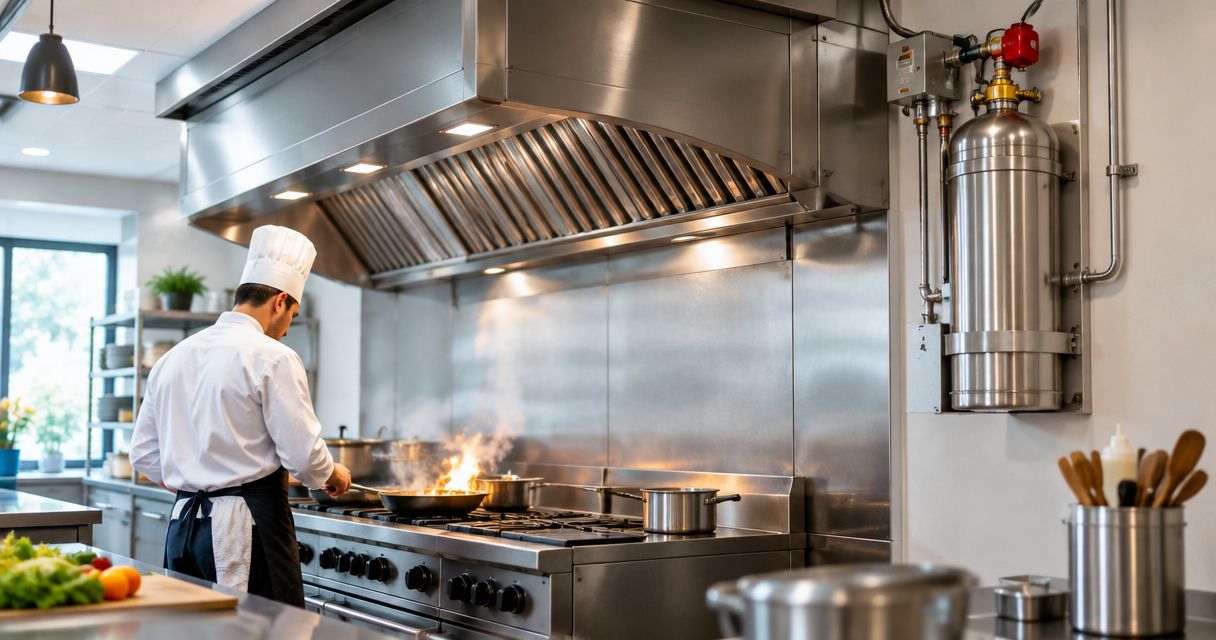
A kitchen hood suppression system cost is never a single number — it moves with nozzle count, hood length, hazard class, and how much of the existing ductwork gets reused instead of replaced. The hidden cost most owners miss is the recurring one: semiannual inspections, cylinder recharges, and fusible link replacement keep running long after the install is done.
- Kitchen hood suppression system cost tracks nozzle count, hood length, hazard class, and inspection frequency, not a flat number.
- Wet chemical systems are the standard for grease-laden cooking lines under NFPA 96 and UL 300 in 2026.
- Semiannual inspections and cylinder recharges add ongoing cost after the initial install.
- First-Line Fire Extinguisher Co. services kitchen hood suppression systems across six states in 2026.
Why this matters
NFPA 96 treats a commercial kitchen with grease-producing equipment as a fire hazard the same way a chemical process line gets treated — automatic suppression over the cooking line isn't optional once a hood pulls grease-laden vapor off a fryer or a flat-top. Fire marshals and insurance underwriters both check for a current suppression system tag before they sign off on a commercial kitchen in 2026, and a lapsed or undersized system is one of the fastest ways to fail an inspection.
First-Line Fire Extinguisher Co. installs and services kitchen hood suppression systems for restaurants, hotels, and institutional kitchens across Kentucky, Illinois, Indiana, Tennessee, Missouri and Alabama. The same conversation comes up on nearly every site visit: the owner wants one number, and the honest answer is that the number depends on the kitchen in front of you.
How much does a kitchen hood suppression system cost in 2026?
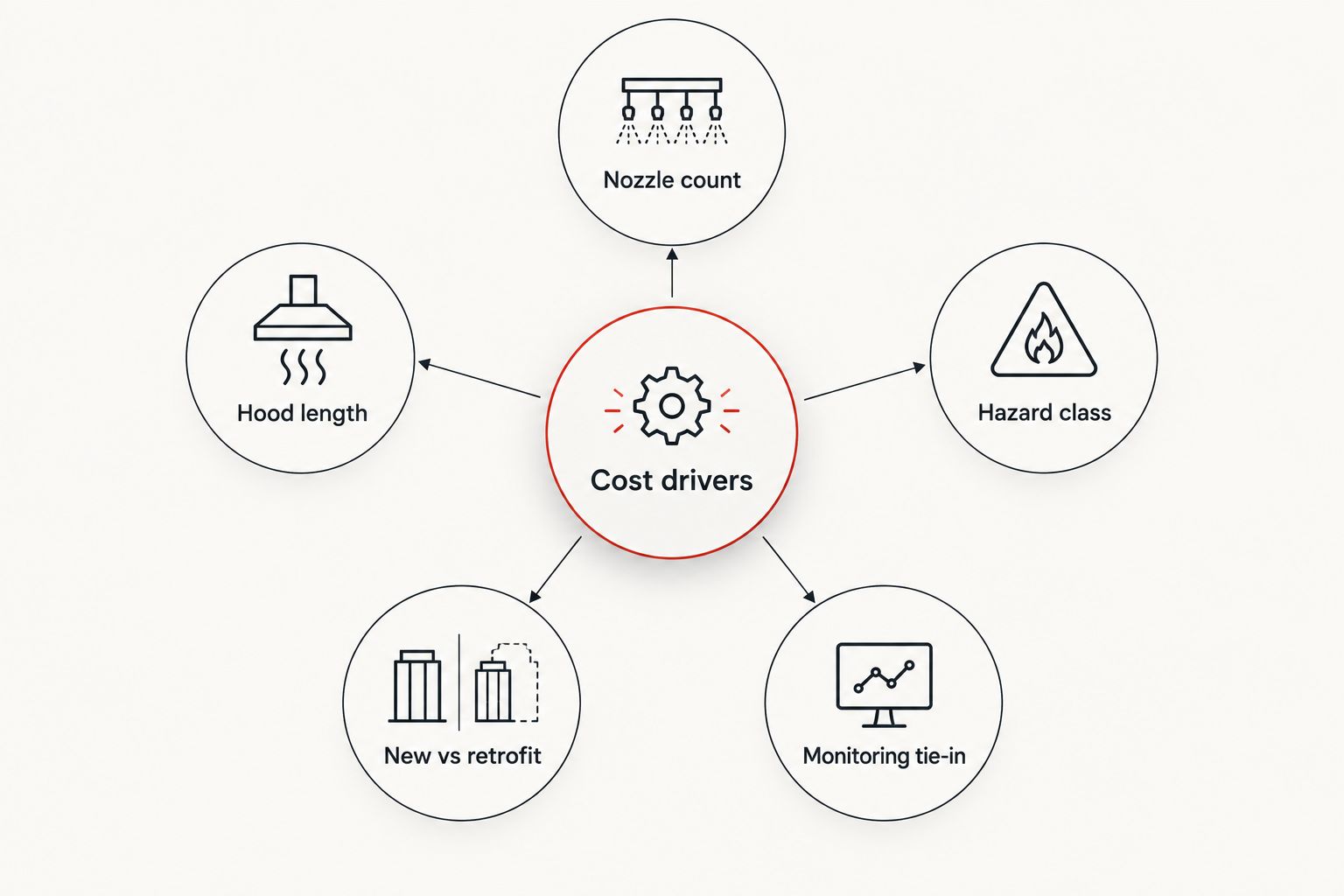
There's no flat price because the variables stack. A single-hood taco counter with two nozzles costs less to protect than a multi-line hotel kitchen with six appliances under one long hood, and a retrofit that reuses existing piping runs cheaper than a system torn out and rebuilt from scratch. Here's what actually moves the quote:
| Cost driver | Impact | Why |
|---|---|---|
| Nozzle count | High | Every fryer, griddle, range, and duct opening needs dedicated coverage |
| Hood length | High | Longer hoods need more piping, more nozzles, and more labor hours |
| Hazard class | Medium | Grease-laden vapor equipment needs wet chemical agent; lighter cooking may not |
| New install vs. retrofit | Medium | Reusing existing cylinders or piping cuts labor time |
| Local permit and AHJ review | Low to Medium | Some jurisdictions require engineered drawings before install |
| Tie-in to fire alarm monitoring | Low to Medium | Cross-zoning the suppression system to the alarm panel adds wiring and programming |
A fire extinguisher and suppression contractor walks the hood, counts appliances, and measures duct length before quoting — there's no way to price a kitchen hood suppression system cost accurately over the phone.
Wet chemical systems: the 2026 standard for commercial kitchens
Wet chemical is what most commercial kitchens run in 2026, and it's what UL 300 testing is built around. The agent knocks down grease fires fast and cools the surface enough to stop reflash, which is why it's paired with fryers, griddles, and char-broilers under a single hood.
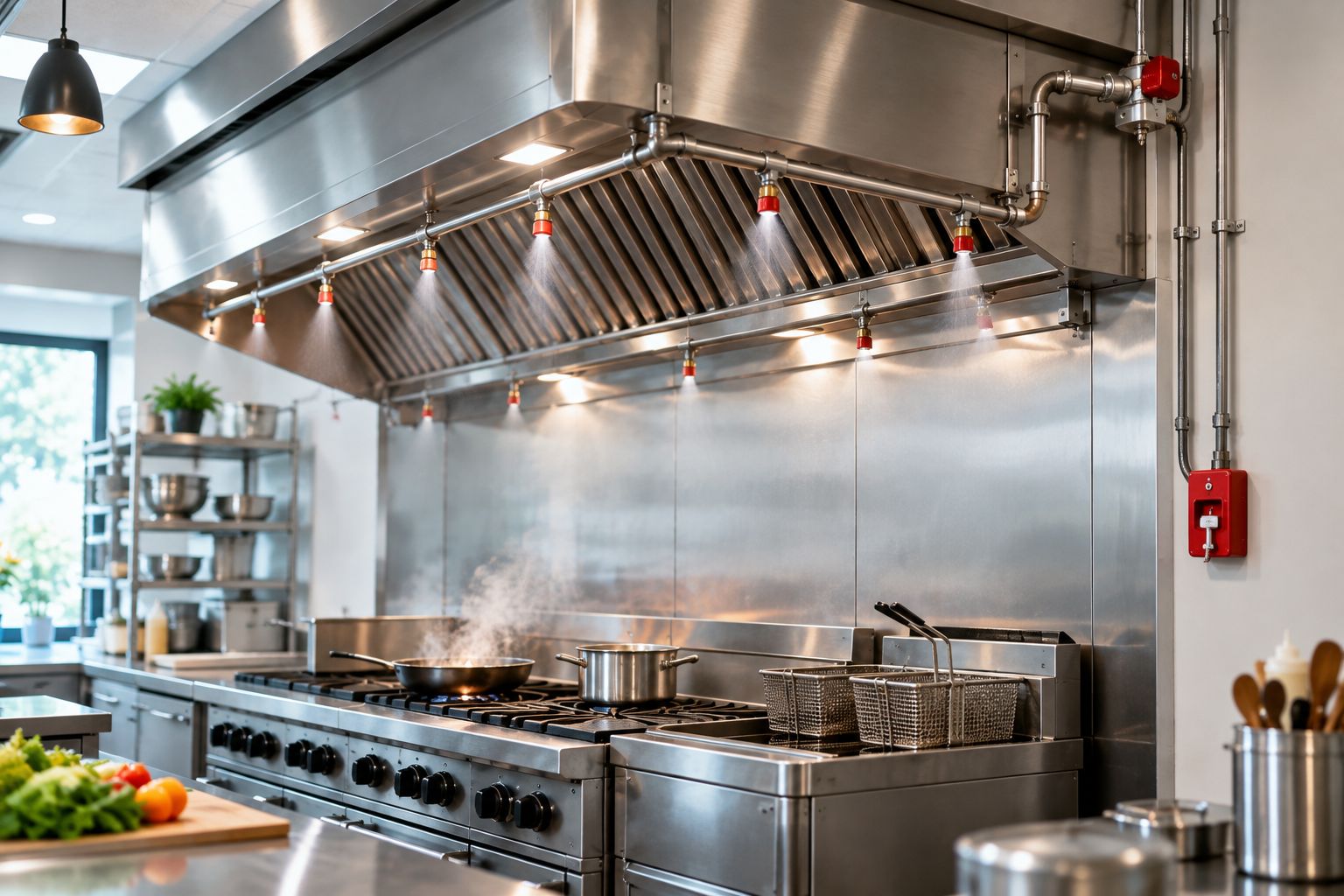
Best for: any kitchen with grease-producing cooking equipment under NFPA 96. Verdict: Buy — this is the code-required system for a commercial cooking line, not an upgrade option.
Dry chemical systems: a legacy option, mostly phased out
Dry chemical kitchen systems were common decades ago but have largely been replaced by wet chemical in new installs, since wet chemical agent cools the grease surface instead of just smothering the flame. Most contractors only encounter dry chemical kitchen systems now during a retrofit of an older building. Verdict: Skip for new installs — spec wet chemical instead.
Clean agent systems: rare in kitchens, common elsewhere
Clean agent suppression shows up far more often in server rooms and electrical vaults than over a cooking line, since it's built to protect equipment without leaving residue rather than to knock down a grease fire. It's worth knowing the difference so a quote for the wrong system type doesn't end up on your kitchen job. Verdict: Skip for kitchen hoods — this is the right call for a data closet, not a fry station.
Why kitchen hood suppression cost varies
Four things separate a small quote from a large one on the same style of kitchen:
- Number of cooking appliances under the hood — each fryer, griddle, or range typically needs its own nozzle
- Hood and duct length — longer runs mean more piping and more labor hours
- Whether it's new construction or a retrofit — retrofits sometimes reuse cylinders and existing piping, new builds don't
- Local AHJ requirements — some jurisdictions require stamped engineering drawings before a system gets approved
- Monitoring tie-in — connecting the suppression system to a fire alarm panel or gas shutoff valve adds wiring and programming time
- Ongoing service cadence — NFPA 96 requires inspection at least every 6 months, and that recurring cost sits on top of the install
Does a kitchen hood suppression system need a permit?
Most jurisdictions require a permit and plan review before a kitchen hood suppression system goes in, especially for new construction. The local AHJ often wants engineered drawings showing nozzle placement and coverage before it signs off, which adds time to the project timeline but not necessarily to material cost.
How often does a kitchen hood suppression system need inspection?
NFPA 96 sets the inspection interval at every 6 months for kitchen hood suppression systems, and that inspection checks nozzle blockage, cylinder pressure, and fusible link condition. Skipping an inspection cycle is one of the more common reasons a commercial kitchen fails a health or fire department walkthrough.
Can an existing dry chemical system be converted to wet chemical?
Converting an old dry chemical kitchen system to wet chemical is possible but usually means new piping and nozzles rather than a simple agent swap, since the two agents aren't interchangeable in the same hardware. A contractor doing the walkthrough can tell you fast whether the existing duct and hood layout supports a straight conversion or needs a fuller rebuild.
Get a kitchen hood system quote
A site walk gives you a real number, not a guess over the phone.
FAQ
How much does a kitchen hood suppression system cost in 2026?
Kitchen hood suppression system cost depends on nozzle count, hood length, hazard class, and whether it's new construction or a retrofit — there's no single flat price. A contractor needs to measure the hood and count appliances before quoting accurately.
Is a kitchen hood suppression system required by law?
Yes, NFPA 96 requires automatic fire suppression over commercial cooking equipment that produces grease-laden vapor. Local fire codes and insurance policies generally enforce this requirement before a commercial kitchen can open or stay open.
What's the difference between wet chemical and dry chemical kitchen systems?
Wet chemical agent cools the grease surface and prevents reflash, making it the 2026 standard for commercial kitchens under UL 300 testing. Dry chemical systems are largely legacy installs now found mostly in older buildings that haven't been retrofitted.
How often does a kitchen hood suppression system need service?
NFPA 96 sets the inspection interval at every 6 months for kitchen hood suppression systems. That inspection checks nozzle condition, cylinder pressure, and fusible links, and it's separate from any repair work triggered by a failed inspection.
Does a kitchen hood suppression system need to tie into the fire alarm?
Many jurisdictions require the suppression system to cross-zone with the building fire alarm so a discharge triggers a signal to the panel. This adds wiring and programming work on top of the base suppression install.
Can a kitchen hood suppression system be added to an existing kitchen without one?
Yes, retrofitting a kitchen hood with a wet chemical suppression system is common, though the cost depends on whether the existing hood and duct layout accommodate standard nozzle placement. Older hoods sometimes need modification before a system can be installed to code.
What happens if a kitchen hood suppression system fails inspection?
A failed inspection usually means the kitchen can't legally operate until the suppression system is repaired or recharged and re-tagged. Common failure points are low cylinder pressure, blocked nozzles, and expired fusible links.
One last thing
The inspection tag matters as much as the install. A kitchen hood suppression system that's never been serviced past its 6-month window is a liability whether or not it would have worked in a fire — the fire marshal and the insurance adjuster both check the tag date first, not the equipment.


