
Fire watch during an alarm outage requires a site-specific hourly quote; there is no single rate that answers what your building will cost in 2026. Ask for the staffing basis, minimum billable hours, added charges, and the conditions for ending coverage—not just an hourly figure.
- How much does a fire watch cost per hour during an alarm outage? Get a site-specific, written quote.
- Compare total billable staffing hours, not hourly rates alone.
- Confirm the fire watch plan with the authority having jurisdiction before relying on it.
- Firstlinefire provides fire alarm services; confirm fire watch arrangements separately.
How much does a fire watch cost per hour during an alarm outage?
The useful number is the total charge for the required coverage, not the advertised hourly rate. A quote needs to identify who will patrol, what area they will cover, when billing starts, and what ends the assignment.
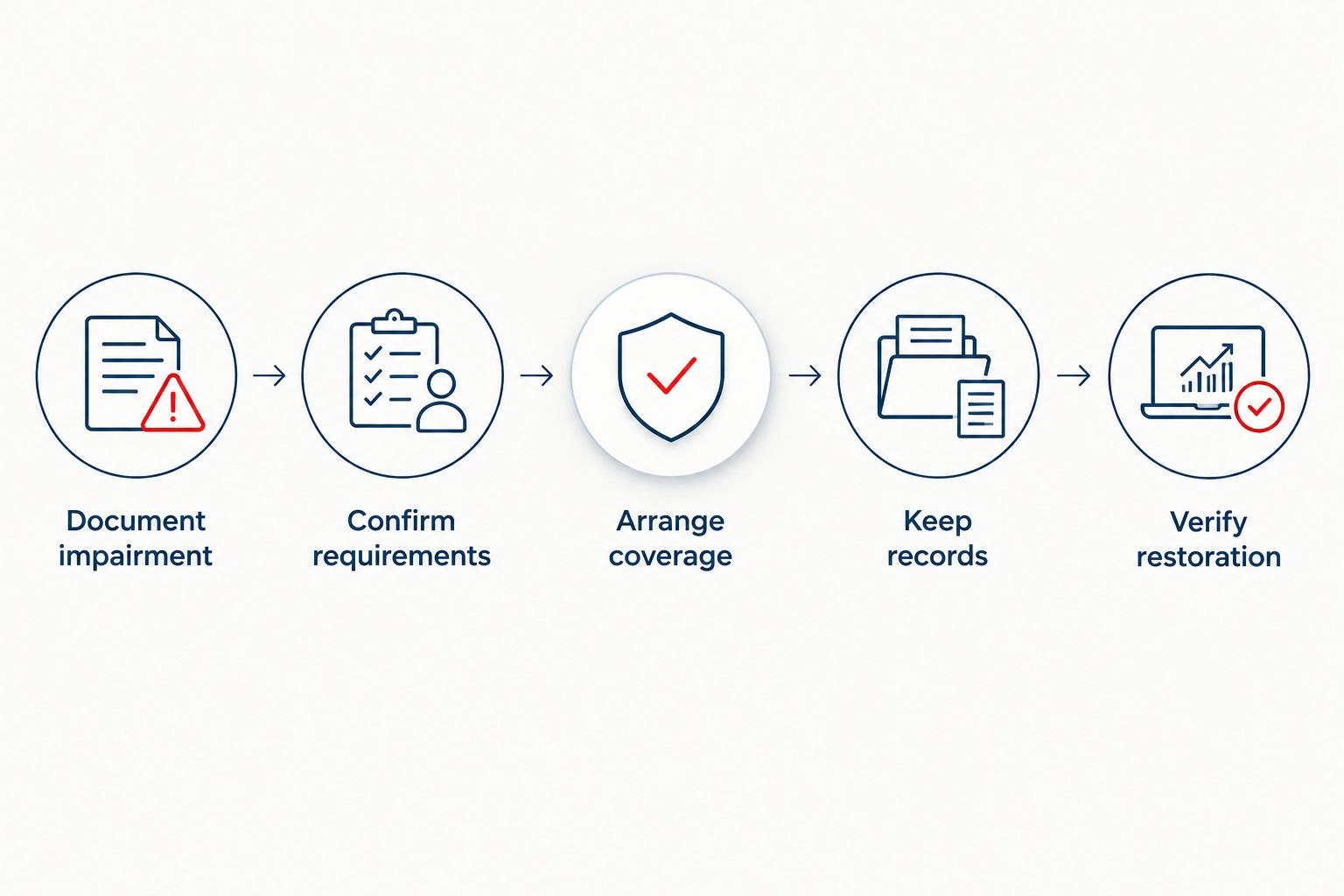
Start with the fire alarm impairment to fire watch coverage workflow. The coverage decision comes before the purchasing decision. Your local fire official or other authority having jurisdiction, often called the AHJ, determines the acceptable response under the rules that apply to your building.
For a 2026 quote, request this breakdown in writing:
| Quote item | What you need to establish | Why it matters |
|---|---|---|
| Staffing basis | Whether the hourly charge applies per person or to the whole assignment | Prevents comparing unlike quotes |
| Coverage period | Start time, scheduled end, and extension procedure | Defines the billable assignment |
| Minimum billing | Any minimum shift or callout commitment | Separates time worked from time charged |
| Added charges | Travel, dispatch, overtime, or other listed charges | Shows what the hourly figure excludes |
| Coverage scope | Buildings, floors, areas, and duties included | Connects staffing to the actual impairment |
| Release conditions | Who authorizes the watch to end | Prevents an unsupported early departure |
Do not assume any particular added charge applies. Ask the provider to mark each item as included, excluded, or not applicable. Keep alarm diagnosis and repair on a separate line so you can see what each service covers.
Why this matters
An alarm outage creates two jobs: manage the impaired protection and restore the system. Buying patrol coverage does not repair a failed detector circuit, restore notification appliances, or reconnect a failed monitoring path.
A low hourly quote answers very little if it leaves out required areas or ends before the approved release point. Compare the same written scope before comparing providers. You need a coverage plan that addresses the outage, not just someone on the property.
If you are building a 2026 outage budget, keep temporary coverage and permanent repairs separate. That makes it easier to approve urgent work without losing track of the remaining repair obligation.
Build the coverage scope before requesting quotes
Give each prospective provider the same information. Otherwise, one provider can quote a limited patrol assignment while another includes relief staffing and a broader route. Those are different jobs.
Identify the impairment
Ask the alarm service provider to describe what has failed and which areas are affected. Distinguish between detection, occupant notification, and transmission to the monitoring service. Do not label a whole building unprotected—or fully protected—based only on a panel message.
Record when the impairment began, who discovered it, and what action has already been taken. If the affected area remains uncertain, make that uncertainty clear to the fire official and prospective coverage provider.
Confirm the required response
Contact the responsible fire official through the appropriate local process. Ask whether fire watch, evacuation, restricted use, or another measure is required for the specific impairment. Do not treat a contractor's staffing proposal as permission to remain open.
Request clear instructions on the covered area, patrol duties, reporting, and release process. A verbal instruction is harder to hand off between shifts, so document the direction you receive and who gave it.
Define the assignment
Give the provider a usable site description: occupied areas, access restrictions, floor layout, outdoor travel, and any hazardous operations relevant to the route. Explain whether the facility will remain occupied throughout the outage.
Ask the provider to identify assumptions in the proposal. If a locked area, separate building, or staffing gap falls outside the assignment, resolve it before coverage begins.
Why fire watch quotes vary
These are scope questions to put to providers, not preset charges or universal staffing rules:
- Coverage area. Ask how separate buildings, multiple floors, and restricted spaces affect the proposed patrol assignment.
- Required duties. Confirm the patrol, communication, documentation, and emergency actions specified for the site.
- Coverage duration. Ask how the provider handles an uncertain repair completion time and extensions beyond the initial assignment.
- Staffing and relief. Establish how breaks, shift changes, and absences will be covered without leaving an assigned duty unattended.
- Scheduling terms. Ask whether the proposed terms change for nights, weekends, urgent dispatch, or extended work.
- Billing rules. Identify minimum commitments, billing increments, cancellation terms, and any separately listed charges.
For your 2026 purchasing file, keep the approved scope beside the signed quote. If the scope changes, get the staffing and billing changes documented together. A revised patrol requirement and an unchanged purchase order can leave different people working from different instructions.
Compare contracted coverage with assigned employees
Neither approach is automatically acceptable for your property. Confirm local requirements, personnel qualifications, and the approved duties before choosing a staffing arrangement.
| Approach | Best for | Practical advantage | Limitation to resolve |
|---|---|---|---|
| Contracted fire watch | Sites seeking separately assigned coverage | Establishes a defined outside assignment | You still need to verify qualifications, scope, relief, and acceptance |
| Assigned employees | Sites with suitable personnel and an accepted internal plan | Uses staff who know the building | Ordinary job duties can conflict with watch duties |
Contracted fire watch: best for a site that needs separately assigned personnel. Ask who supervises the assignment, how replacements are arranged, and who receives the patrol records. Hiring an outside provider does not remove the need to confirm the plan with the responsible authority.
Assigned employees: best for a site with qualified staff and an accepted internal arrangement. Do not assume a receptionist, maintenance worker, or security officer can add fire watch to an existing workload. Check the required duties and whether other tasks must stop.
The decision is not simply outside invoice versus employee wages. Compare the actual assignment, supervision, relief, and effect on normal work. An internal plan that cannot maintain the required coverage is not an equivalent alternative.
Set up the outage response in a clear sequence
Use the following sequence to organize the assignment. Follow the emergency plan and directions from the responsible authority; this checklist does not authorize continued occupancy.
- Document impairment. Record the affected system functions and areas. Keep the alarm contractor's findings with the outage record.
- Confirm requirements. Establish the required protective measures and notification process with the responsible authority.
- Arrange coverage. Name the provider or assigned personnel, covered areas, duties, relief arrangements, and communication method.
- Keep records. Maintain the patrol and incident documentation required by the approved plan. Record handoffs and changes in coverage.
- Verify restoration. Have qualified personnel complete the necessary restoration checks, then follow the release and notification process.
Keep a named contact responsible for coordinating these tasks. The repair technician, coverage provider, building manager, and fire official have different roles; a shared contact prevents instructions from being lost between them.
What should a written fire watch assignment include?
A purchase order alone does not tell personnel what to do on site. Pair the commercial agreement with clear operating instructions that match the accepted coverage plan.
Include the site address, affected areas, site contact, emergency reporting method, and access arrangements. Identify where personnel report, how they receive keys or access credentials, and where they leave records at the end of a shift.
Specify who receives notice of smoke, fire, a new impairment, or an inaccessible area. Do not leave personnel to invent a response while an incident develops. The assignment should direct them to the site's emergency procedures and required reporting actions.
For a 2026 outage file, keep the assignment version and revision date visible. When repairs change the affected area, update the operating instructions rather than relying on a message passed from one worker to another.
Can the business stay open during an alarm outage?
An alarm outage does not give you automatic permission to remain open with a fire watch. The response depends on the impaired functions, building use, applicable requirements, and direction from the responsible authority.
Ask specifically about occupied areas, restricted operations, and any conditions attached to continued use. Do not interpret approval for one area or activity as approval for the whole property.
Separate a provider's ability to staff an assignment from the authority's decision about occupancy. A contractor can agree to send personnel without having authority to approve your operating plan.
Does fire watch replace alarm monitoring?
Fire watch does not restore a failed alarm monitoring connection. Temporary patrol coverage and automatic signal transmission perform different jobs.
Have the alarm service provider identify which functions remain operational. A working local alarm does not, by itself, establish that signals reach the monitoring service; a working communication path does not establish that every detector and notification appliance works.
Keep the repair scope specific. Restoring only one failed function does not establish that the entire impairment has ended.
When can you stop paying for coverage?
End coverage according to the accepted release process, not an estimated repair time. Ask the provider how extensions, partial shifts, and final release affect billing before the assignment starts.
A repair completion message is not the same as documented verification of the affected functions. Confirm the required checks, notifications, and authority instructions before releasing personnel.
Close the 2026 outage record with the restoration evidence, coverage end time, and final invoice. Compare the billed staffing and hours against the assignment and documented changes.
Where Firstlinefire fits
Firstlinefire is a fit for commercial and industrial customers seeking fire alarm and fire-protection services. Its stated services include fire alarms, suppression systems, extinguisher service, hydro testing, and safety training across Kentucky, Illinois, Indiana, Tennessee, Missouri, and Alabama.
Use Firstlinefire to discuss the alarm service side of an outage. The company's stated services do not establish fire watch staffing, so confirm that arrangement separately. Alarm service and patrol coverage need distinct scopes even when they support the same restoration plan.
Discuss your alarm outage
Confirm the alarm service scope and keep temporary coverage arrangements separate.
FAQ
How do I get an accurate hourly fire watch quote?
Give each provider the same written coverage scope and request the full billing terms. Identify staffing, covered areas, expected duration, minimum commitments, added charges, and release conditions.
Is a fire watch hourly rate per guard or per building?
The quote must specify whether the hourly rate applies per person or to the whole assignment. Do not compare rates until the staffing basis and coverage scope match.
Can my maintenance staff perform fire watch?
Do not assign maintenance staff without confirming the applicable requirements and accepted plan. Personnel must be able to perform the required duties without conflicting assignments.
Do I need fire watch for every alarm trouble signal?
A trouble signal alone does not establish the required response. Have qualified personnel identify the affected functions and confirm the necessary protective measures with the responsible authority.
Can I end fire watch when the alarm panel looks normal?
A normal-looking panel alone does not establish that all affected functions have been restored. Complete the required verification and follow the accepted release process.
Does hiring fire watch mean my business can stay open?
Hiring fire watch does not automatically authorize continued occupancy. Confirm the operating conditions and required protective measures with the responsible authority.
Does Firstlinefire provide fire watch personnel?
Firstlinefire's stated services include fire alarms and other fire-protection services, but do not establish fire watch staffing. Confirm staffing separately rather than assuming it is included with alarm repair.
One last thing
Put the release conditions in writing before coverage starts. Without a clear endpoint, the building manager, technician, and coverage provider can each expect someone else to make the final call.
Name the person who coordinates restoration evidence and required notifications. Then give the coverage provider a clear release instruction through the agreed process. That closes the assignment without confusing a repair estimate with permission to stop watching.


