
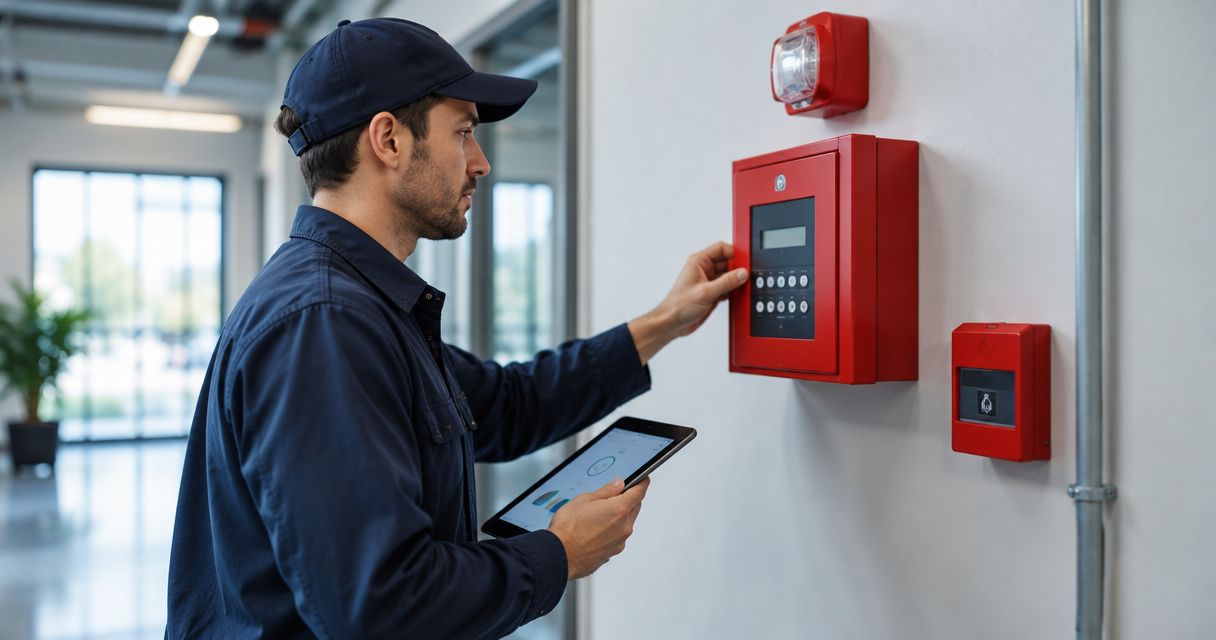
Annual fire alarm inspection cost tracks device count and system type, not the size of your building — a single-panel system with a handful of devices costs less to test than a multi-building system running duct detectors and central-station monitoring. NFPA 72 sets the testing floor at once a year for a full function test, but pull stations, smoke detectors, waterflow switches, and duct detectors don't all sit on the same clock. Get a device count before you set a budget line for 2026 — that number, not square footage, is what actually shows up on the invoice.
- Annual fire alarm inspection cost is driven by device count and system type, not building size.
- NFPA 72 requires a full annual function test, with waterflow switches and duct detectors on tighter quarterly or semi-annual schedules.
- Monitoring and inspection are billed separately — bundling both with one vendor cuts the number of site visits on your calendar.
- First Line Fire runs annual fire alarm testing and monitoring across Kentucky, Illinois, Indiana, Tennessee, Missouri, and Alabama.
Why this matters
A fire marshal or insurance carrier doesn't ask how big your building is — they ask for the current test certificate. Let that lapse and you're out of compliance the day it expires, regardless of what you spent on the system itself.
Most properties get quoted on square footage first and device count never comes up until the technician is on site counting heads and pull stations. That's backwards. First Line Fire prices inspections off the device list, not the floor plan, because that's what determines how long the visit takes.
How much does it cost to inspect a fire alarm system annually?
The number on your invoice moves with three things: how many devices the technician has to individually test, how many panels and zones the system runs, and whether waterflow switches or duct detectors are tied into the alarm. A property with one panel and a low device count takes a fraction of the time a five-building campus with a monitored central station takes.
Ask any vendor quoting your job for device count first. A quote built only on square footage is a guess.
| System profile | What the technician tests | Relative cost |
|---|---|---|
| Single-panel, low device count | Panel, pull stations, smoke/heat detectors, one or two notification circuits | Lower |
| Multi-zone building with sprinkler tie-in | All of the above plus waterflow and tamper switches, elevator recall | Moderate |
| Multi-building or campus system | Multiple panels, duct detectors, central-station monitoring reconciliation, cross-zone coordination | Higher |
“A quote based only on square footage is a guess — device count is what the technician actually bills for.”
Why annual fire alarm inspection cost varies
- Device count — pull stations, smoke and heat detectors, horns and strobes all get function-tested individually, not as a batch.
- Panel and zone count — more panels means more time and more paperwork per zone.
- Waterflow and tamper switches — tied to a sprinkler system, these add a second test sequence beyond the alarm devices themselves.
- Duct detectors — mounted inside HVAC ductwork, these need access equipment most other devices don't require.
- Central-station monitoring reconciliation — confirming the alarm signal actually reaches dispatch adds a call-and-verify step to the visit.
- System age — older or discontinued panels sometimes need parts sourced before a fault clears, which turns a one-visit job into two.
How often does a fire alarm system have to be tested?
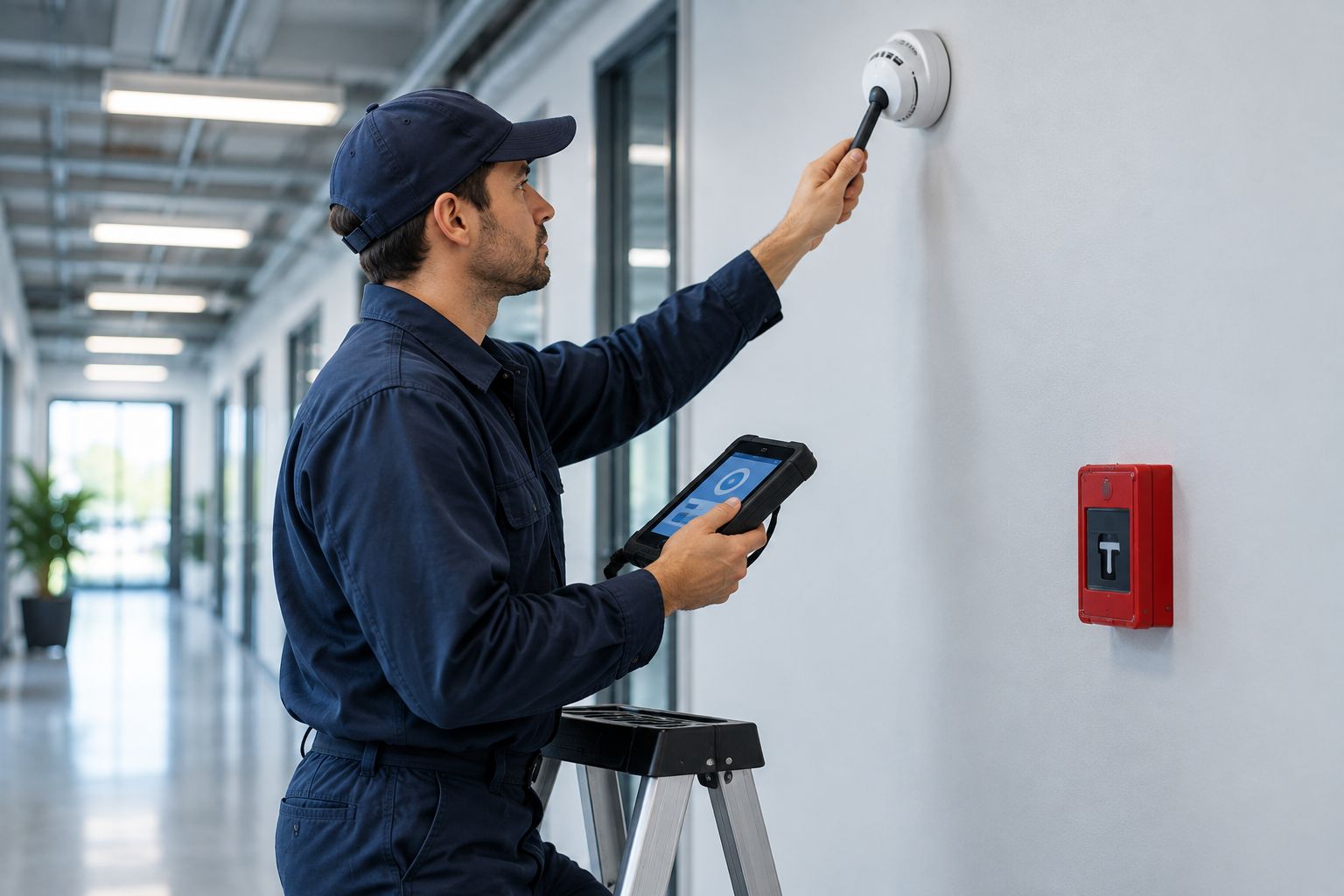
NFPA 72 requires a full function test of the fire alarm system at least once a year in 2026, the same standard it's held for prior cycles. Certain devices sit on a tighter clock inside that same year: waterflow switches and duct detectors typically get checked quarterly or semi-annually, and battery and circuit checks on the panel itself happen more often than once annually in most jurisdictions.
The annual test is the one your fire marshal or insurance carrier asks to see documented. For a full breakdown by device type, see fire alarm testing frequency by system type.
Is fire alarm inspection the same as fire alarm monitoring?
No. Inspection is the physical, on-site test of every device and panel function required by NFPA 72. Monitoring is the ongoing signal connection between your panel and a central dispatch station that calls for help when an alarm trips. You can have one without the other, though most commercial properties carry both.
If you're pricing the recurring side separately, fire alarm monitoring cost per month breaks down what that line item looks like against the once-a-year inspection charge.
Who is qualified to inspect a commercial fire alarm system?
A licensed, certified fire alarm technician runs the inspection — not building maintenance staff, not whoever answers the phone fastest. First Line Fire's technicians handle NFPA 72 testing and tie the results back into your life safety plan across commercial, industrial, and marine properties in Kentucky, Illinois, Indiana, Tennessee, Missouri, and Alabama.
Schedule your annual fire alarm test
One visit covers the panel, the devices, and the paperwork.
FAQ
How much does it cost to inspect a fire alarm system annually?
Cost depends on device count, panel count, and whether waterflow or duct detectors are tied in — a single-panel system with a low device count costs less than a multi-building campus. Get a device count from your inspector before budgeting for 2026; square footage alone won't tell you the number.
How often does NFPA 72 require fire alarm testing?
At least once a year for a full function test, with waterflow switches, duct detectors, and some panel functions on quarterly or semi-annual schedules inside that same year.
Does fire alarm inspection cost include monitoring?
No, inspection and monitoring are billed separately. Monitoring is the recurring signal connection to a central dispatch station; inspection is the once-a-year device test.
Can building staff do the annual fire alarm test?
No. NFPA 72 requires a qualified, certified fire alarm technician to perform and document the annual test, not in-house maintenance staff.
What happens if a fire alarm inspection is skipped?
The certificate on file expires and the property is out of compliance with the fire marshal and, in most cases, the insurance carrier, the day it lapses.
Do duct detectors cost more to test?
Yes, relative to wall-mounted devices. They sit inside HVAC ductwork and usually need access equipment the rest of the device count doesn't.
Is a multi-building system more expensive to inspect than a single building?
Yes. More panels, more zones, and central-station reconciliation across buildings adds time to the visit compared with a single-panel system.
One last thing
Duct detectors get skipped more than any other device on a fire alarm system. They're mounted inside ductwork, out of sight, and an inspector who doesn't pull the access panel will sign off on a test that never happened. Ask to see the duct detector test logged by device number in 2026's report, not just a blanket "system passed" line.


