
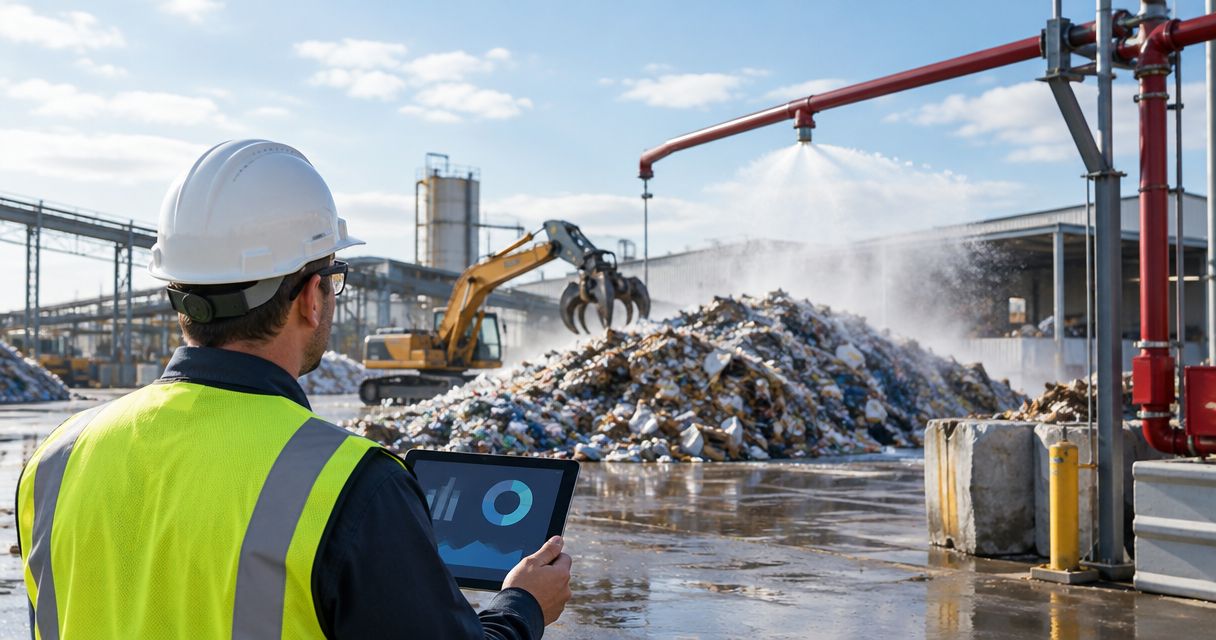
Recycling facility fire suppression cost in 2026 depends on a site-specific design, not a standard charge per building or square foot. Budget for the installed protection, then separate inspection, testing, maintenance, alarm connections, and any work needed to support the installation; an equipment-only quote does not cover the whole job.
- How much does recycling facility fire suppression cost? Define the protected hazards before comparing installation quotes.
- Separate building protection, process equipment, alarm connections, and ongoing service in every proposal.
- Firstlinefire provides fire suppression, fire alarms, and safety training for commercial and industrial customers.
- Require written coverage limits and exclusions before approving a recycling facility fire suppression project.
Why this matters
A recycling facility is not one uniform fire hazard. Receiving areas, storage piles, conveyors, processing equipment, and electrical rooms need separate attention during the site review. A quote that covers a machine is not the same scope as a quote that covers the building.
Compare the protected hazards before you compare the totals. Start with the facility layout and the work included in the proposal. Firstlinefire's fire-protection services include suppression systems, fire alarms, extinguisher services, and safety training for commercial and industrial customers.
How much does recycling facility fire suppression cost in 2026?
The cost is the total of the work needed to protect the defined building, equipment, and operations. Floor area alone does not describe that work. Material type, storage arrangement, available water supply, equipment layout, and existing protection all belong in the scope.
For your 2026 budget, ask each contractor to use the same site information and list the same deliverables. Otherwise, a smaller total can simply mean fewer hazards covered, fewer connections included, or more work assigned to someone else.
What belongs in the cost breakdown?
| Scope item | What the proposal should identify | What to check |
|---|---|---|
| Site review and design | Protected hazards, design basis, drawings, and calculations where applicable | Whether design work is included |
| Suppression equipment | Piping, discharge devices, controls, and supporting equipment | Exact coverage boundaries |
| Detection and alarms | Detection, notification, supervision, and required connections | Which contractor makes each connection |
| Supporting work | Water supply, electrical work, structural support, and access | Work excluded from the suppression contract |
| Installation | Labor, equipment access, and work-area restrictions | Production interruptions and shutdown needs |
| Acceptance and handover | Testing, required approvals, records, and operating instructions | What must happen before completion |
| Ongoing service | Inspection, testing, maintenance, and corrective work | What the service agreement includes |
Treat this breakdown as a scope checklist, not a system specification. The qualified designer must determine the protection that suits the actual hazards and applicable requirements.
Building protection: define the storage and operating areas
Building protection addresses a different scope from protection installed on individual equipment. The design review needs to account for what you store, how you store it, and how the building is used. Do not assume an existing system remains suitable after a change in materials or storage arrangements.
Best for: evaluating protection across receiving, processing, and storage areas as part of the building's fire-protection plan. The advantage is a building-level approach; the limitation is that building protection does not automatically resolve every enclosed or specialized process hazard.
Give the designer the current layout, not an old leasing plan. Mark storage areas, partitions, equipment, access routes, and planned changes. Ask the proposal to state which areas it covers and which assumptions you must maintain after installation.
Equipment protection: define the machine and its boundaries
Equipment protection targets a defined hazard associated with a machine or process. A conveyor, baler, shredder, or other processing installation needs review based on its actual construction, material stream, operating conditions, and manufacturer instructions.
Best for: addressing a specific equipment hazard identified by the design review. The advantage is focused protection; the limitation is its boundary. Protection for one machine does not establish coverage for adjacent storage, upstream equipment, or the whole processing line.
Ask what triggers the system, where it discharges, and what happens to the equipment when it operates. The proposal should identify required shutdown connections and who is responsible for them. Keep those connections in the written scope rather than leaving them for installation day.
Detection and alarms: define what happens after a signal
Detection and alarm work belongs in the project review even when a separate contractor performs it. A device that detects a condition, a system that notifies occupants, and equipment that applies suppression perform different functions.
Best for: identifying conditions and initiating the specified notification or control response. The advantage is a defined warning and signaling function; the limitation is that detection alone does not extinguish a fire.
Ask the designer to describe the intended sequence of operation in plain language. Your operations lead should understand what stops, what sounds, what signal is transmitted, and who responds. Do not assume an existing alarm connection supports a new suppression installation without review.
Compare protection scopes, not interchangeable packages
| Protection scope | Best for | Main benefit | Main limitation |
|---|---|---|---|
| Building protection | Building and storage hazards identified in the design | Addresses the defined building-level scope | Does not automatically cover every specialized process hazard |
| Equipment protection | A defined machine or processing hazard | Targets the identified equipment hazard | Coverage stops at the specified boundaries |
| Detection and alarms | Warning, signaling, and specified control actions | Establishes a response sequence | Does not provide extinguishment by itself |
These scopes can work together. They are not substitutes to select solely by the smallest proposal total.
Why recycling facility fire suppression cost varies
The main drivers are the actual hazards and the work needed to protect them. Keep these factors visible in every proposal:
- Material stream. Paper, plastics, metals, and mixed incoming loads present different fire-protection questions. Identify accepted materials and how unwanted items are handled.
- Storage arrangement. Pile locations, storage height, aisles, and separation affect the design review. Document the intended operating layout.
- Equipment layout. Enclosures, conveyors, transfer points, and access restrictions affect where protection can be installed and serviced.
- Existing infrastructure. Water supply, electrical capacity, alarm equipment, and existing suppression need review before reuse is assumed.
- Installation access. Overhead work, occupied processing areas, and shutdown restrictions affect the installation plan. State those restrictions before bids are prepared.
- Approval and handover requirements. Identify the authority having jurisdiction, required submissions, acceptance activities, and documents needed at completion.
A quote is only comparable when its assumptions are comparable. For a 2026 project, issue the same layout and operating description to every bidder. Record any changes during the bidding process and share them with everyone pricing the work.
How do you get a usable installation quote?
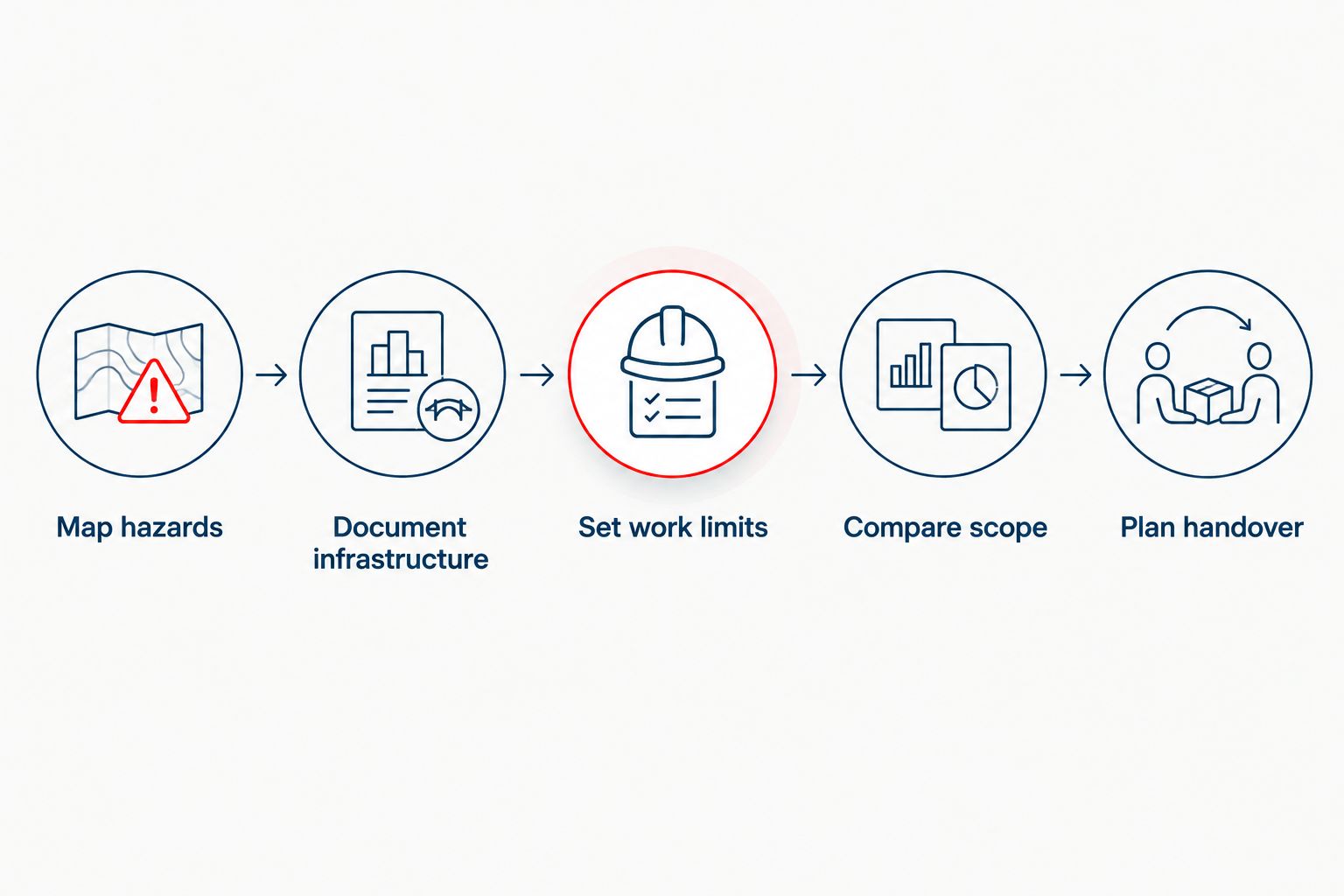
Use a written sequence that starts with the hazards and ends with operating responsibility. A drawing with equipment locations helps, but the contractor also needs to understand what moves through the facility and what changes during a normal shift.
- Map hazards. Mark receiving areas, storage, processing equipment, electrical spaces, and existing protection. Identify materials handled in each area.
- Document infrastructure. Gather available drawings, service records, water-supply information, and alarm documentation. Let the designer verify what can be reused.
- Set work limits. State access restrictions, production schedules, shutdown windows, and planned equipment changes. Name the person who can authorize interruptions.
- Compare scope. Require coverage boundaries, exclusions, supporting work, and acceptance responsibilities in writing. Resolve differences before selecting a contractor.
- Plan handover. Identify operating instructions, staff training, service arrangements, and records you need when the work is complete.
The site review should produce decisions, not just measurements. Ask what information is still needed, who will obtain it, and which design assumptions remain open. Do not approve equipment based on an unresolved description of the hazard.
Firstlinefire is a fit for commercial and industrial operators seeking fire suppression, fire alarms, and safety training services. Its stated service area includes Kentucky, Illinois, Indiana, Tennessee, Missouri, and Alabama. Confirm the specific recycling-facility work and project requirements before selecting the provider.
Discuss your facility's fire-protection scope
Identify the building, equipment, and service requirements for your project.
What should you check before accepting a proposal?
Start with the exclusions. A proposal can include suppression equipment while leaving electrical connections, alarm programming, permits, water-supply changes, or supporting construction to others. Every excluded task needs an assigned owner.
Next, check the completion language. Delivery of equipment is not the same as a completed installation. Ask the contractor to describe installation, testing, required approvals, record delivery, and staff instruction as separate obligations.
For a 2026 procurement file, keep the accepted scope, drawings, exclusions, change orders, and handover records together. That file gives your operations team a clear record of what was installed and the conditions it was designed to protect.
Separate installation from ongoing service
Ask for ongoing service terms separately from installation. Identify inspection and testing tasks, routine maintenance, corrective work, and the process for returning a system to service after operation or impairment.
Do not assume every repair or replacement part is included in a service agreement. Read the exclusions and ask who tracks required service dates. Firstlinefire provides fire-protection inspection and service, but the written agreement must establish the tasks included for your site.
Can we keep our existing fire suppression system?
An existing fire suppression system needs a suitability review before you rely on it for changed recycling operations. Supply the original design records and describe changes in materials, equipment, and storage. Reuse is a design decision, not a budgeting assumption.
A service tag does not establish that a system suits a different hazard. Ask the designer to distinguish equipment condition from suitability for the proposed operation.
Does the installation include fire alarm work?
Fire alarm work is included only when the proposal assigns it to the contractor. Ask for detection, notification, supervision, programming, and required connections to be identified individually.
A phrase such as complete installation needs a defined boundary. Name the party responsible for coordinating suppression controls with existing alarm equipment and documenting the intended operation.
Can the facility stay open during installation?
Operating during installation depends on the work plan, safe access, and any temporary impairment of existing protection. Agree on shutdowns and required precautions with the responsible contractors and authorities before work starts.
Do not promise uninterrupted production based on a preliminary quote. Make operating restrictions part of the bid documents so the installation plan reflects the actual job site.
FAQ
How much does recycling facility fire suppression cost in 2026?
Recycling facility fire suppression cost in 2026 requires a site-specific scope covering the hazards, existing infrastructure, installation, and acceptance work. Compare proposals with the same coverage boundaries and separate ongoing service from installation.
Can I estimate recycling facility suppression from square footage alone?
Square footage alone does not define a recycling facility's fire suppression scope. The design review also needs material types, storage arrangements, equipment hazards, and existing protection information.
Is equipment fire suppression the same as building protection?
Equipment fire suppression and building protection cover different defined scopes. Protection installed for a machine does not automatically protect adjacent storage or the entire building.
Does fire detection replace fire suppression?
Fire detection does not replace fire suppression. Detection identifies conditions and initiates specified signals or controls; suppression applies an extinguishing medium to the defined hazard.
What should I send a contractor before a site visit?
Send the current layout, material descriptions, equipment information, and available fire-protection records. Include planned changes, access restrictions, and production shutdown limits.
Should maintenance be included in the installation proposal?
Maintenance should be addressed in writing, with its scope separated from installation. Ask which inspection, testing, repair, and return-to-service tasks are included or excluded.
Who approves a recycling facility fire suppression design?
The applicable authority having jurisdiction determines the required approval process. Identify that authority early and confirm submission, inspection, and acceptance requirements before installation.
One last thing
Write down what must stay the same after the system is installed. A new conveyor, a relocated storage pile, or a different material stream deserves review before the change becomes routine.
Keep the design assumptions with the operating instructions. For your 2026 project, assign someone to flag layout and process changes for fire-protection review. The useful question is not just what the installation covers today, but what changes would require another look.


