
Prepare for an insurance fire safety inspection by confirming the insurer’s checklist, gathering service records, walking the property, and correcting documented hazards before the visit. Put someone in charge of access and follow-up. An insurance inspection does not replace required equipment servicing or approval from the local fire authority.
- How to prepare for an insurance fire safety inspection: confirm scope, collect records, check the site, and document corrections.
- OSHA requires monthly visual inspections and annual maintenance of workplace portable fire extinguishers, subject to applicable exemptions.
- Firstlinefire provides fire-protection services for commercial, industrial, mining, marine, and fleet customers.
- A current service tag does not prove that every defect is closed or every fire-protection system was checked.
Why this matters
Your paperwork and your property must tell the same story. A service report showing an unresolved defect needs a repair record, not an explanation that someone intended to fix it. A clear exit on a floor plan needs to be clear on the inspection day, too.
For equipment work, Firstlinefire provides extinguisher sales, inspection and service, hydro testing, suppression systems, fire alarms, and safety training. Those services address equipment and training needs; the insurer determines its own inspection scope and underwriting requirements.
Keep your 2026 inspection file organized by property and system. That makes it easier to distinguish completed maintenance from open work.
How to prepare for an insurance fire safety inspection
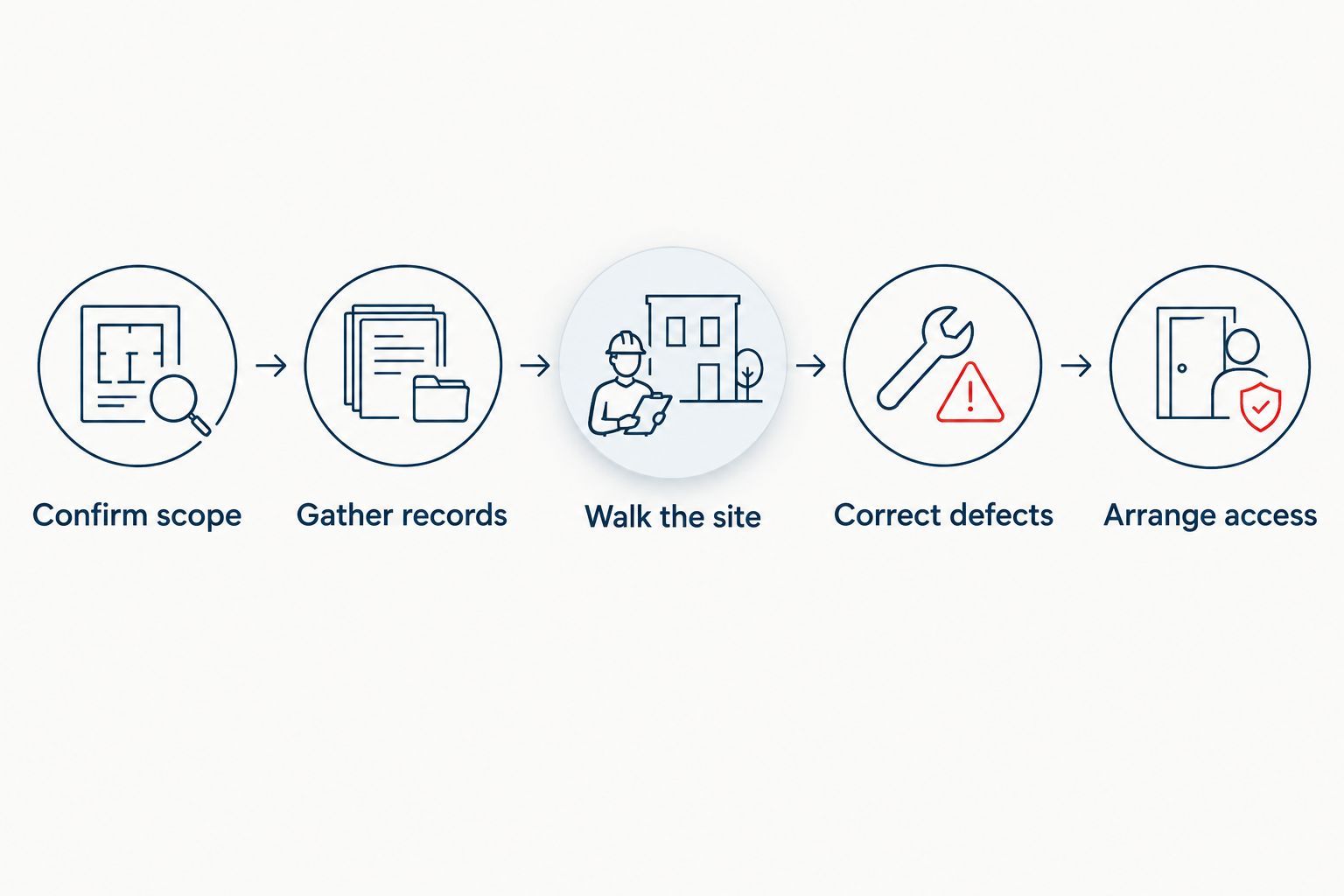
Use this sequence before the visit. Start with the insurer’s request rather than a generic checklist, then check the actual conditions on site.
1. Confirm scope
Ask your insurer or broker what the inspector needs to examine and which documents must be available. Confirm whether the visit covers the building, operating processes, fire-protection equipment, outdoor storage, vehicles, or other insured property.
Get the request in writing. Ask who must attend, whether tenant-controlled spaces need access, and how the insurer expects you to respond to findings.
Do not assume a previous inspection covers the current operation. Tell the inspector about changed uses, new equipment, altered storage, or building work that affects the areas under review.
2. Gather records
Collect the latest inspection, testing, and maintenance reports for the equipment included in the visit. Keep the full reports, not just invoices or photographs of tags.
Organize the file so a reader can identify:
- The property, system, or extinguisher covered.
- The date and type of work performed.
- The result and any listed deficiencies.
- The repair or corrective action taken.
- The person responsible for remaining work.
For extinguishers, keep routine check records separate from professional maintenance and hydrostatic test records. The guide to extinguisher service records and OSHA compliance logs explains that recordkeeping distinction.
3. Walk the site
Walk the same operating areas the inspector will see. Check exit routes, extinguisher access, fire doors, storage areas, and access to fire-protection equipment.
Look at conditions during normal work, not just after cleanup. A delivery pallet that routinely blocks an extinguisher is a recurring access problem, even if someone moves it before the appointment.
Record each issue by location. A description such as blocked extinguisher beside the shipping door gives the responsible person something concrete to correct.
4. Correct defects
Separate housekeeping corrections from equipment work. Staff can move stored goods out of an exit route; a damaged extinguisher, alarm fault, or suppression-system defect needs the appropriate service response.
Do not silence a fault, remove a tag, or reset equipment just to make it appear ready. Arrange qualified service and preserve the resulting documentation. If protection is impaired, follow the applicable impairment procedure and notification requirements.
Keep unresolved items visible in your preparation file. Record the condition, the action underway, and the responsible contact without presenting scheduled work as completed work.
5. Arrange access
Choose a site contact who knows the property and can answer operational questions. Make keys, access permissions, and relevant records available without giving unauthorized people control of fire-protection equipment.
Confirm access to locked service rooms and tenant spaces within the agreed inspection scope. Arrange for the appropriate operator or service contact when specialized equipment needs explanation.
Give the site contact the open-defect list. The inspector should hear the same account from staff that appears in the records.
What should you check before the inspector arrives?
Use this table to assign work. An owner walkthrough, professional service visit, and insurance inspection serve different purposes; none replaces the others.
| Activity | Best for | Main benefit | Limit |
|---|---|---|---|
| Owner or staff walkthrough | Finding visible access and housekeeping problems | Identifies conditions you can address on site | Does not establish equipment performance |
| Qualified equipment service | Inspecting, testing, and maintaining fire-protection equipment | Produces equipment-specific findings and service records | Does not decide insurance acceptance |
| Insurance inspection | Reviewing risks within the insurer’s scope | Identifies the insurer’s concerns and requested actions | Does not replace code enforcement or required maintenance |
Exit routes and fire doors
Check that exit routes remain usable and free of stored materials. Look beyond the doorway: the route through the work area and the discharge outside both matter.
Check fire doors for obvious damage, obstructions, or unauthorized hold-open arrangements. Do not wedge a fire door open. Report doors that do not operate as intended rather than attempting an improvised repair.
Portable fire extinguishers
Check that each extinguisher is present, accessible, and identifiable. Look for damage, missing components, and an abnormal pressure indication on units equipped with a gauge.
Under OSHA’s portable-extinguisher rule, 29 CFR 1910.157, applicable workplace extinguishers require visual inspection each month and annual maintenance. That means a 1-month inspection interval and a 12-month maintenance interval; these are different tasks.
Use those requirements when reviewing your 2026 workplace records, subject to the rule’s scope and exemptions. Do not treat an annual service tag as proof that monthly checks happened.
Alarms and suppression systems
Collect the applicable alarm and suppression inspection reports. Review listed defects, follow-up work, and any known impairment rather than relying on a panel that appears quiet.
Ask qualified personnel to investigate trouble or supervisory conditions. Do not activate a manual pull station, discharge a suppression system, or operate a test control as part of an informal preparation walkthrough.
Coordinate scheduled tests with the service provider and any monitoring or dispatch contacts required by the system’s procedures. Preparation should not create an unintended emergency response.
Exit signs and emergency lighting
Check for visibly damaged or unlit exit signs and emergency lights. A normal power supply can conceal a failed battery or another problem that appears only during a proper test.
For applicable battery-operated emergency lighting, NFPA 101 includes a monthly functional test of at least 30 seconds and an annual test of 90 minutes, with provisions for qualifying self-testing arrangements. Use the adopted code and the equipment’s approved testing method; do not assume one test method fits every installation.
Housekeeping and ignition hazards
Look for combustible waste buildup, unsafe storage, damaged electrical equipment, and work that introduces heat or sparks. Pay particular attention to locations where the actual operation has changed since the last review.
Do not select storage clearances or extinguisher placement from a general online checklist. Those decisions depend on the hazard, equipment, and applicable requirements.
What records should be in your inspection file?
Build the file around equipment and findings, not around vendor invoices. An invoice establishes that a transaction occurred; it does not necessarily establish what passed, what failed, or what remains unresolved.
For your 2026 insurance visit, assemble the records requested by the insurer and the applicable documents below:
- Equipment reports: Extinguisher maintenance, hydrostatic testing, alarm testing, and suppression-system service records.
- Routine checks: Documented site checks and equipment checks required for your operation.
- Corrective work: Repair reports, retest results, and photographs where useful.
- Operating information: Current use of the property and relevant changes to processes or storage.
- Staff procedures: Emergency action arrangements, reporting instructions, and training records relevant to the operation.
- Previous findings: Earlier inspection reports and evidence showing how each item was addressed.
Mark documents clearly by location. If a report covers several buildings, make the relevant equipment and unresolved findings easy to identify.
Keep original service dates intact. A folder named 2026 can contain earlier records when those records remain relevant; do not relabel an older inspection as current work.
Why inspection preparation varies
The same preparation sequence works across properties, but the equipment and hazards change. Match the review to the operation instead of copying a checklist from an unrelated site.
- Commercial premises: Focus the file on the installed protection and the spaces included in the insurer’s request.
- Industrial operations: Identify production equipment, process hazards, storage, and relevant suppression systems.
- Coal mining operations: Separate the insurance request from applicable mining inspection and reporting obligations.
- Marine operations: Identify which vessels, shore facilities, and fire-protection equipment are within scope.
- Vehicle and fleet operations: Confirm whether the review includes vehicles, maintenance areas, yard operations, or installed vehicle suppression.
Firstlinefire serves these customer groups across Kentucky, Illinois, Indiana, Tennessee, Missouri, and Alabama. Its service coverage does not make every site’s equipment requirements or inspection authority identical.
Can you prepare without hiring an equipment service company?
You can collect records, check access, and correct ordinary housekeeping problems yourself. Those steps do not replace qualified inspection, testing, maintenance, or repair.
Firstlinefire is a fire-protection service option for commercial, industrial, mining, marine, and fleet operators in its stated service area. Its stated scope includes extinguishers, hydro testing, suppression systems, fire alarms, and safety training—not authority to approve an insurance risk.
Send the actual findings and equipment details when requesting service. That gives the service provider a defined issue to assess rather than a vague instruction to get the building ready.
Discuss your fire-protection service needs
Review extinguisher, alarm, suppression, or training needs before your inspection.
Does an insurance inspection replace a fire marshal inspection?
An insurance inspection does not replace a fire marshal inspection. The insurer evaluates risks for its purposes, while the fire authority addresses applicable fire-code requirements.
Keep their findings separate and track both. Completion of an insurer’s recommendation is not automatic evidence that a fire-code issue is closed.
What should you do after the insurance inspection?
Ask for the written findings and clarify each requested action, deadline, and evidence requirement. Assign responsibility by item rather than treating the report as a single general task.
Keep the report with your 2026 preparation file. Submit completion evidence through the insurer’s requested process, and retain its response instead of assuming that sending a repair invoice closes the matter.
FAQ
What’s the first thing to do before an insurance fire safety inspection?
Ask the insurer or broker for the inspection scope and document checklist. Confirm the areas covered, who needs to attend, and how findings must be addressed.
How often do workplace fire extinguishers need inspection?
OSHA requires monthly visual inspection and annual maintenance of applicable workplace portable fire extinguishers, subject to the rule’s scope and exemptions. A 1-month inspection interval is separate from the 12-month maintenance interval.
Is a current extinguisher tag enough for an insurance inspection?
A current extinguisher tag is not a complete inspection file. Keep the associated service report, routine check records, and evidence that listed defects were corrected.
Should I test the alarm myself before the insurer arrives?
Do not perform an uncoordinated alarm test as part of a preparation walkthrough. Arrange testing through the appropriate personnel and follow the system’s monitoring and notification procedures.
Can my insurance company’s inspector approve fire-code compliance?
An insurance inspection does not replace approval from the applicable fire authority. Track insurance findings and fire-code findings separately.
Can Firstlinefire help with inspection preparation?
Firstlinefire provides extinguisher inspection and service, hydro testing, suppression systems, fire alarms, and safety training. Confirm the work needed for your equipment; the insurer determines its own inspection requirements.
What if repairs are still open on inspection day?
Show the unresolved condition and the documented action underway. Do not describe scheduled repairs as completed repairs, and follow applicable procedures for impaired protection.
One last thing
Before the visit, pick an equipment item with a previously reported defect and trace it from the original report to the repair and any required retest. Then check the equipment’s actual condition.
If the record trail stops at the invoice, finish it. A completed payment and a closed defect are not the same thing.