
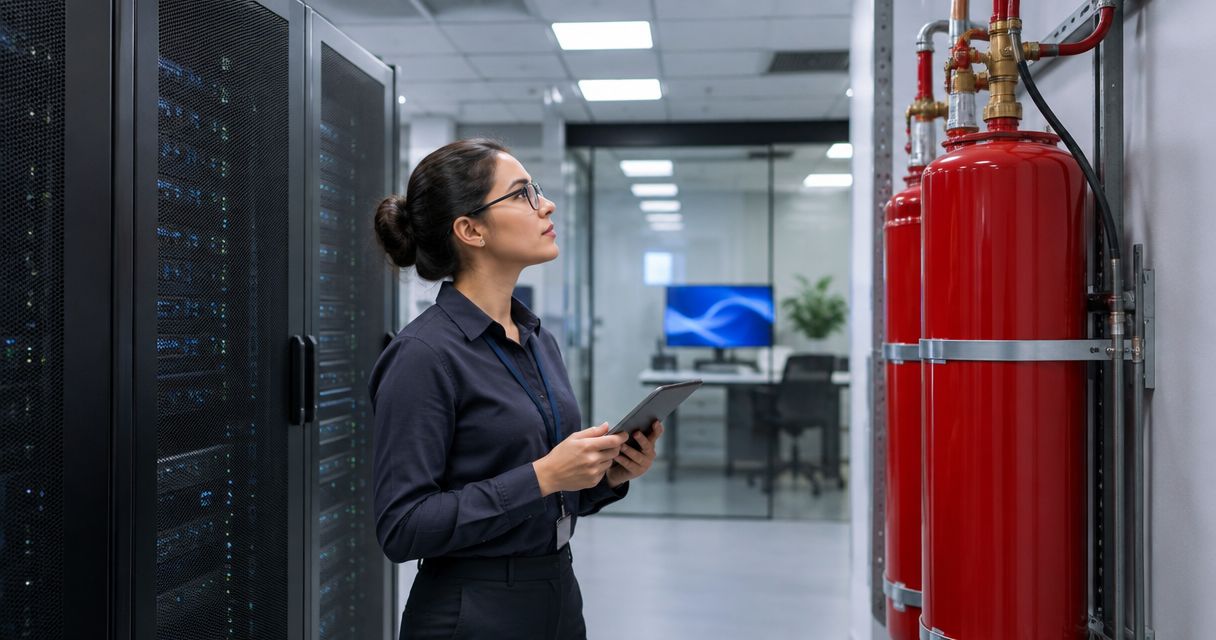
A clean agent suppression system is worth the cost in 2026 when the protected room contains equipment that water or extinguishing residue would damage and automatic protection fits the room’s fire risk. It is a poor fit when the hazard calls for a different suppression method or the room cannot support the required enclosure and system design. The system price alone also leaves out detection, installation, testing and ongoing service.
- Is a clean agent suppression system worth the cost? Yes when protecting sensitive equipment and avoiding cleanup justify the added system scope.
- Clean agent is best for a suitable enclosed equipment room; it is not a default choice for every commercial hazard.
- Compare detection, installation, room conditions and ongoing service before judging a 2026 proposal.
Is a clean agent suppression system worth the cost in 2026?
Yes for a suitable room where equipment damage and post-discharge cleanup are central concerns. No as a blanket upgrade for an entire property. Clean agent systems discharge an agent designed to suppress a fire without leaving the kind of residue associated with dry chemical discharge. That advantage matters most where the protected contents are difficult to clean or where water exposure creates another problem.
| Protection approach | Best for | Main advantage | Main limitation |
|---|---|---|---|
| Clean agent system | A suitable enclosed room with sensitive equipment | Suppression without dry chemical residue | Room design, detection and ongoing service add scope |
| Water-based protection | Hazards and buildings suited to water discharge | Established approach to automatic fire protection | Water can damage equipment and contents |
| Portable extinguisher | A trained person responding to an appropriate early-stage fire | Can address a localized fire when safe to use | Does not replace an automatic system or an evacuation plan |
This table compares jobs, not interchangeable products. The right answer depends on the hazard, the room and the protection already in place. A portable extinguisher cannot provide unattended automatic discharge. A clean agent system does not make other required protection unnecessary.
For commercial operators weighing suppression alongside extinguisher and alarm service, First-Line Fire Extinguisher Co. provides those services. First-Line Fire Extinguisher Co. is best for commercial operators who want a suppression-service provider that also handles fire extinguishers and alarms, rather than treating the room as an isolated purchase. That is a service-fit verdict, not a claim that clean agent fits every site.
Why this matters
The purchase decision is about what happens after a fire starts, not just what comes out of a nozzle. If water or residue reaches sensitive equipment, the cleanup and equipment assessment become part of the incident. If the room’s contents can tolerate the selected protection method, the clean agent advantage carries less weight.
The room itself matters just as much as the equipment. Clean agent protection is designed around a defined space and a specific hazard. Openings, ventilation and changes to the room affect whether the proposed design makes sense. Ask the designer to explain what space is protected and what must stay in place for the design to remain valid.
A 2026 quote also needs to describe the whole system. An agent container by itself does not explain how a fire is detected, how occupants are warned, what happens before discharge or how the system is maintained. Compare complete scopes, not a single equipment line.
Where clean agent makes sense
A server room or other enclosed equipment space is a strong candidate when avoiding water exposure and discharge residue is a priority. The word candidate matters: the hazard and room still need a proper design review. Do not assume that every server room needs the same agent or the same system layout.
Industrial controls can present a similar decision. If a defined room contains equipment whose exposure to water or residue would complicate recovery, clean agent deserves consideration. If the hazard includes materials or processes that need another suppression approach, protecting the electronics alone is not enough reason to choose it.
Ask a practical question before requesting a proposal: What specific equipment or operation are you trying to protect from the fire and from the suppression method? Name the room, the contents and the consequence you want to avoid. If nobody can answer that, the project has not reached the point where competing system quotes will be useful.
Clean agent is not a building-wide substitute for a fire protection plan. You still need to account for the people using the space, the alarm response, portable extinguishers where applicable and any other protection required for the property. A room-level system solves a room-level problem.
Where clean agent is the wrong starting point
Start with the hazard, not the desire for a residue-free discharge. A commercial kitchen hood, a vehicle or an open industrial process presents a different protection problem from an enclosed equipment room. A clean agent proposal for one space should not be carried over to another simply because both contain valuable equipment.
A room that changes often also deserves scrutiny. New cable penetrations, altered ventilation and changes to walls or doors can affect an enclosure-based design. If the site cannot keep the protected space aligned with the approved design, ask what inspection and change-control work the system will require.
Do not compare clean agent against no protection. Compare it against the protection approach that actually fits the hazard and the property’s requirements. The least disruptive discharge is not the best choice if it does not address the fire you need to control.
Why the total cost varies
A useful 2026 proposal separates these scope drivers instead of presenting a single unexplained system price:
- Protected room. The boundaries and condition of the enclosure shape what the design must protect. Ask the bidder to identify the exact space included.
- Fire hazard. The contents and likely fire scenario determine whether clean agent is appropriate and what design work is needed.
- Detection and notification. Confirm what starts the system, how occupants are warned and how the system connects with the site’s alarm arrangements.
- Installation work. Equipment placement, routing and access affect the work on site. Ask which room alterations are included and which are excluded.
- Ongoing service. Inspection, testing and work after a discharge belong in the ownership discussion. Ask for the service scope in writing.
- Future room changes. If the room layout or use changes, the system needs review against its original design. Establish who flags those changes.
These are not reasons to reject the system. They are reasons to reject an incomplete comparison. If one bid covers detection and room work while another lists only suppression equipment, the headline totals do not describe the same job.
How to decide whether the added scope pays off
Use the same questions for every proposed approach. Keep the discussion tied to your room and operations rather than a generic system description.
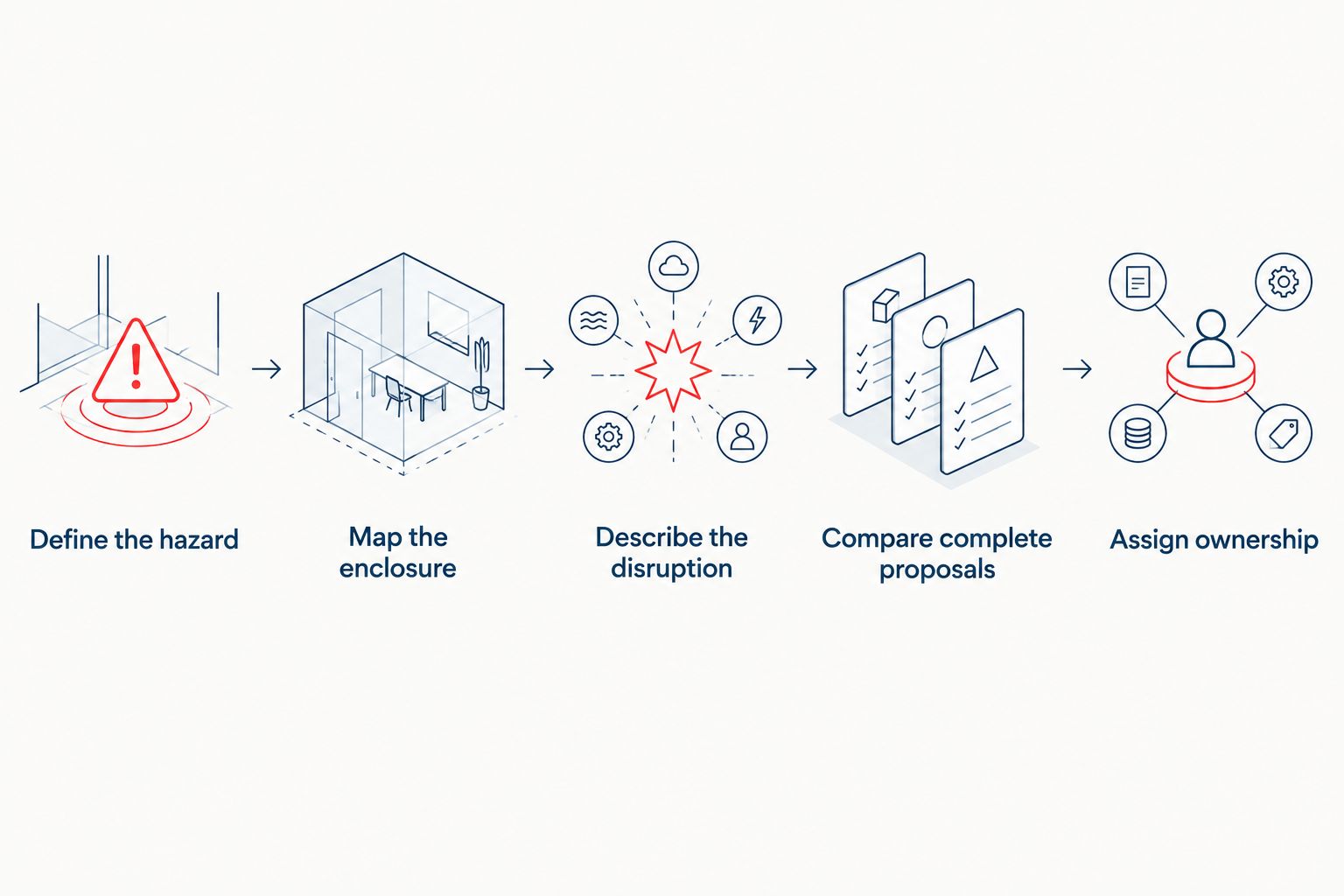
- Define the hazard. List what can burn in the protected space and what equipment the system must protect. Have the proposed suppression method assessed against that hazard.
- Map the enclosure. Identify doors, penetrations, ventilation and any planned changes. Ask how those conditions affect system design and continued use.
- Describe the disruption. Consider the consequences of fire, water exposure and extinguishing residue separately. The clean agent benefit is clearest when avoiding secondary damage changes the recovery work.
- Compare complete proposals. Request the included detection, notification, installation, commissioning and service work. Ask each bidder to state exclusions plainly.
- Assign ownership. Decide who will report room changes, arrange service and coordinate a response after system discharge. A system nobody manages is a poor investment.
A clear answer at each step gives you a defensible decision. If the hazard assessment rules out clean agent, stop there. If the room is suitable and avoiding water or residue matters to operations, compare full system scopes before choosing a provider.
Ask for the design assumptions to appear in the proposal, not only in a sales conversation. That gives your facilities team a record of what the system is intended to protect. It also makes later room changes easier to flag for review.
Discuss your suppression needs
Describe the room, the hazard and the protection you need to evaluate.
What should a 2026 proposal actually show?
A proposal should identify the protected space, the hazard it addresses and the major parts of the work. It should also say how detection, occupant notification, installation and ongoing service are handled. If another contractor or an existing alarm system is part of the plan, that boundary should be clear.
Look closely at exclusions. A proposal that does not cover needed room work or alarm coordination leaves you to arrange it separately. That does not make the proposal wrong; it makes the missing work your responsibility to identify before approval.
Ask what happens after installation, too. Who explains system operation to the site team? Who should be told when the room changes? What service is included in the proposed arrangement, and what requires separate work? These questions expose differences that an equipment list cannot.
The final design must match the actual site. A brochure description of clean agent protection cannot confirm suitability for your room, occupants or hazard. Use it to shortlist an approach, then require a site-specific scope.
Is clean agent better than water protection for a server room?
Clean agent is better suited to avoiding water exposure and discharge residue in a suitable enclosed server room. Water-based protection remains a separate approach to evaluate against the building and fire hazard. Do not remove or dismiss existing protection because a clean agent system is proposed.
Will a clean agent system protect the whole building?
No: a clean agent system is designed for the space and hazard specified in its design. Ask the provider to mark the protected room clearly. Other areas still need protection appropriate to their own hazards and requirements.
Does a clean agent system eliminate cleanup after a fire?
No: clean agent avoids dry chemical residue, but a fire can still leave damaged equipment, smoke effects and work to restore the room. Judge the system by the kind of secondary damage it is designed to avoid, not by a promise of an interruption-free incident.
FAQ
Is a clean agent suppression system worth the cost for a server room?
Yes when the server room is suitable for the system and avoiding water exposure or extinguishing residue matters to operations. Compare the full installation and service scope before deciding.
What is the main benefit of clean agent fire suppression?
The main benefit is fire suppression without dry chemical residue. That matters most where cleanup or exposure to another suppression method would complicate recovery.
Is clean agent better than a sprinkler system?
Neither is better for every hazard. Clean agent addresses a defined space where its design fits; evaluate sprinkler protection against the building’s requirements rather than treating the systems as direct substitutes.
Does clean agent suppression replace a fire alarm?
No. A clean agent proposal must explain its detection and notification arrangements and how they relate to the property’s alarm system.
Can clean agent protect an open industrial area?
Do not assume an open area suits an enclosure-based clean agent design. Have the hazard and physical space assessed before selecting a suppression approach.
What should I compare in clean agent system proposals?
Compare the protected space, hazard assumptions, detection, notification, installation work, exclusions and ongoing service. An equipment-only comparison misses work needed to operate the system.
What happens if the protected room changes after installation?
Have the system design reviewed when changes affect the room or its hazard. Doors, penetrations, ventilation and room use are all reasons to raise the change with the service provider.
One last thing
The strongest reason to choose clean agent is not that the equipment in a room is expensive. It is that the room is suitable for clean agent protection and the method of suppression changes what recovery looks like. Put those points in writing before comparing 2026 proposals. If the room, hazard or service responsibility remains unclear, settle that first.


