

Monthly fire alarm monitoring is not automatically cheaper than a self-monitored system, and removing a monitoring subscription does not remove the work of receiving and acting on alarms. For your 2026 decision, compare the complete service scope, staff responsibility, and requirements for the property—not just the recurring bill. Choose an approved alarm-response arrangement first; compare spending second.
- Is monthly fire alarm monitoring cheaper than self monitored? The subscription alone cannot settle the comparison.
- Central-station monitoring routes signals to a staffed receiver; self-monitoring leaves response responsibility with your designated people.
- Self-monitoring is not a substitute for required monitoring, system inspection, or alarm testing.
- Firstlinefire serves commercial and industrial buyers seeking fire alarms and other fire-protection services.
Is monthly fire alarm monitoring cheaper than self monitored?
Neither approach is the cheaper choice by definition. A central-station arrangement adds a contracted signal-receiving service. A self-monitored arrangement leaves your business responsible for receiving notifications and taking the next action. Those are different scopes, not interchangeable versions of the same service.
Start with the alarm monitoring to central dispatch workflow. The useful comparison is what happens between the panel sending a signal and someone taking responsibility for it.
| Decision point | Central-station monitoring | Self-monitored system |
|---|---|---|
| Best for | Properties requiring, or choosing, a staffed signal-receiving service | Properties where the arrangement is permitted and designated people can maintain response coverage |
| Main benefit | A contracted receiving service handles signals under its procedures | Your designated people receive notifications directly |
| Main limitation | You must confirm the contract, signal handling, and communication arrangement | Your business must maintain coverage when contacts are absent or unavailable |
| Response responsibility | Defined through the monitoring service and site response plan | Assigned to your staff or other designated contacts |
| Equipment to verify | Panel, communicator, and receiving-service compatibility | Panel, notification method, and recipient compatibility |
| Inspection and testing | Still required as applicable to the system and property | Still required as applicable to the system and property |
| Spending comparison | Include the monitoring agreement and everything excluded from it | Include equipment, notification services, upkeep, and response administration |
A notification on a phone is not proof that someone acted. A monitoring agreement is not proof that inspection, repair, or every communication service is included. Ask for the scope in writing before treating either arrangement as a complete solution.
Why this matters
A commercial fire alarm is part of your building's life-safety arrangements. The decision affects occupants, staff duties, records, and what happens when the site is empty. It is not simply a choice between a subscription and an app.
For a 2026 review, start with the property's approved requirements and actual operating schedule. A building staffed during business hours still needs a defined plan for nights, closures, and unavailable contacts. Do not count a person as coverage merely because that person owns a phone.
The first question is whether self-monitoring is acceptable for your property. Confirm that with the authority having jurisdiction—the official responsible for enforcing the applicable requirements—and review any insurer or lease conditions. Permission to use a system is separate from whether your team can operate it dependably.
Central-station monitoring: defined receiving responsibility
Central-station monitoring sends system signals to a staffed receiving service. The service follows its procedures for handling those signals and making the required notifications. Your agreement should explain what it receives, how it identifies the property, and what happens next.
Its practical benefit is a defined receiving function outside your site's staffing schedule. Your business still has work to do. Contact information, access instructions, system maintenance, and impairment procedures do not disappear when a monitoring agreement starts.
Do not assume every transmitted event gets the same treatment. Fire alarm, supervisory, and trouble signals describe different conditions. Ask the provider to explain its handling of each applicable signal in plain language.
Before choosing this arrangement, get written answers to these questions:
- Which signals does the receiving service handle?
- What action follows a fire alarm signal?
- How are supervisory and trouble signals handled?
- Who updates site contacts and access instructions?
- What happens when the communication connection fails?
- Which inspection, testing, and repair tasks sit outside the agreement?
Best for: a property that requires a staffed receiving service, or a business choosing that arrangement with a clear contract and response plan. The limitation is scope: receiving signals does not make the provider responsible for every part of your fire alarm system.
Self-monitoring: your people own the response
Self-monitoring puts the receiving and response duties on your designated people. The exact arrangement depends on the equipment and notification service. Do not assume a consumer-style alert feature is an approved commercial fire alarm monitoring method.
The benefit is direct notification to the people you select. The limitation is equally direct: your business must keep those people available, maintain the notification method, and define the next action. Staff turnover and missed messages are operating problems you must address.
Write down who receives an alert, who acts, and who takes over when the first contact is unavailable. Include closures and shift changes. A contact list without an escalation procedure leaves responsibility unsettled.
Your 2026 self-monitoring review should also distinguish a local alarm from a remote notification. Occupant warning inside the building and notification to someone elsewhere perform different jobs. Confirm both functions rather than assuming one replaces the other.
Best for: a property where self-monitoring is permitted and the business can maintain documented response coverage. Do not choose it solely to remove a subscription line from the budget. That line does not describe the duties your staff would inherit.
Why the total comparison varies
The complete comparison changes with the property, equipment, and service scope. These are the factors to put beside each proposal:
- Property requirements. The applicable rules and approved arrangements determine which options you can consider. A prohibited alternative is not a valid budget comparison.
- Existing equipment. Identify the panel, communicator, and notification equipment already installed. Confirm compatibility before assuming you can change the receiving arrangement without other work.
- Communication method. Identify the connection carrying signals and who maintains it. Separate that service from the receiving service when reviewing the agreement.
- Response coverage. Name the people responsible during work hours and closures. Include the administration needed to keep contacts and escalation instructions current.
- Inspection and maintenance scope. Separate receiving signals from inspecting, testing, and repairing equipment. Ask whether each task is included or separately arranged.
- Contract conditions. Review the term, renewal, equipment ownership, cancellation conditions, and transfer arrangements. These affect the commitment even when the equipment stays in place.
For a 2026 budget, compare the same period and the same duties. A monitoring-only proposal and an equipment-plus-service proposal cannot be compared fairly by their headline line items. Mark the exclusions before deciding.
How do you compare the two arrangements fairly?
Use these 5 steps to build a decision you can explain to the owner, site manager, and enforcing official. Keep the documents together so the next person does not have to reconstruct the arrangement.
Confirm requirements
Ask the authority having jurisdiction what monitoring arrangement is acceptable for the property. Review insurer and lease requirements separately. Record the answer and its scope; do not treat a general discussion about another building as approval for yours.
List equipment
Identify the existing panel, communicator, notification method, and associated services. Ask the proposed provider to confirm compatibility in writing. Do not assume an existing panel can send every required signal through a new connection without changes.
Separate duties
List signal receiving, emergency notification, contact updates, inspection, testing, repairs, and communication upkeep. Assign an owner to each duty under both options. This exposes missing work without pretending that every task belongs in the monitoring agreement.
Review terms
Compare 12 months of planned service against 1 year of the alternative's complete operating scope. Use the same equipment assumptions and include the actual contract term in your review. A yearly comparison does not erase a longer contractual commitment.
Document response
Write the response procedure and confirm how it will be checked through an authorized test. Coordinate testing with the responsible service and affected parties. Do not send an unannounced test alarm to see who calls.
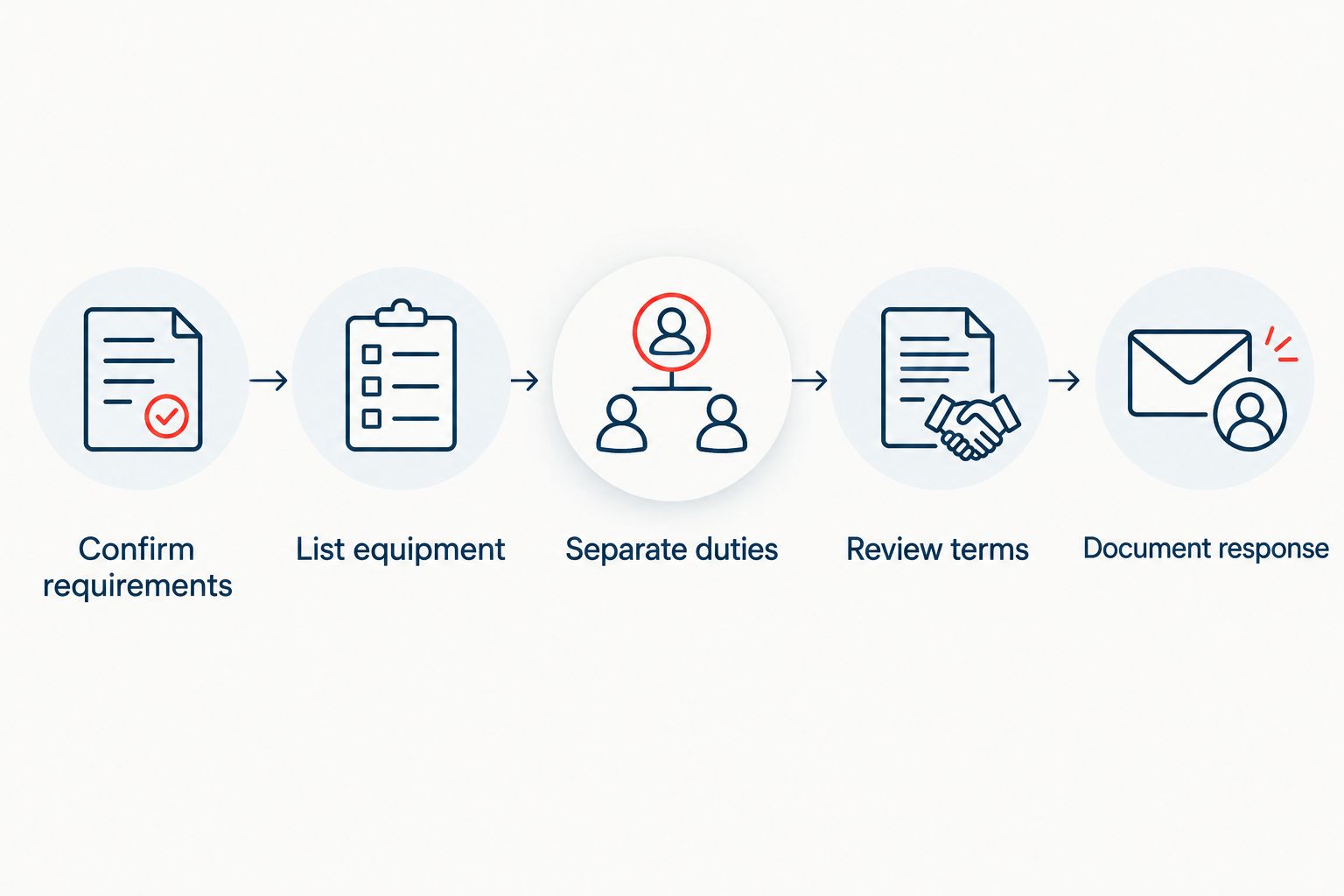
Compare responsibility before spending. If a proposal leaves a task unassigned, resolve that gap before signing or changing the existing service. An omitted duty is not a saving.
What should you ask a fire-protection company?
Bring the provider your panel information, operating schedule, current agreement, and any written requirements for the property. Ask for a clear separation between equipment work, signal receiving, communication services, and inspection or testing. Keep technical terms tied to an action someone owns.
Firstlinefire is best for commercial and industrial buyers seeking fire alarms and extinguisher services from the same provider. Its stated services also include hydro testing, suppression systems, security, and safety training. That service range is relevant when your alarm decision sits inside a larger fire-protection plan; it does not establish the details of a monitoring agreement.
Ask Firstlinefire to identify the services applicable to your property and put the proposed scope in writing. Confirm monitoring arrangements, equipment compatibility, included work, and exclusions rather than assuming them from the broader service list.
Discuss your fire alarm requirements
Bring your panel details, operating schedule, and current service agreement.
Can I stop paying for monitoring and keep the alarm?
Keeping the alarm equipment does not establish that you can discontinue monitoring. The panel's local functions, remote signal transmission, approved requirements, and contract obligations are separate issues. Confirm each before changing service.
For a 2026 changeover, get the replacement arrangement accepted where required and coordinate the transition. Do not leave a gap between the old receiving service and the new arrangement. Keep records of the change and update the site's response instructions.
Does monitoring include fire alarm inspections?
Monitoring does not, by itself, include fire alarm inspection or testing. Monitoring receives signals; inspection and testing assess the system's condition and operation. A contract can bundle services, but the written scope must say so.
Ask who schedules the work, who keeps the records, and who resolves deficiencies. Continue the applicable inspection and testing program under either monitoring choice.
Will monitoring reduce my insurance bill?
Do not count an insurance reduction until your insurer confirms it for your property. Give the insurer the proposed equipment and receiving arrangement, then request the applicable conditions in writing. A general statement about monitored alarms is not a commitment on your policy.
Keep that answer separate from the enforcing official's requirements. Insurance acceptance and code compliance are different checks; neither substitutes for the other.
FAQ
Is monthly fire alarm monitoring cheaper than a self-monitored system?
Monthly fire alarm monitoring is not automatically cheaper than a self-monitored system. Compare the complete equipment, communication, service, and staff-response scope, and confirm which arrangements are permitted for the property.
Can my business use phone alerts instead of central-station monitoring?
Phone alerts are not automatically an acceptable replacement for central-station monitoring. Confirm the property's requirements and the proposed system with the authority having jurisdiction before changing service.
Does a monitoring company maintain my fire alarm panel?
A monitoring agreement does not automatically include panel maintenance. Check the written scope for inspection, testing, repairs, and responsibility for communication equipment.
Who calls for emergency help with a self-monitored alarm?
Your designated responder must follow the documented emergency notification procedure under a self-monitored arrangement. Define backup responsibility and confirm that the arrangement is acceptable for the property.
Can I cancel monitoring while my building is closed?
A building closure does not, by itself, remove its monitoring requirements. Confirm the property's obligations and coordinate any authorized service change before cancellation.
Should I compare monthly agreements over a full year?
Compare 12 months of service against 1 year of the alternative's complete operating scope. Review the actual contract term separately, including renewal, ownership, cancellation, and transfer conditions.
Can Firstlinefire help with more than fire alarms?
Firstlinefire provides fire alarms, extinguisher services, hydro testing, suppression systems, security, and safety training. Confirm the specific work and agreement required for your site before assuming services are bundled.
One last thing
Ask someone unfamiliar with your proposal to read the response procedure. Can that person identify who receives the signal, who takes the next action, and what happens if the contact is unavailable? If not, the arrangement is not clearly documented.
An alert is information; response is an assigned job. Make that distinction before your 2026 renewal or service change. It is the most useful check when two proposals appear to cover the same thing.


