
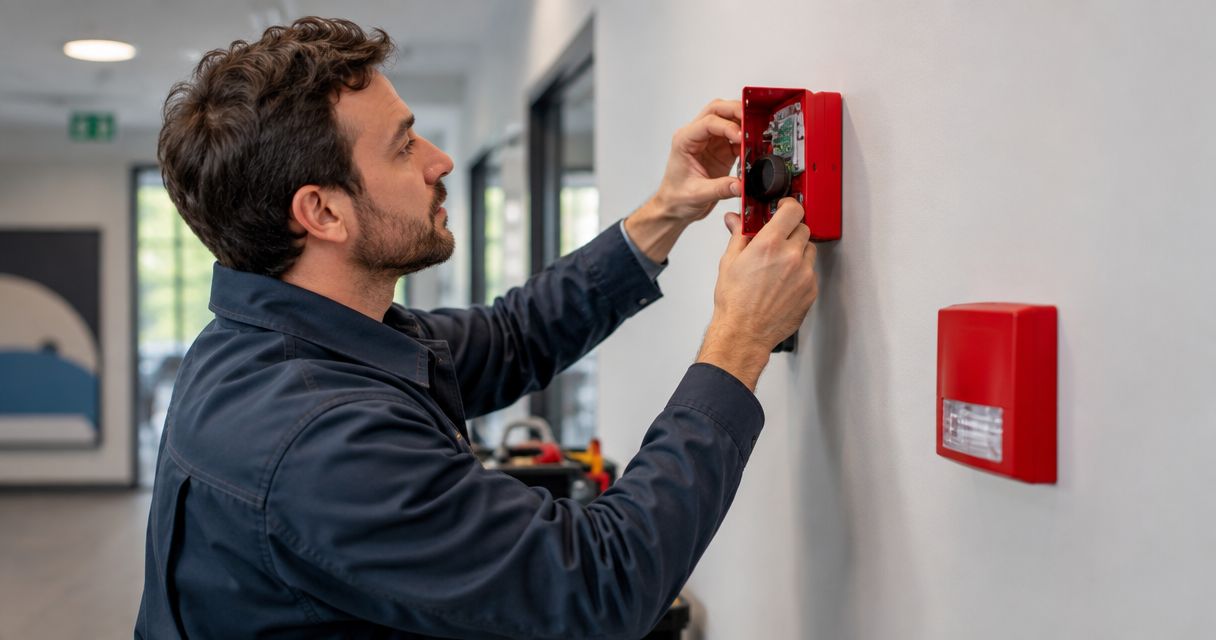
Yes, upgrading an old fire alarm system is worth it in 2026 when documented faults, unsupported parts or changes to the building make dependable operation difficult to maintain. Age alone is not a reason to replace it. The right decision is whether targeted repairs, a limited retrofit or a full replacement addresses the problem without creating a new one.
- Is upgrading old fire alarm systems worth it? Yes, when documented faults or unsupported parts make continued service impractical.
- Repair a serviceable system; consider a retrofit when existing equipment can remain; replace it when the problems extend across the system.
- Firstlinefire is a fit for commercial operators who want fire alarm, extinguisher and suppression services from one provider.
- Get the inspection findings and proposed scope in writing before approving work.
Why this matters
A fire alarm upgrade affects more than the control panel. A change can affect detection devices, notification appliances, monitoring, testing and the records you need for the building. Start with the actual faults and the building's current use, not a sales pitch built around the system's age. For businesses reviewing Firstlinefire, the company lists fire alarms among its services alongside extinguishers and suppression systems.
In 2026, an owner comparing proposals needs to know what stays, what changes and how the finished system will be tested. A low-scope repair is sensible when it resolves a defined fault. A replacement is the better choice when keeping the existing system operational requires repeated work on components that cannot be supported. Neither decision should rest on age alone.
Is upgrading old fire alarm systems worth it in 2026?
Yes, if the upgrade solves a documented problem that repairs cannot resolve reliably. If the current system works, its components remain serviceable and it still suits the building, replacing it simply because it is old has no clear case. If recurring faults persist, replacement parts are unavailable or a changed layout leaves gaps in the existing design, an upgrade deserves a written scope.
| Option | Best for | Advantage | Drawback | Decision to make |
|---|---|---|---|---|
| Repair existing system | An isolated, diagnosable fault on a serviceable system | Keeps usable equipment in place | Does not address wider compatibility or coverage problems | Will the repair clear the fault and pass the required testing? |
| Retrofit existing system | A defined change where some existing equipment can remain | Limits the work to the affected portion | Retained and new components must work together | Which devices, wiring and functions can be retained? |
| Replace existing system | Widespread faults, unavailable parts or a design that no longer fits the building | Gives the designer a chance to address the whole system | Involves more changes to existing equipment and operations | How will the new system be installed, tested and handed over? |
Repair existing system — best for a single fault with an identifiable fix. Ask for the fault report and confirmation of what was tested after the repair. Hold off on replacement when the evidence points to one failed component rather than a system-wide problem.
Retrofit existing system — best for a defined gap with usable equipment around it. A retrofit can address part of a building, but retained components need a compatibility review. Hold off on approval until the proposal names what stays and who is responsible for testing the completed system.
Replace existing system — best for faults or design gaps that targeted work cannot settle. Replacement can remove reliance on unsupported equipment, but it also changes more of the building's alarm setup. Approve it when the scope accounts for devices, notification, monitoring connections, testing and the transition from old to new.
These are choices, not steps every building must take. In 2026, the best proposal is the one tied to inspection findings and the building's present use—not the one with the longest equipment list.
How to decide what work is needed
Start with the most recent inspection and service records. A trouble signal tells you something requires investigation; it does not, by itself, tell you to replace the entire system. Ask a qualified fire alarm provider to identify the fault, document the affected equipment and explain whether a repair can be tested and maintained.
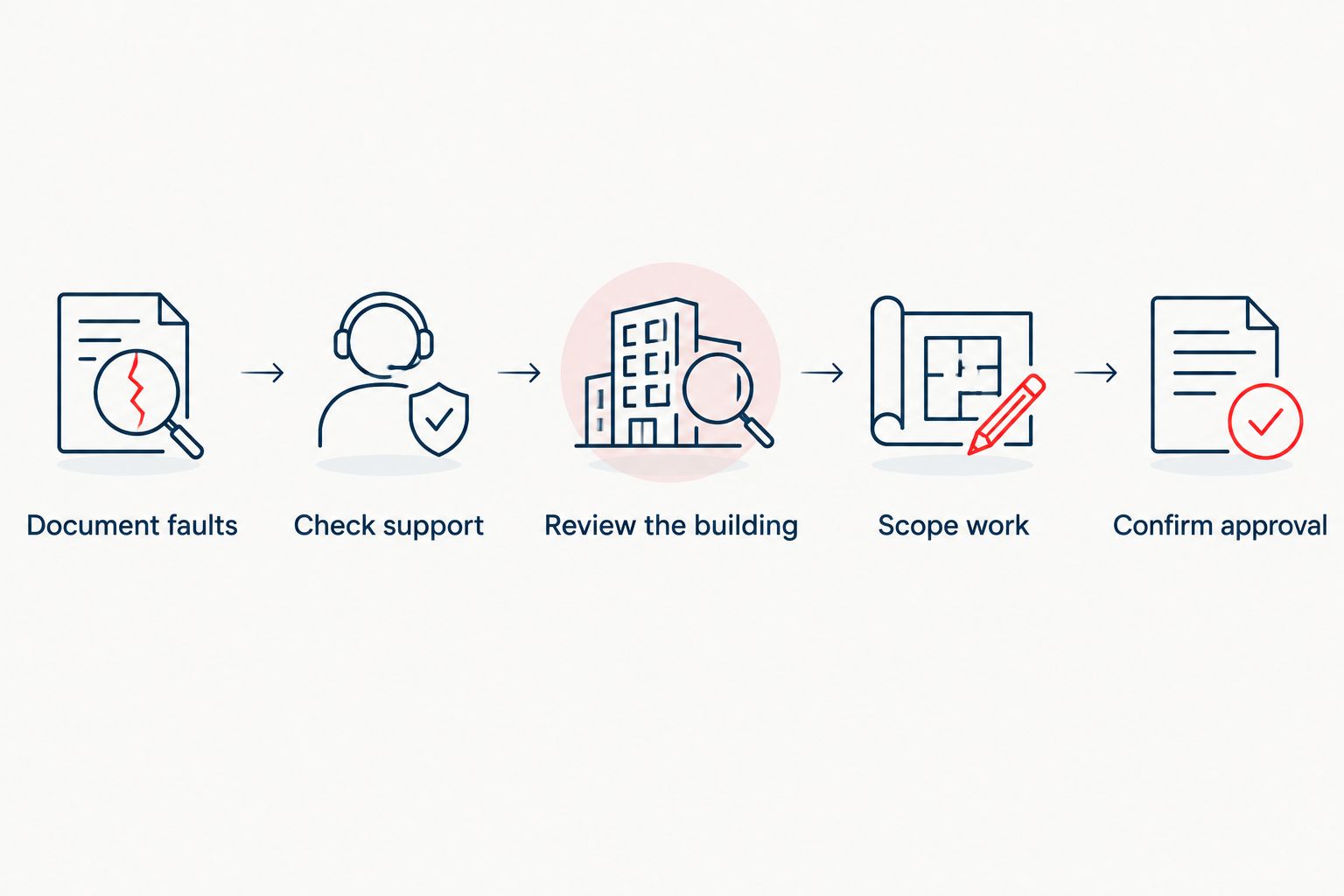
- Document faults. List each open trouble condition, failed test and repeat service issue. Separate a current fault from a problem that has already been corrected.
- Check support. Identify the affected panel and devices, then confirm whether suitable replacement components and service support remain available. Do not assume that a new device will work with an old panel.
- Review the building. Note changes in occupancy, room layout, equipment or operating hours that affect how people receive an alarm and how staff respond.
- Scope work. Request a written comparison of repair, retrofit and replacement where each is feasible. Each proposal should say what stays, what changes and what testing follows.
- Confirm approval. Before work starts, ask the provider and the authority having jurisdiction which plans, permits, tests and records apply to this building and scope.
Keep the response plan in view while making those decisions. If a monitored alarm sends signals off-site, ask how that connection will work during the change and after testing. The alarm monitoring to central dispatch workflow covers the handoff between an alarm signal and its response; it is separate from deciding which equipment to keep.
Why the answer varies by building
The case for upgrading an old fire alarm system changes with the condition of the equipment and the work the building needs. Use these factors to challenge a proposal in 2026:
- Documented faults: An isolated failure supports a different scope from faults spread across devices or circuits. Ask the provider to show which findings drive each proposed change.
- Parts and service support: If affected components cannot be maintained, another repair does not settle the longer-term problem. Confirm support for the actual equipment on site.
- Changes to the premises: A new layout or use can change what the alarm system needs to cover. Review the current building, not only its original drawings.
- Monitoring arrangements: If signals go to an off-site monitoring service, changes to the panel or communication path need a clear testing plan.
- Disruption during work: Replacing equipment can affect occupied areas. Ask how the provider will sequence installation, manage temporary conditions and verify operation before handover.
- Inspection findings: An open deficiency needs a documented resolution. A proposal should connect the recommended work to that finding rather than offer a general equipment refresh.
No single factor decides every project. A panel with a repairable fault and supported parts presents a different decision from a system with multiple unresolved issues. Make the provider show the connection between each finding and each line of work. That is how you separate necessary fire alarm work from optional changes.
What should an upgrade proposal include?
A usable proposal identifies the existing equipment, the reason for the work and the limits of the proposed scope. It names the components to be removed or retained and explains how retained equipment will work with anything new. If a proposal calls for replacement but does not address retained devices or wiring, ask for that gap to be resolved before approving it.
The proposal should also explain what happens while work is under way. Ask who coordinates any required temporary measures, how interruptions will be handled and what must happen before the changed system is placed in service. Those details matter to a warehouse with staff on shift, a property with residents and any operation that cannot simply close a work area without a plan.
Finally, require a test and handover plan. You need to know what functions will be checked, who receives the results and what documentation the building keeps. Connect the finished alarm setup to the site's response procedures; the guide to connecting fire alarm systems to your life safety plan addresses that operational step.
Can you keep some old fire alarm equipment?
Yes, when the retained equipment is suitable for the proposed design and its operation can be verified. A retrofit is not a promise that every existing device, cable or connection can stay. Compatibility, condition and the building's current needs determine what the written scope can retain.
Ask the provider to mark retained components clearly in the proposal. Then ask how those components will be tested with the new work. If the answer is unclear, you do not yet have enough detail to compare the retrofit with replacement. The relevant question is not whether reuse is possible in general; it is whether reuse works for this system.
Does monitoring change the upgrade decision?
Monitoring changes the scope of questions, not the basic answer. A monitored system still needs a clear finding before replacement is justified, but any panel or communication change must account for the path that carries alarm signals and for testing that path after the work.
Ask which signals the monitoring arrangement receives and how the provider will confirm they reach the intended destination. Do not assume that replacing a panel automatically preserves an existing monitoring setup. If your building has no on-site staff at certain times, review remote fire alarm monitoring without on-site staff as a separate operating question.
When should you leave the old system in place?
Leave it in place when inspection findings show it can be maintained, identified faults can be repaired and the system still serves the building's current needs. Old is not the same as failed. Continue the applicable inspection, testing and service work; keeping equipment is an active decision, not permission to ignore it.
Revisit that decision if faults return, parts become unavailable or the building changes. Keep records of what was found, what was corrected and what remains open. In 2026, those records give the next provider a better starting point than a panel's age or an unsupported claim that the whole system needs replacement.
Related questions
Is it better to repair or replace an old fire alarm panel?
Repair the panel when the fault is defined, suitable parts remain available and testing can confirm the fix. Replace it when the panel cannot be supported or the work needed around it makes a limited repair an incomplete answer.
Can a fire alarm upgrade happen while a business operates?
Yes, if the provider plans the work around the building's use and addresses any interruption to alarm protection. Ask for the work sequence, required temporary measures and test plan before scheduling the change.
Does a failed inspection mean the whole system needs replacement?
No. A failed inspection identifies a condition that needs correction; the scope depends on the finding. Get the deficiency in writing and ask which repair, retrofit or replacement work resolves it.
FAQ
Is upgrading old fire alarm systems worth it in 2026?
Yes, when documented faults, unavailable parts or changes to the building make the existing system difficult to maintain or unsuitable for its current use. Age alone does not justify replacement.
What's the first step before replacing an old fire alarm system?
Start with the inspection findings and service records. Ask a qualified provider to identify the faults and explain which equipment needs repair, retrofit or replacement.
Can I upgrade a fire alarm panel without replacing every device?
Yes, if the retained devices suit the proposed design and can be tested with the new work. Require a written list of what stays before approving the scope.
Is repairing a fire alarm system better than replacing it?
Repair is the better choice when it resolves a defined fault on a system that remains serviceable. Replacement makes sense when repairs leave wider faults or unsupported equipment in place.
Does an old fire alarm system need to be replaced just because of its age?
No. Condition, service support, inspection findings and the building's current use provide the basis for the decision.
Should monitoring be included in a fire alarm upgrade plan?
Yes, if the existing system is monitored. The plan should identify any changes to the signal path and how that connection will be tested.
Who decides whether a fire alarm upgrade needs approval?
The applicable authority having jurisdiction determines the requirements for the building and proposed work. Ask the provider to confirm the required plans, permits, tests and records before work begins.
One last thing
Before you approve a replacement in 2026, ask for the list of equipment that will stay. That list exposes the practical difference between a complete replacement and a partial retrofit. If the proposal cannot identify what remains or how it will be tested, send it back for a clearer scope.


