

Instead of chasing a hood-system tag before the health inspector arrives, connect the suppression inspection, correction records, fire-authority review, and health department approval in one tracked workflow. For a kitchen hood suppression health department inspection in 2026, a service tag supports the file; it does not replace the approvals your local authorities require.
- Kitchen hood suppression health department inspection requires separate tracking of service records, corrections, and local approvals.
- Firstlinefire provides fire-protection services; the responsible public authority decides inspection approval.
- Confirm the approval sequence before booking inspections or setting an opening date.
- Keep hood cleaning, suppression maintenance, and health inspection records separate but accessible together.
Why this matters
A serviced suppression system is not the same thing as permission to operate a kitchen. The suppression contractor documents the work performed. The fire authority addresses its assigned fire-code requirements. The health department addresses food-establishment requirements under its jurisdiction. Ask each office what it needs from the others.
Firstlinefire provides fire-protection system sales, inspection, and service. Firstlinefire is a fit for commercial kitchen operators seeking suppression-system service, not a substitute for public-authority approval. That distinction keeps the service appointment from becoming an assumed opening authorization.
For your 2026 opening or renewal file, track each required approval separately. A completed contractor report should never automatically mark the health inspection complete.
Before you start
- Get the right people and access. Name the kitchen manager, property contact, qualified suppression contractor, and responsible health and fire offices. Arrange access to the hood, appliances, suppression equipment, manual release, and relevant utilities.
- Gather the current records. Collect the last suppression report, correction notices, hood-cleaning records, approved system information, and a current appliance layout. Get access to whatever submission method each authority actually uses.
- Check the hidden snag: appliance changes. Tell the contractor about moved fryers, replacement equipment, fuel changes, or altered cooking processes before the visit. A current tag does not establish that a changed cooking line matches the approved suppression design.
Do not operate a manual release or attempt a discharge test yourself. The contractor must plan testing, impairment precautions, and restoration around the installed system and manufacturer instructions.
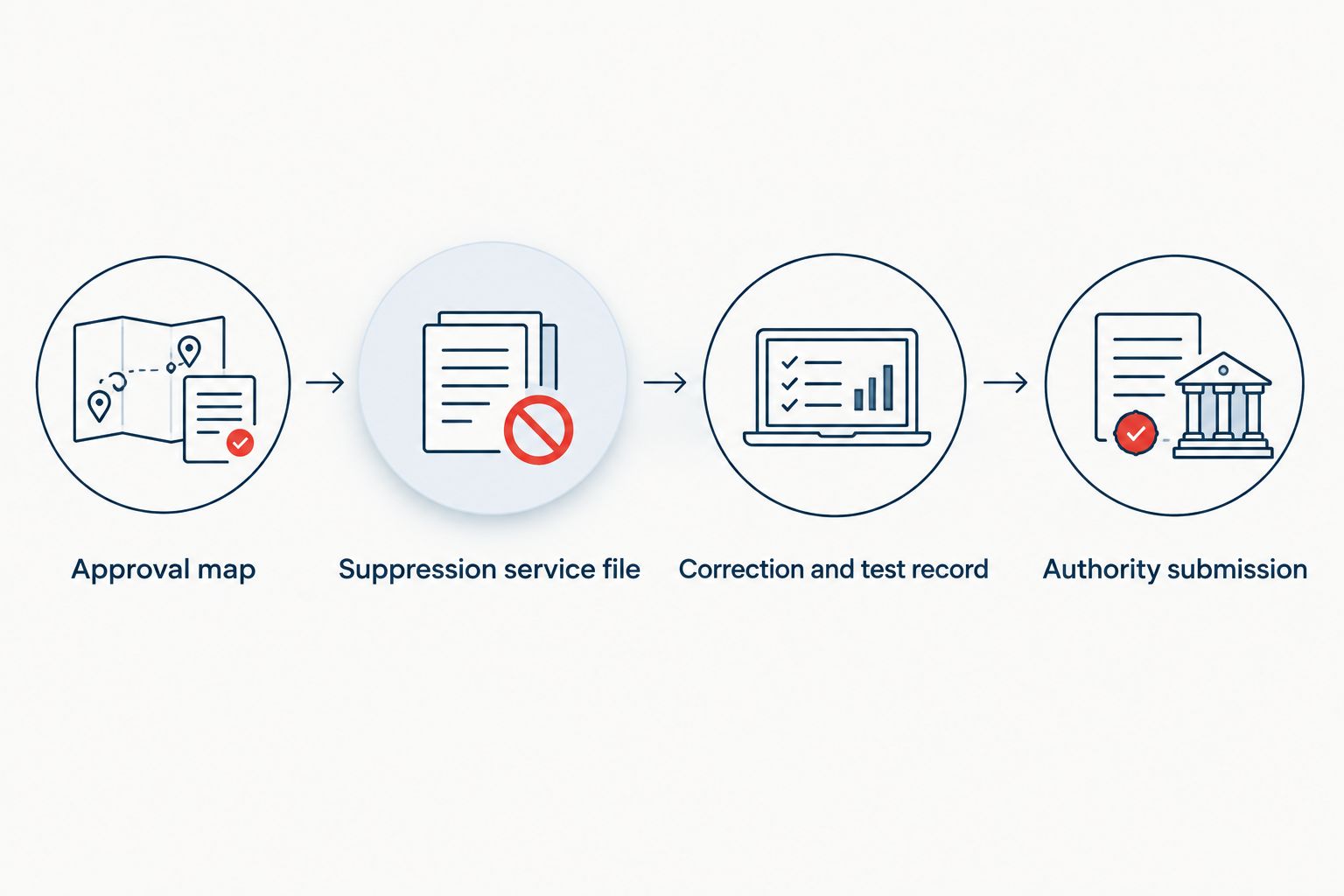
Approval map
Confirm the inspection sequence
- Contact the health department responsible for the address. Ask whether the project is a new opening, ownership change, remodel, or routine inspection, and request its applicable checklist.
- Contact the responsible fire authority. Ask whether it requires plan review, permits, an acceptance inspection, routine service documentation, or another submission for this scope.
- Ask both offices whether one approval must precede the other. Record the answer, contact name, and date rather than relying on what another restaurant did.
- Create a shared record with these working labels: Site address, Project scope, Required approval, Responsible person, Evidence, Due date, and Status. These are your tracking labels, not claimed government portal fields.
- Separate the statuses Service complete, Corrections closed, and Authority approval received. Attach evidence before changing each status.
Expected result: You have a written approval sequence with named owners and required documents. Every appointment has a purpose, and nobody treats the suppression contractor's visit as the health department's final inspection.
Keep email instructions with the file. If verbal instructions conflict, request written clarification before scheduling dependent work. This matters especially when the landlord, operator, and contractor each hold different pieces of the project record.
Suppression service file
Match the system to the cooking line
- Send the contractor the current appliance layout and a list of changes since the last inspection. Identify equipment by its actual location and cooking use, not just a nickname such as the back fryer.
- Ask the contractor to compare the installed protection with the applicable system design and manufacturer requirements. Nozzle coverage, appliance positioning, detection, and shutdown arrangements belong in that review.
- Have the contractor perform the required inspection and maintenance. NFPA 17A, the wet-chemical extinguishing-system standard, establishes maintenance at least every 6 months; confirm the locally adopted edition and any additional requirements for your installation.
- Obtain a readable report identifying the site, system, service date, work performed, deficiencies, and system condition after service. Keep supporting test and repair records with it.
- Record the next service due date. A six-month maintenance interval means at least 2 maintenance visits per year, not an annual visit with a replacement tag between appointments.
Expected result: The service record identifies the equipment actually installed and states what remains unresolved. You can distinguish a completed maintenance visit from a system that still needs corrective work.
For the 2026 file, retain the full report alongside the tag information. A photograph of a tag is useful for locating a date; it is not a replacement for the report's findings.
Correction and test record
Close deficiencies with evidence
- Enter each deficiency as a separate task. Copy the contractor's or inspector's wording so the repair scope does not drift during handoffs.
- Assign the correct trade and an accountable site contact. Suppression repairs, electrical shutdown work, fuel-system work, and hood cleaning are different scopes; confirm who handles each required action.
- Ask the contractor what testing and operational interruption the correction requires. Coordinate affected cooking, alarm interfaces, and any required notifications before work starts.
- Attach completion evidence to each task. Use the contractor's repair report, required test results, revised approved documents, or authority correspondence as appropriate. A manager's note that something looks fixed does not establish technical acceptance.
- Have the contractor document restoration after work. Keep any outstanding limitation or impairment visible, and obtain operating direction from the responsible authority when approval or safe use is unresolved.
Expected result: Each correction has a documented outcome, and the file shows the system's condition after the work—not just the condition that triggered the service call.
NFPA 10, the portable-extinguisher standard, limits travel distance to a Class K extinguisher to 30 feet for applicable cooking hazards. Include the kitchen extinguisher in the readiness review, but do not treat it as a substitute for required fixed suppression protection.
Authority submission
Submit the file and record the decision
- Assemble the documents each office requested. Keep suppression maintenance, correction closeout, hood cleaning, and applicable permit or acceptance records clearly labeled.
- Submit through the authority's stated process. Use its actual form names and submission instructions; do not assume an emailed contractor report completes a permit or inspection request.
- Confirm receipt and arrange the required site visit. Keep the current appliance layout and reports accessible to the person meeting the inspector.
- Record the inspection outcome exactly. Distinguish an approval from a correction notice, conditional outcome, or request for additional evidence.
- Close the health department task only after receiving its required approval or documented disposition. Also retain any separate fire approval and operating conditions that apply.
Expected result: Your record shows who approved what, when the decision occurred, and whether any conditions remain. The opening decision rests on actual authority documents, not a calendar invitation marked complete.
Use the same evidence chain for every 2026 inspection: required action, completed work, supporting record, authority decision. Do not create an automatic approval rule based solely on the contractor uploading a report.
Know which record proves what
Keep these documents together, but do not combine their meanings. Each record answers a different question.
| Record | What it supports | What it does not establish |
|---|---|---|
| Suppression service report | Work performed and recorded system condition | Health department approval |
| Hood-cleaning record | Documented cleaning scope and findings | Suppression-system maintenance completion |
| Correction closeout | Evidence addressing a specific deficiency | Acceptance by an authority unless that acceptance is documented |
| Fire-authority decision | The fire approval or disposition stated in the document | Completion of every health department requirement |
| Health department decision | The food-establishment approval or disposition stated | Approval of changes outside its stated scope |
A shared digital folder makes handoffs easier, but it needs controlled access and a clear current version. A paper binder works at the inspection site, but someone must replace superseded documents. Use one master record and give the site manager access to the current evidence.
Repeat the workflow whenever the cooking line changes
A replacement appliance is not just a purchasing event. Its dimensions, cooking hazard, location, or fuel arrangement can affect the suppression design and approval requirements.
Before installing or moving equipment:
- Record the proposed change and send it to the qualified suppression contractor.
- Ask the responsible authorities whether revised plans, permits, or inspections are required.
- Coordinate any required suppression modifications before using the changed arrangement.
- Collect the revised service, test, and approval records applicable to the work.
- Replace the current appliance layout in the master file while retaining the previous version as history.
Best for existing kitchens: Trigger this review from the equipment-change request, not from the next scheduled maintenance reminder. The benefit is early coordination; the limitation is that the review does not itself authorize the change.
Keep equipment-change tasks separate from routine service reminders in your 2026 calendar. Completing scheduled maintenance should not silently close a pending remodel approval.
Troubleshooting
The tag is current, but the inspector wants more records
Request the complete service report and the exact missing document. Match the request to the appropriate owner: contractor, cleaning provider, permit applicant, or public authority. Do not answer a request for acceptance documentation with another photograph of the tag.
A fryer moved after the last inspection
Notify the suppression contractor and responsible authority before using the changed arrangement. Have the contractor evaluate coverage and required modifications. Moving the appliance back by eye does not prove that the system matches its approved design.
Shutdown testing conflicts with meal service
Agree on a controlled test window before the technician arrives. Identify affected equipment and required notifications, then have qualified personnel document restoration. Do not bypass a shutdown or other safety function to keep cooking during the test.
The contractor finished, but the correction remains open
Check whether the authority requires a report upload, reinspection request, or separate acceptance. Send the specific evidence requested and retain the written disposition. Contractor completion and authority closure are separate events.
Hood cleaning and suppression maintenance were confused
Separate the scopes and obtain the missing service. Cleaning addresses grease accumulation; suppression maintenance addresses the extinguishing system. Keep both records accessible without labeling either one as proof that the other task is complete.
Customize your workflow
For a single kitchen, assign the manager ownership of the inspection file and name a backup. For multiple kitchens, use a separate record for every address and system; a completed task at one location must not close another location's requirement.
Firstlinefire provides suppression-system and fire-extinguisher services. Keep the requested service scope explicit, including the site, installed equipment, known deficiencies, and documents the authority requested. Public-authority scheduling and approval remain separate responsibilities unless your actual agreement assigns coordination tasks.
Arrange fire-protection service
Identify the site, cooking-line changes, and inspection documents needed before requesting service.
FAQ
Does a kitchen hood suppression inspection count as health department approval?
No. A suppression inspection documents system service and findings; health department approval is a separate decision under the local process. Ask the responsible offices which documents and inspections your project requires.
How often does a wet-chemical kitchen suppression system need maintenance?
NFPA 17A establishes maintenance at least every six months. Confirm the locally adopted edition, manufacturer instructions, and any additional requirements with the qualified contractor and responsible authority.
What documents should I have ready for the kitchen inspection?
Have the documents requested by the inspecting authority ready, including applicable suppression reports, correction records, cleaning records, and permit or acceptance documents. Keep a current appliance layout available so the records can be matched to the installed cooking line.
Can I move a fryer after the hood system has been inspected?
Get a suppression-design review before using a changed appliance arrangement. Appliance location and cooking hazard affect protection, and the responsible authority determines whether additional permits or inspections are required.
Does hood cleaning replace suppression-system maintenance?
No. Hood cleaning and suppression maintenance address different conditions and produce different records. Keep both scopes current under the requirements that apply to your kitchen.
Can Firstlinefire provide the health department sign-off?
The responsible health department issues its approval. Firstlinefire provides fire-protection inspection and service; contractor documentation supports the approval process but does not replace the authority's decision.
Can the kitchen stay open while inspection corrections are pending?
The service report alone does not authorize continued operation. Follow any closure order, operating restriction, impairment procedure, or written direction from the responsible authority, and obtain clarification before using affected equipment.
One last thing
Check the cooking line against the paperwork before checking the dates. A recent report describing an old appliance arrangement leaves a question that a fresh tag cannot answer. Make equipment changes visible to the contractor and the approving authority.


