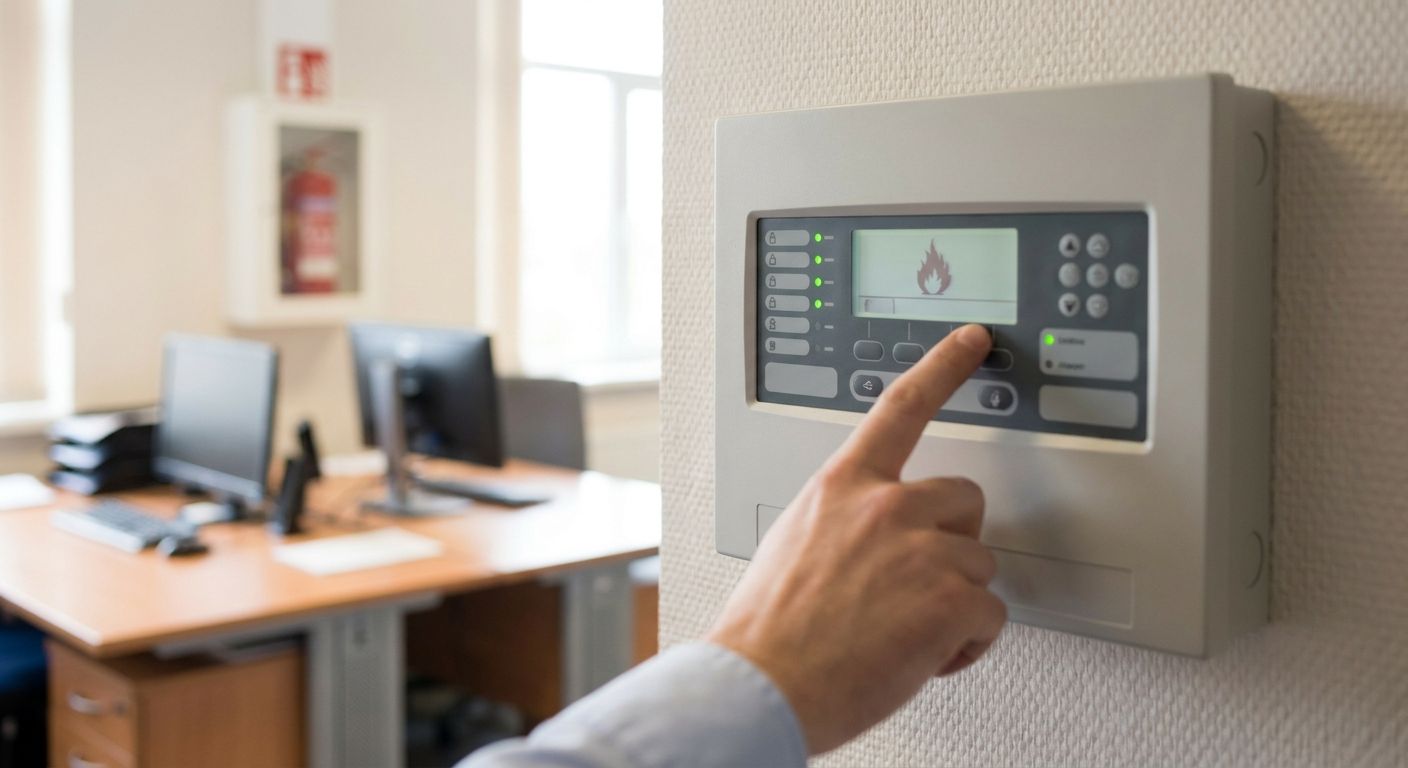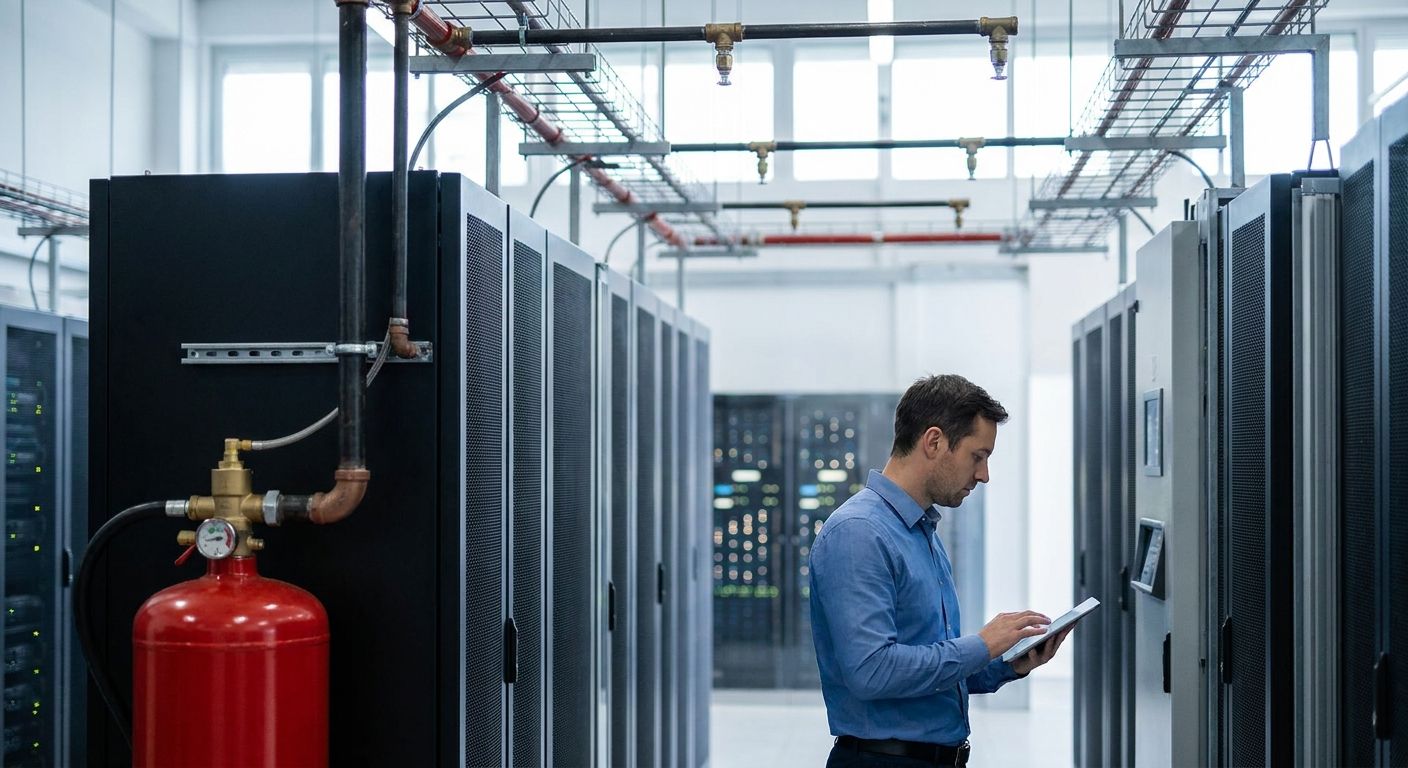
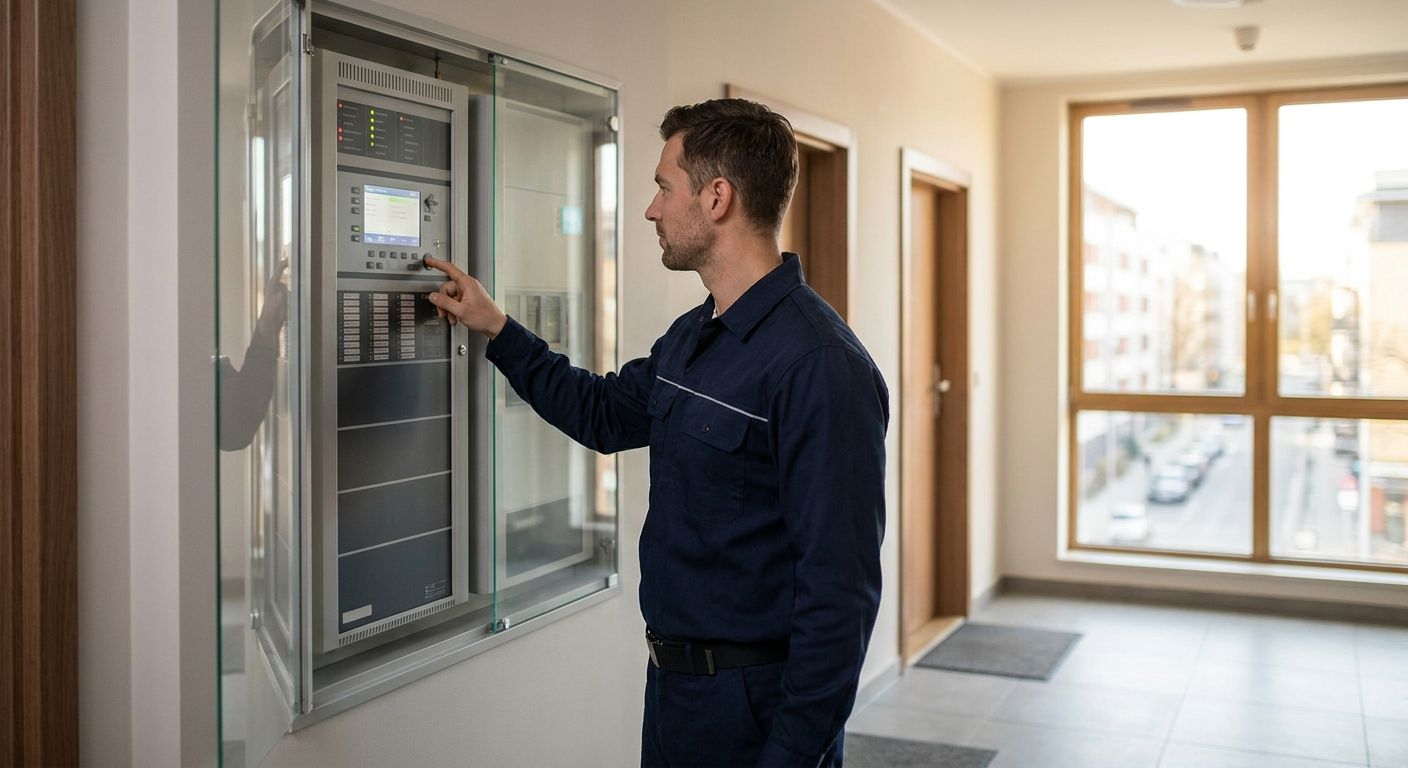
Cellular monitoring is the right call for most multi-family buildings in 2026, hybrid cellular-plus-landline earns its keep on large campuses that need redundancy, and self-monitored setups work as a budget option only when staff are on-site around the clock.
- Cellular (IP) monitoring is the best fire alarm monitoring service for multi-family buildings in 2026 for most properties under 200 units.
- Hybrid cellular-plus-landline monitoring wins for large complexes that need two paths to the central station.
- UL 864-listed third-party central station monitoring is the compliance baseline most insurers and fire marshals expect.
- Self-monitored, on-site staffed monitoring only works as a budget option when someone is watching the panel 24/7.
- Landline-only (POTS) monitoring is being phased out as copper lines disappear — migrate before it forces an emergency swap.
Why this matters
A fire alarm panel that isn't monitored is a smoke detector with a very expensive housing. NFPA 72 requires supervised systems in most multi-family occupancies to report to a UL-listed central station, and local fire marshals across Kentucky, Illinois, Indiana, Tennessee, Missouri, and Alabama check for that connection during inspections.
The monitoring method you pick determines how fast the fire department gets the call, how the system reports trouble signals, and what your insurer will accept. First-Line Fire installs and services fire alarm panels for commercial and multi-family properties across those six states, coordinating the panel install with a UL-listed monitoring center so the system reports correctly from day one.
Get this wrong and you're either paying for redundancy you don't need or running a building on a monitoring method your insurer is quietly planning to reject at the next policy renewal.
What makes the best fire alarm monitoring service for multi-family buildings
- UL 864 listing on the central station receiving the signal — this is what insurers and most fire marshals require.
- Signal path redundancy — a single point of failure (one phone line, one cell tower) is a liability in a building with dozens of units.
- Response time to dispatch — the gap between alarm activation and fire department notification.
- Trouble and supervisory signal reporting — low battery, panel tamper, and sprinkler valve status need to reach someone, not just the fire signal.
- Compatibility with the existing panel — retrofitting an old panel for a new monitoring method sometimes costs more than the monitoring itself.
- Code compliance for your state — requirements vary slightly between Kentucky, Illinois, Indiana, Tennessee, Missouri, and Alabama on inspection frequency and reporting.
Fire alarm monitoring services at a glance
| Method | Best for | Standout feature | Key limitation |
|---|---|---|---|
| Cellular (IP) monitoring | New construction and renovated panels | No phone line needed, reports in seconds | Requires cell signal strength check at install |
| Hybrid cellular + landline | Large complexes needing redundancy | Two independent signal paths | Higher monthly monitoring cost |
| UL 864 central station monitoring | Insurance and code compliance | Meets NFPA 72 supervised-system requirement | You still need a local contractor for panel service |
| Self-monitored (on-site staffed) | Small complexes with 24/7 staff | No monthly monitoring fee | Fails the moment staffing gaps happen |
| Landline-only (POTS) monitoring | Buildings mid-migration | Familiar, works with legacy panels | Copper lines are being retired by carriers |
1. Cellular (IP) monitoring: best fire alarm monitoring for new and retrofitted panels
Cellular monitoring sends the alarm signal over a dedicated cellular radio built into or added onto the fire alarm panel. No phone jack, no dependency on a landline that a contractor could accidentally cut during a renovation down the hall.
Cellular monitoring pros:
- Signal reaches the central station in seconds, not the longer dial-up delay of older landline systems
- Works in buildings where copper phone lines have already been disconnected
- Easier to add to an existing panel than rewiring for a second landline
Cellular monitoring cons:
- Weak cell signal in below-grade mechanical rooms can require a signal booster
- Ongoing carrier data costs are bundled into the monthly monitoring fee
Best for: multi-family buildings under roughly 200 units doing new construction or replacing an aging panel in 2026.
Verdict: Buy.
2. Hybrid cellular + landline monitoring: best for large complexes needing redundancy
Hybrid monitoring keeps a landline as the secondary path and cellular as primary (or vice versa), so a single failure — a cut phone line or a dead cell tower — doesn't take the whole system offline.
Hybrid monitoring pros:
- Two independent signal paths reduce the odds of a total monitoring blackout
- Satisfies stricter insurer requirements for larger properties
- Landline still functions as backup if cellular coverage degrades
Hybrid monitoring cons:
- Monthly monitoring cost runs higher than a single-path setup
- Landline component still depends on copper infrastructure that carriers are retiring in phases
Best for: complexes over 150-200 units, or any property where the insurer specifically asks for redundant signal paths.
Verdict: Buy if your unit count or insurance policy justifies the extra cost.
3. UL 864-listed third-party central station monitoring: best for code and insurance compliance
This is the baseline every monitored fire alarm system routes through, regardless of whether the signal travels by cellular, landline, or hybrid path. The central station is UL 864-listed, staffed continuously, and dispatches the fire department when a signal comes in.
Central station monitoring pros:
- Meets the NFPA 72 requirement for supervised systems in most multi-family occupancies
- Continuous staffing means a real person confirms the alarm before dispatch
- Accepted by essentially every commercial property insurer
Central station monitoring cons:
- The central station handles monitoring, not panel testing or repair — you still need a local fire protection contractor for inspections and service
- Not all central stations are UL-listed; verify before signing a contract
Best for: any multi-family property where the fire marshal or insurance carrier requires documented, monitored coverage — which in 2026 is nearly all of them.
Verdict: Hold — this is the layer you build the other methods on top of, not a standalone choice.
4. Self-monitored (on-site staffed) monitoring: best budget option for small, staffed complexes
Self-monitoring means the panel reports to an on-site desk or security office instead of a third-party central station, with staff responsible for calling the fire department directly.
Self-monitored pros:
- No recurring third-party monitoring fee
- Staff on-site can visually confirm a false alarm before dispatch
Self-monitored cons:
- Fails completely during staffing gaps, shift changes, or overnight hours if coverage isn't truly 24/7
- Most insurers and many local codes won't accept this as the sole monitoring method for multi-family occupancies
Best for: smaller complexes with a genuinely staffed front desk around the clock, and only as a supplement to central station monitoring, not a replacement.
Verdict: Wait — confirm with your fire marshal and insurer before relying on this alone.
5. Landline-only (POTS) monitoring: on its way out
Landline monitoring dials a phone number to reach the central station when the panel trips. It's the oldest method still in use and the one carriers are actively retiring as copper networks get decommissioned.
Landline monitoring pros:
- Familiar and already wired into older panels
- No cellular signal concerns in below-grade spaces
Landline monitoring cons:
- Carriers are phasing out copper lines nationally, which puts a hard deadline on this method
- Slower signal transmission than cellular or IP paths
Best for: buildings that haven't migrated yet but need a stopgap while scheduling the switch.
Verdict: Skip for any new install in 2026 — migrate existing landline-only panels before the phone company forces the issue.
Get your fire alarm panel monitoring-ready
Panel install, inspection, and monitoring coordination across KY, IL, IN, TN, MO, and AL.
How we ranked these
Each method was weighed against the six criteria above: UL 864 listing, signal redundancy, dispatch speed, trouble-signal reporting, panel compatibility, and state-level code compliance across Kentucky, Illinois, Indiana, Tennessee, Missouri, and Alabama. Methods that fail on redundancy or are being phased out by carriers rank lower regardless of upfront cost.
Which fire alarm monitoring service should you choose?
Default to cellular monitoring if you're installing a new panel or replacing an old one in 2026 — it's faster, doesn't depend on copper, and satisfies most insurers on its own. Move to hybrid only if your unit count or policy specifically calls for a second signal path. Landline-only setups need a migration plan now, not later, since the underlying phone infrastructure is disappearing regardless of what your panel is capable of.
Multi-family properties with shared commercial kitchens in a clubhouse or leasing office should also check whether the commercial kitchen suppression system tied to that space reports to the same monitored panel — a lot of buildings miss this during inspection prep.
FAQ
What's the best fire alarm monitoring service for multi-family buildings in 2026?
Cellular (IP) monitoring is the best fit for most multi-family buildings in 2026 because it doesn't depend on a landline and reports signals in seconds. Larger complexes needing redundancy should add a hybrid cellular-plus-landline setup instead.
Is cellular monitoring better than landline monitoring?
Yes — cellular monitoring reports faster and doesn't rely on copper phone lines that carriers are retiring. Landline-only monitoring should be treated as a stopgap, not a long-term choice, in 2026.
Do multi-family buildings legally need monitored fire alarms?
Most multi-family occupancies fall under NFPA 72 requirements for supervised, monitored fire alarm systems reporting to a UL 864-listed central station. Local fire marshals in Kentucky, Illinois, Indiana, Tennessee, Missouri, and Alabama check for this during inspections.
Can a self-monitored building skip third-party monitoring entirely?
Only if staff are genuinely on-site 24/7, and even then most insurers and codes expect central station monitoring as the primary method. Self-monitoring works best as a supplement, not a replacement.
How much does fire alarm monitoring cost for an apartment complex?
Cost depends on unit count, panel type, and whether you choose cellular, hybrid, or landline monitoring, so check current pricing directly with a licensed provider. The bigger cost driver is usually panel compatibility, not the monitoring method itself.
What happens to landline fire alarm monitoring as copper lines are retired?
Buildings still on landline-only monitoring will need to migrate to cellular or hybrid before their carrier fully retires copper service in their area. Waiting until the line is cut forces an emergency panel upgrade instead of a planned one.
Does hybrid monitoring cost more than cellular alone?
Yes, hybrid monitoring runs a higher monthly fee because it maintains two independent signal paths instead of one. It's worth the added cost mainly for larger complexes or properties where insurers require redundancy.
Who installs and services fire alarm panels for multi-family buildings?
A licensed local fire protection contractor installs, tests, and inspects the panel, then coordinates the signal path with a UL-listed monitoring center. First-Line Fire handles this across Kentucky, Illinois, Indiana, Tennessee, Missouri, and Alabama.
One last thing
The method most buildings overlook isn't the monitoring path — it's the trouble signal. A panel reporting low battery or a tamper alert on a sprinkler valve matters just as much as the fire signal itself, and not every monitoring setup routes those the same way. Ask specifically how your monitoring method handles supervisory signals before you sign a contract, not after the first false trouble alarm at 3 a.m.