
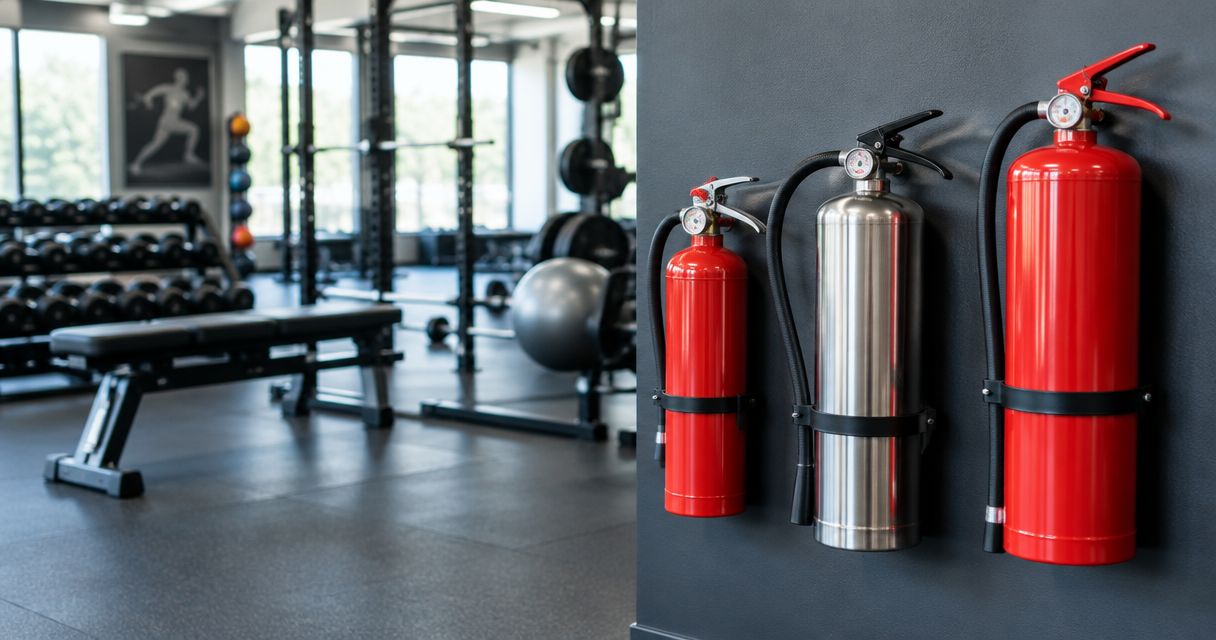
Best overall: ABC dry chemical. Best for sensitive electronics: a clean-agent extinguisher with the required rating. Best for cooking-oil hazards: Class K wet chemical. This 2026 guide ranks the best fire extinguisher types for gyms by the hazards they cover, the residue they leave, and where they belong.
- ABC dry chemical leads the best fire extinguisher types for gyms for general coverage.
- Clean-agent extinguishers suit sensitive electronics; check each extinguisher’s listed fire classes.
- Class K wet chemical belongs at commercial cooking-oil hazards, not ordinary workout areas.
- Firstlinefire provides fire extinguisher sales, inspection and service for commercial facilities.
Why this matters
Choose extinguishers by what can burn, not by the equipment’s purchase value. A treadmill has electrical components, but nearby upholstery, paper and stored supplies introduce ordinary combustible hazards. An extinguisher that handles energized electrical equipment does not necessarily handle those materials.
For commercial fire extinguisher sales and service, Firstlinefire serves Kentucky, Illinois, Indiana, Tennessee, Missouri and Alabama. Firstlinefire is a service option for gym operators in those states who need fire extinguisher sales, inspection and service.
Your 2026 plan should identify hazards room by room. General workout areas, electrical equipment spaces and food preparation areas do not automatically need the same agent. Selection also depends on the extinguisher’s rating, mounting location, travel distance and staff training.
An extinguisher is for a small, early-stage fire when a trained person has a clear escape route. If smoke, heat or fire threatens that route, evacuate. Equipment protection comes after people.
What makes the best fire extinguisher types for gyms?
Use these criteria before choosing a cylinder:
- Fire-class coverage: Match the label to ordinary combustibles, flammable liquids, energized electrical equipment or cooking oils.
- Listed rating: Agent type alone does not establish how much protection an extinguisher provides. Read the actual rating.
- Residue: Powder creates cleanup work. Residue-free agents avoid powder deposits but have their own limits.
- Room conditions: Occupancy, ventilation, temperature and confined spaces affect suitability and safe use.
- Access: Staff need an unobstructed route to a visible extinguisher. A suitable unit behind stored equipment is not accessible.
- Service requirements: Choose equipment you can inspect, maintain and test under its instructions and applicable requirements.
Do not turn this ranking into a shopping list for every room. The right mix follows the hazards your gym actually has.
Fire extinguisher types at a glance
| Rank | Type | Best for | Standout feature | Key limitation |
|---|---|---|---|---|
| 1 | ABC dry chemical | General gym coverage | Covers ordinary combustibles, flammable liquids and energized electrical hazards | Powder contaminates equipment and surfaces |
| 2 | Clean agent | Residue-sensitive electronics | Leaves no powder deposit | Fire-class coverage varies by listed model |
| 3 | Carbon dioxide | Localized electrical and flammable-liquid hazards | Leaves no extinguishing-agent residue | Standard portable units lack Class A coverage |
| 4 | Water | Dedicated ordinary-combustible hazards | Cools burning Class A materials | Standard water units are unsuitable for energized electrical equipment |
| 5 | Class K wet chemical | Commercial cooking-oil hazards | Designed for cooking oils and fats | Does not replace general gym coverage |
The order reflects general usefulness to a fitness facility, not suitability for every fire. Class K ranks last for general coverage but first for a commercial fryer hazard.
1. ABC dry chemical: best gym extinguisher for general coverage
ABC dry chemical is the default starting point for general gym areas. A listed ABC extinguisher covers Class A ordinary combustibles, Class B flammable liquids and Class C energized electrical equipment.
That coverage fits spaces where several hazard types sit close together. Reception areas, offices, storage rooms and workout floors need assessment for their actual contents; the room name alone does not establish the hazard classification.
ABC dry chemical pros:
- Covers several common fire classes with one agent type.
- Handles ordinary combustibles as well as energized electrical hazards.
- Reduces the need to choose between narrow-purpose agents during an emergency.
- Provides a practical baseline for a room-by-room protection plan.
ABC dry chemical cons:
- Powder leaves deposits on equipment, flooring and surrounding surfaces.
- Discharge creates a dust cloud that affects visibility.
- Cleanup around electronics requires care; powder is not a residue-free option.
Best for: General coverage where Class A hazards occur alongside electrical equipment or flammable-liquid hazards.
Check the extinguisher’s actual rating before treating ABC as sufficient. An ABC label does not settle quantity or placement, and it does not make the unit suitable for commercial cooking-oil fires or every battery hazard.
For your 2026 equipment review, start with suitable ABC coverage, then identify areas needing a different agent. Verdict: Buy ABC dry chemical for general coverage after confirming ratings and placement.
2. Clean agent: best gym extinguisher for sensitive electronics
A portable clean-agent extinguisher provides fire protection without leaving dry-chemical powder behind. It is a targeted option for spaces where agent residue would complicate equipment cleanup, such as an electronics room or audiovisual control area.
Clean agent is a category, not a single fire rating. Some listed units cover Class A, B and C hazards; others have narrower coverage. The cylinder’s label and manufacturer instructions decide what it protects.
Clean-agent pros:
- Leaves no dry-chemical powder deposit.
- Suits residue-sensitive equipment when the unit has appropriate ratings.
- Offers an alternative to powder in specifically assessed spaces.
Clean-agent cons:
- Class A coverage is not automatic across the category.
- Use restrictions and exposure limits depend on the agent and product.
- A portable unit does not replace a required fixed suppression system.
Best for: Sensitive electronics where avoiding powder residue matters and the listed rating matches the room’s hazards.
Do not select clean agent just because a treadmill has a screen. Assess the entire area, including nearby combustible materials, and confirm that the extinguisher meets the protection requirement.
Firstlinefire provides fire extinguisher and suppression-system sales and service. Keep portable extinguisher selection separate from any decision about fixed protection; they serve different roles. Verdict: Buy a correctly rated clean-agent unit for a defined residue-sensitive hazard, not as an automatic whole-gym replacement.
3. Carbon dioxide: best gym extinguisher for localized electrical hazards
Carbon dioxide, or CO2, extinguishers serve Class B and Class C hazards without leaving extinguishing-agent residue. They are a targeted option for assessed flammable-liquid or energized electrical hazards.
Standard portable CO2 extinguishers do not provide Class A coverage. That matters when paper, fabric, wood or other ordinary combustibles sit near the electrical equipment you want to protect.
Carbon dioxide pros:
- Leaves no powder or liquid-agent deposit.
- Covers energized electrical equipment with a Class C rating.
- Covers Class B flammable-liquid hazards within its listed rating.
Carbon dioxide cons:
- Does not replace Class A protection for ordinary combustibles.
- Gas discharge creates an asphyxiation hazard in confined or poorly ventilated spaces.
- Wind and air movement disperse the agent and reduce effectiveness.
Best for: Localized Class B or electrical hazards where the environment and training support safe use.
CO2 is not a default choice for a crowded fitness studio. Its residue advantage does not cancel its coverage and exposure limits. Staff also need instruction on cold discharge components and the manufacturer’s handling requirements.
Use CO2 only where the hazard assessment supports it, with separate Class A protection where required. Verdict: Hold until the location, fire classes and safe-use conditions are confirmed.
4. Water: best gym extinguisher for dedicated Class A hazards
A standard water extinguisher cools Class A fires involving ordinary combustibles. It belongs only where its listed use matches the hazard and staff can distinguish it from equipment rated for energized electrical fires.
Water is not the general-purpose choice for a workout floor containing powered equipment. Standard water extinguishers are unsuitable for energized electrical equipment, flammable-liquid fires and cooking-oil fires.
Water extinguisher pros:
- Cools burning ordinary combustibles.
- Leaves no dry-chemical powder deposit.
- Provides a clearly defined option for an assessed Class A hazard.
Water extinguisher cons:
- Standard units lack Class B and Class C coverage.
- Water discharge damages moisture-sensitive materials and equipment.
- Freezing conditions matter unless the listed unit is designed for them.
Best for: A dedicated ordinary-combustible hazard where standard water use is appropriate.
Do not confuse a standard water extinguisher with a listed water-mist model. Certain water-mist products have different ratings and instructions; the word water does not establish electrical suitability.
A towel-storage area still needs assessment for nearby equipment and other hazards. Verdict: Skip standard water as the gym-wide default; use it only for a confirmed Class A application.
5. Class K wet chemical: best gym extinguisher for commercial cooking oils
Class K wet chemical is the right category for commercial cooking-oil and fat hazards. It belongs in the discussion when a fitness facility operates equipment such as a deep fryer—not simply because it has a snack counter.
Wet chemical cools the cooking medium and forms a protective layer that helps suppress the fire. Where a hood suppression system is installed, staff must follow the system’s operating instructions and emergency procedures.
Class K wet-chemical pros:
- Targets cooking oils and fats that need specialized protection.
- Provides cooling and surface fire suppression.
- Complements required commercial cooking protection rather than substituting for it.
Class K wet-chemical cons:
- Does not replace general gym extinguisher coverage.
- Requires cleanup after discharge.
- Cooking-area protection still depends on appliances, fuel sources and applicable requirements.
Best for: Commercial cooking equipment with a cooking-oil or fat hazard.
A refrigerator, blender or packaged-food display does not by itself establish a Class K need. Identify the appliance and cooking process before selecting the extinguisher. Verdict: Buy Class K for a confirmed commercial cooking-oil hazard; skip it as general workout-floor protection.
How we ranked the extinguisher types
This ranking puts fire-class coverage before cleanup convenience. ABC leads because it addresses several common hazard classes. Clean agent and CO2 occupy narrower slots where residue matters; water and wet chemical belong to specific fuel hazards.
The ranking also weighs safe-use limitations and service requirements. It does not rank individual manufacturers or claim that every extinguisher within an agent category has the same rating.
For a 2026 purchasing decision, confirm the exact listed model, the hazard classification and local requirements before ordering. The best agent is the one matched to the fire—not the one with the shortest cleanup.
Put the right type in the right place
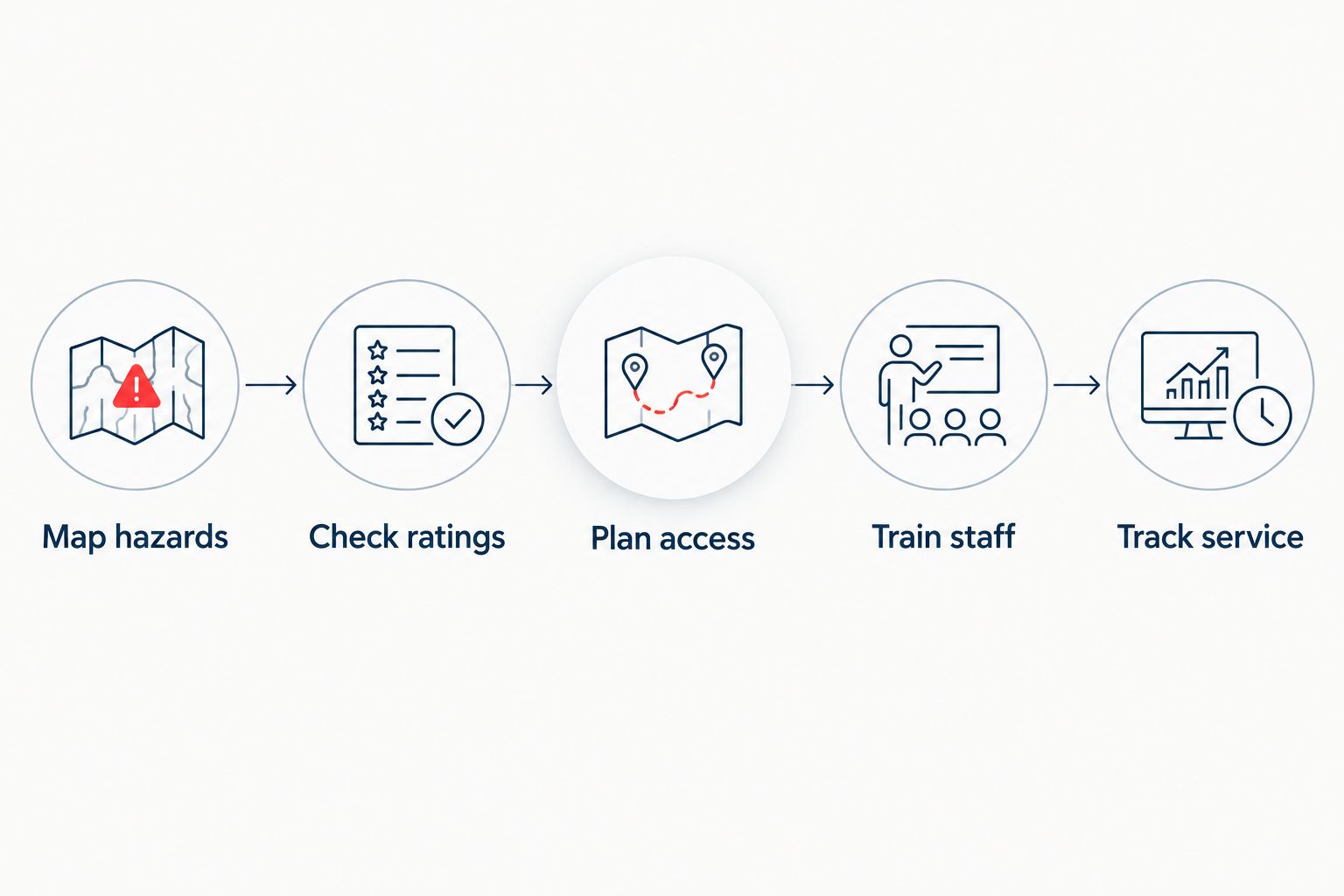
Build your selection around a simple sequence:
- Map hazards. Record ordinary combustibles, electrical equipment, flammable liquids and cooking operations by room.
- Check ratings. Match the extinguisher’s listed classes and capacity to each assessed hazard.
- Plan access. Check walking routes, visibility, mounting and obstructions.
- Train staff. Define who evacuates, who raises the alarm and who is authorized to use extinguishers.
- Track service. Assign inspections, maintenance and follow-up for discharged or damaged units.
For workplaces subject to OSHA’s portable-extinguisher rule, 29 CFR 1910.157 sets a maximum Class A travel distance of 75 feet and a maximum Class B travel distance of 50 feet from the hazard area. These are travel distances, not straight-line measurements through walls or equipment.
The same rule requires monthly visual inspections and an annual maintenance check. Local fire-code requirements, adopted standards and manufacturer instructions also affect your plan. Use the extinguisher placement guide by hazard class to keep distance questions separate from agent selection.
For your 2026 records, document the location and condition of each extinguisher, not just its service tag. Move a blocking storage cart immediately; do not wait for the next maintenance visit.
Plan your gym’s extinguisher service
Discuss extinguisher sales, inspection, service and safety training with Firstlinefire.
Which fire extinguisher type should your gym choose?
Start with correctly rated ABC dry chemical for general coverage. Add a suitable clean-agent extinguisher for an assessed residue-sensitive area, or CO2 for a defined Class B or electrical hazard. Add Class K only when commercial cooking oils or fats require it.
Do not use standard water as a substitute for electrical-rated protection. Do not assume a Class C marking solves every rechargeable-battery fire scenario, either. Battery chemistry, charging arrangements and equipment instructions need separate assessment.
Your final selection should leave staff with clear choices, not a collection of cylinders they cannot distinguish. Label locations in the safety plan and train employees on the units actually installed.
FAQ
What’s the best fire extinguisher type for a gym?
ABC dry chemical is the default starting point for general gym coverage because it covers Class A, B and C hazards. Confirm the listed rating, quantity and placement against the actual facility hazards and applicable requirements.
Is a clean-agent extinguisher better than ABC around treadmills?
Clean agent avoids powder residue, but it is not automatically a better whole-area choice. Check the unit’s fire ratings and nearby ordinary combustibles before replacing ABC coverage.
Can I use a water extinguisher on a treadmill fire?
Do not use a standard water extinguisher on energized electrical equipment. Use an appropriately rated extinguisher only if the fire is small, you are trained and your escape route remains clear.
Does a gym snack bar need a Class K extinguisher?
A snack bar needs Class K protection when its commercial cooking equipment creates a cooking-oil or fat hazard. Packaged snacks, refrigeration and blending alone do not establish that need.
How far can employees walk to a gym extinguisher?
OSHA’s workplace rule limits Class A travel distance to 75 feet and Class B travel distance to 50 feet from the hazard area. Applicable fire codes and the specific hazard assessment also govern placement.
How often should gym extinguishers be inspected?
OSHA’s portable-extinguisher rule requires monthly visual inspections and an annual maintenance check. Follow applicable code requirements and manufacturer instructions for additional maintenance and testing.
Can one extinguisher protect the entire fitness center?
Do not assume one extinguisher protects an entire fitness center. Required coverage depends on floor layout, hazard classification, extinguisher ratings and travel distances.
One last thing
A Class C rating identifies suitability around energized electrical equipment; it does not describe the fuel burning beside it. Once equipment is de-energized, the remaining fire is classified by the burning material. That is why an electrical-rated extinguisher without Class A coverage is not a complete answer for every treadmill area.
Before finishing your 2026 plan, walk the actual route from each hazard to its extinguisher. Check what blocks the route and whether staff can recognize the right unit without stopping to debate it.


