
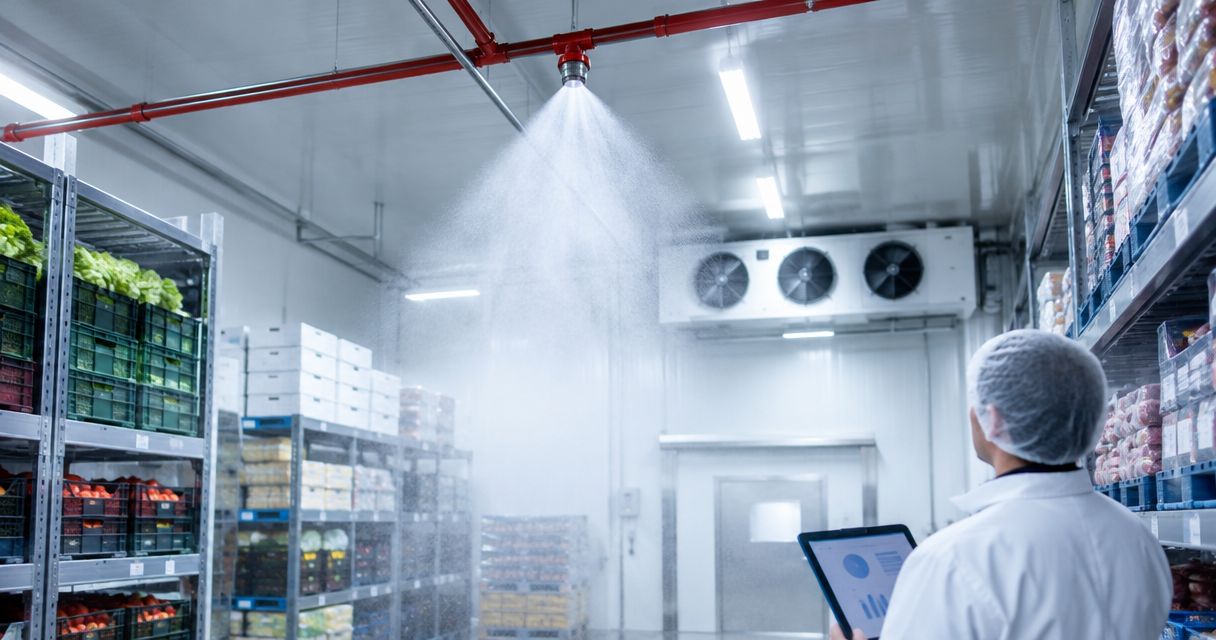
Best default for subfreezing storage: dry-pipe sprinklers. Best for water-sensitive freezer areas: preaction sprinklers. Best for heated processing rooms: wet-pipe sprinklers. This 2026 guide compares the best fire suppression systems for cold storage facilities and separates building protection from cooking, electrical, and equipment hazards.
- The best fire suppression systems for cold storage facilities match temperature, stored commodities, rack layout, and water supply.
- Dry-pipe sprinklers suit subfreezing storage; preaction systems add detection-controlled water admission for water-sensitive areas.
- Wet-pipe sprinklers suit heated processing rooms; wet-chemical systems protect qualifying commercial cooking equipment.
- Firstlinefire provides suppression systems and fire alarms; select cold storage fire protection through a site-specific design.
Why this matters
A freezer and a cooking line do not need the same suppression system. Frozen food also does not remove the fire load from cartons, plastic packaging, pallets, or combustible building materials.
Choose protection by room and hazard, not by the name of the business. A food processing facility often needs several systems working together, with separate requirements for storage, cooking, machinery, and electrical rooms.
Firstlinefire provides suppression systems, fire alarms, extinguisher services, and safety training across Kentucky, Illinois, Indiana, Tennessee, Missouri, and Alabama. For your 2026 project, start with a documented hazard assessment and an approved design—not a preferred agent.
What makes the best cold storage fire suppression system
Use these criteria before comparing systems:
- Temperature suitability: Pipes, valves, detectors, and agents must suit the lowest temperatures they encounter, including shutdown and defrost conditions.
- Storage compatibility: Commodity classification, packaging, rack arrangement, storage height, and ceiling height determine sprinkler design requirements.
- Water delivery: Available flow and pressure must support the design. Dry and preaction systems also need acceptable water delivery to the operating sprinklers.
- Discharge consequences: Evaluate food contamination, equipment exposure, cleanup, and drainage without weakening required fire protection.
- Maintenance access: Valves, drains, detectors, and test points must remain accessible around refrigeration equipment and production operations.
- Approval and documentation: Require applicable listings, design calculations, acceptance testing, and approval from the authority having jurisdiction.
For sprinkler planning, NFPA 13 uses 40°F, approximately 4°C, as the familiar minimum-temperature benchmark for ordinary wet-pipe installations. Water freezes at 32°F, or 0°C. A room operating above freezing still needs protection against colder conditions around exposed piping.
These are screening facts, not permission to select or modify a system yourself. The adopted standard, equipment listings, and approved design control the installation.
Fire suppression systems at a glance
The 2026 ranking below assigns each system a different job. It does not treat specialized equipment protection as a replacement for required building sprinklers.
| Rank and system | Best for | Standout feature | Key limitation |
|---|---|---|---|
| 1. Dry-pipe sprinklers | Subfreezing storage with ordinary sprinkler protection needs | Keeps water out of cold distribution piping until operation | Air release delays water delivery; trapped water creates freeze risks |
| 2. Preaction sprinklers | Water-sensitive freezer areas | Detection controls water admission to sprinkler piping | More detection, controls, and testing than a basic dry system |
| 3. Wet-pipe sprinklers | Reliably heated processing and packaging rooms | Water is already present at each sprinkler | Unsuitable for ordinary installation where piping is exposed to freezing |
| 4. Wet-chemical suppression | Qualifying commercial cooking equipment | Protects cooking appliances, hoods, and ducts under its listing | Does not protect a freezer or general storage area |
| 5. Water-mist suppression | Specific equipment hazards covered by a listing | Uses fine water droplets in a tested application | Suitability cannot be assumed for high-rack cold storage |
| 6. Clean-agent suppression | Enclosed electrical and control rooms | Suppresses fire without powder residue | Enclosure integrity and agent safety requirements restrict its use |
1. Dry-pipe sprinklers: best for subfreezing storage
Dry-pipe sprinklers hold pressurized air or nitrogen in the distribution piping. When a sprinkler operates, pressure falls, the dry valve opens, and water enters the piping before discharging at the open sprinkler.
That arrangement keeps standing water out of the freezer piping during normal operation. It still requires a storage-specific design and careful drainage.
Dry-pipe sprinkler pros:
- Separates the cold distribution piping from the standing water supply.
- Supports sprinkler protection in areas exposed to freezing.
- Does not require separate fire detection to open a conventional dry valve.
Dry-pipe sprinkler cons:
- Water delivery includes the time needed to release gas and fill piping.
- Trapped water and moisture demand drainage and maintenance attention.
- The valve and water-filled components need protection from freezing.
Best for: Freezer storage where the approved sprinkler design permits dry-pipe protection and a separate detection-controlled release is unnecessary.
Verdict: Buy for the default subfreezing-storage shortlist, subject to design approval. Do not select a dry system without checking storage configuration, delivery requirements, and water supply.
2. Preaction sprinklers: best for water-sensitive freezer areas
Preaction sprinklers combine sprinkler piping with a separate detection system. The conditions that admit water depend on whether the system uses single-interlock, double-interlock, or another approved arrangement.
In a single-interlock system, detection admits water into the piping; discharge still requires an open sprinkler. A double-interlock arrangement requires both detection and sprinkler operation before admitting water.
Preaction sprinkler pros:
- Adds detection-controlled water admission.
- Provides an option for areas where unintended water admission needs tighter control.
- Allows release controls to be designed around a defined freezer hazard.
Preaction sprinkler cons:
- Adds detectors, releasing controls, and additional testing responsibilities.
- Double-interlock arrangements add release conditions that affect water delivery.
- Cold conditions and airflow must suit the selected detection equipment.
Best for: Water-sensitive cold rooms where the design justifies preaction controls and meets applicable delivery requirements.
Verdict: Buy when the water-admission risk justifies the added controls. Preaction is not automatically better than dry-pipe protection simply because it has more equipment.
3. Wet-pipe sprinklers: best for heated processing rooms
Wet-pipe sprinklers keep water in the piping. Heat opens an individual sprinkler, and water discharges without first filling an empty distribution network.
This makes wet-pipe protection a straightforward choice for processing, packing, and support rooms that remain reliably above the applicable minimum temperature. Cold storage facilities do not need dry piping in every room.
Wet-pipe sprinkler pros:
- Delivers water without a dry-valve air-release sequence.
- Uses fewer release components than preaction protection.
- Fits heated areas when the sprinkler design matches the actual hazard.
Wet-pipe sprinkler cons:
- Standing water creates a freeze risk in inadequately heated piping.
- Water discharge still affects exposed products and equipment.
Best for: Reliably heated food processing, packaging, and ancillary spaces with suitable sprinkler design conditions.
Verdict: Buy for heated areas; skip ordinary wet-pipe installation in freezing spaces. Check the entire pipe route, not just the room thermostat.
4. Wet-chemical suppression: best for commercial cooking equipment
Wet-chemical systems protect qualifying commercial cooking hazards through listed nozzles, agent, and controls. Cooking-oil protection relies on cooling and a reaction that helps form a protective layer over the oil surface.
The protected appliances, hood, and duct arrangement must match the system listing. An industrial fryer or specialized food-production machine needs an application-specific review rather than an assumed kitchen-system fit.
Wet-chemical suppression pros:
- Targets cooking oils and fats in qualifying applications.
- Protects specified appliances and associated exhaust components.
- Includes required equipment shutdown functions within the approved arrangement.
Wet-chemical suppression cons:
- Agent discharge requires cleanup and food-safety assessment.
- Appliance changes affect nozzle coverage and design suitability.
- It does not replace building sprinkler protection.
Best for: Commercial cooking lines and hood systems within the selected system's listing.
Verdict: Buy for the cooking hazard; skip it as a freezer-wide solution. Keep appliance layouts and suppression drawings aligned.
5. Water-mist suppression: best for listed equipment applications
Water-mist systems use fine droplets to control or suppress fire through mechanisms including cooling. Performance depends on nozzle design, pressure, spacing, ventilation, and the tested hazard.
The name describes a technology, not universal suitability. A water-mist system approved for one machinery application does not establish suitability for a cold storage rack arrangement.
Water-mist suppression pros:
- Offers targeted protection for hazards covered by its listing.
- Uses water's cooling effect through a specified droplet pattern.
- Provides an equipment-level option where the tested application fits.
Water-mist suppression cons:
- Requires evidence that the actual hazard matches the approved application.
- Water-bearing components need appropriate freeze protection.
- Obstructions and ventilation affect performance.
Best for: A defined equipment enclosure or machinery hazard with documented application approval.
Verdict: Hold until the designer supplies a matching listing and acceptance basis. Skip broad claims that water mist replaces warehouse sprinklers without application evidence.
6. Clean-agent suppression: best for enclosed control rooms
Clean-agent systems use gaseous agents to suppress fire without the powder residue associated with dry chemical discharge. They suit selected enclosed electrical or control spaces when the agent and design match the hazard.
Total-flooding protection depends on achieving and retaining the required concentration. Doors, ventilation, penetrations, and occupancy conditions are part of the design.
Clean-agent suppression pros:
- Avoids powder residue on sensitive equipment.
- Provides room-level protection for suitable enclosed hazards.
- Supports coordinated detection, release, alarms, and ventilation controls.
Clean-agent suppression cons:
- Requires enclosure integrity and concentration calculations.
- Agent exposure and evacuation requirements need specific review.
- Does not replace required sprinkler protection for general cold storage.
Best for: Enclosed control or electrical rooms where residue avoidance matters and total-flooding conditions are achievable.
Verdict: Buy for an approved enclosed-room application; skip it as the default for open storage. Confirm agent suitability at the room's actual temperature.
How the systems rank
This 2026 ranking follows temperature suitability first, then hazard fit, water delivery, discharge consequences, and maintenance requirements. Dry-pipe sprinklers lead the freezer shortlist; specialized systems rank lower because they address narrower hazards, not because they provide weaker protection within their approved applications.
Firstlinefire sells suppression systems and provides fire alarms, but service scope alone does not establish which listed design your freezer needs. Ask for application evidence, not a blanket recommendation.
Choose the system room by room
Build your 2026 selection around a marked-up floor plan. Show the freezer, heated processing rooms, cooking equipment, machinery, and control rooms separately.
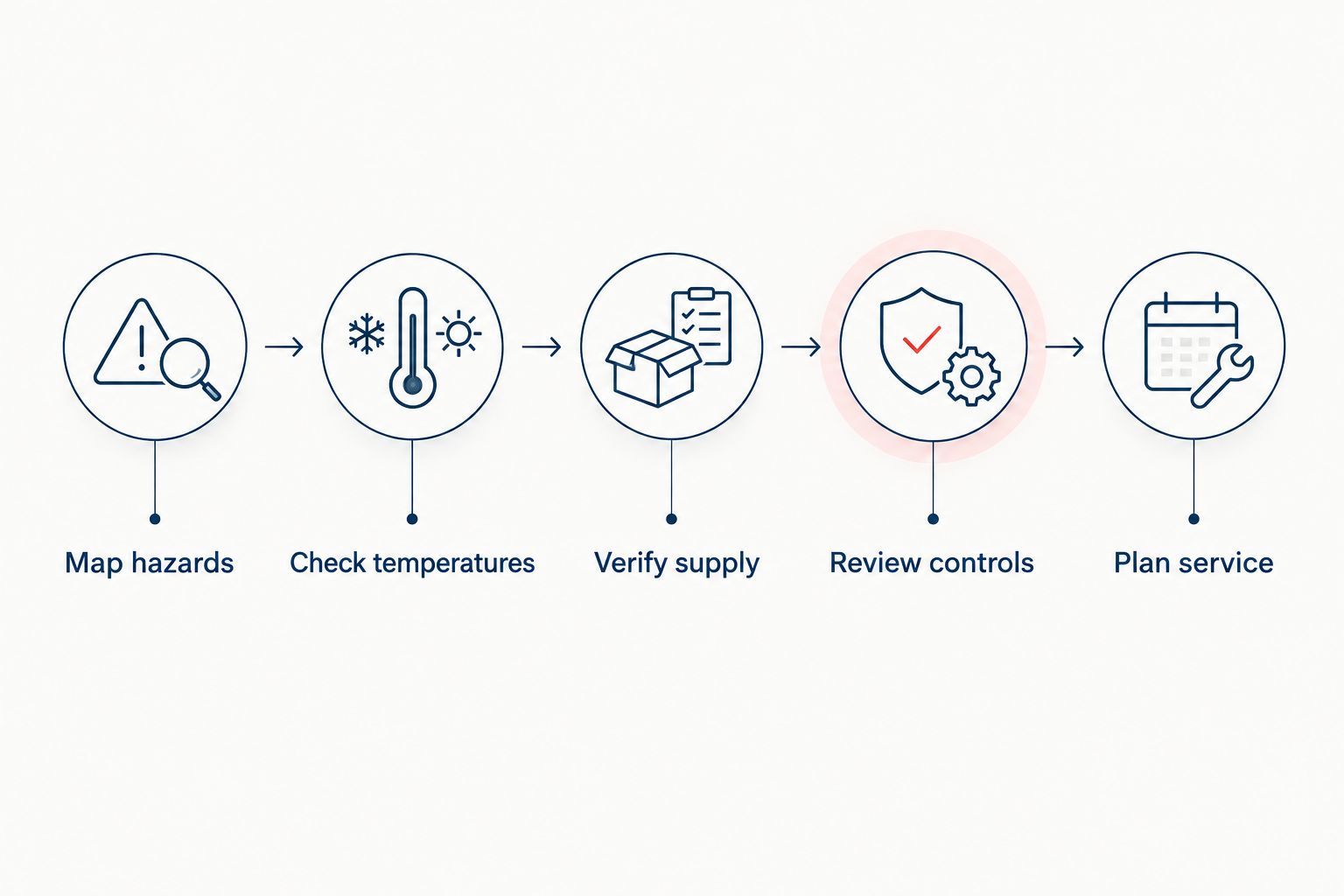
Follow this sequence before approving a proposal:
- Map hazards: Record commodities, packaging, racks, equipment, refrigerants, and combustible construction materials.
- Check temperatures: Document operating conditions, shutdown conditions, and piping routes through colder spaces.
- Verify supply: Have the designer establish the water-supply basis and required hydraulic performance.
- Review controls: Identify detection, release, shutdown, supervisory signals, and alarm connections.
- Plan service: Identify access, testing, drainage, impairment procedures, and restoration responsibilities.
Read the proposed sequence of operation closely. A valve opening, a detector activating, and water discharging are different events. Each event needs the correct signal and response; the alarm monitoring to central dispatch workflow explains the reporting side.
For food processing, include sanitation and quality staff in discharge planning. Define how exposed product will be isolated, equipment assessed, and production released after an incident. Do not trade required suppression performance for easier cleanup.
Firstlinefire is a fire suppression service option for commercial and industrial customers in its six-state service area. Bring the floor plan, equipment list, and existing inspection records to the service discussion.
Discuss your suppression requirements
Bring your room temperatures, storage layout, and existing system records.
Which fire suppression system should you choose?
Start with dry-pipe sprinklers for subfreezing storage and wet-pipe sprinklers for reliably heated rooms. Move preaction onto the shortlist when detection-controlled water admission addresses a documented need.
Add wet chemical for qualifying cooking equipment, clean agent for suitable enclosed control rooms, and water mist only where the application evidence fits. Your final 2026 design must account for the whole facility, including hazards that no system in this list addresses by itself.
FAQ
What's the best fire suppression system for a cold storage facility?
Dry-pipe sprinklers are a practical default for subfreezing storage when the approved design permits them. Preaction suits specific water-sensitive applications, while wet-pipe sprinklers suit reliably heated areas. Storage classification, racks, and water supply determine the final design.
Is preaction better than dry-pipe protection for a freezer?
Preaction is better when detection-controlled water admission addresses a documented need. It adds detection and release controls, and its interlock arrangement affects operation and water delivery. More controls do not automatically mean better protection.
Can wet-pipe sprinklers be installed in a refrigerated room?
Ordinary wet-pipe sprinklers require piping temperatures that meet the applicable minimum-temperature requirements. Refrigerated rooms that remain sufficiently warm can qualify, but freezing spaces need another approved arrangement. Check all piping locations and abnormal operating conditions.
Can a clean-agent system replace freezer sprinklers?
A clean-agent system is not a default replacement for required freezer sprinkler protection. Total-flooding systems need suitable enclosure conditions, agent concentration, and hazard approval. Their stronger fit here is a qualifying enclosed electrical or control room.
Do food processing facilities need wet-chemical suppression?
Food processing facilities need wet-chemical suppression where qualifying cooking equipment and its exhaust system require that protection. Not every production machine fits a commercial kitchen system listing. Review the appliance and process before choosing the system.
Will a fire suppression discharge contaminate food?
A suppression discharge requires assessment of exposed food, packaging, and processing equipment. The outcome depends on the agent, exposure, and applicable food-safety procedures. Plan product isolation and sanitation before an incident.
What should I send a contractor before a cold storage assessment?
Send the floor plan, room temperatures, storage layout, commodity and packaging details, equipment list, and existing system records. Include planned changes to racks, products, or production lines. Firstlinefire provides suppression systems and fire alarms within its stated service area.
One last thing
A freezer's fire hazard changes when its packaging or storage arrangement changes—even if the temperature stays the same. Treat new plastic totes, taller racks, different pallets, and revised aisle layouts as reasons to review the sprinkler design.
Before your next storage change in 2026, compare the proposed layout with the approved protection drawings. A current inspection record does not establish that a changed storage arrangement still fits the original design.


