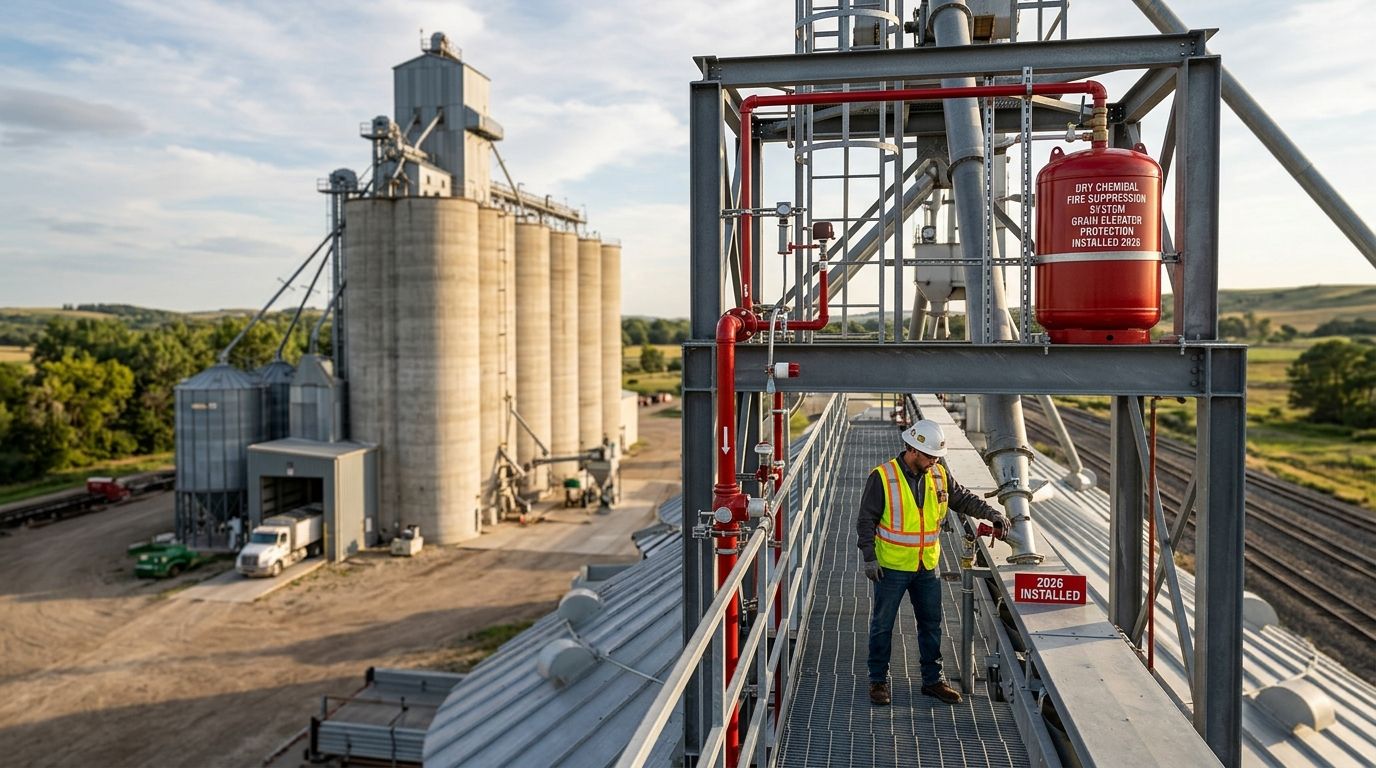
Grain elevators combine three things fire code writers worry about most: fine combustible dust, enclosed vertical conveying legs, and equipment that runs unattended for hours. The best fire suppression systems for grain elevators in 2026 combine explosion suppression at the bucket elevator leg with spark detection on pneumatic conveying lines — no single system covers every ignition point in a facility this size.
- Explosion suppression systems for enclosed bucket elevator legs are the best overall pick for grain elevators in 2026.
- Spark detection and extinguishing systems win for pneumatic conveying lines and ductwork.
- Dry chemical point protection is the lowest-commitment starting point for motors and bearings.
- NFPA 61 governs combustible dust protection in grain handling facilities and drives which system a given zone needs.
- No single suppression system covers a whole elevator — legs, silos, and conveying lines each need a different answer.
Why this matters
Grain dust is a classified combustible dust hazard under NFPA 61, the standard covering fire and dust explosion prevention in agricultural and food processing facilities. A bucket elevator leg is an enclosed vertical duct moving grain past friction points — belts, pulleys, bearings — that generate the sparks and heat that ignite suspended dust. Get the wrong system on the wrong zone and you've spent money without closing the actual risk.
First-Line Fire Extinguisher Co. installs and services suppression systems across grain and agricultural operations in Kentucky, Illinois, Indiana, Tennessee, Missouri, and Alabama, alongside coal mining and industrial clients that carry similar combustible-dust exposure. The pattern holds across all of them: match the system to the ignition mechanism, not to a one-size-fits-all package.
What makes the best fire suppression system for grain elevators
- Detection method matched to the ignition source — spark/ember detection for ductwork, pressure-rise detection for enclosed legs
- NFPA 61 compliance for the specific equipment class (leg, silo, headhouse, transfer tower)
- Coverage type — point protection, full flooding, or isolation, depending on what the zone actually needs
- Integration with existing dust collection, bucket elevators, and conveying equipment already on site
- Inspection and maintenance cycle — some systems need agent recharge and hydro testing on a schedule, others need sensor calibration
- Response speed relative to how fast dust ignites and propagates inside an enclosed conveying path
Grain elevator fire suppression systems at a glance
| System | Best for | Standout feature | Key limitation |
|---|---|---|---|
| Explosion suppression (bucket elevator legs) | Enclosed leg protection | Detects pressure rise and floods the leg in a fraction of a second | Doesn't cover ductwork or silo headspace on its own |
| Spark detection and extinguishing | Pneumatic conveying lines | Catches sparks and embers before they reach the dust collector | Needs a clean, well-maintained duct run to work reliably |
| Explosion isolation (venting + isolation valves) | Silo and bin protection | Stops flame front propagation between connected vessels | Adds ductwork modifications during install |
| Dry chemical point protection | Motors, bearings, gearboxes | Low-footprint, targets a single ignition point | Doesn't address dust suspended in open air |
| Water spray/deluge | External structure, transfer towers | Covers large exposed surfaces cheaply per square foot | Limited value inside enclosed, energized equipment |
1. Explosion suppression systems: best for bucket elevator legs
An explosion suppression system mounts pressure detectors directly on the enclosed leg housing and discharges a suppressant in milliseconds once a pressure spike is sensed — before the deflagration can build into a full explosion. This is the system built specifically for the part of a grain elevator with the highest concentration of dust and the least room to vent.
Explosion suppression pros:
- Purpose-built for the enclosed leg, the highest-risk zone in most elevators
- Reacts to pressure rise, not just heat or flame, so it catches the earliest stage of ignition
- Meets NFPA 61 explosion protection requirements for enclosed bucket elevators
Explosion suppression cons:
- Doesn't extend coverage to ductwork or silo headspace — those need separate protection
- Requires periodic sensor and suppressant cylinder inspection to stay compliant
Best for: facilities where the bucket elevator leg is the single largest unprotected combustible dust hazard. Verdict: Buy if the leg has no explosion protection today — this is the highest-priority gap in most grain elevators.
2. Spark detection and extinguishing systems: best for pneumatic conveying lines
Spark detection systems place infrared sensors inside ductwork to catch sparks or embers generated upstream — at a hammer mill, dryer, or bearing — before they travel into a dust collector or silo. A water mist or extinguishant discharges automatically inside the duct within a fraction of a second of detection.
Spark detection and extinguishing pros:
- Stops an ignition source before it reaches a dust collector, which is often the point of catastrophic failure
- Works continuously without shutting down the conveying line for inspection
- Pairs directly with existing pneumatic conveying and dust collection equipment
Spark detection and extinguishing cons:
- Sensor placement has to be planned around every known spark-generating point — miss one and it's uncovered
- Duct buildup or poor housekeeping degrades sensor accuracy over time
Best for: facilities running pneumatic conveying between dryers, hammer mills, and dust collectors. Verdict: Buy for any conveying line feeding a dust collector that isn't already monitored.
3. Explosion isolation systems: best for silo and bin protection
Isolation systems use fast-acting valves or chemical barriers to stop a flame front from traveling between connected silos, bins, and ductwork. Isolation doesn't stop the initial event — it stops one explosion from triggering a chain reaction through the rest of the facility.
Explosion isolation pros:
- Contains a deflagration to the vessel where it started instead of letting it propagate
- Required by NFPA 61 for interconnected vessels above certain dust hazard classifications
- Works alongside venting for a complete protection scheme on silos
Explosion isolation cons:
- Installation often means cutting into existing ductwork, which adds downtime
- Isolation valves need regular functional testing to confirm they'll fire on demand
Best for: multi-silo facilities where ductwork connects several storage vessels. Verdict: Buy if silos share connecting ductwork with no isolation currently installed.
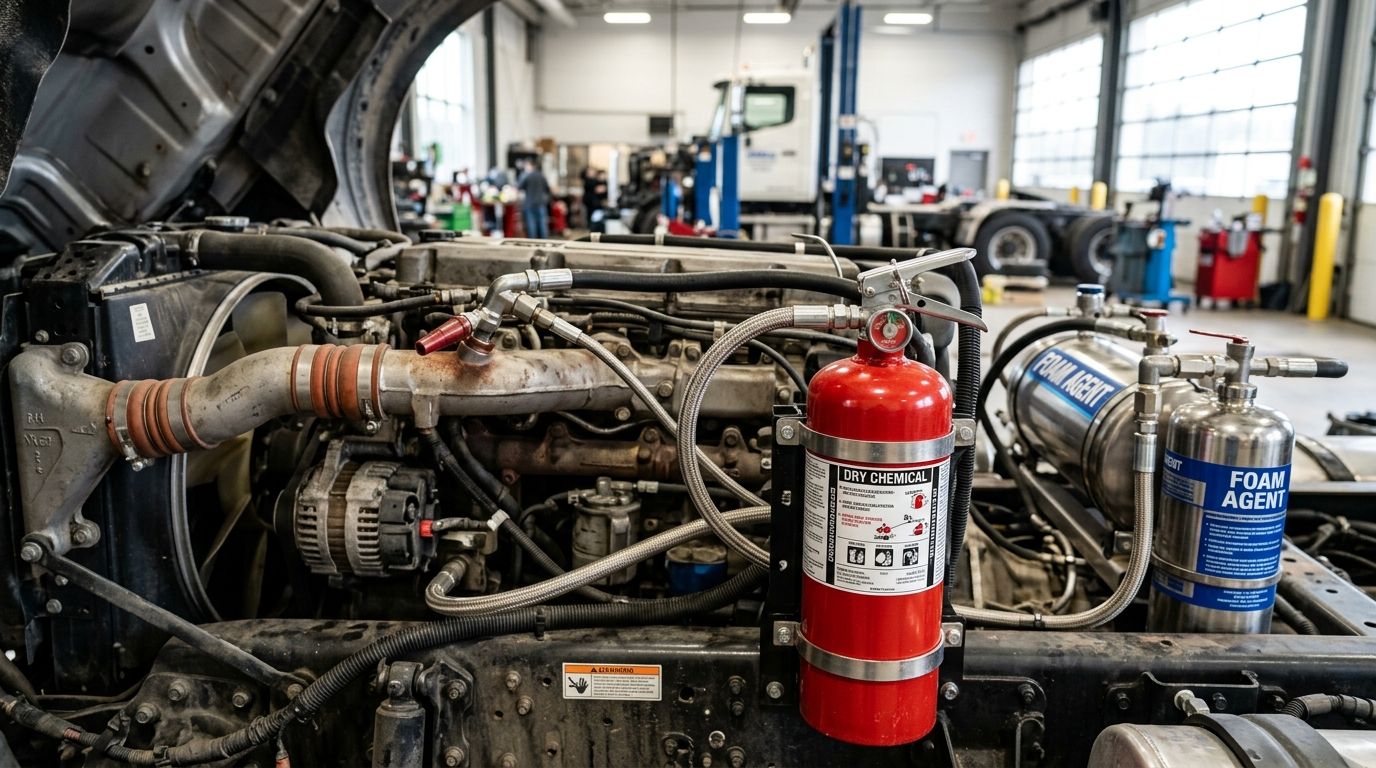
4. Dry chemical point protection: best for motors, bearings, and gearboxes
Dry chemical systems target a single piece of equipment — a bearing housing, gearbox, or motor — with a fixed nozzle and heat-activated release. It's the narrowest-scope system on this list, and that's the point: it protects one known ignition source without trying to cover the whole facility.
Dry chemical point protection pros:
- Fast to install on a single piece of equipment without touching the rest of the facility
- Low maintenance footprint compared to full-flooding systems
- A practical starting point for facilities protecting equipment incrementally
Dry chemical point protection cons:
- Covers only the equipment it's mounted on, not suspended dust in the surrounding area
- Not a substitute for leg or ductwork protection required under NFPA 61
Best for: facilities protecting specific high-friction equipment one piece at a time. Verdict: Hold — good as a first step, but don't stop here if the leg and ductwork are still unprotected.
5. Water spray/deluge systems: best for external structure and transfer towers
Deluge systems flood exposed exterior surfaces — headhouses, transfer towers, conveyor galleries — with water spray triggered by heat detection. They protect structure and equipment surfaces exposed to weather and radiant heat from an adjacent fire, not internal dust ignition.
Water spray/deluge pros:
- Covers large exterior surface areas efficiently
- Simple, well-understood technology with decades of field use
- Useful for exposure protection between adjacent structures
Water spray/deluge cons:
- Little value against ignition inside enclosed, energized equipment
- Water and electrical equipment don't mix — needs careful zoning around control panels
Best for: transfer towers, headhouses, and exterior structural exposure protection. Verdict: Hold — useful as exposure protection, not a substitute for internal dust hazard systems.
How this ranking was built
Each system was scored against the criteria above: detection method against the actual ignition mechanism in that zone, NFPA 61 fit, coverage type, integration with existing equipment, and maintenance burden. The bucket elevator leg ranked first because it's consistently the highest-density dust zone with the least natural venting — the same logic that puts explosion suppression at the top of comparable rankings for coal mining equipment, another combustible-dust environment with enclosed conveying paths.
Get your grain elevator assessed
First-Line Fire tracks inspection due dates and shows up on-site across KY, IL, IN, TN, MO, and AL.
Which fire suppression system should you choose?
Start with the enclosed bucket elevator leg — it's the zone with the highest dust concentration and the fastest potential deflagration. If the leg has no explosion suppression system installed in 2026, that's the first call to make. Add spark detection on any pneumatic conveying line feeding a dust collector, then isolation valves between connected silos. Dry chemical and deluge systems fill in gaps around motors, bearings, and exterior structure once the primary dust hazard zones are covered. A facility running all four in 2026 without gaps is protecting against the actual ignition mechanisms present in a grain elevator, not just checking a box.
“The bucket elevator leg is the highest-risk zone in a grain elevator, and it's the first place a suppression system belongs, not the last.”
FAQ
What is the best fire suppression system for grain elevators?
An explosion suppression system on the enclosed bucket elevator leg is the best starting point in 2026, paired with spark detection on pneumatic conveying lines feeding the dust collector. No single system covers every ignition point in a grain elevator.
Does NFPA 61 require explosion protection in grain elevators?
NFPA 61 governs fire and dust explosion prevention in agricultural and food processing facilities and applies directly to grain elevators. It sets requirements for enclosed conveying equipment, silo isolation, and dust collection systems.
Is spark detection better than explosion suppression for grain elevators?
They protect different zones, not the same one. Spark detection catches ignition sources in ductwork before they reach a dust collector, while explosion suppression protects the enclosed bucket elevator leg where dust concentration is highest.
What causes grain elevator fires and explosions?
Friction points on bucket elevator legs and conveying equipment — bearings, belts, pulleys — generate sparks and heat that ignite suspended combustible grain dust. Enclosed legs and ductwork concentrate dust in a way open storage areas don't.
Do silos need isolation systems if they already have suppression?
Yes, if the silos are connected by ductwork to other vessels. Isolation stops a flame front from propagating between connected silos; suppression addresses the initial deflagration inside a single vessel.
How often do grain elevator suppression systems need inspection?
Suppression systems need periodic sensor calibration and suppressant cylinder inspection to stay functional and compliant with NFPA 61. The exact interval depends on the system type and manufacturer specification.
Can dry chemical systems replace explosion suppression on a bucket elevator leg?
No. Dry chemical point protection covers a single piece of equipment like a bearing or motor, not the dust concentration inside an enclosed leg. Explosion suppression is built specifically for that zone.
One last thing
The ductwork connecting a dryer or hammer mill to a dust collector is one of the most commonly missed zones in grain elevator fire protection — facilities install leg suppression and silo isolation, then leave the conveying line itself unmonitored. Spark detection on that single run of ductwork closes a gap that a lot of otherwise well-protected elevators still carry into 2026.