
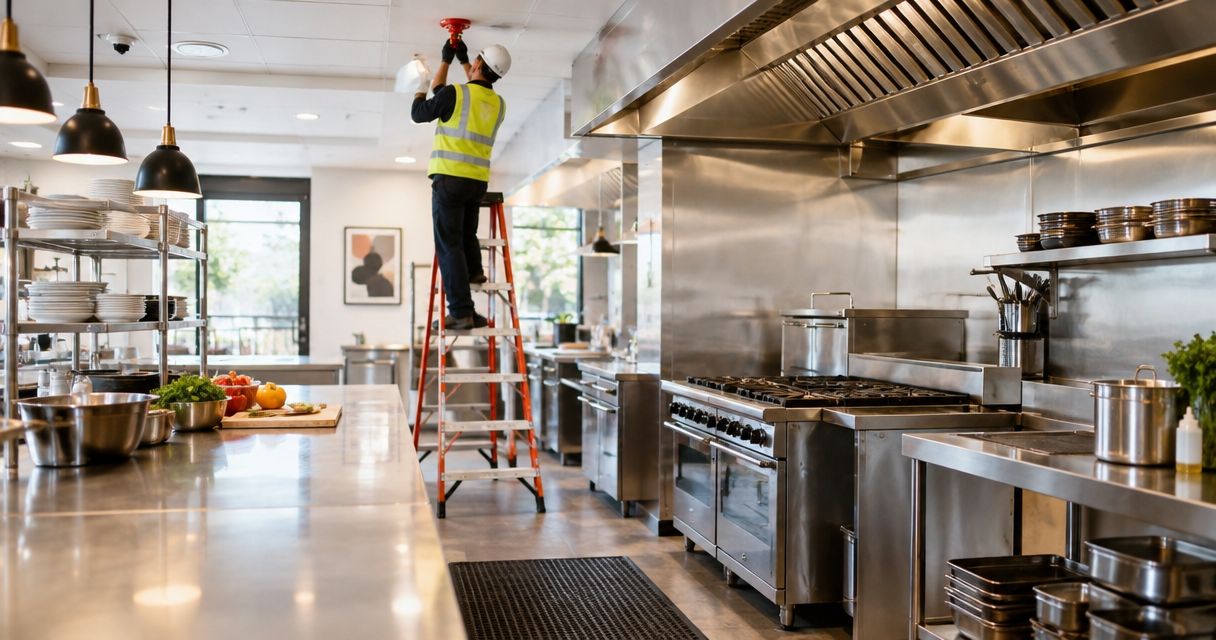
A kitchen can stay partly open during fire suppression installation only when the work leaves an approved, safely separated operation with all required protection in service. Stop cooking on affected equipment whenever its required suppression is unavailable; keeping the dining room open or serving a limited menu requires a separate assessment of fire safety, food safety, and local approval.
- Can a kitchen stay open during fire suppression installation? Only where approved operations retain required protection.
- Stop cooking on equipment whose required hood suppression is out of service.
- A fire watch or portable extinguisher does not automatically authorize continued cooking.
- Firstlinefire provides fire suppression services for commercial operators across its six-state service area.
Can a kitchen stay open during fire suppression installation?
An open restaurant does not mean an operating cookline. Separate the decision to admit customers from the decision to use appliances beneath the hood. Installation work, utility shutdowns, and required inspections determine which activities can continue.
Plan the handoff through kitchen hood suppression inspection and sign-off, not just the installer's last day on-site.
| Operating plan | Best for | Main benefit | Main limitation |
|---|---|---|---|
| Full cooking shutdown | Work affecting the entire required hood system | Keeps cooking away from impaired protection | Stops service from the affected cookline |
| Partial kitchen operation | A separately protected area approved for continued use | Preserves permitted preparation or cooking | Shared utilities, access, or construction can still prevent operation |
| Dining room with limited service | Approved service that does not depend on affected equipment | Keeps some customer service separate from installation | Food handling, exits, and occupancy still need to remain safe |
None of these arrangements is permission by itself. Ask the authority having jurisdiction, commonly called the AHJ, what is allowed for your installation. The fire official and health department address different parts of the decision.
Why this matters
The dangerous assumption is simple: the installer is working above the appliances, so the cooks can keep using them. Once required suppression is disconnected or otherwise unavailable, the protection that supports that cooking operation is no longer in place.
A portable extinguisher does not recreate automatic detection, agent discharge, or the system's connection to appliance shutdown controls. Assigning someone to watch the line does not restore those functions either.
For a 2026 installation plan, describe the actual operating condition rather than promising that the restaurant will remain open. State which appliances stop, which areas remain occupied, and who authorizes each restart. Plan around the unavailable protection, not around the reservation book.
How to plan service around the installation
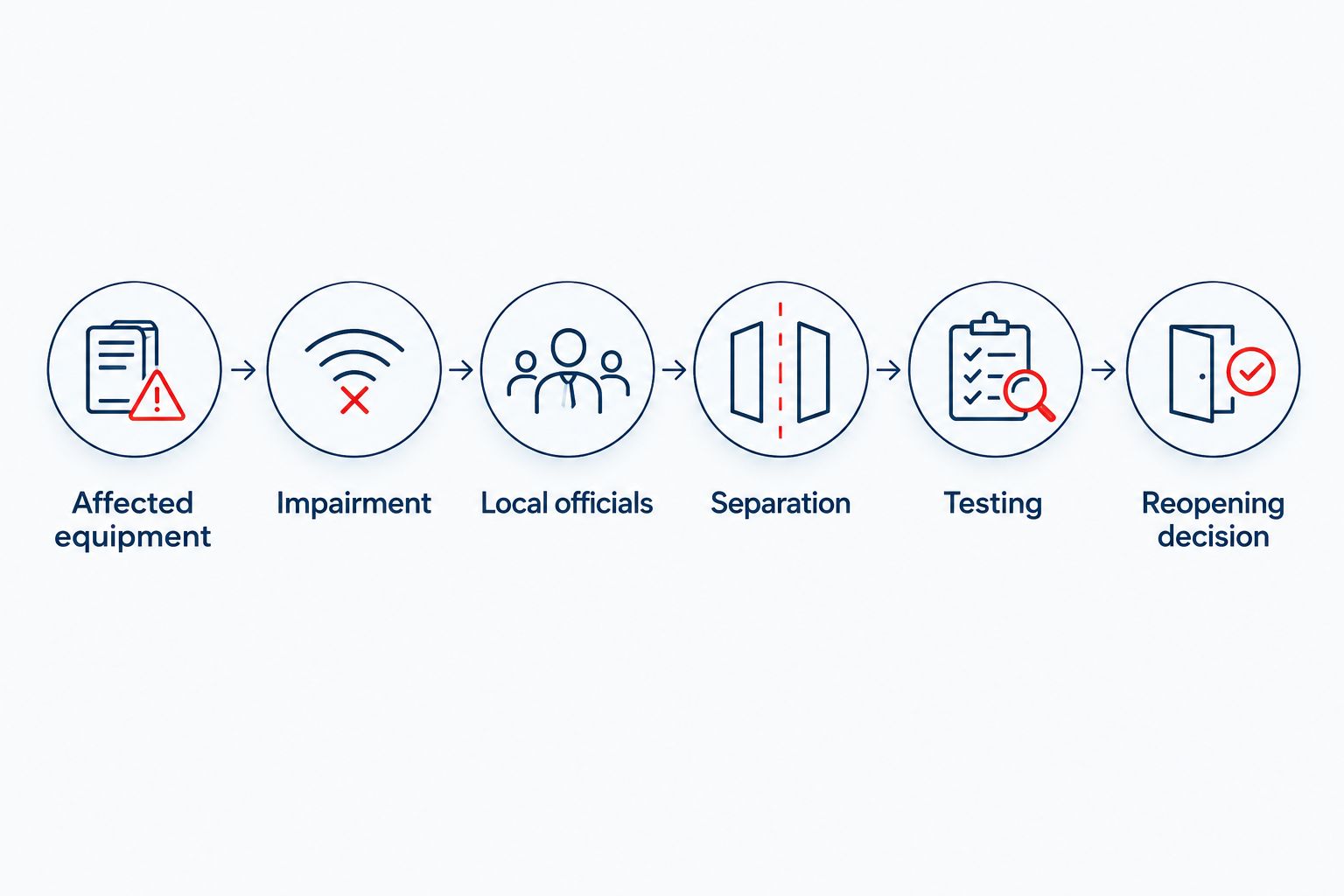
1. Define the affected equipment
Give the suppression contractor a current appliance list and layout. Identify the fryers, griddles, ranges, and other equipment involved, along with the hood serving them.
Tell the contractor about planned appliance moves before the work begins. Suppression coverage depends on the system's listed design and installation instructions; moving equipment after layout approval can change the work needed.
2. Identify the impairment
Ask exactly when the existing protection becomes unavailable and what must happen before it returns to service. Do not treat delivery, mounting, piping, testing, and acceptance as the same milestone.
Record the affected area in plain language. Kitchen staff need to know which equipment is off-limits, not merely that a contractor is servicing the system.
3. Review continued operations with local officials
Describe the proposed limited menu, occupied areas, construction boundaries, and utility interruptions to the relevant officials. Ask whether continued operation is permitted and whether any temporary measures are required.
Request written conditions or retain the applicable inspection record. A contractor's schedule does not replace an operating restriction issued by a fire official or health department.
4. Separate workers, food, and customers
Set a clear boundary around the installation area. Keep tools, piping, packaging, and ladders out of customer routes and required exits.
Protect food, utensils, and food-contact surfaces from installation debris. If the work prevents safe food handling or effective separation, stop those activities rather than trying to work around the crew.
5. Coordinate shutdowns and testing
Have the responsible trades identify the gas, electrical, ventilation, and alarm connections involved. The exact connections depend on the installed system and approved design.
Tell the manager when testing will interrupt operations. Staff should not restart equipment, reset controls, or move appliances while the contractor is checking system functions.
6. Assign the reopening decision
Name the manager who receives the completed work records and confirms that required approvals are in place. Give that manager an appliance-specific restart checklist.
For your 2026 work order, distinguish installation completion from authorization to resume cooking. The crew leaving the building is not the reopening signal.
Full cooking shutdown: stop the affected line
Best for work that removes required protection from the whole cookline. Keep affected appliances out of use until the system is restored, required testing is complete, and applicable approval conditions are satisfied.
This is the clearest operating boundary. It avoids asking staff to distinguish between neighboring appliances while contractors work on shared protection or controls. The drawback is direct: the affected line cannot produce food during the shutdown.
Prepare the closure around equipment cool-down, safe food storage, contractor access, and cleaning after installation. Tell staff which preparation tasks remain permitted and which areas they must leave clear.
Do not use a scheduled reopening time as an instruction to resume cooking. If testing exposes a defect or an inspector requires a correction, the affected equipment stays out of service until that issue is resolved.
Partial operation: use only the approved area
Best for a kitchen with a genuinely separate, protected operating area. A second hood is not enough on its own. Confirm whether it shares suppression components, utility shutoffs, ventilation dependencies, or access with the work area.
Partial operation can preserve a limited service, but it adds management work. Staff need a fixed equipment list, a clear boundary, and instructions for what happens if the installer needs a wider shutdown.
For a 2026 phased installation, have the contractor identify the point at which each phase affects operating equipment. Review that sequence with the officials responsible for continued operation.
Do not move a fryer or other grease-producing appliance outside its approved location to keep the menu running. Changing the location can put the appliance outside its required hood and suppression coverage. Temporary cooking arrangements need their own review.
Limited service: separate food service from cooking
Best for an approved menu that does not depend on the affected appliances. Cold food preparation or service from an unaffected area is not automatically prohibited by work elsewhere, but it still needs safe conditions and any required local permission.
Check refrigeration, handwashing, warewashing, potable water, and safe access before choosing this route. A utility interruption that looks minor on the installation schedule can prevent safe food service.
The benefit is narrower disruption. The limitation is that a reduced menu does not solve blocked exits, construction contamination, or an unsafe occupied space.
For your 2026 service notice, tell customers what service is actually operating. Do not advertise normal kitchen service while the approved plan excludes the equipment needed to deliver it.
Why continued operation varies
The decision turns on the work and the building, not a universal rule that restaurants must either stay open or close entirely.
- Protection affected: Replacing a complete system creates a different impairment from work that leaves an independent system operational.
- Shared controls: A common fuel shutoff or other shared connection can affect equipment outside the immediate installation area.
- Appliance layout: Equipment moves can change coverage requirements and the approved installation scope.
- Work boundaries: Access, debris, and blocked routes can prevent safe occupancy or food preparation.
- Testing and acceptance: Required demonstrations, corrections, and inspections affect when equipment returns to use.
- Local conditions: Permit requirements and instructions from fire and health officials govern the proposed operating arrangement.
Ask the contractor to put these dependencies into the job plan. A statement that the installation is scheduled after closing does not explain what happens if testing or approval remains unfinished before the next service.
What must happen before cooking resumes?
Reopen against a checklist, not a verbal estimate. Before restarting affected appliances, confirm the following with the contractor and the relevant officials:
- The installed system matches the approved scope and the final appliance layout.
- Required functional tests are complete, including applicable shutdown and signal connections.
- The system is restored to its normal operating condition.
- Required inspections, acceptance steps, and corrections are complete.
- Food-contact surfaces and the work area are clean and ready for use.
- Staff know the manual activation location, shutdown procedure, and emergency instructions.
Keep installation and inspection records where management can retrieve them. Record unresolved items explicitly; do not let a general completion note conceal a restriction on using particular equipment.
A health inspection does not replace fire-system acceptance. Likewise, acceptance of the suppression work does not establish that food handling conditions are ready. Confirm both sides when both apply.
Who should coordinate the suppression work?
Choose a contractor who can explain the impairment boundary, testing responsibilities, and handoff to the approving authority. Ask who handles permits, who coordinates other trades, and who tells management that the system is back in service. Get those responsibilities into the scope.
Firstlinefire is a fire-protection service option for commercial operators in Kentucky, Illinois, Indiana, Tennessee, Missouri, and Alabama. Its stated services include suppression systems, fire extinguishers, fire alarms, and safety training.
For kitchen suppression work, ask Firstlinefire to define the installation scope and shutdown needs for your site. Do not assume that a contractor's service offering includes every trade, permit, or approval needed for the project.
Plan the kitchen shutdown
Discuss suppression work, affected equipment, and the steps needed before cooking resumes.
Can we cook if someone stands watch?
A fire watch does not automatically authorize cooking without required suppression. Any temporary arrangement must follow the directions of the authority having jurisdiction; do not treat an assigned employee or an extra extinguisher as permission to operate.
Ask what activities must stop during the impairment. If the answer excludes the cookline, change the service plan instead of improvising a substitute.
Can we reopen as soon as the installer finishes?
Physical installation alone does not establish readiness to cook. Testing, restoration, required acceptance, and safe food-service conditions still need to be complete.
In your 2026 reopening checklist, require confirmation of those milestones before management releases affected equipment. This prevents a scheduling assumption from becoming a cooking instruction.
FAQ
Can a kitchen stay open during fire suppression installation?
A kitchen can stay partly open only where approved operations retain required protection and safe conditions. Stop cooking on affected equipment when its required suppression is unavailable, and confirm operating restrictions with local officials.
Can we keep serving cold food while the hood system is being installed?
Cold food service requires safe food-handling conditions and any applicable local approval. Construction debris, utility interruptions, or unsafe access can prevent service even when no cooking occurs.
Does a Class K extinguisher let us keep using the fryers?
A Class K extinguisher does not replace required automatic hood suppression. Keep affected fryers out of use while their required protection is unavailable.
Can another cookline stay open during installation?
Another cookline requires confirmation that its protection remains operational and that continued use is approved. Shared shutoffs, ventilation, or work access can affect a line outside the immediate installation area.
Who decides when the kitchen can reopen?
Management must confirm that contractor testing, restoration, and applicable official approvals are complete before restarting affected cooking. Fire and health officials address different requirements, so identify each required approval before work starts.
Can Firstlinefire help with commercial kitchen fire protection?
Firstlinefire provides fire suppression, extinguisher, alarm, and safety training services to commercial customers across Kentucky, Illinois, Indiana, Tennessee, Missouri, and Alabama. Discuss the site's installation scope and shutdown requirements before setting a reopening schedule.
One last thing
A smaller menu does not necessarily mean a smaller fire-protection problem. Keeping just the fryer running still means using an appliance that depends on its required protection.
Before installation day, mark the appliances that must stay off and give the opening manager the same list. Add a clear release condition beside each affected area: testing complete, protection restored, and required approvals received. The menu follows the safe equipment list. The safe equipment list does not follow the menu.
Keep that list through the first service after reopening. If staff discover that an appliance moved, a control remains disabled, or a required condition was missed, stop the affected operation and contact the responsible contractor or official.


