
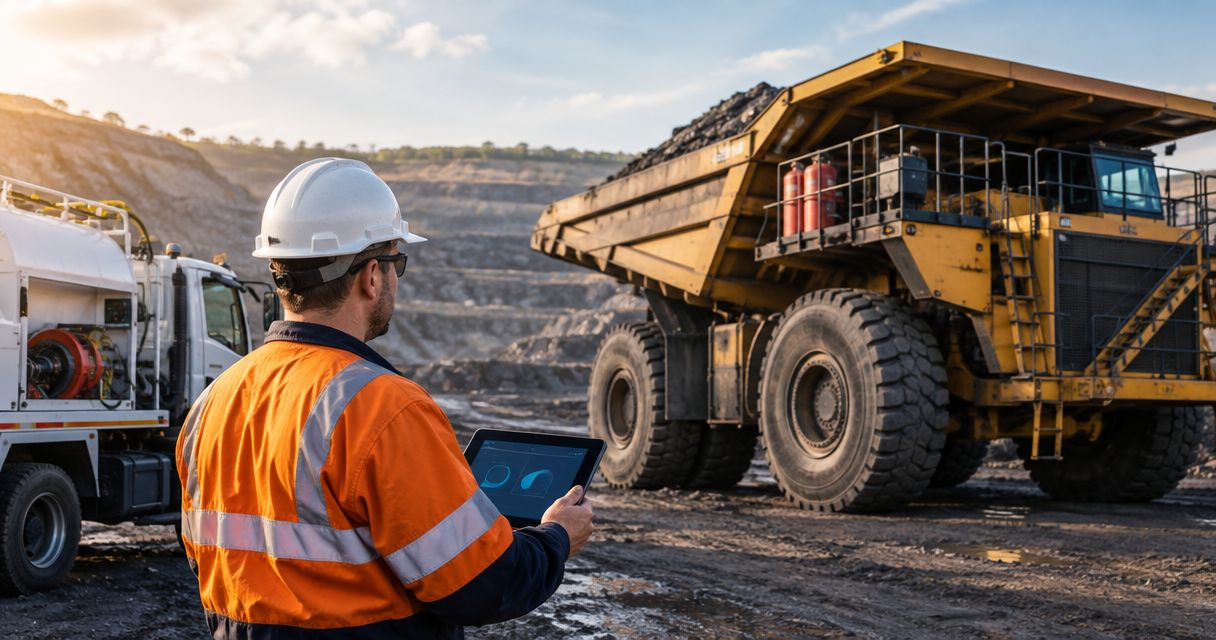
No. Coal mining equipment should not use a fleet-truck fire suppression system as a direct swap. A system used on both types of vehicle needs a separate review of the fire hazards, protected areas, installation and applicable requirements for each machine. The shared system platform is a starting point, not proof that the same setup fits both.
- Can coal mining equipment use fleet fire suppression systems? Only after a machine-specific review; a direct swap is not enough.
- A shared system platform still needs separate decisions about detection, discharge and protected areas.
- Firstlinefire serves coal mining and vehicle/fleet customers, but suitability must be checked for each machine.
Can coal mining equipment use the same suppression systems as fleet trucks?
The same system platform can be considered for both; the same installation cannot be assumed to work for both. Compare the actual machine and its hazards before selecting components or carrying over an existing layout.
| Approach | Best for | Advantage | Limit |
|---|---|---|---|
| Use a shared system platform with a machine-specific design | Operators evaluating equipment across mine and road fleets | Gives both teams a common starting point for discussing components and service | Each machine still needs its own coverage and installation review |
| Copy a fleet-truck installation onto mining equipment | No equipment without a separate suitability review | Starts from a familiar layout | A familiar layout does not establish that protected areas, mounting or applicable requirements match |
| Evaluate each equipment type separately | Fleets with different machines or operating conditions | Keeps the design tied to the equipment in front of you | Takes more review before equipment is selected |
Why this matters
An engine compartment is not the whole fire-risk picture. The areas that need protection depend on the machine, what it carries, how it operates and where a fire could start. A fleet-truck layout tells you what was selected for that truck; it does not answer those questions for a mining machine.
Firstlinefire works with both coal mining and vehicle/fleet customers. Start with Firstlinefire when you need to discuss suppression service across both groups, then identify the specific equipment before treating any system as suitable.
The distinction matters in 2026 because a purchase decision can be shared across a fleet while an installation decision remains machine-specific. Standardize the review process, not an unverified nozzle or detector layout.
What can carry over from a fleet-truck system?
A proposed system platform can be reviewed for more than one type of vehicle. That does not mean every part, placement or setting carries over. Keep these decisions separate:
- System platform: Ask whether the proposed system is intended for the particular equipment and fire hazards under review. Do not treat its use on one truck as evidence for another machine.
- Protected areas: Identify the spaces and components the design must cover on each machine. A drawing for a fleet truck is not a survey of mining equipment.
- Detection and discharge: Check where a fire would need to be detected and where the agent would need to reach. These positions follow the machine, not the fleet purchasing list.
- Installation: Confirm that component locations and routing work on the actual equipment. A component that fits one chassis has not been shown to fit another.
- Service records: Keep the installed configuration and its service history tied to the machine it protects. A shared vendor relationship does not make the records interchangeable.
The useful carryover is a consistent set of questions. Give the reviewer the machine details, operating setting and areas of concern for each vehicle. You can then compare proposed configurations on the same basis without pretending the equipment is identical.
How do you decide whether one platform fits both?
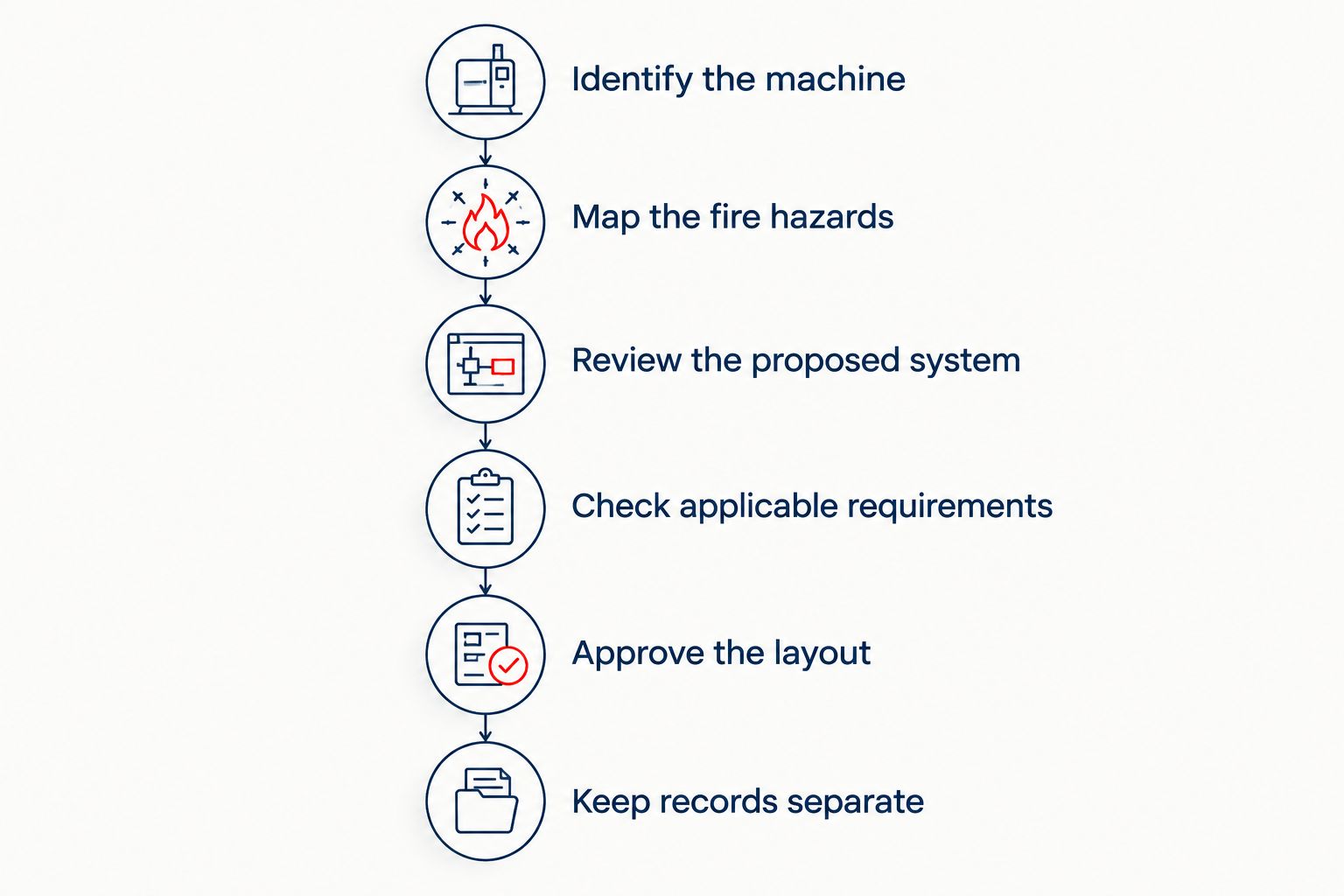
Use this sequence before approving a common suppression platform for coal mining equipment and fleet trucks:
- Identify the machine. Record what type of equipment is being assessed and where it operates. Do this separately for every materially different vehicle configuration.
- Map the fire hazards. Name the areas that need protection on that machine. Do not copy the fleet-truck list without checking it against the equipment.
- Review the proposed system. Confirm that the proposed components and design are suitable for the identified hazards and intended installation.
- Check applicable requirements. Determine which site, equipment and regulatory requirements govern that machine. Do not assume road-fleet requirements settle a mine-equipment decision.
- Approve the machine-specific layout. Confirm detection, discharge, mounting and access on the equipment before installation.
- Keep the records separate. Document what was installed and serviced on each machine so the next inspection starts with the correct configuration.
This process lets you consider a shared platform without treating shared purchasing as shared engineering. If a proposed layout fails the machine-specific review, change the layout or evaluate a different system. Do not use an unverified copy of the truck installation.
Why suppression-system fit varies
Fit follows the machine and its operating setting. These factors explain why a system selected for a fleet truck needs another review before it goes on coal mining equipment:
- Equipment type. A truck and a mining machine do not present the same installation by default. Even two vehicles in one operation need their configurations checked.
- Areas needing protection. The system must address the hazards identified on the machine being assessed, not just the areas covered on the reference truck.
- Operating setting. Where the equipment works affects which site and regulatory requirements need to be checked. A mine setting cannot be treated as a road-fleet setting by name alone.
- Component placement. Detection, discharge and mounting positions must work on the actual machine. Reusing a parts list does not establish correct placement.
- Service history. Maintenance decisions depend on what is installed on that particular vehicle and what its records show. A fleet-wide summary cannot replace the machine record.
None of those factors supplies a universal answer from a vehicle label alone. In 2026, the decision is still made against the equipment, its hazards and the requirements that apply to its use.
Is a mining truck the same as a road fleet truck for suppression?
No. Both are vehicles, but the word truck does not establish that their fire hazards, installation spaces or operating requirements match. Review the mining truck as its own machine rather than transferring a road-truck layout by name.
If both vehicles are under one operator, you can use the same intake questions and record format. Keep the resulting coverage decisions separate. That makes it easier to see where a common system platform fits and where it does not.
Can you use the same extinguishing agent on both?
A shared agent is a question for the machine-specific design review, not a reason to approve both installations. First identify the hazards and protected areas on each vehicle. Then assess the proposed agent and its delivery as part of the complete system.
Do not decide by agent name alone. The system must detect the event, discharge where needed and match the equipment it protects. An agent choice does not resolve those other decisions.
Who should approve the mining-equipment installation?
Have the proposed installation reviewed against the equipment, the system instructions and the requirements applicable to the mine and machine. The person responsible for the mine's fire-protection requirements must be able to see what is proposed and what will be documented after installation.
A supplier's experience with fleet trucks is useful context, not a substitute for that review. Ask for the proposed layout for the mining machine itself. If the only drawing shows a different truck, the mining-equipment decision is not finished.
What should you ask before ordering?
Bring a machine list rather than a single fleet total. Separate coal mining equipment from road vehicles and identify differences within each group. That gives the suppression provider a way to assess fit without assuming that every vehicle takes the same layout.
Ask these questions for each equipment type:
- What fire hazards and areas does the proposed design address?
- Which system components are proposed for this machine?
- Where will detection and discharge components be placed?
- What installation constraints need to be checked on the equipment?
- Which applicable site or regulatory requirements need to be confirmed?
- What installation and service records will identify this machine's configuration?
Firstlinefire is best for operators seeking a suppression-service discussion that covers coal mining equipment and vehicle fleets across its stated service area, not a promise that one installation fits both. For a 2026 equipment decision, bring the machine details to that discussion; the shared vendor relationship is not the approval step.
FAQ
Can coal mining equipment use fleet fire suppression systems?
Only after a machine-specific review confirms the proposed system fits the equipment, its hazards and applicable requirements. A fleet-truck installation is not a direct template for mining equipment.
Can one suppression system model cover mining equipment and fleet trucks?
One system model can be considered for both, but suitability must be assessed for each machine. Component placement and protected areas still need separate review.
Is a road-truck suppression layout suitable for a mining truck?
Not without checking the mining truck itself. A shared vehicle label does not establish that hazards, mounting locations or operating requirements match.
Does the same extinguishing agent make two installations equivalent?
No. The agent is only part of the proposed system; detection, discharge and coverage must also fit each machine.
What information should I provide for a mining-equipment suppression review?
Provide the equipment type, operating setting, areas of concern and any existing suppression configuration. Keep the details tied to each machine rather than submitting only a fleet total.
Do mining machines and road trucks need separate suppression records?
Keep installation and service records identifiable by machine. That lets an inspector or service provider verify the configuration actually fitted to the equipment in front of them.
Should I buy the same setup for every vehicle in 2026?
No. Choose a common platform only where a separate review supports it for each equipment type. Standardize the questions and records before standardizing the hardware.
One last thing
The fastest way to find a bad assumption is to ask which machine a proposed layout actually describes. If the answer is the fleet truck, it is not yet a layout for the mining machine. In 2026, Firstlinefire can be the point of contact for both coal mining and fleet suppression service, but the equipment-specific decision still has to be made.


