
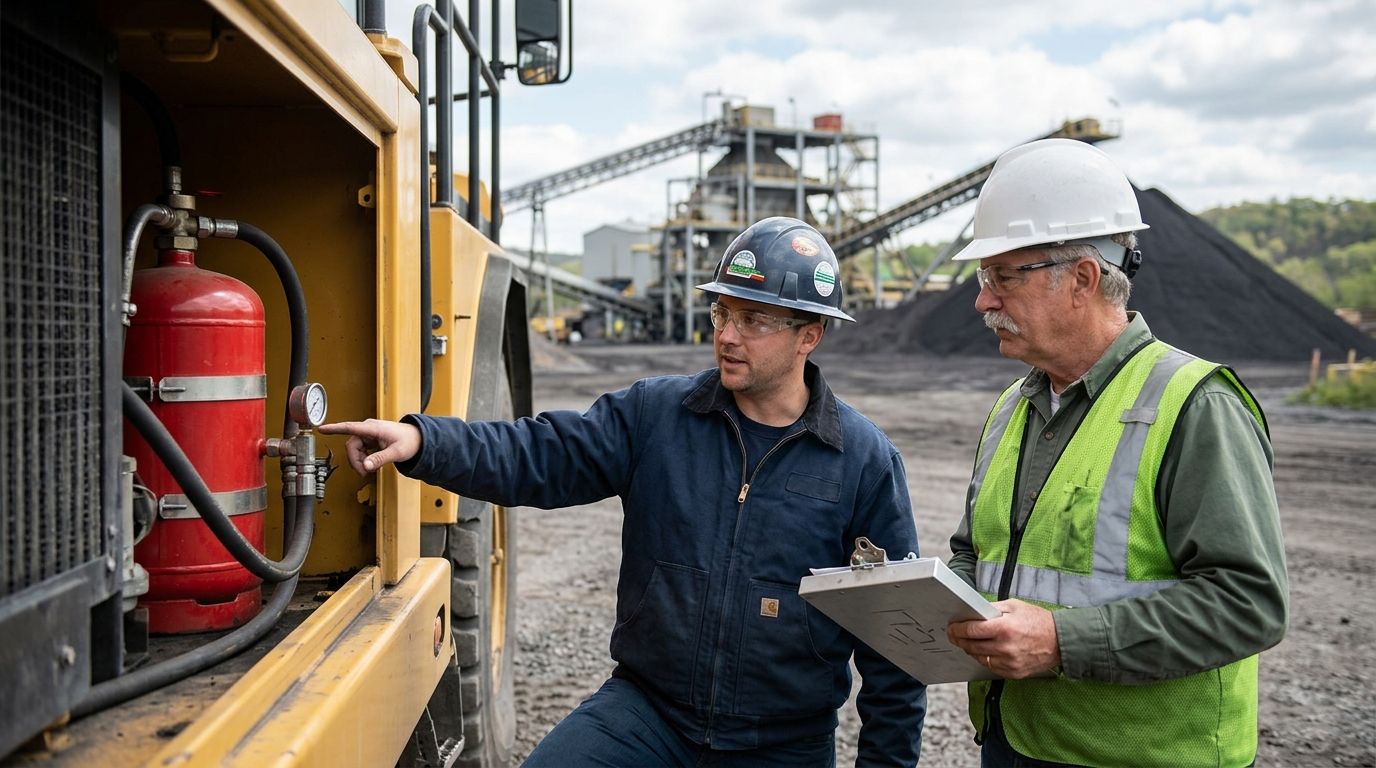
An MSHA fire suppression inspection at a coal site doesn't run against a fixed clock. MSHA regulates how often each system gets checked, not how long the person doing the checking stays on site, so the actual visit in 2026 runs anywhere from a fast spot-check on one beltline to a full-day review of every extinguisher, sensor, and suppression head across a coal preparation plant. The hidden variable most operators miss: incomplete service records add more time to the visit than the inspection itself.
- MSHA fire suppression inspection time isn't fixed by regulation — MSHA sets frequency (weekly, monthly, annually), not how long the visit takes.
- A single-beltline weekly exam runs short; a full annual functional test across a coal prep plant runs long.
- Incomplete or missing service tags is the most common reason a coal site inspection visit drags past a few hours in 2026.
- First-Line Fire schedules coal mining and coal preparation plant suppression checks ahead of MSHA deadlines so the visit stays short.
Why MSHA fire suppression inspection time is hard to pin down
MSHA's fire protection standards under 30 CFR Part 75 (underground coal) and Part 77 (surface coal) set inspection frequency, not a required time-on-site window. That distinction is the whole answer to why nobody can give you a single number for how long a visit takes.
A mine with three suppression systems and one beltline gets a short visit. A coal preparation plant with a dozen suppression zones, multiple beltlines, and diesel-powered face equipment gets a long one. The inspector isn't working off a stopwatch — they're working off a checklist tied to what equipment exists on your property, and that checklist only closes when every item on it has a current tag or a documented functional test.
Operators who track fire suppression status through a formal MSHA reporting workflow walk into these visits with records already staged, which is the single biggest lever an operator has over how long the inspection actually runs.
How long does an MSHA fire suppression inspection take at a coal site?
There's no MSHA-mandated duration for the visit itself — the agency sets the interval, and the interval determines what the inspector has to look at that day. Here's how the major categories break down:
| Fire Protection Item | MSHA-Set Frequency | What Drives Visit Length |
|---|---|---|
| Firefighting equipment (extinguishers, water lines, rock dust) | Weekly | Number of stations, tag completeness |
| Belt conveyor fire suppression | Weekly | Number of beltlines, sensor spacing |
| Automatic fire sensor and warning systems | Functional test at least every 12 months | Sensor count, calibration records |
| Mobile and diesel equipment suppression | Shift check plus periodic functional test | Fleet size, maintenance log status |
A weekly firefighting-equipment walk covering a handful of extinguisher stations and one beltline is quick — the inspector confirms tags, pressure gauges, and rock dust coverage and moves on. The annual functional test on automatic fire sensors is the longer visit: every sensor gets triggered or verified, and the results get logged against the mine's compliance file. Coal preparation plants tend to run longer visits than a single underground section simply because they stack more suppression zones into one footprint.
Weekly firefighting equipment checks: the shortest MSHA inspection cycle
Weekly exams of extinguishers, water lines, and rock dust coverage are the fastest MSHA fire suppression inspection cycle on a coal site, and they're usually handled as a walk-through against a fixed list of stations. Best for: sites that already keep current tags on every extinguisher and hose reel — the exam confirms what's already documented instead of chasing down gaps.
Annual automatic sensor functional tests: the longest MSHA inspection cycle
The functional test on automatic fire sensor and warning device systems, required at least once every 12 months, is the longest single inspection event most coal operators face in a given year. Every sensor in the system gets tested for response, not just visually checked, which is why this cycle takes meaningfully more time than a weekly walk. Best for: operators who schedule this test on its own day rather than folding it into a routine production shift.
Belt conveyor suppression exams: a second weekly requirement
Belt conveyor fire suppression gets its own weekly examination separate from general firefighting equipment, because beltlines carry their own ignition risk from friction and material buildup. On a mine with several miles of conveyor, this weekly exam adds real time compared to a mine running a single short beltline. Best for: sites tracking beltline suppression status separately from portable extinguisher tags, since the two run on different documentation trails.
Why MSHA fire suppression inspection time varies
- Number of suppression systems on site — more zones means more items on the inspector's list, full stop.
- Number of beltlines — each beltline carries its own weekly suppression exam requirement.
- Inspection type — a routine weekly walk is short; the 12-month functional test is long by design.
- Record completeness — missing tags or undocumented functional tests stop the visit while the inspector waits on paperwork or re-tests equipment in person.
- Surface vs. underground vs. preparation plant — coal prep plants stack more suppression zones into a smaller footprint than a single underground section, which extends the visit.
- Diesel and mobile equipment count — larger fleets mean more per-shift suppression checks layered on top of the fixed systems.
Operators who see the same inspection stretch from an hour to half a day usually have one thing in common: their suppression system documentation lives in three places instead of one. First-Line Fire Extinguisher Co. runs coal mining and coal preparation plant fire suppression service on a tracked schedule, so tags, functional test dates, and service records are current before the inspector arrives — the visit becomes a walk-through of what's already documented instead of a scramble to prove it.
Keep your MSHA fire suppression records current
First-Line Fire tracks due dates for coal mining and coal prep plant suppression systems.
How often does MSHA require fire suppression inspections at a coal mine?
Firefighting equipment and belt conveyor fire suppression systems get examined weekly under MSHA's 30 CFR Part 75 and Part 77 fire protection standards. Automatic fire sensor and warning systems get a functional test at least once every 12 months, and mobile or diesel equipment suppression gets checked on a per-shift basis in addition to periodic functional testing.
What happens if a coal mine fails an MSHA fire suppression inspection?
A failed inspection generates a citation and, depending on the severity, can require the affected equipment or area to be taken out of service until the suppression system is repaired and re-verified. Repeat or serious deficiencies extend the inspection process because the inspector has to confirm corrective action before closing the citation, which adds follow-up visits on top of the original inspection time.
Who can perform a fire suppression inspection at a coal preparation plant?
MSHA inspectors handle the regulatory inspection itself, but the underlying weekly exams and functional tests are typically performed or documented by mine personnel or a contracted fire protection service ahead of that visit. Coal preparation plants that use a dedicated service provider for suppression system upkeep tend to walk into MSHA visits with cleaner records and shorter inspection times.
FAQ
How long does an MSHA fire suppression inspection take at a coal site?
There's no MSHA-set duration for the visit — the agency regulates inspection frequency (weekly, monthly, or annually depending on the system), and actual visit length depends on how many suppression systems, beltlines, and pieces of diesel equipment are on site. A routine weekly walk is short; the 12-month automatic sensor functional test is the longest cycle most coal sites face.
How often does MSHA require coal mine fire suppression inspections?
Firefighting equipment and belt conveyor suppression systems get weekly exams under 30 CFR Part 75 and Part 77, while automatic fire sensor and warning systems get a functional test at least once every 12 months.
What's the difference between a weekly exam and an annual functional test?
A weekly exam confirms tags, pressure gauges, and physical condition of firefighting equipment and beltline suppression, while the annual functional test actually triggers or verifies automatic fire sensors to confirm they respond, which is why it takes longer.
Does a coal preparation plant take longer to inspect than an underground section?
Usually yes — coal preparation plants stack more suppression zones and beltlines into a smaller footprint than a single underground section, which adds items to the inspector's checklist and extends the visit.
What causes an MSHA fire suppression inspection to run long?
Incomplete or missing service tags is the most common cause — when documentation isn't current, the inspector either waits on paperwork or requires equipment to be re-tested on the spot, both of which add time to the visit.
Can a failed fire suppression inspection shut down mining equipment?
Yes — a citation for a failed suppression system can take the affected equipment or area out of service until it's repaired and re-verified, and MSHA requires a follow-up visit before the citation closes.
Who tracks fire suppression inspection due dates for coal mining sites?
Mine personnel or a contracted fire protection service typically track due dates between MSHA visits — First-Line Fire handles this scheduling for coal mining and coal preparation plant customers so records stay current between inspections.
One last thing
The inspection itself is rarely what stretches an MSHA visit into a half-day event in 2026 — missing paperwork is. Mines that keep suppression system tags, functional test logs, and beltline exam records in one place consistently report shorter visits than mines chasing down documentation while the inspector waits. The single move that shortens your next MSHA fire suppression inspection time isn't a faster inspector — it's a current file.


