
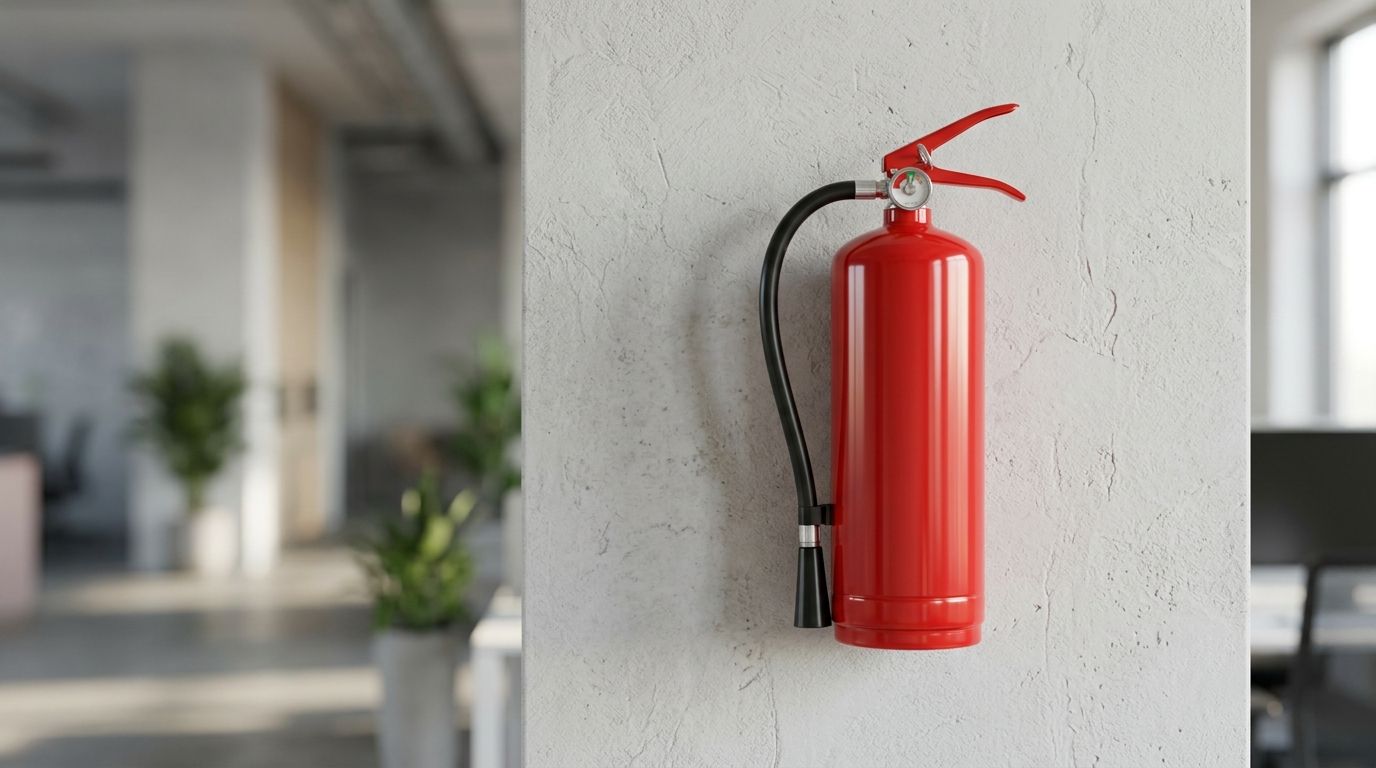
Yes. One fire extinguisher can cover multiple fire classes if its label lists each class: an ABC-rated extinguisher covers ordinary combustibles, flammable liquids and energized electrical equipment. It does not cover every hazard. A commercial cooking-oil fire or combustible-metal fire calls for an extinguisher selected for that specific risk.
- Can one fire extinguisher cover multiple fire classes? Yes: an ABC-rated extinguisher covers Classes A, B and C.
- ABC is not a substitute for an extinguisher selected for a Class D metal fire or Class K cooking-oil fire.
- Firstlinefire is best for businesses that need extinguisher selection, service and safety training across its stated service area.
Can one fire extinguisher cover multiple fire classes?
Yes, but the letters on the extinguisher decide which fires it covers. An ABC dry-chemical extinguisher is a common multi-class option. A carbon dioxide extinguisher labeled B:C covers a different combination. Neither label means the extinguisher is suitable for every fire on your property.
| Extinguisher type | Classes shown on a typical label | Best for | Advantage | Limit |
|---|---|---|---|---|
| ABC dry chemical | A, B and C | Areas with ordinary combustibles, flammable liquids and electrical equipment | Covers three common hazard classes | Not a blanket answer for cooking oils or combustible metals |
| Carbon dioxide labeled B:C | B and C | Flammable-liquid and electrical hazards where the B:C rating fits | Does not leave dry-chemical residue | Does not carry a Class A rating |
| Standard water extinguisher labeled A | A | Ordinary combustible materials where a Class A unit fits | Targets the hazard named on its label | Not for energized electrical equipment or flammable-liquid fires |
| Wet chemical labeled K | K; check the individual label for any additional rating | Commercial cooking-oil hazards | Selected for the cooking hazard | Does not replace the rest of a building's extinguisher plan |
| Class D dry powder | D, for the metals specified by its instructions | A matching combustible-metal hazard | Addresses a hazard an ABC unit does not cover | Agent selection depends on the metal involved |
In 2026, read the actual unit's label rather than choosing by color, size or the name of its extinguishing agent. The table describes common ratings, not a promise that every model of a given type has identical approvals.
Why this matters
A multi-class label can simplify selection for a mixed-use area. It cannot erase a separate cooking or metal hazard, and it does not tell you how many extinguishers a site needs. If you are comparing types for a workplace, start with the portable fire extinguishers ranked by class, then check the labels on the units actually installed.
The distinction matters at a warehouse, job site or fleet facility where the materials and equipment change from one work area to another. Paper packaging, fuel-handling areas and energized equipment do not all present the same fire risk. A sensible selection begins with the hazard at each location, not a single extinguisher type chosen for the whole property.
ABC dry chemical: 3 fire classes
An ABC-rated dry-chemical extinguisher is labeled for Class A ordinary combustibles, Class B flammable liquids and Class C fires involving energized electrical equipment. Best for: a work area where those hazards overlap and the individual extinguisher's rating meets the site's requirements. It is the clearest answer to the question of whether one portable unit can cover multiple classes.
The trade-off is residue. Dry chemical can spread across nearby equipment and materials during discharge, creating cleanup after the immediate fire response. That does not make ABC the wrong choice; it means coverage and cleanup both belong in the selection decision. The ABC label also does not make the unit a Class D or Class K extinguisher.
Class C needs careful reading. The letter identifies suitability for energized electrical equipment; it is not a separate fuel you can remove from the scene. Once equipment is de-energized, the burning material still matters. Check whether the unit also carries the Class A or B rating appropriate to that material.
Carbon dioxide B:C: 2 fire classes
A carbon dioxide extinguisher labeled B:C covers Class B flammable-liquid hazards and Class C energized electrical equipment hazards. Best for: a location where those are the relevant hazards and a B:C-rated unit fits the fire plan. Its practical advantage over dry chemical is that carbon dioxide does not leave dry-chemical residue on nearby surfaces.
Its limit is just as clear: a B:C label does not include Class A. If a room also contains ordinary combustible materials, do not treat the B:C unit as a substitute for Class A coverage. Carbon dioxide discharge also introduces hazards in confined spaces; follow the unit's instructions and workplace training rather than treating a clean discharge as an all-purpose advantage.
Class A water: 1 fire class
A standard water extinguisher labeled A is intended for Class A ordinary combustibles such as wood, paper and cloth. Best for: a location where the identified fire hazard is Class A and the installed unit meets the site's requirements. Its narrow rating is easy to understand, but it is not the answer to a mixed electrical or flammable-liquid hazard.
Do not use a standard Class A water extinguisher on energized electrical equipment or a flammable-liquid fire. Some specialized water-based units have different labels; that is precisely why the letters printed on the particular extinguisher take priority over a general description of the agent.
Class K wet chemical: check the label
A commercial cooking-oil hazard needs an extinguisher selected for Class K. Best for: the cooking area where that hazard exists. A wet-chemical unit labeled K addresses a different risk from the office or storage-area fires an ABC unit is commonly chosen to cover.
Do not assume every Class K unit carries only one rating, and do not assume an additional rating is present without reading its label. A Class K extinguisher also does not replace a kitchen hood suppression system or the other portable extinguishers a property needs. Treat the cooking line and the surrounding property as separate parts of the selection plan.
Class D dry powder: match the metal
A combustible-metal hazard requires an extinguisher and agent selected for the metal involved. Best for: a work area with a known combustible-metal fire risk and a unit whose instructions identify that application. An ABC rating alone does not establish Class D suitability.
Class D selection is not a matter of picking any container marked D. The metal and extinguishing agent must match. Identify the materials used in the process, confirm the extinguisher's instructions and train the people expected to use it. If the material is unknown, do not improvise with a nearby multi-purpose unit.
Why extinguisher coverage varies
- The fuel changes the class. Ordinary combustibles, flammable liquids, cooking oils and combustible metals call for different selections.
- Electrical equipment changes the immediate hazard. A unit used around energized equipment needs an appropriate Class C marking.
- The printed rating belongs to the specific unit. Similar-looking extinguishers can carry different combinations of letters.
- Work areas do not share one hazard profile. A kitchen, shop floor and storage area need separate checks against what is present there.
- Placement matters as well as class. Under OSHA's general-industry rule, employers distribute Class A extinguishers so employee travel distance is no more than 75 feet; for Class B hazards, the limit is 50 feet. Those limits do not mean one unit automatically covers an entire building.
- Condition matters. An extinguisher with the right rating still needs to be available and maintained. OSHA calls for a visual inspection at least once per month and a maintenance check once per year for workplace portable extinguishers.
Those OSHA distances and checks come from the general-industry portable-extinguisher rule, 29 CFR 1910.157; other site-specific rules and the authority having jurisdiction still need attention. In 2026, a correct letter rating is the start of the decision, not the whole placement or service plan.
Review your extinguisher coverage
Discuss extinguisher selection, service and safety training for your work areas.
Can an ABC extinguisher replace every other extinguisher?
No. ABC covers three classes—A, B and C—but it is not a universal replacement for extinguishers selected for Class K cooking-oil or Class D combustible-metal hazards. In 2026, inventory the hazards by work area before deciding whether an ABC unit is enough for that location.
A commercial property can have appropriate ABC coverage in one area and still need another extinguisher type elsewhere. The useful question is not whether the building owns an ABC unit. It is whether the installed units match the hazards and placement requirements where people will reach for them.
Does a B:C extinguisher work on paper or wood?
No: a B:C label does not include Class A. Paper and wood are ordinary combustibles, so look for a unit labeled A when selecting an extinguisher for those materials. Do not extend a B:C rating just because the extinguisher is close at hand.
Can the same extinguisher cover electrical and flammable-liquid fires?
Yes, if its label includes both B and C. ABC dry chemical and carbon dioxide units labeled B:C are examples of different ways to cover that combination. Their other limits differ: an ABC unit also covers Class A, while a B:C-only unit does not.
Where Firstlinefire fits
Firstlinefire is best for commercial, industrial, mining, marine and fleet operators that need fire extinguisher sales, service and safety training across its stated service area. Its services also include hydro testing and suppression systems. That makes it relevant when the decision extends beyond reading a label to checking what is installed and what needs service.
Firstlinefire does not change what an extinguisher rating means. The limit of any service visit is the same limit a buyer faces: the actual hazards, extinguisher labels and applicable site requirements must drive the selection. In 2026, use a work-area inventory and the labels on existing units to frame that discussion.
FAQ
Can one fire extinguisher cover multiple fire classes?
Yes. An ABC-rated extinguisher covers Classes A, B and C, but it is not a universal choice for Class D metals or Class K cooking oils.
What does ABC mean on a fire extinguisher?
ABC means the extinguisher is rated for ordinary combustibles, flammable liquids and fires involving energized electrical equipment. Check the full label for the specific unit's instructions.
Is a B:C extinguisher the same as an ABC extinguisher?
No. A B:C extinguisher lacks the Class A rating shown on an ABC extinguisher, so it is not rated for the same range of hazards.
Can I use an ABC extinguisher on a commercial cooking-oil fire?
Do not treat ABC as a substitute for a Class K extinguisher selected for a commercial cooking-oil hazard. Check the cooking area's fire plan and the installed equipment.
Does an ABC extinguisher work on combustible metals?
An ABC rating does not establish Class D suitability. Select a Class D agent whose instructions match the combustible metal involved.
How far can employees travel to reach an extinguisher?
Under OSHA's general-industry rule, the maximum employee travel distance is 75 feet for Class A coverage and 50 feet for Class B hazards. Check the applicable rules for the site and hazard.
How often do workplace fire extinguishers need checking?
OSHA's general-industry rule calls for a visual inspection at least once per month and a maintenance check once per year. Other servicing depends on the extinguisher and applicable requirements.
One last thing
A multi-class rating tells you what a unit is designed to fight, not whether it is close enough, in service or safe for a particular employee to use. In 2026, check those points together. If a fire is spreading, the exit is not clear or you are not trained to use the extinguisher, leave the area and follow the emergency plan.


