
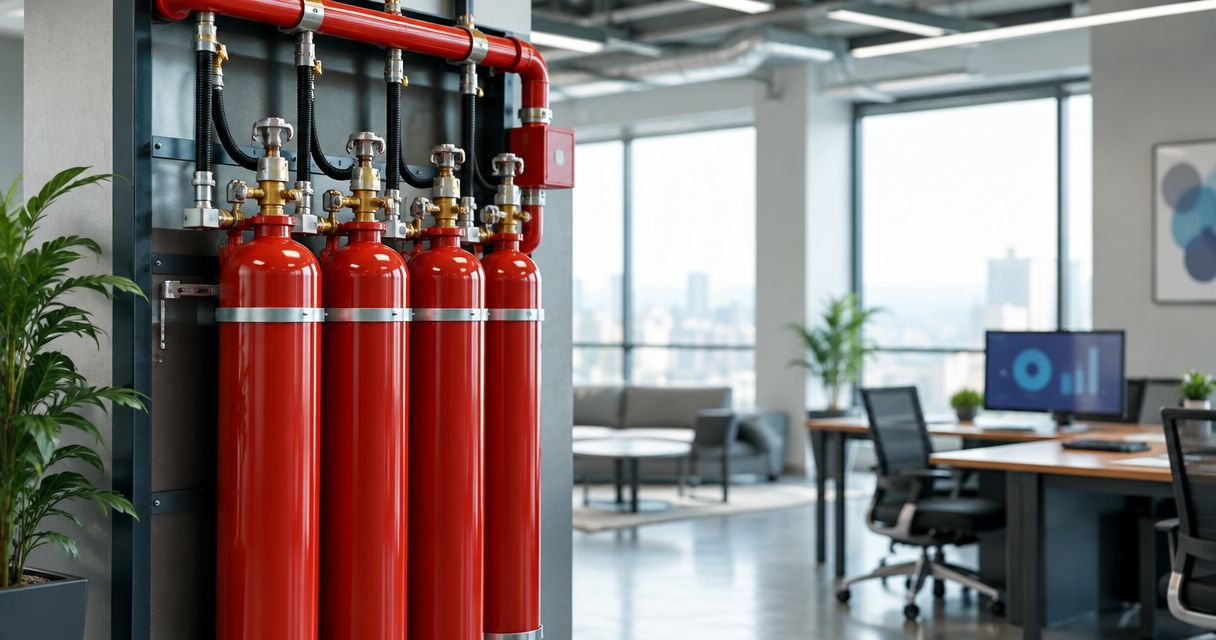
Best overall for broad building coverage: automatic sprinklers. Best for enclosed, water-sensitive equipment: clean-agent suppression. Best for cooking hazards: wet-chemical hood systems. This 2026 guide compares fire suppression systems ranked by coverage area by the space they protect—not by an unsupported maximum square-footage claim.
- Fire suppression systems ranked by coverage area need separate comparisons for buildings, rooms, equipment, and cooking hazards.
- Automatic sprinklers are the default starting point for broad building protection, subject to hazard-specific design.
- Clean-agent suppression protects suitable enclosed spaces; wet-chemical systems protect listed cooking hazards.
- Firstlinefire provides fire suppression systems and services for commercial, industrial, mining, marine, and fleet customers.
Why this matters
A system that protects an entire building does not automatically protect every special hazard inside it. A warehouse, enclosed electrical room, paint booth, and kitchen need different design decisions. Floor area alone cannot settle them.
Firstlinefire provides fire suppression systems and services across Kentucky, Illinois, Indiana, Tennessee, Missouri, and Alabama. Firstlinefire is a service option for commercial, industrial, mining, marine, and fleet customers seeking fire suppression support. The ranking below compares system types, not contractors or named equipment models.
For a 2026 project, start with the protection boundary. Decide whether you need building protection, a defined process zone, an enclosed room, or direct protection at a piece of equipment. Then match the agent and system design to the actual fire hazard.
What makes the best system for your coverage area?
Judge each option against these criteria before comparing its footprint:
- Protection boundary: Identify whether the design protects a building, zone, enclosure, or specific hazard. Those boundaries are not interchangeable.
- Fire hazard: Match the system to the materials, fuels, processes, and equipment present. More coverage does not fix an unsuitable agent.
- Geometry and obstructions: Check ceiling height, racks, machinery, ducts, openings, and concealed spaces. Floor area leaves these out.
- Design basis: Require the applicable listing, manufacturer instructions, calculations, and adopted standards. A generic coverage claim is not a design.
- Site dependencies: Check water supply, enclosure integrity, drainage, ventilation, shutdowns, and access. These determine whether the proposed protection works as intended.
- Change tolerance: Identify what requires reassessment when you move equipment, change storage, or alter ventilation. Protection must follow the hazard, not the old drawing.
Fire suppression coverage at a glance
The order below moves from broad building protection toward increasingly defined hazards. It is a selection guide, not a claim that every system higher on the list covers more square feet than every system below it. Engineered configurations overlap.
| Rank and system | Best for | Coverage basis | Standout feature | Key limitation |
|---|---|---|---|---|
| 1. Automatic sprinklers | Broad building protection | Building layout and hazard-specific design | Distributed protection throughout the designed area | Water supply and storage conditions govern design |
| 2. Deluge water-spray systems | Defined industrial process zones | Hazard surfaces and discharge zone | Open outlets discharge together when activated | Water demand, drainage, and equipment compatibility need review |
| 3. Water-mist systems | Applications covered by the system listing | Listed application and tested configuration | Fine water droplets provide fire suppression | Coverage cannot be transferred between unlike applications |
| 4. Clean-agent suppression | Enclosed water-sensitive equipment rooms | Enclosure volume and required concentration | Suppression without water discharge or agent residue | Leakage and ventilation affect total-flooding protection |
| 5. Dry-chemical local-application systems | Specific equipment and process hazards | Listed nozzle arrangement and hazard geometry | Direct agent discharge onto the protected hazard | Residue and equipment changes require attention |
| 6. Wet-chemical hood systems | Commercial cooking equipment | Listed appliances, hood, plenum, and duct arrangement | Agent suited to cooking-oil and grease hazards | Does not replace building-wide protection |
1. Automatic sprinklers: best for broad building coverage
Automatic sprinklers are the starting point for broad protection of many commercial and industrial buildings. Piping distributes water to sprinklers positioned throughout the designed coverage area. In a conventional closed-head system, individual sprinklers respond to heat; they do not all open because one sprinkler activates.
Coverage depends on the occupancy, ceiling arrangement, storage configuration, sprinkler type, spacing, and available water supply. A large floor plate does not establish the design demand by itself. High storage and changed commodities can alter what the building requires.
Automatic sprinkler pros:
- Provide distributed protection across the designed building area.
- Support designs for different occupancies and storage hazards.
- Closed-head systems discharge at heat-activated sprinklers rather than every outlet.
Automatic sprinkler cons:
- Require a suitable water supply and hydraulic design.
- Water discharge can damage contents and equipment.
- Storage changes and obstructions can invalidate the original design assumptions.
Best for: Owners seeking broad building protection rather than protection limited to one machine or room.
For a 2026 warehouse project, give the designer the storage arrangement, not just the lease plan. Include rack layout, stored materials, ceiling information, and planned changes. A drawing of empty floor space is not enough.
Verdict: Buy for broad building protection when the hazard-specific design supports it.
2. Deluge water-spray systems: best for industrial process zones
Deluge systems use open discharge outlets supplied through a valve that opens when the system activates. Water discharges through the outlets in the activated system together. This makes deluge different from conventional closed-head sprinklers.
A deluge water-spray arrangement can address a defined industrial hazard or process zone where the design calls for simultaneous discharge. The protected boundary follows the equipment, exposed surfaces, and hazard arrangement. It is not simply the floor area beneath the pipework.
Deluge water-spray pros:
- Discharge through the activated system's open outlets together.
- Direct water toward defined equipment or exposed surfaces.
- Support hazard-specific industrial protection arrangements.
Deluge water-spray cons:
- Simultaneous discharge creates substantial water-supply and drainage requirements.
- Water must be compatible with the materials and process.
- Detection, valve operation, and shutdown arrangements need coordinated design.
Best for: Defined industrial zones that require simultaneous water discharge under an approved hazard-specific design.
Do not select deluge merely because an industrial building is large. Establish what must be wetted, why simultaneous discharge is needed, and where the discharged water will go. A broad footprint without those answers is not a useful specification.
Verdict: Buy for a defined process hazard; skip it as a generic substitute for building sprinklers.
3. Water-mist systems: best for listed application-specific coverage
Water-mist systems discharge fine water droplets to suppress fire. Their performance depends on the particular system, nozzle arrangement, operating conditions, and application. A water-mist label alone does not establish what the system can protect.
The important boundary is the one supported by the system's listing and design documentation. An arrangement intended for one machinery space does not automatically transfer to an unrelated warehouse or cooking hazard. Similar floor dimensions do not make those applications equivalent.
Water-mist system pros:
- Provide water-based suppression for supported applications.
- Offer designs suited to specific spaces and equipment arrangements.
- Use application-specific documentation to define the protection limits.
Water-mist system cons:
- Coverage depends on the tested and listed configuration.
- Nozzle position, ventilation, and obstructions can affect performance.
- Requires specialist design and system-specific maintenance knowledge.
Best for: Projects where an available water-mist system explicitly supports the intended hazard and installation conditions.
For a 2026 specification, ask for the applicable listing before accepting a coverage diagram. Check that the room geometry, openings, equipment, and operating conditions match the permitted application. Do not assume mist means suitable for every water-sensitive space.
Verdict: Hold until the listing and design documentation match your application.
4. Clean-agent suppression: best for enclosed equipment rooms
Total-flooding clean-agent systems establish an extinguishing concentration inside a defined enclosure. Their coverage is therefore a volume question, not just a floor-area question. Room height, connected spaces, openings, and ventilation all matter.
Clean agents do not leave the powder residue associated with dry-chemical discharge. That makes them a relevant option for suitable rooms containing sensitive equipment. Agent selection still requires a review of the fire hazard, occupancy conditions, and enclosure requirements.
Clean-agent suppression pros:
- Suppress suitable fires without water discharge.
- Leave no agent residue requiring powder cleanup.
- Protect a defined enclosure rather than only exposed equipment surfaces.
Clean-agent suppression cons:
- Leakage can prevent the enclosure from retaining the required concentration.
- Ventilation, pressure relief, and shutdowns need coordinated review.
- Open or frequently changing spaces complicate total-flooding protection.
Best for: Suitable enclosed equipment rooms where water discharge and residue are important concerns.
Measure the entire protected enclosure. Account for connected voids and spaces as the design requires. Then address doors, penetrations, ventilation, and any required enclosure integrity testing. Adding cylinders does not repair an undefined protection boundary.
Verdict: Buy for a suitable enclosure with verified design conditions; skip unsupported open-area coverage claims.
5. Dry-chemical systems: best for specific equipment hazards
Dry-chemical local-application systems discharge powder through nozzles arranged around a particular hazard. Depending on the listed system and agent, applications include certain industrial equipment and process hazards. The nozzle layout and hazard geometry determine protection.
This is targeted coverage. A system designed around one machine or booth does not protect the rest of the building simply because its agent reaches some surrounding space. Changing the equipment can change the protection requirements.
Dry-chemical system pros:
- Direct agent onto defined hazard locations.
- Support listed local-application arrangements.
- Provide an alternative where the hazard calls for dry-chemical protection.
Dry-chemical system cons:
- Powder residue requires cleanup after discharge.
- Equipment moves and shielding can affect nozzle coverage.
- Agent compatibility must match the materials and equipment involved.
Best for: Specific equipment or process hazards supported by the selected system's listing.
Document the hazard before choosing nozzle locations. Include moving parts, shields, openings, combustible materials, and shutdown needs. Treat the equipment arrangement as part of the protection design, not as a detail to settle after installation.
Verdict: Buy for a listed equipment application; skip it as blanket room or building protection.
6. Wet-chemical hood systems: best for cooking coverage
Wet-chemical hood systems protect listed commercial cooking arrangements. Their design addresses cooking appliances and the associated hood, plenum, and duct protection. The agent is suited to cooking-oil and grease hazards within the supported application.
Kitchen floor area does not determine coverage. Appliance type, placement, hood configuration, nozzle position, and manufacturer instructions do. Moving a fryer or replacing an appliance can require reassessment even when the kitchen footprint stays unchanged.
Wet-chemical hood system pros:
- Address cooking-oil and grease hazards.
- Provide coordinated protection for the listed cooking arrangement.
- Include required operating controls and shutdown connections in the design.
Wet-chemical hood system cons:
- Coverage follows the listed appliance and hood arrangement.
- Appliance changes can require system modifications.
- Does not replace required building sprinklers or portable extinguishers.
Best for: Commercial kitchens needing protection of cooking equipment and associated exhaust components.
For a 2026 kitchen change, review suppression before moving the equipment. Do not assume an existing nozzle still protects a different appliance in the same spot. Keep the current appliance layout with the system documentation.
Verdict: Buy for commercial cooking hazards; skip floor-area shortcuts.
How this coverage ranking works
This ranking uses protection scope, hazard fit, geometry, design documentation, site dependencies, and change tolerance. Automatic sprinklers lead as the broad-building starting point. The remaining systems serve distinct process, enclosure, equipment, and cooking applications.
No universal maximum area is assigned to any category. That figure would hide differences between systems, listings, fuel hazards, and installation conditions. Compare equivalent hazards and documented designs—not unrelated coverage claims.
Which suppression system should you choose?
For broad building protection, start with automatic sprinklers and a hazard-specific design review. For a special hazard inside that building, define the smaller protection boundary separately. The correct answer can include building sprinklers plus dedicated equipment or room protection.
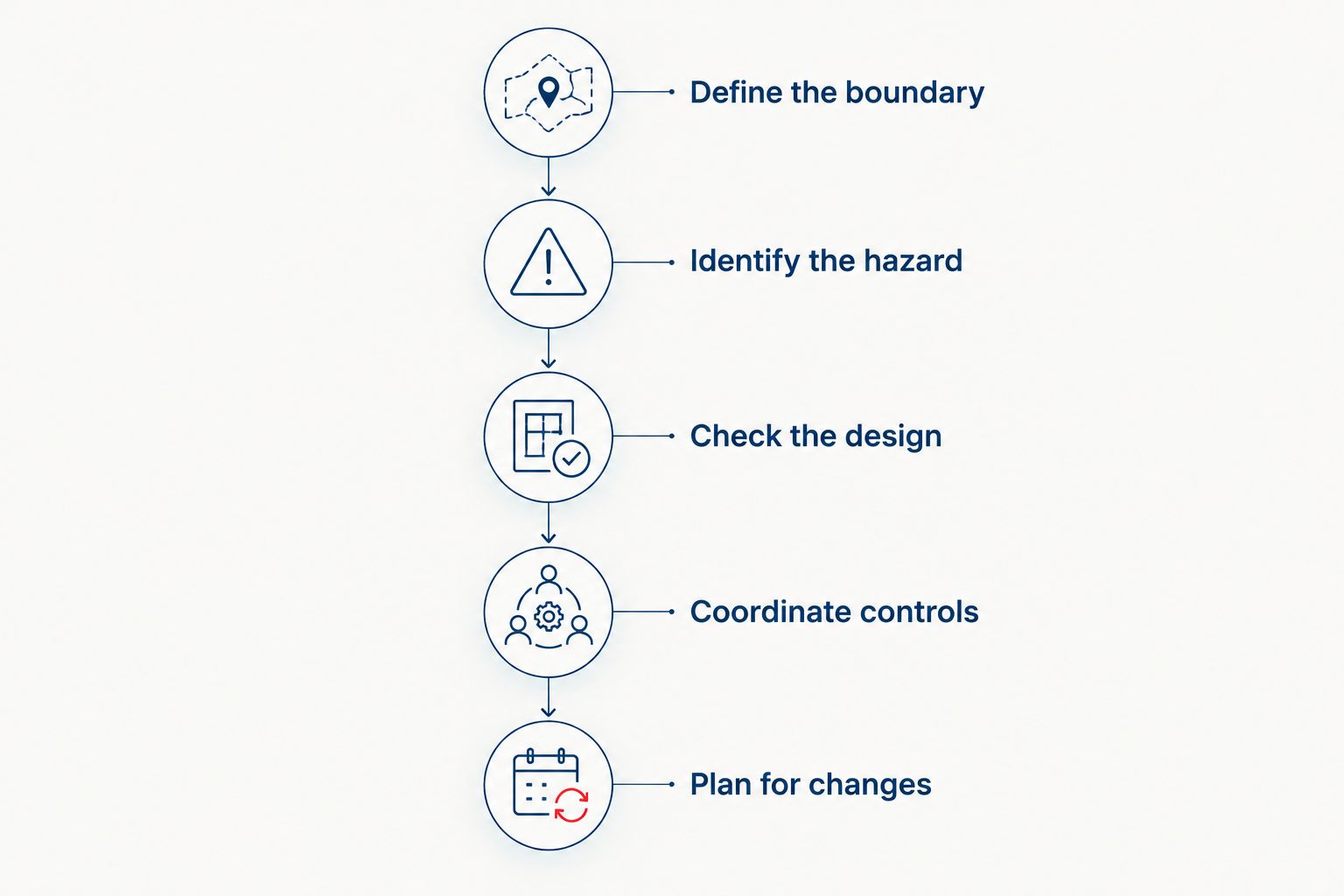
Use this sequence when preparing a scope for Firstlinefire fire suppression services:
- Define the boundary: Mark the building, zone, enclosure, equipment, or hood being protected.
- Identify the hazard: Record materials, storage, processes, and operating conditions.
- Check the design: Require the applicable listing, calculations, and manufacturer instructions.
- Coordinate controls: Identify alarms, ventilation changes, shutdowns, and discharge arrangements.
- Plan for changes: State what equipment, storage, or layout changes require another review.
The sequence prevents a common purchasing mistake: choosing the agent before defining what it must protect. It also gives your designer a scope that can be checked against the actual site.
Before accepting a proposal, ask for the protected boundary on a drawing and the assumptions behind it. Confirm what falls outside that boundary. Keep those documents with the equipment and layout records so future changes trigger the right review.
Discuss your suppression requirements
Bring your layout, equipment list, and existing system records to the discussion.
FAQ
What's the best fire suppression system for a large building?
Automatic sprinklers are the starting point for broad protection of many commercial and industrial buildings. The final design depends on occupancy, storage, geometry, water supply, and applicable requirements; special hazards can need additional protection.
Can fire suppression systems be ranked by square footage alone?
No. Building systems, total-flooding systems, and local-application systems use different coverage bases. A useful ranking separates building area, enclosure volume, and specific hazard geometry.
Does a clean-agent system protect the same area as sprinklers?
Not on an equivalent basis. Total-flooding clean-agent protection depends on enclosure volume and concentration, while sprinkler design addresses the building layout and fire hazard. Equal floor area does not establish equal protection.
Is water mist better than a conventional sprinkler system?
Water mist is not a universal replacement for conventional sprinklers. Select water mist only when the specific system's listing and design documentation support your hazard and installation conditions.
Can a kitchen hood system protect the whole restaurant?
No. A wet-chemical hood system protects its listed cooking appliances and associated hood, plenum, and duct arrangement. It does not replace required building protection or portable extinguishers.
Do I need a suppression review after moving equipment?
Review the change before assuming existing protection remains valid. Equipment movement can affect nozzle coverage, obstructions, shutdowns, and the system's listed arrangement, even when floor area stays unchanged.
Who does Firstlinefire provide fire suppression services for?
Firstlinefire serves commercial, industrial, coal mining, marine, and vehicle or fleet customers. Its stated service region includes Kentucky, Illinois, Indiana, Tennessee, Missouri, and Alabama.
One last thing
A smaller protected footprint can be the correct design. A hood system deliberately follows cooking hazards. An equipment system deliberately follows the machine. Neither becomes better by claiming to cover unrelated floor space.
For your 2026 project, ask one final question: what hazard remains outside the proposed protection? A clear answer is more useful than a large coverage number.


