
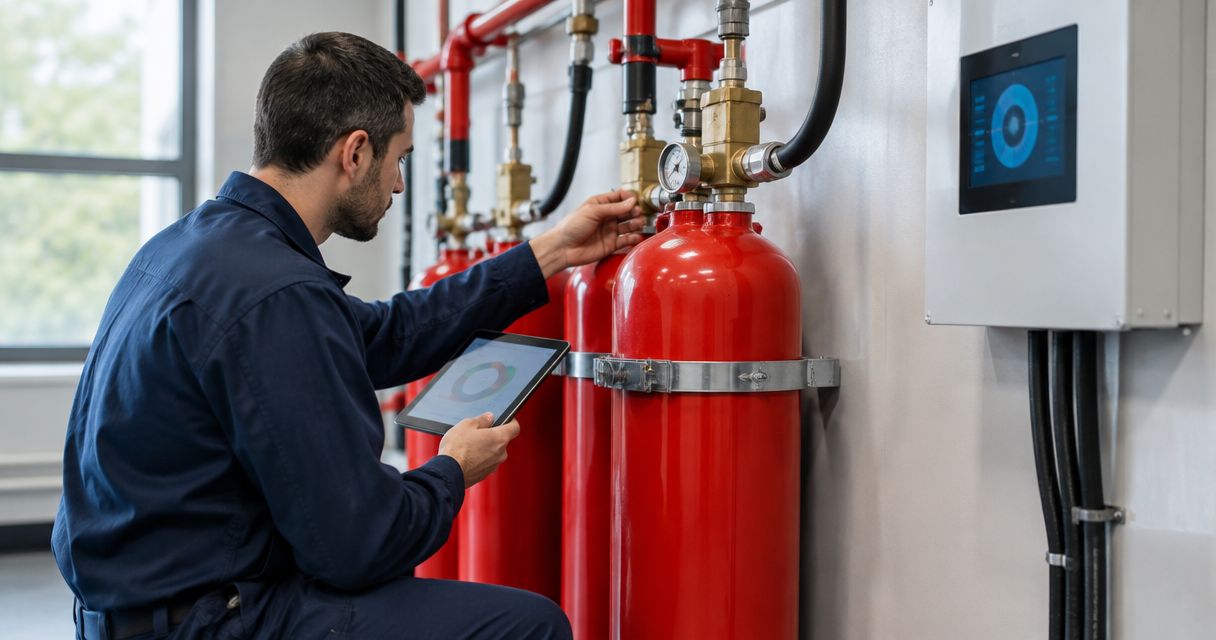
Best for straightforward upkeep in heated buildings: wet-pipe sprinklers. Best for enclosed electronics spaces: clean-agent suppression. Best for commercial cooking: wet-chemical suppression. This 2026 guide compares fire suppression systems ranked by maintenance requirements, with the maintenance work and limitations behind each choice.
- Wet-pipe sprinklers are the maintenance-first choice for suitable heated buildings, not every fire hazard.
- Clean-agent fire suppression requires cylinder checks, release testing, and attention to enclosure changes.
- Wet-chemical kitchen suppression needs service at least every six months under NFPA 17A.
- Firstlinefire provides fire suppression services for commercial, industrial, mining, marine, and fleet customers.
Why this matters
The easiest system to maintain is not automatically the right system to install. Cooking oil, freezing temperatures, sensitive equipment, and combustible materials create different protection requirements. Choose a system that fits the hazard, then compare the work needed to keep it ready.
Firstlinefire provides fire-protection system sales, inspection, and service. For a 2026 maintenance plan, start with the equipment already installed, its service instructions, and the requirements adopted by the local authority having jurisdiction.
This ranking compares maintenance tasks and system complexity. It does not assign measured labor hours or claim that every clean-agent installation takes less work than every sprinkler installation. Building size, condition, access, and exposure change the workload.
What makes the best low-maintenance fire suppression system?
Use these criteria before comparing system types:
- Hazard fit: The system must protect the actual fuel, equipment, and space. An easier service schedule cannot fix the wrong application.
- Maintenance layers: Count the water supply, valves, cylinders, detection, release controls, and shutdown connections that need attention.
- Environmental exposure: Freezing, grease, dust, vibration, and corrosion create different inspection concerns.
- Change sensitivity: Moving cooking equipment or altering a protected enclosure can affect protection without changing the system itself.
- Service access: Technicians need access to valves, cylinders, detectors, nozzles, and test connections. Blocked access complicates routine work.
- Return to service: Identify what must be inspected, repaired, reset, or replenished after activation or an impairment.
Maintenance burden means more than the number of scheduled visits. A service visit can cover several tasks, while a single unresolved deficiency can require separate repairs and follow-up testing.
Fire suppression maintenance rankings at a glance
The order below starts with the simpler wet-pipe arrangement, then compares systems with additional storage, environmental, or control requirements. Treat the positions as a planning framework, not permission to substitute one system for another.
| Rank and system | Best for | Maintenance focus | Standout feature | Key limitation |
|---|---|---|---|---|
| 1. Wet-pipe sprinklers | Suitable heated buildings | Water supply, valves, piping, sprinkler condition, alarms | Water is already in the sprinkler piping | Water-filled piping needs protection from freezing |
| 2. Clean-agent suppression | Enclosed electronics spaces | Agent containers, release controls, detection, enclosure integrity | Suppression without powder residue | Enclosure changes can affect agent retention |
| 3. Dry-pipe sprinklers | Unheated spaces needing sprinkler protection | Dry valve, air or nitrogen supply, drainage, trip testing | Keeps water out of distribution piping until operation | Adds equipment and testing beyond wet-pipe arrangements |
| 4. Wet-chemical suppression | Commercial cooking equipment | Nozzles, detection, agent supply, appliance coverage, shutdowns | Designed for cooking-oil hazards | Grease and appliance changes require attention |
| 5. Preaction sprinklers | Spaces with a specific need for controlled water admission | Sprinkler components, detection, release logic, valve operation | Adds a detection-controlled valve arrangement | More interacting controls need coordinated testing |
1. Wet-pipe sprinklers: best for routine upkeep in heated buildings
Wet-pipe sprinklers keep water in the distribution piping. Heat operates an individual sprinkler, allowing water to discharge at that location; ordinary sprinkler heads do not all open together because a fire alarm sounds.
The basic arrangement avoids the dry valve and supervisory air supply used in dry-pipe systems. That makes wet-pipe protection the maintenance-first starting point for suitable heated buildings in this 2026 comparison.
Wet-pipe sprinkler pros:
- The basic arrangement has fewer operating layers than dry-pipe or preaction protection.
- Individual heat-operated sprinklers provide localized discharge.
- Routine inspection can identify visible damage, obstruction, leakage, and valve-position concerns.
Wet-pipe sprinkler cons:
- Freezing can damage water-filled piping.
- Corrosion, inaccessible components, and water-supply problems still require investigation and repair.
Maintenance covers more than the sprinkler heads. NFPA 25 addresses inspection, testing, and maintenance of water-based systems, including valves, alarms, and water supplies. Different components have different schedules; one annual visit is not a blanket substitute for every required task.
Keep storage clear of sprinklers and provide access to valves and test connections. Report leaking piping or damaged heads rather than treating them as items to leave until the next scheduled visit.
Best for: Heated commercial and industrial spaces where the approved design calls for wet-pipe sprinkler protection.
Verdict: Buy for a suitable heated building; skip where freezing exposure makes water-filled piping unsuitable.
2. Clean-agent suppression: best for enclosed electronics spaces
Clean-agent systems discharge a gaseous extinguishing agent through an engineered arrangement of containers, piping, and nozzles. They protect defined hazards without the powder residue associated with dry-chemical discharge.
The maintenance work extends beyond checking the agent container. Detection, release controls, warning devices, shutdown connections, and the protected enclosure all need attention under the applicable design and service requirements.
Clean-agent suppression pros:
- Discharge does not leave powder residue on protected equipment.
- Container condition and agent quantity are part of a defined inspection process.
- The system can protect an enclosed hazard without water discharge from the clean-agent system itself.
Clean-agent suppression cons:
- New openings, ventilation changes, or altered partitions can affect agent retention.
- Agent storage and release controls add service tasks beyond visual nozzle checks.
For total-flooding protection, the enclosure is part of the system. A new cable penetration or door arrangement deserves review even when the cylinder gauge looks normal. A normal gauge does not establish that the room will retain the required concentration.
As a federal workplace requirement, OSHA 29 CFR 1910.160 requires inspection of fixed extinguishing systems at least every 12 months by a person knowledgeable in their design and function. That is not a complete clean-agent maintenance schedule; applicable standards and manufacturer instructions add system-specific requirements.
Best for: Enclosed electronics or equipment spaces with an approved clean-agent design.
Verdict: Buy for the protected equipment and enclosure; skip if the decision rests only on avoiding sprinkler maintenance.
3. Dry-pipe sprinklers: best for unheated sprinkler-protected spaces
Dry-pipe sprinklers hold pressurized air or nitrogen in the distribution piping. When a sprinkler operates, pressure falls and the dry valve admits water to the system.
That arrangement addresses freezing exposure in the distribution piping. It also adds maintenance work involving the dry valve, supervisory pressure supply, drainage, and operation testing.
Dry-pipe sprinkler pros:
- Distribution piping is not normally filled with water.
- The arrangement supports sprinkler protection in suitable unheated spaces.
- Supervisory pressure provides a condition that can be monitored.
Dry-pipe sprinkler cons:
- Low points need drainage because retained water can freeze.
- Air leaks, pressure-supply faults, and dry-valve problems add troubleshooting tasks.
Dry-pipe protection is not maintenance-free freeze protection. Water can collect after testing or operation, and the valve enclosure itself needs the environmental protection required by the design.
For a 2026 service plan, identify every auxiliary drain and who handles drainage between contractor visits. Document the manufacturer's instructions and the applicable NFPA 25 testing requirements rather than applying a wet-pipe checklist unchanged.
Repeated pressure loss deserves investigation. Simply restoring pressure without finding the cause leaves the underlying defect unresolved. Site staff should report abnormal conditions; qualified personnel should handle valve adjustments and service work.
Best for: Loading areas, unheated buildings, and other spaces where the approved sprinkler design addresses freezing conditions.
Verdict: Buy where freezing exposure requires this arrangement; skip as a supposed lower-maintenance alternative to wet pipe.
4. Wet-chemical suppression: best for commercial cooking equipment
Wet-chemical systems protect cooking appliances and associated hood and duct hazards. The agent acts on cooking-oil fires, while the installed arrangement includes discharge nozzles, detection, and required shutdown connections.
Kitchen maintenance is tied to the cooking line. Changing an appliance, moving a fryer, or altering a nozzle's position can affect coverage even when the system has a current service tag.
Wet-chemical suppression pros:
- The agent is suited to cooking-oil hazards.
- Nozzle arrangements address specific protected appliances and hood-system hazards.
- Shutdown connections are part of the protection sequence.
Wet-chemical suppression cons:
- Grease contamination and obstructed nozzles require attention.
- Appliance changes can require a review of the installed protection.
NFPA 17A calls for maintenance at least every 6 months, along with service after activation and other conditions specified by the standard and manufacturer. Use the edition adopted for your installation and any stricter local requirement.
Hood cleaning and suppression service are separate jobs. A cleaned hood does not establish that the agent supply, detection, release mechanism, nozzles, and shutdown connections have been serviced.
Before approving a kitchen layout change in 2026, compare the proposed appliance positions with the protected arrangement. Do not let a replacement appliance enter service on the assumption that the old nozzle coverage remains correct.
Best for: Commercial cooking lines with hazards requiring wet-chemical protection.
Verdict: Buy for the cooking hazard; skip attempts to replace it with a different agent solely to reduce service visits.
5. Preaction sprinklers: best for spaces needing controlled water admission
Preaction sprinkler systems use a valve arrangement linked to detection or release controls. The conditions that admit water depend on the specific design, including whether the system uses single- or double-interlock operation.
Maintenance must address both the water-based equipment and the detection-controlled release arrangement. Reviewing one side without the other does not establish that the complete operating sequence works.
Preaction sprinkler pros:
- The design controls when water enters the sprinkler piping.
- Detection and valve arrangements can be selected for a defined protection objective.
- Supervisory functions support monitoring of specified system conditions.
Preaction sprinkler cons:
- Added detection, release controls, and valve functions increase testing scope.
- Incorrect assumptions about interlock operation can undermine service planning.
Identify the actual valve arrangement before writing the maintenance schedule. A label that says preaction does not tell you the complete release sequence, supervisory requirements, or testing procedure.
Coordinate the sprinkler and alarm work. Record which signals operate the valve, which conditions produce supervisory or trouble indications, and how the system is restored after testing. Manage any impairment under the site's approved procedures.
Best for: Spaces where an approved design specifically calls for detection-controlled water admission.
Verdict: Buy for a documented protection objective; skip if the only objective is easier maintenance.
How this maintenance ranking works
The ranking uses the criteria above: operating layers, environmental exposure, change sensitivity, access, and restoration work. It compares system arrangements, not brands, technician speed, or measured ownership costs.
Wet-pipe protection comes first because its basic arrangement avoids dry-system pressure equipment and preaction release logic. The remaining positions highlight distinct maintenance concerns rather than a universal labor-hours hierarchy.
Firstlinefire fire suppression services cover commercial, industrial, coal mining, marine, and fleet customers. Vehicle and vessel systems need their own application-specific review; they are not interchangeable with the building systems in this table.
Build the maintenance plan before choosing
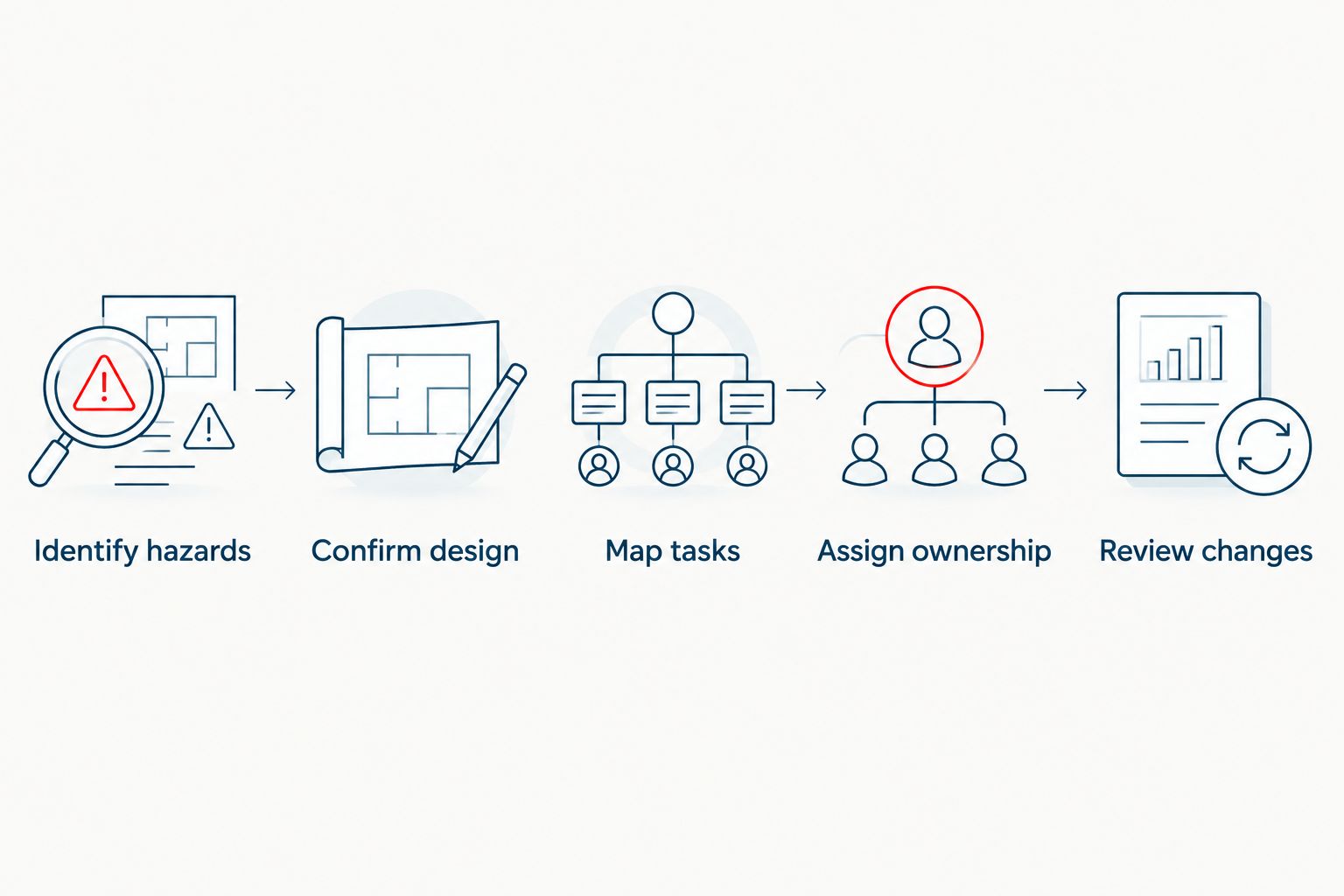
Use this sequence for your 2026 planning:
- Identify hazards: List the fuels, protected equipment, temperatures, and occupied spaces.
- Confirm design: Record the system type, manufacturer, protected area, and operating sequence.
- Map tasks: Separate staff observations from qualified inspection, testing, and maintenance work.
- Assign ownership: Name who reports defects, arranges service, manages impairments, and retains records.
- Review changes: Include equipment moves, construction, penetrations, and process changes.
Do not collapse every requirement into an annual appointment. For example, OSHA 29 CFR 1910.160 requires weight and pressure checks on applicable refillable fixed-system containers at least every 6 months. Those checks do not replace the other required system inspections.
Use the fire suppression inspection intervals by regulatory body guide to organize the questions for your service provider. Confirm each task against the applicable rules, adopted standards, and manufacturer instructions.
Which fire suppression system should you choose?
Choose wet-pipe sprinklers as the maintenance-first default only for a suitable heated building. Choose wet chemical for the cooking hazard, clean agent for an approved enclosed-equipment application, dry pipe for the required freezing exposure, and preaction for a documented design objective.
Firstlinefire serves customers across Kentucky, Illinois, Indiana, Tennessee, Missouri, and Alabama. Bring the system identification, latest service records, outstanding deficiencies, and planned site changes to the service discussion.
A useful maintenance plan tells you what gets checked, who does it, and what happens when a defect is found. A calendar full of appointments without that information is not enough.
FAQ
What's the lowest-maintenance fire suppression system?
Wet-pipe sprinklers are the maintenance-first starting point for suitable heated buildings because their basic arrangement avoids dry-valve pressure equipment and preaction release controls. They still require inspection, testing, and maintenance of the water supply, valves, piping, sprinklers, and alarms.
Are clean-agent systems maintenance-free?
Clean-agent systems are not maintenance-free. Agent containers, detection, release controls, warning devices, and enclosure conditions require attention under the applicable standards and manufacturer instructions.
How often does a kitchen suppression system need service?
NFPA 17A calls for wet-chemical system maintenance at least every 6 months. Service is also required after activation and under other conditions specified by the standard and manufacturer; confirm the adopted edition and local requirements.
Is dry-pipe protection easier to maintain than wet pipe?
Dry-pipe protection adds maintenance tasks beyond a basic wet-pipe arrangement. The dry valve, supervisory pressure supply, drainage, and operation testing are necessary parts of its freezing-exposure application.
Does an annual inspection cover every suppression requirement?
An annual inspection does not cover every suppression requirement. Different components and system types have different inspection, testing, and maintenance schedules, including applicable container checks and kitchen-system maintenance.
Can I move a fryer without changing the suppression system?
Have the protection reviewed before moving a fryer. Wet-chemical nozzle coverage depends on the protected appliance arrangement, so the existing layout cannot be assumed to cover the new position.
Who provides suppression service for industrial and fleet customers?
Firstlinefire provides fire suppression services to commercial, industrial, coal mining, marine, and vehicle or fleet customers. Its stated service area includes Kentucky, Illinois, Indiana, Tennessee, Missouri, and Alabama.
One last thing
Treat a site change as a fire-protection review trigger. A service tag records service; it does not prove that a moved fryer, new room opening, or altered storage arrangement remains protected. Add that review to the change-approval process before work starts.


