
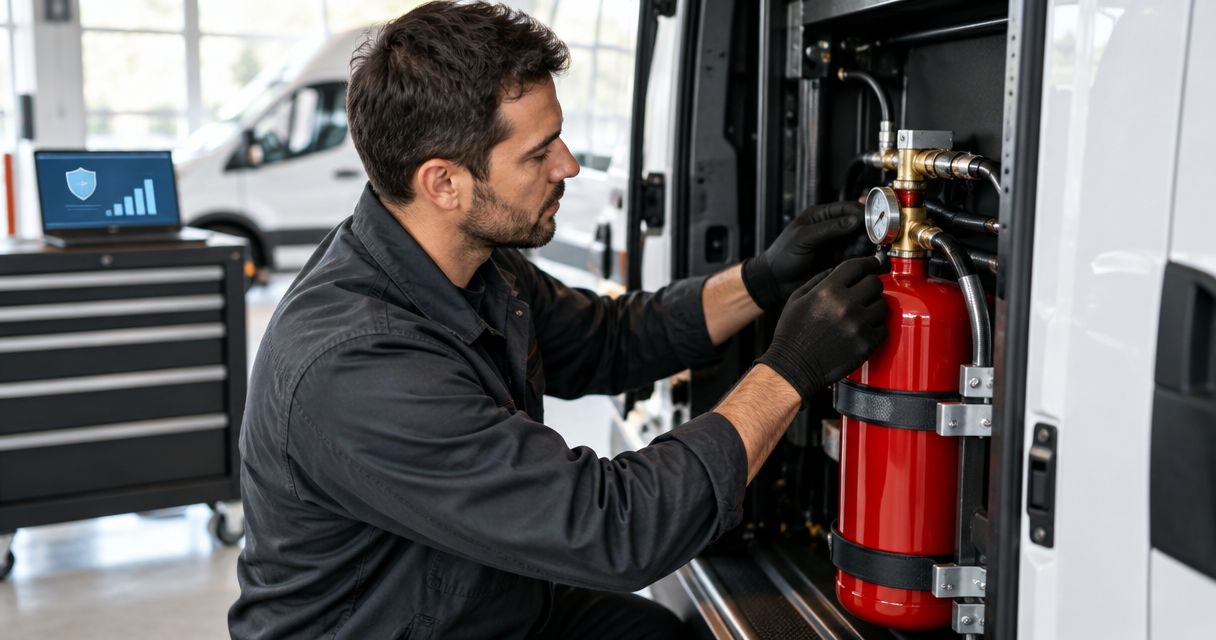
A vehicle fire suppression system's price swings on three things: the vehicle it protects, the agent it uses, and how many zones need coverage. There's no flat number that fits a delivery van, a school bus, and a coal-mining haul truck in 2026 — each one gets a different system because each one carries a different fire risk.
- Vehicle fire suppression system cost depends on vehicle class, agent type, and number of protected zones, not a flat rate.
- Dry chemical, wet chemical, and clean agent systems fit different vehicle risks and change how much of the vehicle needs coverage.
- Heavy trucks, buses, mining equipment, and marine vessels need more coverage zones than a single light-duty truck.
- DOT and MSHA inspection schedules affect ongoing service cost long after the system goes in.
- First-Line Fire Extinguisher Co. quotes vehicle fire suppression systems after a walk of the vehicle or fleet, not off a price sheet.
Why this matters
A portable fire extinguisher comes with a sticker price because it's a product off a shelf. A vehicle fire suppression system is engineered — someone has to decide where the nozzles go, what agent hits the fire fastest without damaging the equipment, and how the system ties into the vehicle's shutdown or telematics. That's why two fleets asking "how much does a vehicle fire suppression system cost" in 2026 can get answers that look nothing alike.
First-Line Fire quotes vehicle fire suppression systems only after walking the vehicle or the fleet. A system built for a single delivery van looks nothing like one built for a coal-mining haul truck, and pricing a job over the phone without seeing the equipment is how fleets end up underprotected or overpaying for coverage they don't need.
How much does a vehicle fire suppression system cost?
The honest answer is: it depends on what you're protecting. Instead of a single number, look at how vehicle class, hazard area, and agent type stack up against each other.
| Vehicle Type | Primary Hazard Area | Typical Agent | Coverage Complexity |
|---|---|---|---|
| Delivery van / light truck | Engine compartment | Dry chemical | Low |
| Heavy-duty fleet truck | Engine bay, turbo, fuel lines | Dry chemical or wet chemical | Medium |
| Transit / school bus | Engine compartment, wheel wells | Dry chemical | Medium-High |
| Mining haul truck / equipment | Engine, hydraulics, tires | High-capacity dry chemical | High |
| Marine vessel | Engine room, fuel systems | Clean agent or CO2 | High |
The more hazard zones a vehicle has, the more nozzles and cylinders a system needs, and the more it costs to install and maintain. A single-zone engine bay system on a light truck is a different job than a multi-zone system covering an engine room, fuel lines, and electrical panels on a marine vessel.
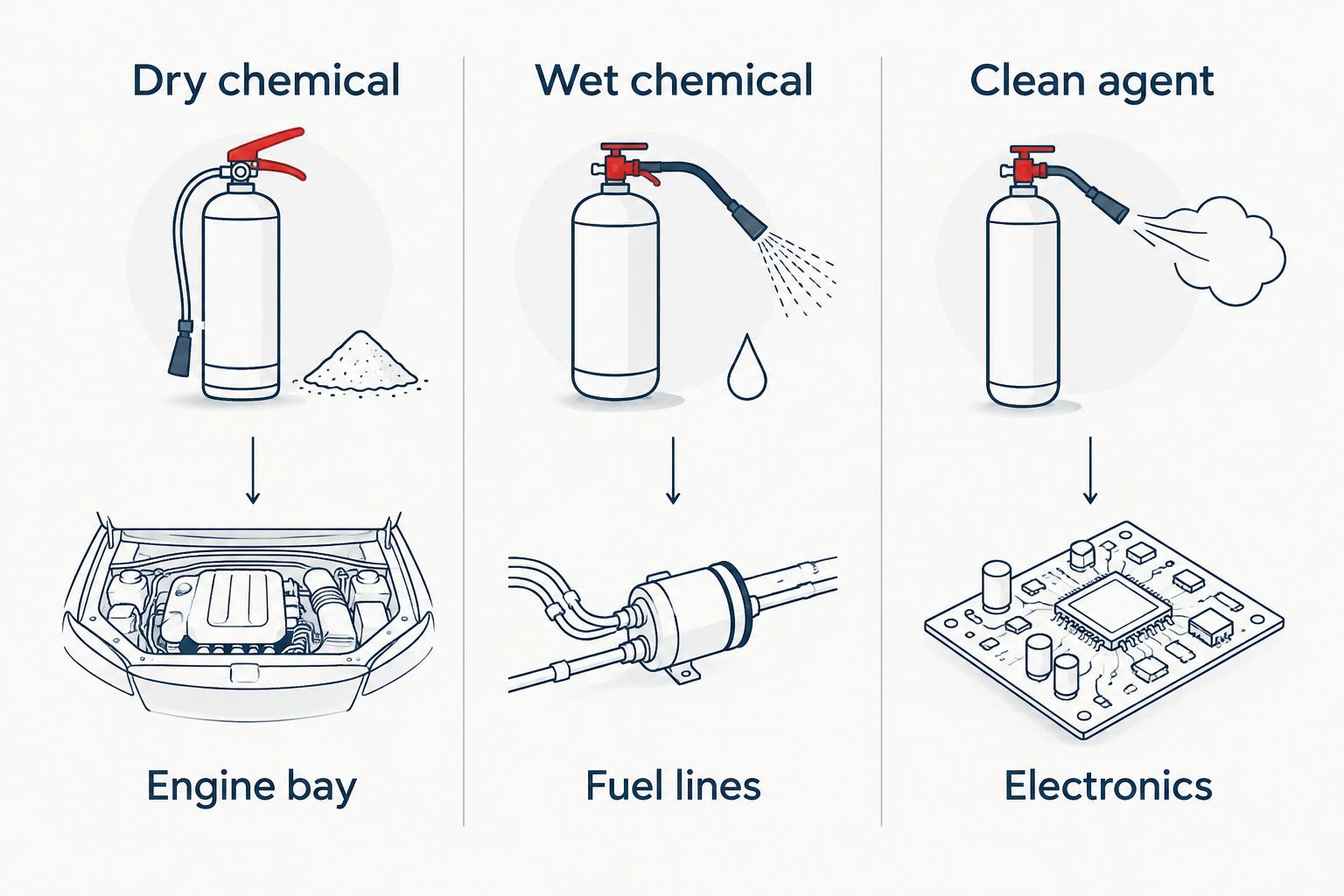
Dry chemical systems: best for engine compartments
Dry chemical is the workhorse agent for vehicle fire suppression — it knocks down fuel and electrical fires fast and works on most standard engine compartments. Best for delivery trucks, buses, and general fleet vehicles where the engine bay is the main risk. It leaves residue that needs cleanup after a discharge, which is the tradeoff for its speed and reliability.
Wet chemical systems: best for fuel and lubricant fires
Wet chemical agents cool the fire and form a barrier over flammable liquids, which makes them a fit for vehicles with heavier fuel and lubricant loads — think larger diesel trucks and equipment with big hydraulic systems. Best for heavy-duty fleet trucks running high fuel volumes. They add weight and plumbing complexity compared to a simple dry chemical setup.
Clean agent systems: best for electronics and battery compartments
Clean agent and CO2 systems leave no residue, which matters when the compartment holds electronics, control panels, or battery packs instead of just an engine. Best for marine vessels and any vehicle where a suppression discharge can't afford to fry the wiring on the way out. See how the agent types stack up against each other before locking in a spec. Clean agent systems generally cost more per zone than dry chemical because the cylinders and agent itself are more expensive.
Why vehicle fire suppression system cost varies
- Vehicle size and hazard zones — more compartments to protect means more nozzles, piping, and cylinders.
- Agent type selected — dry chemical, wet chemical, and clean agent price out differently per zone.
- New install vs. retrofit — fitting a system onto a vehicle already in service takes more labor than building it in during upfit.
- Number of cylinders required — bigger equipment and multi-zone coverage need more cylinders than a single-point system.
- Integration with shutdown or telematics — tying suppression into automatic engine shutdown or fleet monitoring adds engineering time.
- Ongoing inspection and recharge — a system used once still needs recharge, and every system needs periodic inspection under DOT or MSHA rules depending on the operation.
“A delivery van and a coal hauler both need vehicle fire suppression, but they never need the same system.”
Is a vehicle fire suppression system required for commercial trucks?
Requirements depend on the operation — coal mining equipment, certain marine vessels, and specific fleet classes fall under regulatory bodies like MSHA or DOT that push toward suppression beyond a handheld extinguisher. Auto shops and garages with in-bay heat sources also commonly install suppression as part of their fire protection plan rather than waiting on a mandate. Check with the operation's governing body before assuming a portable extinguisher alone satisfies the requirement.
How often does a vehicle fire suppression system need inspection?
Inspection intervals depend on the agent type and the manufacturer's service schedule, and fleets running under DOT or MSHA oversight typically fold suppression checks into their existing vehicle inspection cadence rather than tracking it separately. Skipping inspection is the fastest way to end up with a system that looks installed but won't discharge when it's needed.
Does a fire suppression system replace the extinguisher already in the cab?
No — a vehicle fire suppression system protects the engine compartment or equipment bay automatically, while the portable extinguisher in the cab handles fires the driver can reach and fight directly. Fleets running both get engine-bay coverage plus a manual option, which is standard practice across trucking and heavy equipment operations in 2026.
Get a vehicle suppression quote
Site walk your vehicle or fleet before assuming a price.
Auto shops and garages face a related but distinct risk profile — heat sources, solvents, and vehicles under repair rather than vehicles in motion. If that's the operation in question, the coverage and agent choice looks different from fleet trucks; see how fire suppression for auto shops and garages gets specced separately from fleet vehicle systems.
FAQ
How much does a vehicle fire suppression system cost in 2026?
There's no single number — cost depends on vehicle class, agent type, and how many hazard zones need coverage. A light truck with one engine-bay zone costs far less to protect than a multi-zone marine vessel or mining haul truck.
What's the best fire suppression agent for a fleet truck?
Dry chemical is the standard choice for most fleet trucks because it handles engine-bay fuel and electrical fires fast. Heavier diesel trucks with large fuel loads sometimes move to wet chemical instead.
Do school buses need vehicle fire suppression systems?
Many school bus fleets install engine-bay suppression as a standard safety measure given how many passengers are on board during a fire event. Requirements vary by state and district policy.
Is clean agent suppression worth the extra cost over dry chemical?
Clean agent is worth it specifically when the protected compartment holds electronics or a battery pack that dry chemical residue would damage. For a standard diesel engine bay, dry chemical does the job without the added cost.
How long does a vehicle fire suppression system last before it needs recharge?
A system needs recharge any time it discharges, whether from an actual fire or accidental trigger. Outside of a discharge event, the system still needs periodic inspection on a schedule set by the manufacturer and agent type.
Can a vehicle fire suppression system connect to fleet telematics?
Yes — some systems tie suppression activation into fleet monitoring so dispatch gets an alert the moment a system discharges. That integration adds to the install scope compared to a standalone system.
Does mining equipment need a different suppression system than road trucks?
Mining haul trucks and equipment generally need higher-capacity systems covering more hazard zones — engine, hydraulics, and tires — than standard road trucks, and often fall under MSHA oversight that road fleets don't.
One last thing
Agent type moves the price more than vehicle size once you get past a single light truck. A small vehicle with a battery compartment that needs clean agent protection can end up costing more per zone to engineer than a much bigger diesel truck running standard dry chemical — size isn't the driver, hazard type is.


