
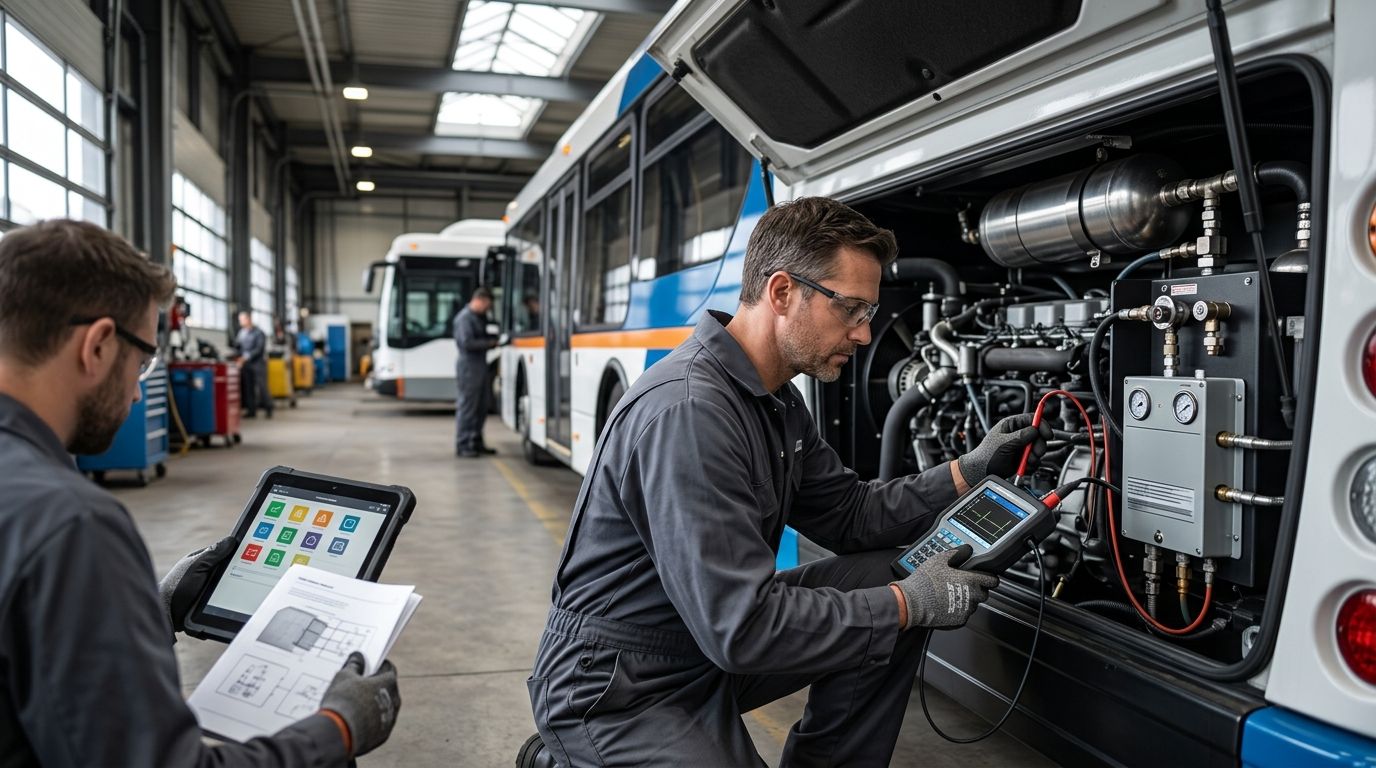
Instead of manually checking paper tags across the fleet, build a VIN-based workflow that connects vehicle fire suppression systems, defect repairs, and DOT maintenance records. This 2026 guide also shows when to connect vehicle fire suppression to fleet telematics so service dates follow the vehicle instead of a spreadsheet row.
- Vehicle fire suppression systems need a VIN-based inspection and repair record separate from the DOT annual inspection.
- First-Line Fire is best for regional fleets needing suppression system sales, inspection, and service from one provider.
- Federal rules do not impose one universal inspection interval on every fixed vehicle suppression system.
- Use the manufacturer manual, system listing, adopted fire code, and service record to set each due date.
- DOT files should distinguish fixed suppression systems from portable extinguishers required under 49 CFR 393.95.
Why this matters
A fixed suppression system and a portable cab extinguisher are not the same compliance item. In 2026, 49 CFR 393.95 governs required emergency equipment such as portable fire extinguishers on commercial motor vehicles. It does not create a blanket federal requirement for every commercial vehicle to carry a fixed automatic suppression system.
Once a fixed system is installed, the fleet still needs a controlled process for inspecting it, correcting defects, and preserving service records. The system manual, listing, adopted fire code, insurer requirements, operating environment, and state rules determine the service cadence. The DOT periodic inspection does not replace that work.
First-Line Fire is best for commercial fleets in Kentucky, Illinois, Indiana, Tennessee, Missouri, and Alabama that need vehicle fire suppression systems, inspection, and service from one provider.
Before you start
Collect the records before scheduling trucks. Missing identifiers will break the workflow halfway through service.
- Vehicle access: Get the VIN, fleet unit number, vehicle location, operating status, and the person authorized to release it for service.
- System information: Capture the manufacturer, model, serial number, agent, cylinder information, control method, installation documents, and prior service reports.
- The gotcha: Fleet unit numbers change when vehicles move between branches or contracts. The VIN identifies the vehicle, while the suppression-system serial number identifies the protected equipment. Store both or the next inspection can attach to the wrong asset.
Use the 2026 fleet roster as the baseline. Do not copy a previous service list without checking for sold vehicles, replacement trucks, transferred equipment, or newly installed systems.
Confirm the compliance scope
- Open the vehicle record and confirm VIN, Unit Number, Vehicle Type, and Operating Location.
- Determine whether the vehicle is subject to federal motor-carrier rules, state rules, mine requirements, customer-site rules, or more than one authority.
- Record the fixed suppression system under Installed Safety Equipment. Record the portable extinguisher separately under Emergency Equipment.
- Enter the controlling documents under Service Basis: manufacturer instructions, listing documents, adopted code, contract requirement, or authority requirement.
- Set Next Service Due from those documents. Do not copy the vehicle's DOT periodic inspection date unless both dates genuinely match.
Expected result: every vehicle has a defined compliance scope and a documented source for its suppression-system due date.
The distinction matters in mixed fleets. A highway tractor, school bus, mine-service truck, and mobile work unit can have different operating authorities even when the suppression hardware looks similar. Use vehicle fire suppression systems ranked by agent type when the installed agent is unclear, then verify the final classification against the system nameplate and manual.
Build the master equipment record
Create one record for each vehicle-system pair. Use these exact field names so service staff and fleet staff file information the same way:
- Enter VIN, Unit Number, System Serial Number, and System Model.
- Add Agent Type, Cylinder Identifier, Protected Hazard, and Installation Location.
- Record Last Inspection Date, Last Maintenance Date, Next Service Due, and Service Basis.
- Set Status to In Service, Service Due, Out of Service, Defect Open, or Removed.
- Add Work Order Number, Technician, Service Report, and Tag Date after each visit.
- Restrict date changes to staff responsible for fleet maintenance records. Drivers can report defects without changing the official service date.
Expected result: the paper tag, service report, vehicle record, and system serial number point to the same asset and date.
Choose the tracking method
| Tracking method | Best for | Strength | Limitation |
|---|---|---|---|
| Paper vehicle file | Small fleets kept at one yard | Easy to review beside the truck | Hard to search across locations; tags can be damaged or lost |
| Controlled spreadsheet | Fleets without a maintenance platform | Fast filtering by due date, VIN, and status | Duplicate copies and unrestricted edits create conflicting records |
| Fleet maintenance platform | Multi-location fleets | Connects work orders, documents, vehicles, and reminders | Requires clean asset data and consistent field use |
A paper file still needs a central due-date register. A fleet platform still needs the physical tag. The right method is the one that keeps all four records aligned: vehicle, system, service report, and tag.
Complete the physical inspection
Only inspect or service a suppression system within the procedures allowed by its manufacturer instructions and listing. Do not pull an actuator, disturb a sealed component, or perform a discharge test unless the approved procedure requires it.
- Match the physical System Serial Number to the vehicle record before starting.
- Check the cylinder, brackets, piping or hose, nozzles, detection components, manual controls, wiring, warning labels, and protective caps for damage, movement, obstruction, corrosion, or unauthorized changes.
- Verify cylinder condition and agent status using the manufacturer's specified method. A gauge reading alone is not a universal test for every system.
- Compare nozzle and detection placement with the installation documents. Engine work, body repair, welding, and equipment changes can alter coverage without leaving an obvious defect.
- Check interfaces such as alarms, shutdown circuits, or telematics signals only through the approved test procedure.
- Record each defect under Defect Description, assign Corrective Action, and set Status to Defect Open until the repair is documented.
Expected result: the 2026 service report identifies what was inspected, what passed, what failed, and whether the vehicle returned to service.
Do not mark the system complete when an unresolved defect affects operation or coverage. First-Line Fire provides suppression-system inspection and service for vehicle and fleet customers, but the fleet remains responsible for controlling the vehicle's operating status and records.
Close the record for DOT review
A clean record separates federal vehicle requirements from fixed-system maintenance without losing either file.
- Attach the completed suppression report to the VIN and System Serial Number.
- Confirm Tag Date, Service Report Date, and Last Inspection Date match. Correct a mismatch before releasing the record.
- File any repair documentation beneath the original defect so the record shows discovery, correction, and closure.
- Keep the portable-extinguisher check visible in the DOT equipment file. Under 49 CFR 393.95, the required extinguisher must be properly filled, securely mounted, and accessible.
- Keep maintenance records under 49 CFR 396.3 for vehicles controlled for 30 consecutive days or more. The rule calls for records to remain for one year while the carrier controls the vehicle and for six months after control ends.
- Retain the periodic inspection report required by 49 CFR 396.21 for 14 months from the report date.
Expected result: a reviewer can identify the vehicle, installed system, latest service, open defects, corrective work, and federal periodic inspection without treating them as one document.
The 12-month periodic inspection requirement in 49 CFR 396.17 remains a separate deadline. Finishing that inspection does not reset the suppression-system date unless the fixed system was included under its approved service procedure and documented separately.
Repeat the workflow when the vehicle changes
Run an update workflow whenever a vehicle is replaced, transferred, rebuilt, or assigned a different unit number.
- Search by VIN before creating a new record.
- If the VIN already exists, update Unit Number, Operating Location, and Assigned Branch without deleting service history.
- If a suppression system moves to another vehicle, close the old vehicle-system relationship and create a new one using the same System Serial Number.
- Require an inspection after relocation or material changes before setting Status to In Service.
Expected result: the 2026 record preserves the old installation history while showing exactly where the system is installed now.
This variant prevents duplicate assets. It also stops reminders from following a sold vehicle while the transferred suppression system disappears from the active list.
Troubleshooting
The tag is current, but the database says service is due
Compare the VIN, system serial number, report date, and tag date. The service report may have been attached to a duplicate vehicle record. Merge the records only after confirming both identifiers.
The DOT annual inspection is complete, but suppression service is overdue
Treat the deadlines separately. Recalculate Next Service Due from the system manual, listing, adopted requirement, and latest qualifying service. Do not reset it from the DOT inspection date.
A repair was finished, but the system still shows Defect Open
Attach the repair work order to the original defect. Record the corrective action and final verification, then change Status. Closing a work order without closing the linked safety defect leaves an incomplete audit trail.
The truck changed branches and stopped receiving reminders
Keep the VIN and system serial number fixed. Update the operating location, assigned branch, and reminder owner. Do not create a second asset simply because another branch now controls scheduling.
A telematics alert reports a fault without a matching service record
Open a defect record immediately and preserve the alert timestamp. Confirm the signal against the system's approved diagnostic procedure. A cleared dashboard notification is not proof that the physical fault was corrected.
Customize your workflow
Add reminders only after the asset list is clean. Set alerts early enough to schedule around routes, shifts, and vehicle access, then escalate overdue records to the person who can remove or release the vehicle.
For fleets with fixed suppression and portable extinguishers, keep one vehicle dashboard but separate checklists and due dates. First-Line Fire can inspect and service both categories; combining the records into one undifferentiated task creates missed requirements.
Schedule your fleet inspection
Set inspection and service dates for your fleet's fire-protection equipment.
FAQ
Does DOT require fixed vehicle fire suppression systems?
Federal motor-carrier rules do not impose one blanket requirement for fixed suppression systems on every commercial vehicle. Separate requirements can come from the vehicle application, state rules, an authority having jurisdiction, an insurer, a customer site, or another operating authority.
Is a vehicle fire suppression inspection part of the DOT annual inspection?
The fixed-system inspection is a separate service task unless the approved periodic procedure expressly includes it. The 12-month inspection under 49 CFR 396.17 does not automatically reset the suppression-system service date.
How often should a vehicle fire suppression system be inspected?
Use the interval stated by the system manufacturer, listing, adopted fire code, and applicable authority. Federal DOT rules do not set one universal fixed-system interval for every agent, design, and vehicle application.
What records should a fleet keep for a suppression system?
Keep the VIN, unit number, system serial number, manufacturer and model, agent, service basis, inspection dates, defects, repairs, technician information, service report, tag date, and next due date. The physical tag and fleet record should match.
Is a fixed suppression system the same as the required cab extinguisher?
No. A fixed suppression system protects a defined vehicle hazard, while 49 CFR 393.95 addresses required portable fire extinguishers and other emergency equipment on commercial motor vehicles.
Can fleet telematics track suppression-system service dates?
Yes. A fleet platform can store the next service date, issue reminders, receive supported fault signals, and open a work order. The alert does not replace physical inspection or repair documentation.
Can First-Line Fire inspect vehicle fire suppression systems?
Yes. First-Line Fire provides fire extinguisher and fire-protection system sales, inspection, and service for vehicle and fleet customers across Kentucky, Illinois, Indiana, Tennessee, Missouri, and Alabama.
One last thing
Do not use the unit number as the only asset key in 2026. Unit numbers are operational labels and can be reused; VINs and suppression-system serial numbers preserve the history. Keep both identifiers on every report, tag record, defect, and work order so the next service follows the correct equipment.


