
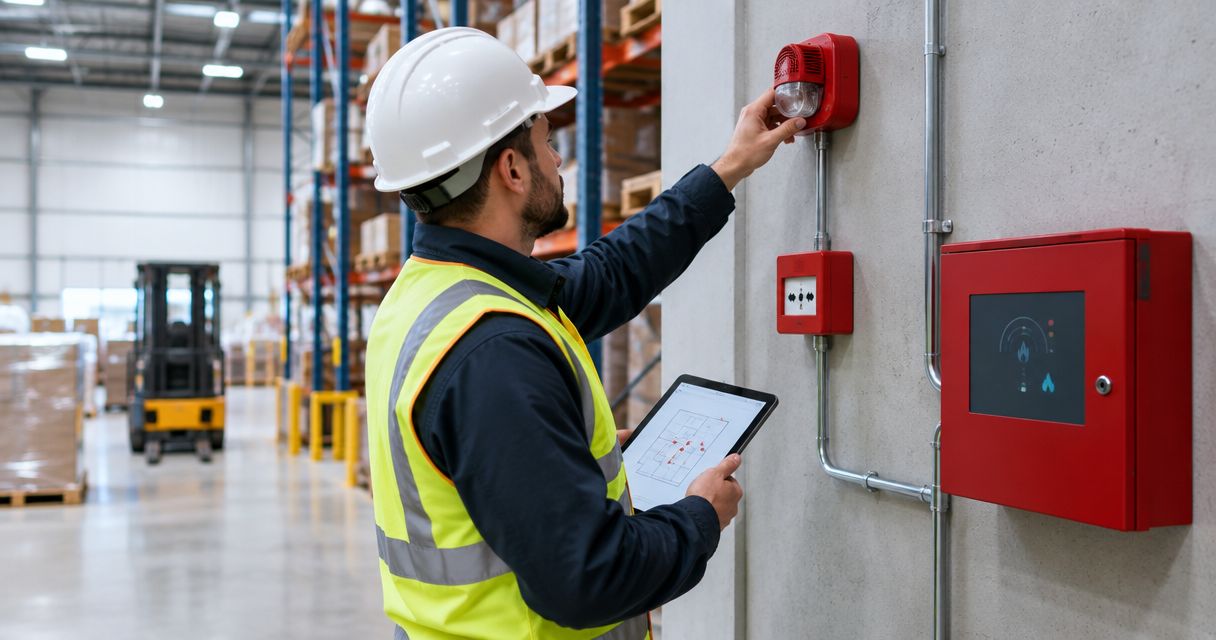
A warehouse fire alarm system costs an average of $15,000 installed in 2026, with most jobs landing between $5,000 and $75,000 depending on square footage and system type. The number that catches people off guard isn't the equipment — it's the monitoring connection and annual inspection fees that keep the system compliant after installation day.
- Fire alarm system installation cost for a warehouse averages $15,000 in 2026, ranging from $5,000 to $75,000+.
- Square footage and detection type (conventional vs. addressable) drive most of the price swing.
- Monitoring and annual testing are recurring costs the install price doesn't cover.
- A 20,000 sq ft warehouse runs cheaper per device than a 150,000 sq ft distribution center — device count, not building size alone, sets the bill.
- First-Line Fire installs and services fire alarm systems across Kentucky, Illinois, Indiana, Tennessee, Missouri and Alabama.
Why this matters
Warehouses aren't offices. High ceilings, racked storage, forklift traffic and open floor plans change where detectors go and how many you need. A system sized for a 15,000 sq ft office building will not pass inspection in a 100,000 sq ft distribution center — the coverage math is different, and so is the price.
Getting the estimate wrong at the quote stage means change orders mid-install or a system that fails its first fire marshal walkthrough. That's the gap this page closes: what actually drives the fire alarm system installation cost for a warehouse, and where the money goes.
How much does fire alarm installation cost for a warehouse?
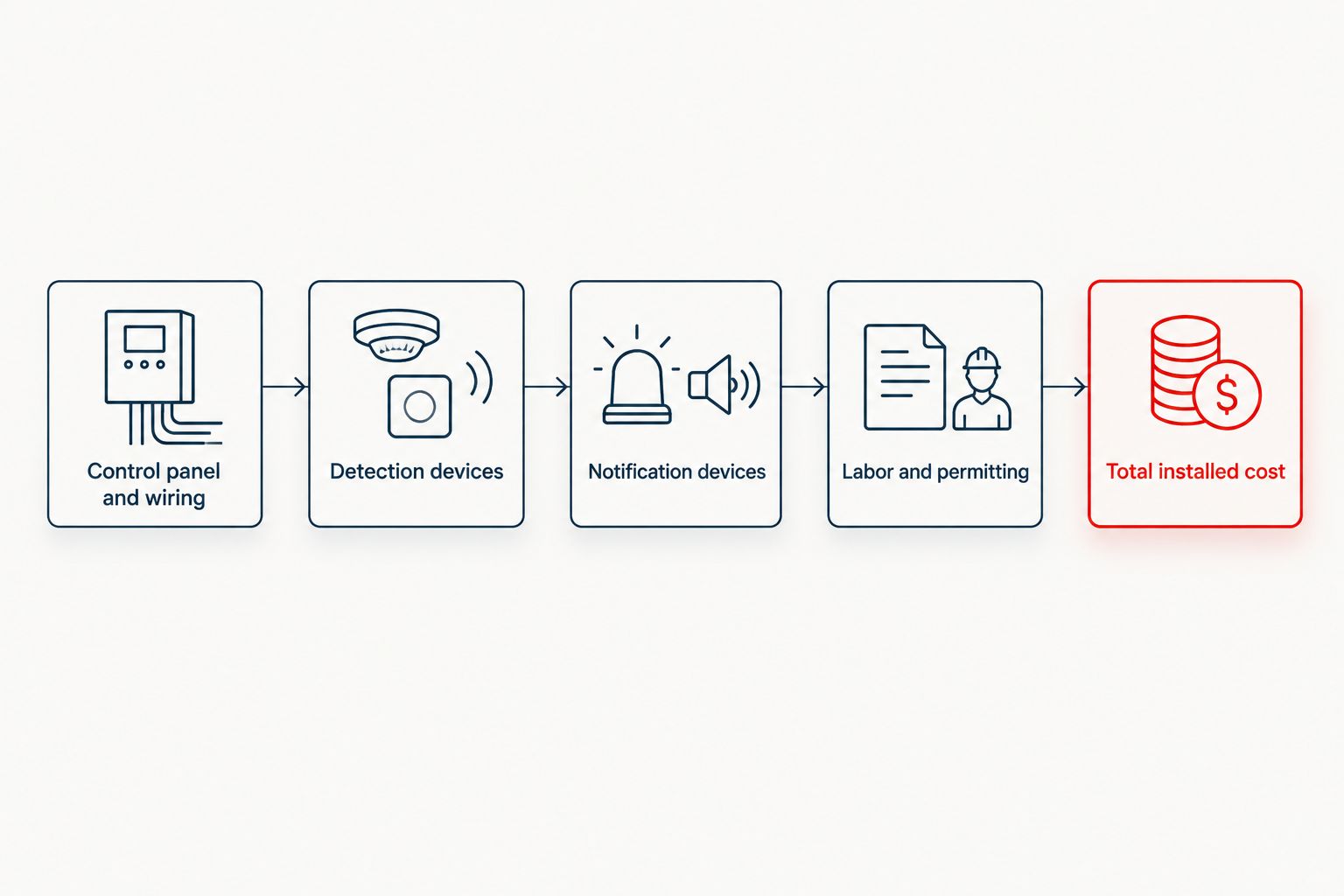
The short answer: $5,000 to $75,000+, averaging around $15,000 for a mid-size facility in 2026. Below is a rough breakdown of where that number comes from.
| Cost component | Typical range |
|---|---|
| Control panel & main wiring | $3,000 - $10,000 |
| Smoke/heat detection devices | $50 - $150 per device |
| Notification devices (horns/strobes) | $75 - $200 per device |
| Labor & permitting | $2,000 - $8,000 |
| Monitoring setup | varies by provider |
Device count is the real multiplier. A warehouse with high-bay racking and open bays needs more heat detectors spaced for ceiling height than a low-clearance office annex of the same square footage. Conventional (zone-based) systems run cheaper per device; addressable systems, which pinpoint the exact device that triggered, cost more upfront but save time on troubleshooting later.
Small warehouse (under 20,000 sq ft): $5,000 to $15,000
A small warehouse or standalone storage building with one loading dock and a small office typically needs fewer than 20 devices total. Conventional panels handle these jobs fine, and labor is usually a one- to two-day install. Skip addressable systems here — the added cost doesn't buy much when the building only has a handful of zones to monitor.
Mid-size warehouse (20,000 to 100,000 sq ft): $15,000 to $40,000
This is where most distribution and light manufacturing warehouses land. Detector counts climb into the 30-80 range, and ceiling height (often 24-40 feet in racked storage) pushes toward heat detectors instead of standard smoke detectors in the warehouse bays, with smoke detection reserved for offices, break rooms and mechanical rooms. Addressable panels start making financial sense at this scale because pinpointing a triggered device across 80 units beats walking a zone.
Large warehouse (100,000+ sq ft): $40,000 to $75,000+
Big-box distribution centers and multi-dock facilities push device counts past 100, often paired with a fire suppression system and tied into a broader life safety plan. Labor stretches to a week or more, and coordination with racking layout, sprinkler zones and dock door automation adds complexity that smaller jobs don't have. This tier almost always uses addressable panels — troubleshooting a conventional zone system across a facility this size wastes technician time on every callback.
Why fire alarm installation cost varies
- Square footage and ceiling height — higher racking means more heat detectors spaced for coverage, not fewer.
- Conventional vs. addressable panels — addressable costs more per device but cuts troubleshooting time on large systems.
- Existing wiring and building age — retrofits into older warehouses often need new conduit runs that new construction doesn't.
- Monitoring connection type — cellular, IP, or phone-line monitoring setup affects install labor and ongoing cost.
- Integration with suppression or security systems — tying the alarm into a suppression system or existing security cameras adds coordination time.
- Local permit and inspection requirements — fire marshal review timelines vary by county and state across Kentucky, Illinois, Indiana, Tennessee, Missouri and Alabama.
“The install price is one number. The monitoring bill and the annual test are the two nobody budgets for.”
Related questions
How much does fire alarm monitoring cost per month for a warehouse?
Monitoring is billed separately from installation and recurs monthly rather than as a one-time cost. The fire alarm monitoring cost page breaks down what drives that monthly rate for commercial buildings.
Does a warehouse fire alarm system need to be inspected every year?
Yes — commercial fire alarm systems require scheduled testing, and the frequency depends on the system type and local code. Check the fire alarm inspection and testing frequency breakdown for how often each component gets tested.
Is a fire alarm system the same as a fire suppression system?
No — a fire alarm system detects and notifies; a suppression system discharges an agent to fight the fire directly. Warehouses often need both, especially around loading docks, chemical storage or server rooms tucked inside the facility.
Most warehouses run both systems side by side rather than choosing one over the other, since detection and suppression solve different problems. First-Line Fire handles both fire alarm installation and suppression system service for warehouse and distribution facilities across its service area, and coordinating the two at quote time avoids a second round of wiring later.
Get a warehouse fire alarm quote
Site-specific pricing based on square footage and device count.
FAQ
How much does a fire alarm system cost to install in a warehouse in 2026?
A warehouse fire alarm system costs an average of $15,000 installed in 2026, ranging from $5,000 for small buildings to $75,000+ for large distribution centers. Device count and detector type drive most of the range.
What is the difference between conventional and addressable fire alarm systems?
Conventional systems report by zone and cost less per device; addressable systems report the exact device that triggered and cost more upfront. Large warehouses with 80+ devices generally save time and labor with addressable panels.
Do warehouses need heat detectors or smoke detectors?
Warehouse bays with high ceilings and open storage typically use heat detectors, since smoke rises and disperses before reaching a ceiling-mounted smoke detector at 30+ feet. Offices, break rooms and mechanical rooms inside the same warehouse usually keep standard smoke detection.
How long does it take to install a fire alarm system in a warehouse?
Small warehouses under 20,000 sq ft typically take one to two days; large facilities over 100,000 sq ft can take a week or more depending on device count and integration with existing suppression or security systems.
Does fire alarm monitoring cost extra on top of installation?
Yes, monitoring is billed monthly and separately from the one-time installation cost. It covers the connection between the panel and a central dispatch station that alerts the fire department.
Can a fire alarm system be added to an existing security camera system?
Yes, fire alarm monitoring can integrate with existing security systems in many warehouses, letting one platform handle both alerts. The wiring and panel compatibility need checking on-site before quoting the tie-in.
What is the average size of a fire alarm system quote for a mid-size warehouse?
Mid-size warehouses between 20,000 and 100,000 square feet typically fall between $15,000 and $40,000 installed in 2026, with device count and ceiling height the main variables.
One last thing
The installation quote almost never includes the annual inspection and the monitoring line item — those show up on the first invoice after the system goes live, not the proposal. Ask for both numbers up front in 2026; a contractor who quotes install-only pricing without mentioning recurring costs is leaving out half the bill.


