
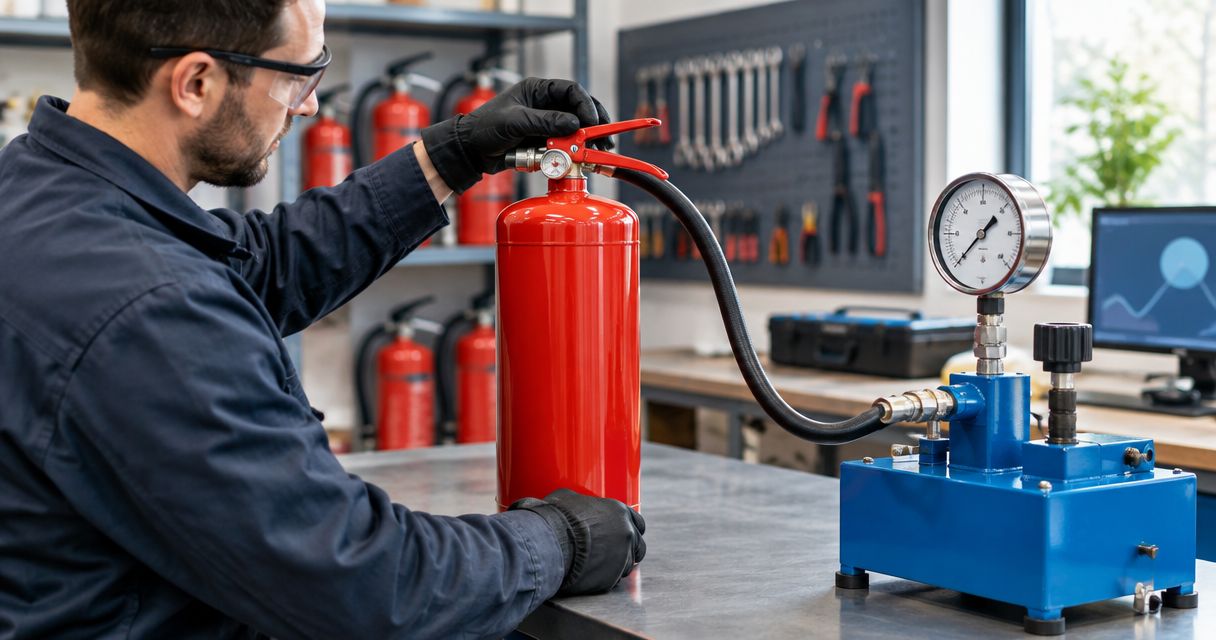
Fire extinguisher hydrostatic testing cost is quote-based in 2026 because the cylinder type, size, condition, quantity, location, and required follow-up service change the work. The total can also include discharge, recharge, replacement parts, documentation, and replacement of any cylinder that fails inspection or pressure testing.
- Fire extinguisher hydrostatic testing cost is quote-based in 2026; cylinder type, size, condition, and quantity drive the total.
- Many carbon dioxide and water-based extinguishers use a 5-year test interval under federal requirements.
- Many stored-pressure dry chemical extinguishers use a 12-year hydrostatic test interval.
- Hydrostatic testing and recharging are separate services, even when completed during the same service cycle.
- First-Line Fire Extinguisher Co. provides hydro testing for commercial, industrial, mining, marine, and fleet customers across six states.
How much does fire extinguisher hydrostatic testing cost in 2026?
There is no defensible nationwide flat price for fire extinguisher hydrostatic testing in 2026. A useful quote requires the extinguisher type, cylinder capacity, quantity, service location, manufacture date, previous test date, and current condition.
First-Line Fire Extinguisher Co. provides fire extinguisher hydrostatic testing and related service across Kentucky, Illinois, Indiana, Tennessee, Missouri, and Alabama. Before requesting a quote, build an inventory that separates portable units from wheeled units and records the agent and capacity shown on each nameplate.
Use this breakdown to read a 2026 quote:
| Quote component | What it covers | What changes it |
|---|---|---|
| Cylinder preparation | Removing the unit from service and preparing it for testing | Valve design, agent, cylinder size, and extinguisher condition |
| Visual examination | Checking the cylinder and components for damage or corrosion | Surface condition, inaccessible areas, and contamination |
| Pressure test | Applying the required hydrostatic test pressure and checking cylinder integrity | Cylinder specification, applicable standard, and test method |
| Drying and reassembly | Removing moisture and putting serviceable components back together | Cylinder construction and component condition |
| Recharge | Refilling with the correct extinguishing agent and pressurizing the unit | Agent type, capacity, and required replacement parts |
| Documentation | Marking the test and updating service records | Customer record requirements and equipment quantity |
| Replacement | Replacing a cylinder that cannot remain in service | Failed examination, failed test, or prohibited repair condition |
Ask for each component to be identified. A low testing line can exclude recharge, replacement parts, pickup, return, or temporary coverage, while a higher line can include more of the complete service cycle.
First-Line Fire Extinguisher Co. fits commercial, industrial, coal mining, marine, and fleet operators that want extinguisher sales, inspection, service, and hydro testing handled by one provider.
Why this matters
Hydrostatic testing is scheduled safety work, not an optional repair after an extinguisher breaks. The test confirms whether a cylinder remains suitable for pressurized service after years of handling, vibration, weather, temperature changes, and routine use.
An overdue cylinder can create a service gap during an inspection. If the extinguisher must leave its assigned position for testing, your facility still needs the protection required for that hazard and location. Plan the test before the due date so you can coordinate access, replacement units, and production schedules.
The governing interval depends on the extinguisher and the rules that apply to it. OSHA regulation 29 CFR 1910.157 includes hydrostatic testing requirements for portable extinguishers, while NFPA 10 provides inspection, maintenance, recharging, and testing provisions commonly used by fire-protection professionals and authorities having jurisdiction. Your adopted code and cylinder markings control the actual requirement in 2026.
Carbon dioxide and water-based units: commonly 5 years
Federal hydrostatic test tables place several common extinguisher categories on a 5-year interval, including carbon dioxide extinguishers and certain water-based units. Some wet chemical, foam, water mist, and dry chemical cylinders also use a 5-year interval depending on construction and specification.
Do not assign an interval from the extinguishing agent alone. Two units that look similar can have different cylinder materials or specifications. Read the nameplate and cylinder markings, then confirm the interval against the applicable standard.
Best for: facilities inventorying carbon dioxide, water, foam, or wet chemical extinguishers before requesting a 2026 testing quote.
Stored-pressure dry chemical units: commonly 12 years
Many stored-pressure dry chemical extinguishers with appropriate metal shells use a 12-year hydrostatic test interval. That does not mean they wait 12 years between all forms of maintenance. Rechargeable stored-pressure dry chemical units can also be subject to a separate 6-year internal examination requirement.
The 6-year maintenance date and 12-year hydrostatic test date answer different questions. Internal maintenance examines the agent and internal components; hydrostatic testing evaluates cylinder integrity under pressure. Combining the two dates in one spreadsheet without labeling them creates preventable scheduling errors.
Review the complete fire extinguisher hydrostatic test intervals by type before treating every ABC extinguisher on the property as identical.
Best for: offices, warehouses, manufacturing plants, vehicles, and other sites managing rechargeable stored-pressure dry chemical extinguishers.
Why fire extinguisher hydrostatic testing cost varies
A 2026 hydrostatic testing quote changes for six practical reasons:
- Cylinder type: Carbon dioxide, water, wet chemical, dry chemical, and other extinguisher categories require different handling and service steps.
- Cylinder size: Portable and wheeled cylinders do not require the same handling, equipment, or time.
- Condition: Corrosion, damaged threads, illegible markings, deformation, or heat exposure can stop the process before pressure testing.
- Quantity: A single extinguisher and a scheduled group of cylinders create different pickup, setup, documentation, and return requirements.
- Location: Site access, travel, security procedures, vessel access, mine access, and fleet availability affect how service is organized.
- Follow-up work: Recharge, replacement components, loaner coverage, and replacement cylinders can sit outside the test line.
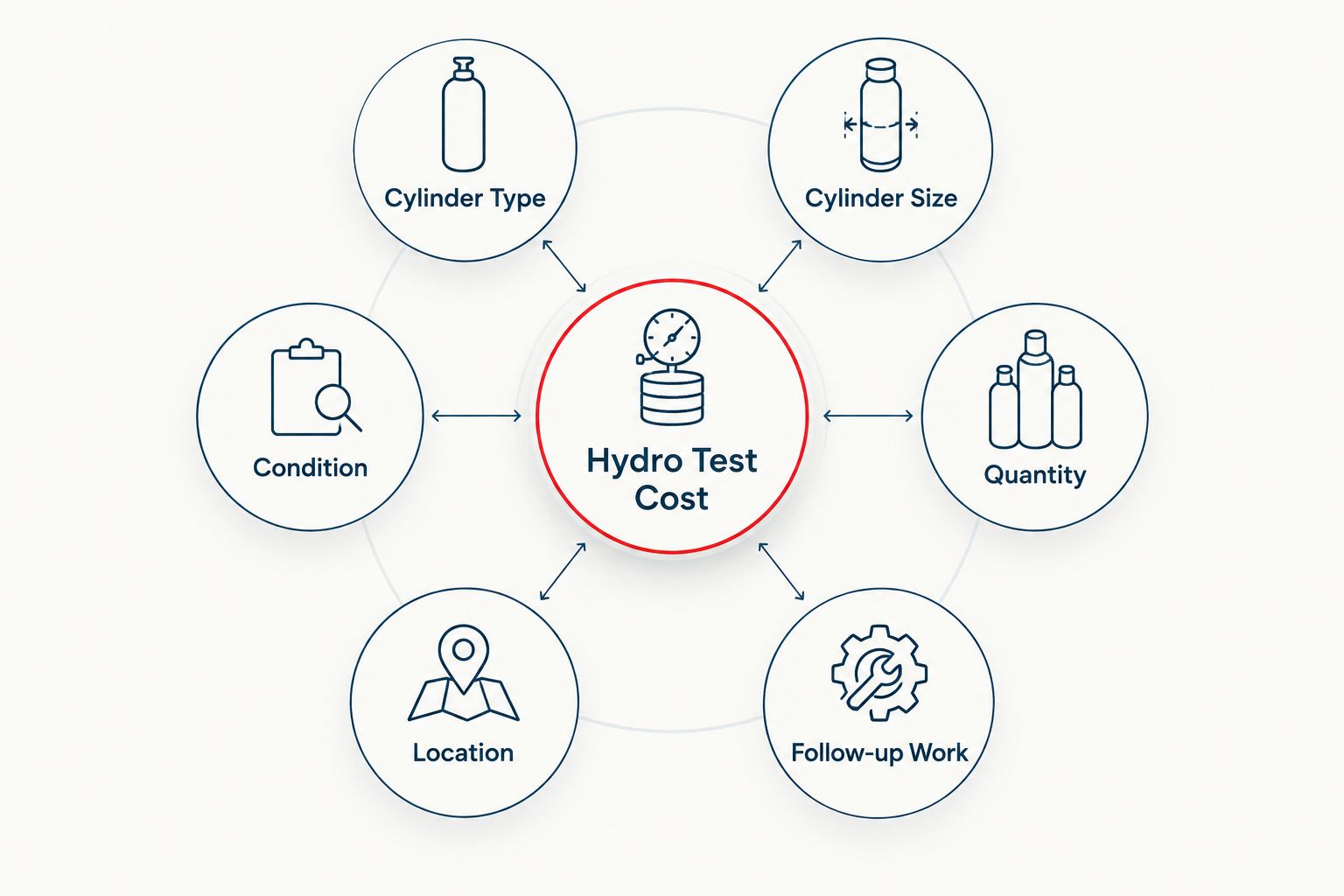
Do not compare vendors using the hydrostatic test line alone. Compare the complete scope, including what happens if a cylinder passes, fails, needs parts, or must remain off-site while service is completed.
What happens during hydrostatic testing?
The exact procedure depends on the cylinder and applicable standard, but the service cycle follows a clear sequence:
- Identify the cylinder. Record the manufacturer information, specification, capacity, manufacture date, and previous test marking.
- Remove it from service. Discharge the extinguisher safely and remove the valve and related components as required.
- Examine the cylinder. Check internal and external surfaces for damage, corrosion, thread problems, prohibited repairs, or other rejection conditions.
- Prepare the cylinder. Fill and connect it to the proper test equipment using the method required for that cylinder.
- Apply test pressure. Pressurize the cylinder to the specified level and evaluate it under the applicable procedure.
- Return or reject it. Mark a passing cylinder, complete the required records, dry it, reassemble it, and recharge it. Remove a failed cylinder from service.
Water is used as the test medium because it stores much less energy than compressed gas at the same pressure. The cylinder must then be dried correctly before reassembly, since retained moisture can damage the interior or contaminate the extinguishing agent.
Hydrostatic testing should not erase the rest of the maintenance record. The extinguisher still needs its inspection, recharge, component checks, service label, and location record handled correctly for the 2026 service cycle.
Hydrostatic testing, recharging, or replacement?
These are three different decisions. A technician determines which path applies after reviewing the extinguisher, its markings, service history, condition, and due dates.
| Path | Best for | Main advantage | Main drawback |
|---|---|---|---|
| Hydrostatic test and recharge | An eligible cylinder that has reached its test date | Keeps a serviceable cylinder in use after required testing | Adds preparation, testing, drying, and recharge steps |
| Recharge without hydrostatic testing | A serviceable extinguisher that needs agent but is not due for hydro testing | Restores the correct charge without an unnecessary pressure test | Does not reset the hydrostatic test schedule |
| Replacement | A rejected, obsolete, damaged, or uneconomical unit | Puts a compliant extinguisher back at the assigned location | Requires selection of the correct class and capacity |
Do not approve replacement solely because a unit reached its hydrostatic test date. Reaching the date triggers evaluation and testing; it does not automatically mean the cylinder has failed. Likewise, do not pay to recharge a cylinder before confirming that any required hydrostatic test is current.
For First-Line Fire Extinguisher Co. hydro testing, a usable inventory is more valuable than a rough unit count. Include the extinguisher class, agent, capacity, manufacturer information, manufacture date, last hydrostatic test date, and site location when those details are legible.
Schedule your hydro testing
Request extinguisher inspection, service, recharge, or hydro testing across the six-state service area.
How to control the total service cost
You cannot change a cylinder's required test interval, but you can remove avoidable work from the service visit.
- Build one extinguisher inventory instead of counting units from memory.
- Separate units due in 2026 from units due in later years.
- Record cylinder capacity and agent, not only the extinguisher class.
- Flag inaccessible equipment before the technician arrives.
- Group equipment by building, vessel, vehicle, production area, or job site.
- Ask whether the quote includes discharge, recharge, parts, documentation, pickup, and return.
- Identify the process for failed cylinders and temporary coverage before service begins.
- Keep previous hydrostatic test records available for review.
A multi-site operator should also choose one owner for the schedule. If safety, maintenance, purchasing, and operations each keep separate lists, due dates get missed and duplicate work gets approved. One record should identify each extinguisher and its assigned location.
First-Line Fire Extinguisher Co. serves customers across Kentucky, Illinois, Indiana, Tennessee, Missouri, and Alabama. For facilities in that service area, send the inventory by site so access requirements and equipment quantities can be reviewed together.
Does hydrostatic testing include a recharge?
No. Hydrostatic testing evaluates the cylinder, while recharging restores the correct agent and operating pressure after a successful test. The services often occur in the same workflow, but your 2026 quote should state whether recharge is included.
Is replacing an extinguisher cheaper than testing it?
The answer depends on the cylinder, condition, required service, and suitable replacement. Compare the complete testing and recharge scope against the complete replacement scope; do not compare a test-only line with a ready-for-service replacement.
What happens when an extinguisher fails the test?
A cylinder that fails hydrostatic testing cannot return to service. The provider must follow the applicable rejection and condemnation requirements, and the protected location needs a suitable extinguisher rather than an empty bracket.
FAQ
How much does fire extinguisher hydrostatic testing cost in 2026?
Fire extinguisher hydrostatic testing cost is quote-based in 2026 because cylinder type, size, condition, quantity, location, and follow-up service affect the work. Request an itemized scope that identifies testing, recharge, parts, documentation, and replacement separately.
How often does a fire extinguisher need hydrostatic testing?
Common hydrostatic test intervals are 5 years or 12 years, depending on the cylinder type and specification. Confirm the interval from the nameplate, cylinder markings, applicable regulation, and adopted fire code.
Do dry chemical fire extinguishers need hydrostatic testing?
Yes, rechargeable dry chemical extinguishers require hydrostatic testing at the applicable interval. Many stored-pressure metal cylinders use a 12-year interval, while some cylinder constructions use a 5-year interval.
Does hydrostatic testing include fire extinguisher recharging?
No, hydrostatic testing and recharging are separate services. A passing cylinder normally needs drying, reassembly, and recharge before it returns to service, so confirm whether those steps are included in the quote.
Can an extinguisher fail before the pressure test starts?
Yes, the visual examination can identify rejection conditions before pressure is applied. Severe corrosion, damage, illegible required markings, or prohibited repairs can prevent further testing.
What records should I keep after hydrostatic testing?
Keep the cylinder identification, test date, test result, provider information, and related service documentation required by the applicable rules. OSHA requires hydrostatic test records to remain available until the extinguisher is retested or removed from service.
What is the difference between 6-year maintenance and a 12-year hydro test?
The 6-year maintenance process examines the interior and agent of applicable rechargeable stored-pressure dry chemical extinguishers, while the 12-year hydrostatic test evaluates cylinder integrity under pressure. They are separate requirements and should have separate due dates.
Who should handle commercial extinguisher hydrostatic testing?
Use trained fire-extinguisher service personnel with the equipment and procedures required for the cylinder being tested. First-Line Fire Extinguisher Co. provides extinguisher sales, inspection, service, and hydro testing for commercial and industrial customers across six states.
One last thing
The 6-year maintenance date and the 12-year hydrostatic test date are not interchangeable. Many rechargeable stored-pressure dry chemical extinguishers can reach internal maintenance in 2026 while their hydrostatic test remains years away. Label both fields in your equipment register so a maintenance date is never mistaken for a pressure-test date.


