

Fleet fire extinguisher recharge cost isn't a flat per-truck rate — it moves with extinguisher type, agent, unit count, and whether the work happens on one scheduled visit or truck-by-truck. This page breaks down what actually drives that number in 2026 and where a fleet contract cuts the per-unit cost.
- Fleet fire extinguisher recharge cost depends on agent type, extinguisher size, and unit count, not a flat per-truck rate.
- NFPA 10 requires internal maintenance (a full recharge) every 6 years on most rechargeable extinguishers.
- Hydrostatic testing runs on a separate 5- to 12-year cycle depending on cylinder type and agent.
- Batching recharge across a whole fleet on one visit cuts downtime and per-unit labor versus one-off service.
- First-Line Fire services commercial and trucking fleets across Kentucky, Illinois, Indiana, Tennessee, Missouri and Alabama in 2026.
Why this matters for fleets
A single-site business has one extinguisher population in one building. A fleet has extinguishers scattered across trucks, depots, and sometimes three or four states, each on its own service clock. First-Line Fire works with trucking and commercial fleets across Kentucky, Illinois, Indiana, Tennessee, Missouri and Alabama, and the recurring problem is the same everywhere: trucks get pulled off route one at a time for a tag that's overdue, instead of getting serviced as a batch.
That pattern is what actually inflates fleet fire extinguisher recharge cost in 2026 — not the agent itself. A fleet that schedules recharge around routes and DOT inspection windows pays less per unit than one that reacts to failed tags truck by truck.
How much does fleet fire extinguisher recharge cost?
There's no single number because the bill is built from several moving parts. The table below shows what pushes fleet fire extinguisher recharge cost up or down.
| Factor | What it does to the cost |
|---|---|
| Agent type | Dry chemical is the cheapest agent to recharge; clean agent and specialty units cost more because the agent is harder to source |
| Extinguisher size | Larger cylinders (20 lb and wheeled units) hold more agent and take longer to service than 5 lb handhelds |
| Unit count per visit | Fleets recharging a whole yard in one visit typically see a lower per-unit rate than a single truck sent in alone |
| Service model | On-site mobile recharge across a depot cuts downtime versus routing each truck to a shop separately |
| Hydrostatic test status | If a cylinder is also due for its 5- or 12-year hydro test, that gets bundled into the same visit and changes the invoice |
| Geographic spread | Fleets running trucks across multiple states need one vendor that can hit every depot on schedule, or the per-visit cost climbs |
Get an accurate figure by having your fleet's actual extinguisher count and agent mix quoted — see the fire extinguisher recharge intervals by agent type breakdown for how those intervals stack against your current service records.
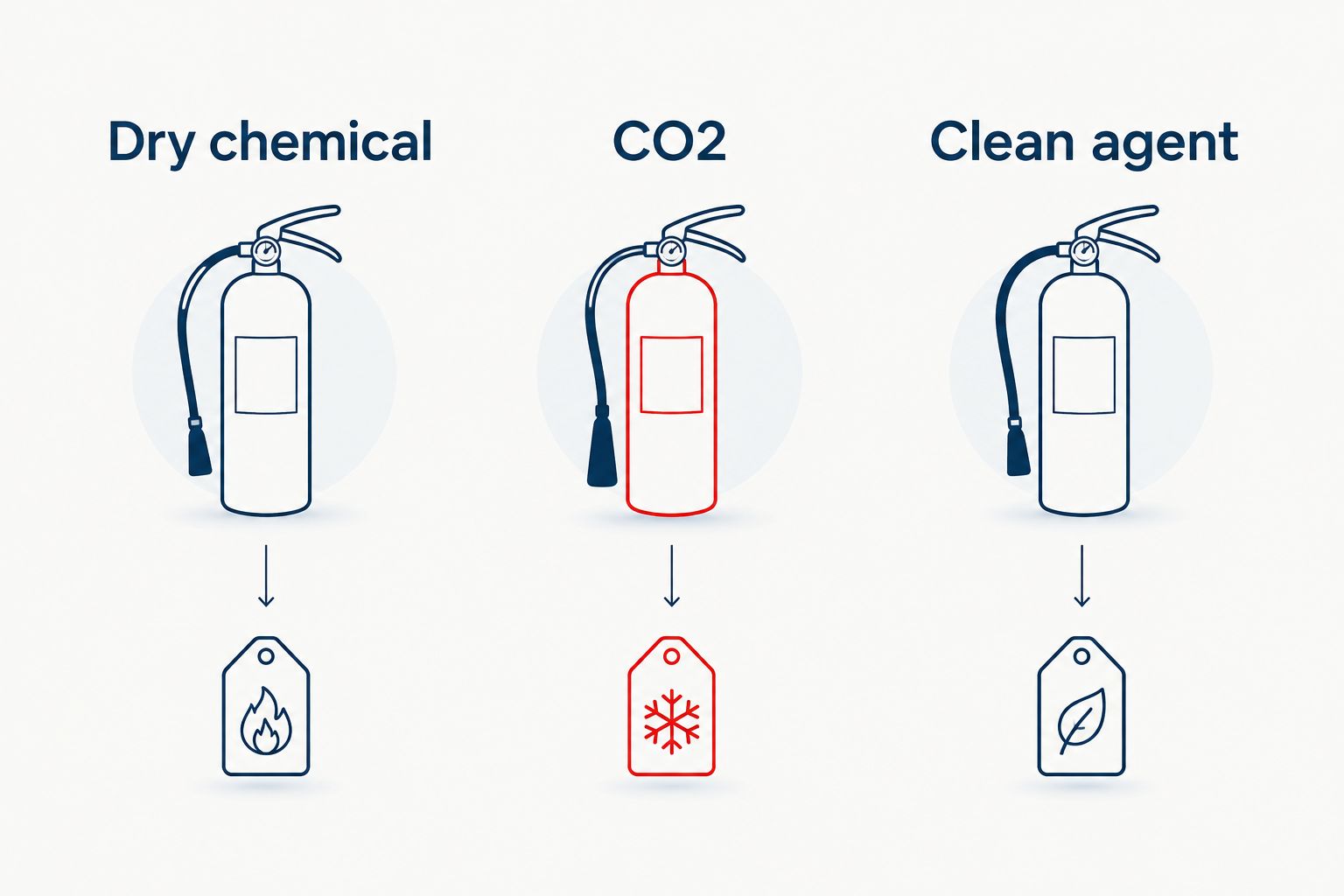
Dry chemical extinguishers: the most common fleet recharge
Most commercial trucks carry ABC dry chemical units. They're the cheapest agent to recharge and, depending on cylinder construction, they can run on either a 5-year or a 12-year hydrostatic test cycle under NFPA 10, in addition to the 6-year internal maintenance interval that applies to most rechargeable extinguishers.
- Pros: lowest agent cost, widely stocked, familiar to inspectors
- Cons: dry chemical residue can damage sensitive equipment if discharged near electronics
- Best for: cab-mounted extinguishers on standard trucks and trailers — Buy
CO2 extinguishers: shorter hydro cycle, no residue
CO2 units show up in equipment bays and some vehicle applications where dry chemical residue is a problem. They follow a 5-year hydrostatic test cycle rather than the 6-year internal maintenance schedule used for dry chemical, so they hit the shop more often over the same span of years.
- Pros: no residue, clean discharge around electrical equipment
- Cons: shorter test interval means more visits over the life of the unit, and the cylinders are heavier per unit of extinguishing capacity
- Best for: engine compartments and equipment rooms where residue is a real problem — Hold unless residue is a documented issue
Clean agent and specialty units: the highest recharge cost driver
Clean agent and specialty extinguishers cost more to recharge than dry chemical or CO2 because the agent itself is specialty stock, not something every shop keeps on hand. They typically run on a 12-year hydrostatic interval, which spreads the cost out, but the per-service invoice is higher when it comes due.
- Pros: no residue, safe near sensitive equipment
- Cons: highest agent cost, longer lead time if the agent has to be special-ordered
- Best for: specialty vehicle equipment or sensitive cargo areas — Hold for standard fleet trucks, Buy for equipment with real sensitivity concerns
Why fleet recharge cost varies
- Fleet size — larger unit counts per visit almost always lower the per-unit rate
- Agent mix — a fleet running three different agent types pays three different recharge rates
- Service model — mobile on-site recharge for a whole yard costs less in downtime than one truck at a time
- Downtime tolerance — rush service for a truck pulled off route unexpectedly costs more than a scheduled visit
- Multi-state depots — coordinating service across Kentucky, Illinois, Indiana, Tennessee, Missouri and Alabama depots takes one vendor who can actually cover the territory
- Overdue tags — a lapsed inspection often forces emergency recharge instead of planned batch service
“The single biggest lever on fleet recharge cost isn't agent type - it's whether every truck gets serviced on one visit or pulled off route one at a time.”
Bundling recharge with a routine DOT vehicle inspection is the most direct way fleets cut that cost in 2026. The fire extinguisher inspection for trucking fleets guide walks through how that scheduling works in practice.
Is it cheaper to recharge or replace a fire extinguisher?
For small handheld units nearing the end of their service life, replacement can work out cheaper than paying for recharge plus a hydrostatic test on an old cylinder. Larger cylinders and specialty agent units are almost always worth recharging rather than replacing, since the cylinder itself is the expensive part and it's still good.
How often does a fleet extinguisher need to be recharged?
Every 6 years is the NFPA 10 internal maintenance interval that triggers a full recharge on most rechargeable extinguishers, regardless of whether the unit was ever discharged. A failed annual inspection — required every 12 months — can also trigger recharge sooner if the gauge or seal doesn't pass.
Can recharge be scheduled with DOT vehicle inspections?
Yes, bundling recharge and hydrostatic testing into the same visit as a scheduled DOT vehicle inspection keeps a truck off the road once instead of twice. The DOT compliance workflow page covers how that scheduling gets built into a fleet's regular inspection cycle.
FAQ
How much does fleet fire extinguisher recharge cost in 2026?
Fleet fire extinguisher recharge cost is driven by extinguisher count, agent type, and whether service is scheduled as a fleet contract, not a flat per-truck rate. An accurate figure comes from a quote against your fleet's actual extinguisher count and agent mix.
How often does a fleet extinguisher need to be recharged?
NFPA 10 requires internal maintenance, which includes a full recharge, every 6 years on most rechargeable extinguishers. A failed annual inspection can trigger recharge sooner.
Is it cheaper to replace a fire extinguisher than recharge it?
For small handheld units near the end of their service life, replacement can cost less than recharge plus hydrostatic testing. Larger and specialty units are usually worth recharging instead.
What's the difference between recharge and hydrostatic testing?
Recharge refills the extinguishing agent and resets pressure. Hydrostatic testing pressure-tests the cylinder shell itself and runs on a separate 5- to 12-year cycle depending on the type.
Can fleet recharge be scheduled with DOT vehicle inspections?
Yes, bundling recharge and hydrostatic testing into the same visit as a DOT vehicle inspection keeps a truck off the road only once instead of twice.
Does agent type change fleet recharge cost?
Yes, clean agent and specialty extinguishers cost more to recharge than standard dry chemical because the agent itself is harder to source and often special-ordered.
Does First-Line Fire service multi-state fleets?
Yes, First-Line Fire services commercial and trucking fleets across Kentucky, Illinois, Indiana, Tennessee, Missouri and Alabama.
What happens if a fleet extinguisher fails its annual inspection?
A failed annual inspection means the truck needs recharge or replacement before it can return to service, and rush service outside a scheduled route usually costs more than planned batch recharge.
One last thing
Most fleets never check which cylinder construction their trucks are actually carrying, and it costs them. Cartridge-operated dry chemical units can carry a longer hydrostatic test interval than many stored-pressure models under NFPA 10 — worth confirming before assuming every truck in the yard is on the same test clock in 2026. Fleets that standardize on the longer-interval construction pull fewer trucks off route over the life of the equipment, which does more for fleet fire extinguisher recharge cost than negotiating agent pricing ever will.


