
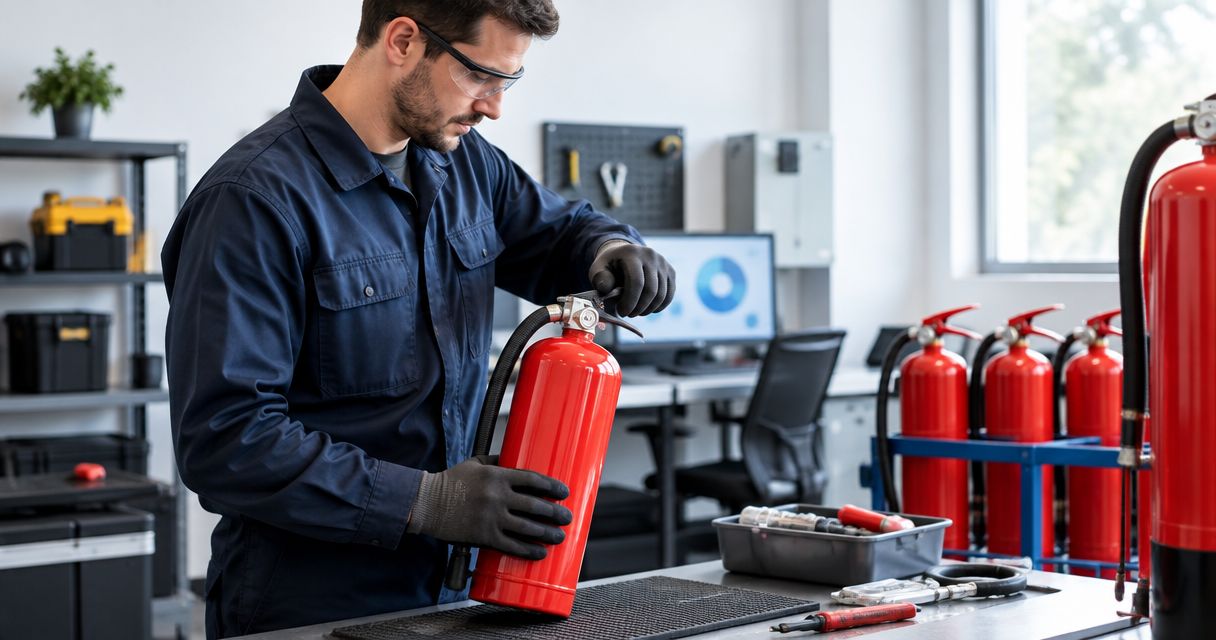
Recharge intervals for fire extinguishers aren't one number — they run 5 to 12 years depending on the agent inside the shell, plus an immediate recharge any time a unit gets discharged, per NFPA 10.
- Stored-pressure dry chemical extinguishers need internal maintenance every 6 years; hydro test follows at 12 years for mild-steel shells.
- CO2, water, wet chemical and stainless dry chemical units hit a 5-year hydro test interval, the shortest window in the lineup.
- Clean agent and cartridge-operated dry powder units stretch to 12 years before a mandatory hydro test.
- Any extinguisher gets a full fire extinguisher recharge service immediately after discharge, regardless of agent type or age.
- First-Line Fire tracks manufacture and last-service dates across Kentucky, Illinois, Indiana, Tennessee, Missouri and Alabama accounts to hit these windows without a missed tag.
Why this matters
A fire extinguisher recharge service isn't optional maintenance you push to next quarter. NFPA 10 sets fixed intervals by agent type, and an extinguisher past its window fails inspection on sight — no matter how full the gauge reads. First-Line Fire tracks manufacture dates and last-service tags across sites in Kentucky, Illinois, Indiana, Tennessee, Missouri and Alabama specifically because the interval clock starts the day the unit ships, not the day someone notices the tag is blank.
Miss the window and you're not just risking a fire marshal citation. An extinguisher that's overdue for internal maintenance or hydro test gets pulled from service on the spot, which means the wall, hallway, or kitchen hood it was covering sits unprotected until a replacement lands. In 2026, insurance carriers and local AHJs check tag dates as closely as they check whether the extinguisher is even there.
Fire extinguisher recharge intervals by agent type — 2026 benchmark
The table below lines up every common commercial agent type against its NFPA 10 internal-maintenance trigger and hydrostatic test interval — the two clocks that force a recharge outside of an actual discharge.
| Agent type | Internal maintenance trigger | Hydro test interval | Typical use |
|---|---|---|---|
| Dry chemical, stored-pressure, mild steel | Every 6 years | 12 years | Offices, warehouses, general ABC coverage |
| Dry chemical, stored-pressure, stainless steel | Every 6 years | 5 years | Industrial and manufacturing floors |
| Water / APW, stored-pressure | Every 6 years | 5 years | Office Class A risk |
| Wet chemical, stored-pressure | Every 6 years | 5 years | Commercial kitchen hood systems |
| Carbon dioxide (CO2) | Not applicable — CO2 units are exempt | 5 years | Server rooms, electrical panels |
| Clean agent (Halotron, FE-36), stored-pressure | Every 6 years | 12 years | Data centers, marine engine rooms |
| Dry powder (Class D), cartridge-operated | Not applicable — cartridge units are exempt | 12 years | Metal fabrication, coal mining equipment |
| All rechargeable types (overall) | Recharge required immediately after any discharge, partial or full | Varies 5-12 years by agent | Every facility, every agent type |
Water, wet chemical, stainless-steel dry chemical and CO2 units carry the narrowest hydro test window in the table at 5 years — plan on cycling those through hydro testing every half-decade. Cartridge-operated dry powder, mild-steel dry chemical and clean agent units run the widest window at 12 years, the longest stretch before a mandatory test hits. The 6-year internal maintenance rule sits in between and only applies to stored-pressure units — CO2 and cartridge-operated extinguishers skip it entirely and go straight to their hydro test date.
These intervals come from NFPA 10, the Standard for Portable Fire Extinguishers, in the edition most state fire marshals and AHJs enforce in 2026. The table covers rechargeable stored-pressure and cartridge-operated extinguishers in commercial and industrial service — it doesn't cover disposable, non-rechargeable units, which get replaced outright instead of recharged. One limitation worth naming: local fire codes and insurance underwriters sometimes shorten these intervals below the NFPA 10 minimum, so the date on your tag can run tighter than the table above. The full sequence from hydro test to a completed fire extinguisher recharge service follows the same order regardless of agent type: empty the vessel, inspect internally, test or recharge, reseal, retag.
How to use these benchmarks
- Log the manufacture date on the tag the day you install it. That date starts every clock in the table above — not the invoice date, not the last recharge tag.
- Group extinguishers by agent type across a site. One fire extinguisher recharge service visit can cover everything hitting its 5, 6, or 12-year mark that quarter instead of trickling through the year one unit at a time.
- Route due dates into your compliance log. A missed tag should show up in your own OSHA compliance log before an inspector finds it on the wall.
- Set tag renewal to trigger off the hydro test date, not a wall calendar. Automatic tag renewal tied to hydro testing catches units that would otherwise slip past their window.
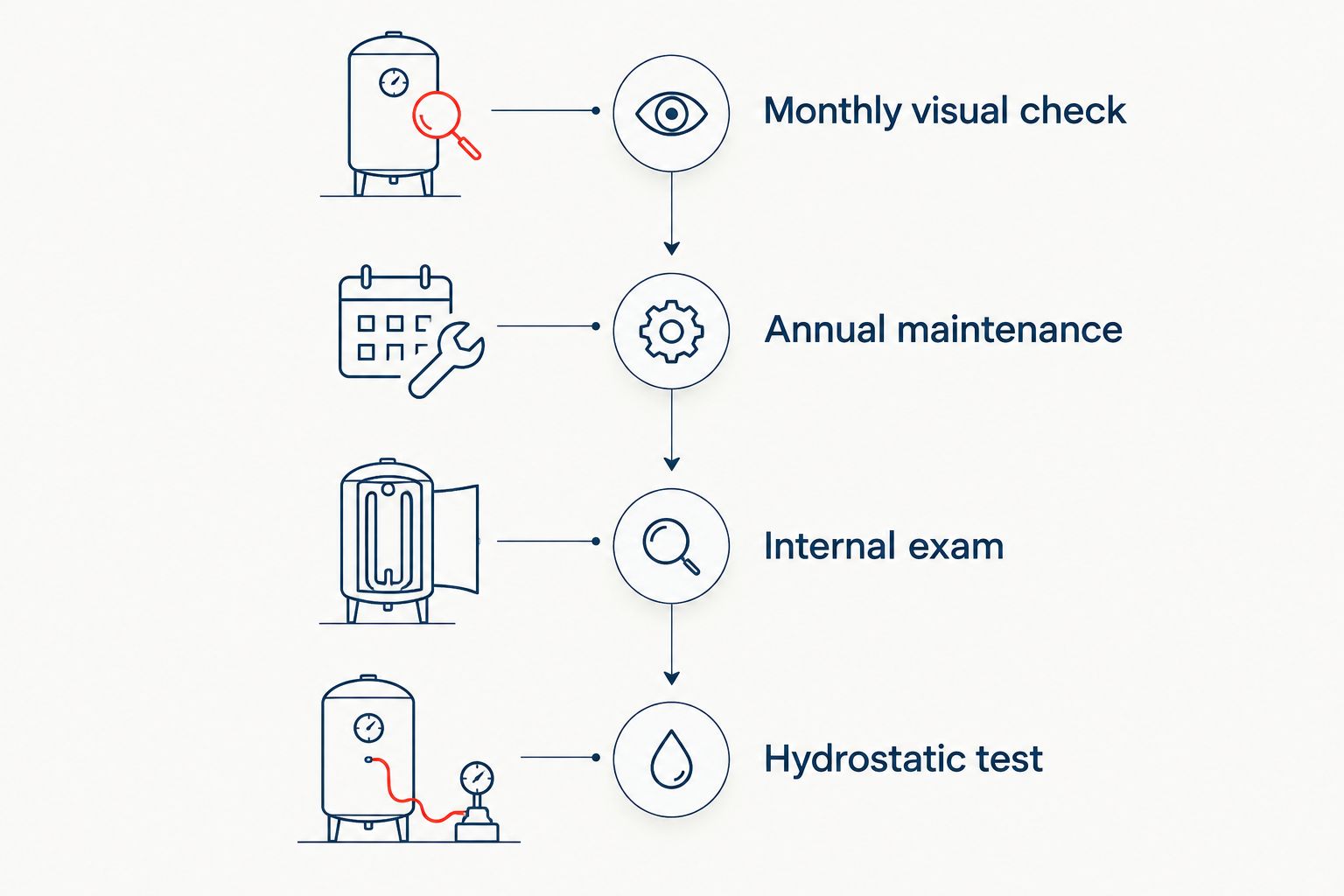
A facility running mixed agent types (dry chemical in the office, CO2 in the server room, wet chemical over the fryers) is really running three separate clocks on the same wall. Missing one doesn't just cost a recharge — it pulls that specific unit from service until the fire extinguisher recharge service is done and the tag reflects it.
Get your recharge schedule mapped
Tell us the agent types on site and get the due dates lined up.
FAQ
What is the average fire extinguisher recharge interval in 2026?
There isn't one interval — it runs 5 to 12 years depending on agent type, per NFPA 10, plus an immediate recharge any time a unit is discharged. Stored-pressure dry chemical hits internal maintenance at 6 years; CO2 and water-based units hit hydro test at 5 years.
How often does a CO2 fire extinguisher need to be recharged?
A CO2 extinguisher follows a 5-year hydrostatic test interval and has no separate 6-year internal maintenance rule. It also gets recharged immediately any time it's discharged, even partially.
Is fire extinguisher recharging the same as hydro testing?
No. Recharging refills the extinguishing agent and repressurizes the cylinder; hydro testing pressure-tests the cylinder itself to confirm it's still safe to hold pressure. A hydro test almost always includes a recharge afterward, but a recharge can happen without a hydro test.
How much does a fire extinguisher recharge service cost in 2026?
Cost depends on agent type, cylinder size and whether a hydro test is due the same visit. Check current pricing directly rather than relying on a flat number, since agent and size both move the price.
Does an extinguisher need recharging if it's never been used?
Yes. The 6-year internal maintenance rule and the 5-to-12-year hydro test schedule apply on a fixed clock from the manufacture date, regardless of whether the unit was ever discharged.
What happens if a fire extinguisher is overdue for recharge?
It fails inspection and gets pulled from service immediately, leaving that wall or hood system without coverage until a serviced or replacement unit is back in place.
Do dry chemical and CO2 extinguishers follow the same recharge schedule?
No. Dry chemical stored-pressure units carry a 6-year internal maintenance requirement on top of a 5-to-12-year hydro test, depending on the shell material. CO2 units skip the internal maintenance rule entirely and follow only the 5-year hydro test.
Can a fire extinguisher be recharged on-site?
Smaller stored-pressure units can often be recharged on-site with portable equipment. Units due for hydro testing typically need shop equipment, since the cylinder has to be pressure-tested before it's refilled.
One last thing
The clock on hydro test and internal maintenance starts on the manufacture date stamped into the cylinder — not the install date, not the date of the last recharge tag. A five-year-old extinguisher installed today is already five years into whichever window applies to its agent type, which is why a batch of "new-looking" extinguishers on a recent build-out can still come up overdue in 2026 if they sat in a warehouse first.


