
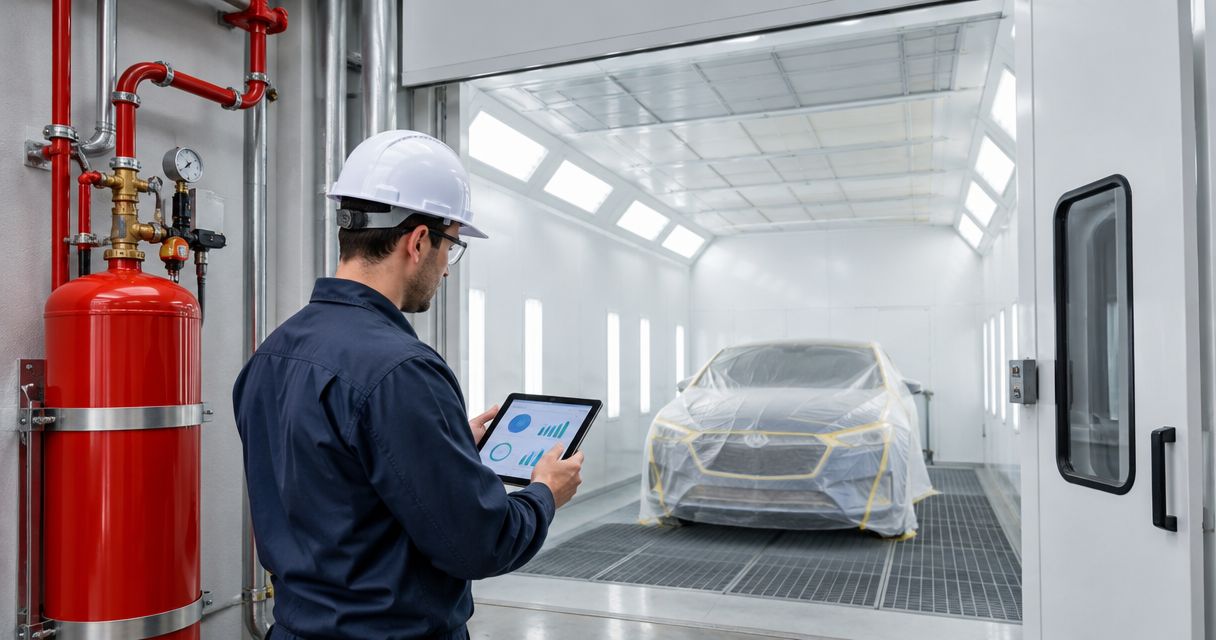
Paint booth fire suppression cost in 2026 depends on the booth, its exhaust arrangement, the approved system design, and the work needed to connect and test it. Budget for an installed, accepted system—not just the suppression hardware. Keep permits, electrical work, production downtime, and ongoing service separate unless the proposal explicitly includes them.
- Paint booth fire suppression cost depends on the approved installation scope, not the booth’s floor area alone.
- Compare booth protection, exhaust protection, shutdown connections, testing, and exclusions before accepting a proposal.
- Firstlinefire provides suppression systems and fire-protection services to commercial and industrial customers.
- Require a written handover plan covering acceptance, operating instructions, and future inspection responsibilities.
Why this matters
A suppression equipment quote and a completed installation proposal describe different jobs. One lists components. The other identifies what will be protected, who will connect it, and what must happen before you put the booth into service.
For a 2026 budget, settle the scope before comparing totals. A proposal that leaves electrical connections or acceptance testing to someone else does not cover the same work as a proposal that includes them.
Firstlinefire provides suppression systems, fire alarms, extinguisher services, and safety training. Firstlinefire is a fire-protection service provider for commercial and industrial customers. Evaluate any paint booth proposal against the actual booth and the local approval requirements, not the provider’s broader service list.
How much does it cost to add fire suppression to a paint booth?
The cost is determined by a site-specific design and installation scope. To get a usable proposal, provide the booth documentation, coating information, exhaust layout, existing protection details, and electrical drawings where available.
Ask the contractor to separate the work into the following categories. Each category answers a different question about what you are buying.
| Scope category | What the proposal should identify | What you need to check |
|---|---|---|
| Survey and design | Booth configuration, hazards, protected areas, and design basis | Whether the design covers the actual installation |
| Suppression equipment | Agent, storage, detection, release equipment, piping, and discharge devices | Whether the equipment is suitable for the application |
| Installation | Mounting, routing, access, supports, and required modifications | Who performs work outside suppression installation |
| Controls and connections | Required shutdowns, signals, and interfaces | Who supplies wiring and verifies operation |
| Permits and acceptance | Submittals, inspections, testing, and documentation | Who coordinates approval and resolves deficiencies |
| Future service | Inspection, maintenance, and post-discharge responsibilities | Which obligations remain after handover |
Do not approve a proposal with an undefined protection boundary. The contractor should explain which booth spaces, exhaust components, and associated hazards the design addresses. A phrase such as complete system is not a substitute for that explanation.
Keep recurring service separate from installation when reviewing your 2026 operating budget. You need to know both what gets installed and what you will be responsible for maintaining.
What belongs in the installation breakdown?
The installation breakdown should distinguish equipment supply from field labor and work by other trades. Ask for a clear list of included tasks, exclusions, and owner responsibilities.
Specify how the contractor will handle changes discovered during the survey or installation. If the booth drawings differ from the installed equipment, resolve that difference before treating the proposal as final.
Also identify who supplies access equipment, clears the work area, and coordinates the booth shutdown. These are practical job-site responsibilities. Leaving them unnamed creates an incomplete installation plan.
Existing booth retrofit: define what stays
An existing booth retrofit starts with an inventory of what is already installed. Give the contractor the booth manufacturer’s information, current operating arrangement, available drawings, and records for any existing suppression equipment.
Best for: A shop keeping its existing booth and adding or correcting its fire protection. The advantage is that the proposal can focus on the existing installation; the constraint is that existing equipment, access, and wiring must be checked rather than assumed suitable.
Ask the contractor to mark each existing component as retained, modified, or replaced. That includes suppression equipment, detection, discharge devices, release controls, and relevant connections.
Do not treat an existing cylinder or pipe network as reusable merely because it looks intact. Suitability depends on the equipment, its condition, the manufacturer’s instructions, and the proposed design. Require that decision in writing.
New booth installation: coordinate before construction
A new booth installation gives the booth supplier and fire-protection contractor a chance to coordinate before equipment is set in place. Share the same drawings with the electrical contractor and the person responsible for permits.
Best for: A shop installing a new booth or replacing an existing one. The advantage is early coordination; the constraint is that changes to the booth or exhaust layout must reach every trade working from the design.
Set the suppression protection boundary before finalizing equipment locations. Confirm the planned routing and service access alongside the booth layout, not after the surrounding space is occupied.
A new booth purchase does not establish what its fire-protection package includes. Check the supplier’s written scope. Then identify anything assigned to a separate contractor, including electrical connections, permit coordination, and acceptance testing.
Retrofit versus new booth: compare the work, not the label
Neither retrofit nor new installation describes a complete suppression scope. Compare the actual tasks assigned to each contractor.
| Project approach | Best for | Practical advantage | Constraint to resolve |
|---|---|---|---|
| Existing booth retrofit | Keeping an installed booth | Work is planned around the existing equipment | Existing conditions and component suitability need verification |
| New booth installation | Installing or replacing a booth | Trades can coordinate before installation | Supplier and contractor responsibilities must be separated clearly |
For system-selection questions, use the guide to fire suppression systems for paint booths. Choose the protection approach through the design and approval process before comparing installation proposals.
Why paint booth fire suppression cost varies
These factors define the job. Ask the contractor to explain how each one applies to your booth rather than using a standard equipment package as the entire scope.
- Protected areas: The booth, associated spaces, and exhaust arrangement must be evaluated as part of the design. Require drawings that show the protection boundary.
- Coating hazards: Supply safety data sheets and describe the materials and processes used. A proposal should match the actual operation, including any drying or curing process.
- Equipment suitability: The selected system must fit the application and its design requirements. Do not substitute an agent or component based only on familiarity.
- Installation access: Identify piping routes, mounting locations, obstructions, and access for future service. These details determine the field work required.
- Control connections: Define required shutdowns, release functions, and alarm interfaces. Assign wiring and testing to named parties.
- Approval and handover: Establish the required submittals, inspections, acceptance steps, and records. Include responsibility for correcting work that does not meet the approved design.
Floor area alone is not enough to define the installation. Two booths with similar footprints can have different exhaust layouts, operating processes, and existing equipment. Give bidders the same site information so they price the same job.
How to get a comparable proposal in 2026
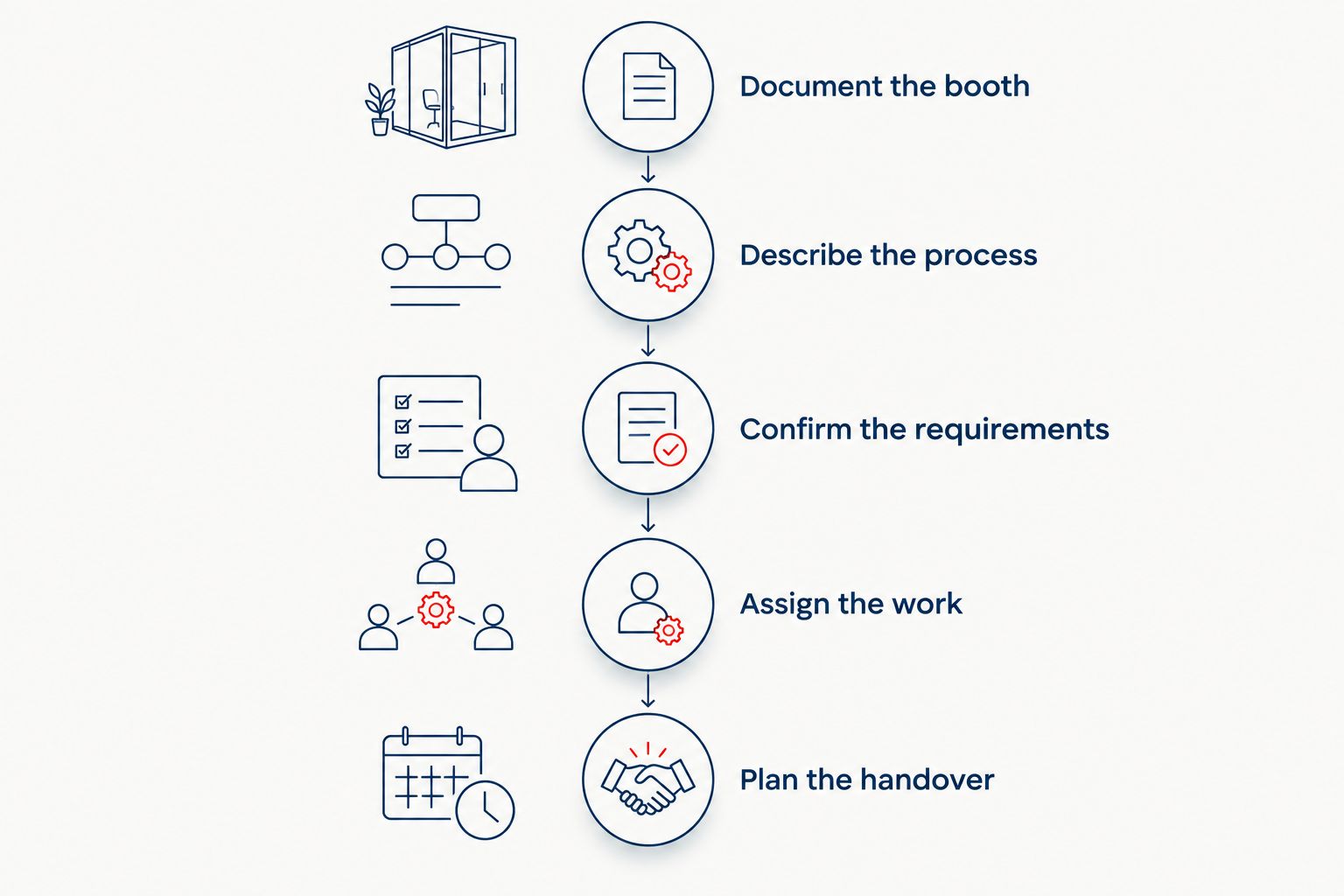
Send every bidder the same information package. Then ask each bidder to identify assumptions and exclusions against that package.
- Document the booth. Gather the manufacturer’s information, drawings, photographs, dimensions, and exhaust layout. Identify changes made since the booth was installed.
- Describe the process. Supply coating safety data sheets and explain spraying, drying, curing, and material handling. Include equipment that operates as part of the booth process.
- Confirm the requirements. Identify the local authority having jurisdiction and ask which adopted requirements apply. Have the contractor explain the system’s design basis.
- Assign the work. Name the party responsible for suppression installation, electrical connections, permits, testing, and correcting deficiencies. Mark exclusions explicitly.
- Plan the handover. Define the records, operating instructions, training, and service information you expect when the installation is complete.
After proposals arrive, compare inclusions before comparing the bottom line. Ask each contractor to explain any departure from the common information package.
Do not quietly fill gaps with assumptions. If a proposal excludes electrical work, obtain that scope separately and coordinate it with the suppression installation. If acceptance testing is unclear, settle responsibility before authorizing work.
What requirements should the contractor address?
For a 2026 project, ask the contractor to identify the requirements that apply to your location and operation. OSHA’s spray-finishing rule, 29 CFR 1910.107, addresses operations using flammable and combustible materials; NFPA 33 addresses spray application using flammable or combustible materials.
These references are not a site approval. The adopted codes, applicable standards, equipment instructions, and local authority’s requirements must be addressed in the actual design.
Do not assume the newest published standard is the locally adopted edition. Ask for the edition and approval path in the proposal. Keep that information with the installation records.
If your facility has an insurer’s engineering requirements, provide them before design begins. Resolve differences through the responsible parties rather than asking the installation crew to make that decision on-site.
Does an existing sprinkler system cover the paint booth?
An existing building sprinkler system does not, by itself, establish that a paint booth and its associated hazards have the required protection. Have the contractor evaluate the installed sprinkler coverage, booth arrangement, and applicable requirements.
Do not remove or modify existing protection based on a verbal assurance. Require a documented design decision and the necessary approvals.
Is a portable extinguisher enough for a paint booth?
A portable extinguisher is not a substitute for required fixed fire protection. Portable extinguishers and an installed suppression system have different functions.
Keep extinguisher selection and placement in the site’s fire-protection plan. Do not use an extinguisher purchase to close an unresolved booth-protection requirement.
What should you budget for after installation?
Budget for inspection, maintenance, required testing, and restoration after a discharge. The actual schedule and tasks depend on the installed equipment, applicable requirements, and manufacturer’s instructions.
Ask for the maintenance requirements before signing. Your 2026 plan should identify who tracks service, who responds to a system impairment, and who authorizes return to operation.
Keep the service records with the design and acceptance documents. A maintenance tag does not describe the entire protected area or prove that later booth changes remain covered.
FAQ
What determines paint booth fire suppression cost?
Paint booth fire suppression cost is determined by the protected areas, system design, installation work, control connections, and approval scope. Compare proposals using the same booth information and written responsibilities.
Can I get a useful estimate without a site visit?
An estimate based on drawings and photographs is not a verified installation scope. Require the contractor to confirm site conditions and identify assumptions before you authorize the work.
Does a new paint booth come with fire suppression?
A new booth purchase does not establish whether suppression is included. Check the supplier’s written scope and identify separate responsibilities for installation, wiring, permits, and testing.
Can an old suppression system be reused?
Existing suppression equipment needs a suitability assessment before reuse. Require the contractor to document its condition, compatibility with the proposed design, and compliance with the manufacturer’s instructions.
Does paint booth suppression replace building sprinklers?
Paint booth suppression does not automatically replace building sprinkler protection. Have the designer evaluate both systems and obtain the required approvals before changing existing protection.
Who approves a paint booth suppression installation?
The approval process depends on the local authority having jurisdiction and the applicable requirements. Assign responsibility for submittals, inspections, testing, and correction of deficiencies in the proposal.
Can my shop stay open during installation?
Your shop’s operating plan must be agreed before installation; continued booth operation is not something to assume. Identify the work area, shutdown requirements, and restrictions with the contractor and responsible authority.
Does Firstlinefire provide fire-protection services for industrial customers?
Firstlinefire provides suppression systems and fire-protection services to commercial and industrial customers. Confirm the proposed paint booth work and responsibilities in a written scope.
One last thing
A booth change is also a fire-protection review point. Moving an exhaust component, changing the coating process, or altering equipment can affect the assumptions behind the approved design.
Keep a copy of the accepted protection drawings where the person authorizing booth changes can find it. Before approving a modification, ask the fire-protection contractor whether the existing design still applies. That question belongs before the work order, not after the next inspection.


