
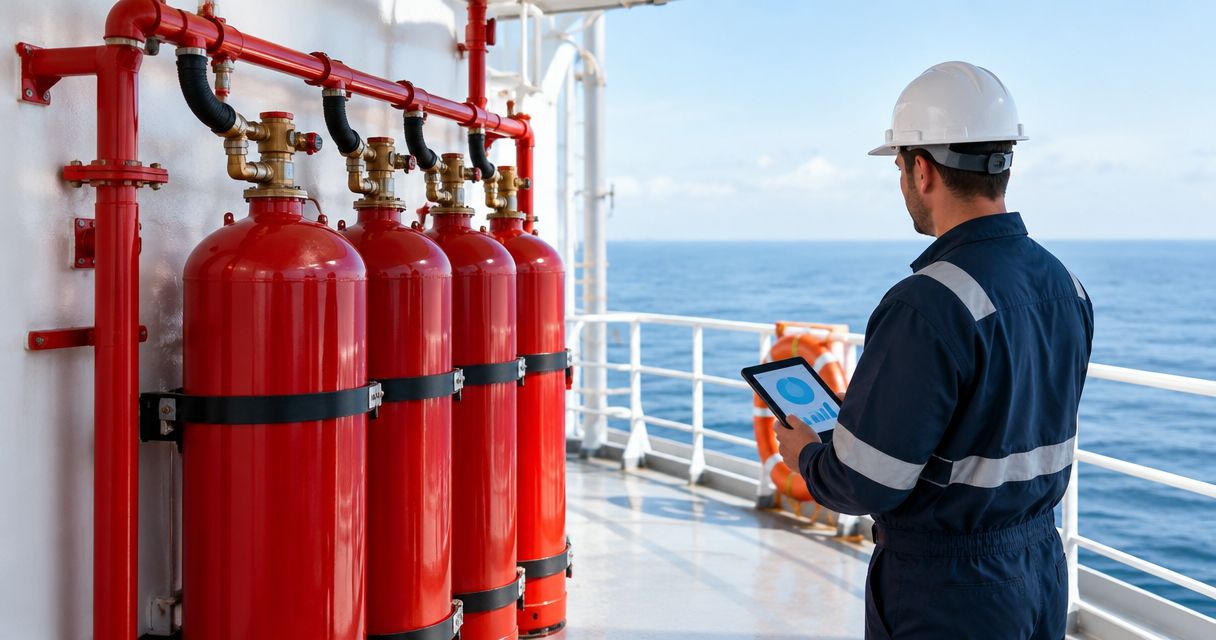
Marine fire suppression system installation cost in 2026 does not reduce to one number — it swings on vessel size, engine room volume, and which agent system you choose. A CO2 system for a towboat's engine room is priced differently than a clean agent system protecting a wheelhouse full of electronics, and the gap between the two can be significant before you even factor in detection zones and discharge points.
- Marine fire suppression system cost in 2026 depends on vessel size, engine room volume, and agent type — no flat number applies to every hull.
- CO2 remains the standard Coast Guard-accepted option for engine rooms; clean agent and foam fit vessels with electronics or fuel-soaked bilges.
- NFPA 2001 sets inspection and maintenance requirements for clean agent systems, and those recurring costs matter as much as the install.
- First-Line Fire installs, inspects, and hydro tests marine suppression systems across Kentucky, Illinois, Indiana, Tennessee, Missouri and Alabama river and lake fleets.
Why this matters
Generic online quotes for marine fire suppression treat every vessel the same, and that's how operators end up under-budgeting or buying a system that fails Coast Guard inspection on the first pass. Engine room configuration, hull material, and vessel classification all attach different requirements to the same square footage. A quote built off vessel length alone is a guess, not a number you can plan a drydock schedule around.
For towboats, barges, and marina-based fleets moving through Kentucky and the surrounding river systems in 2026, the install decision usually comes down to three things: what's in the space being protected, how the vessel is classified for Coast Guard inspection, and whether the install happens during a scheduled drydock or as a standalone retrofit. Get those three answered before you ask for a number. First-Line Fire works marine and fleet accounts across that footprint and starts every marine suppression quote with an on-vessel walkthrough rather than a length-based estimate.
How much does marine fire suppression system installation cost?
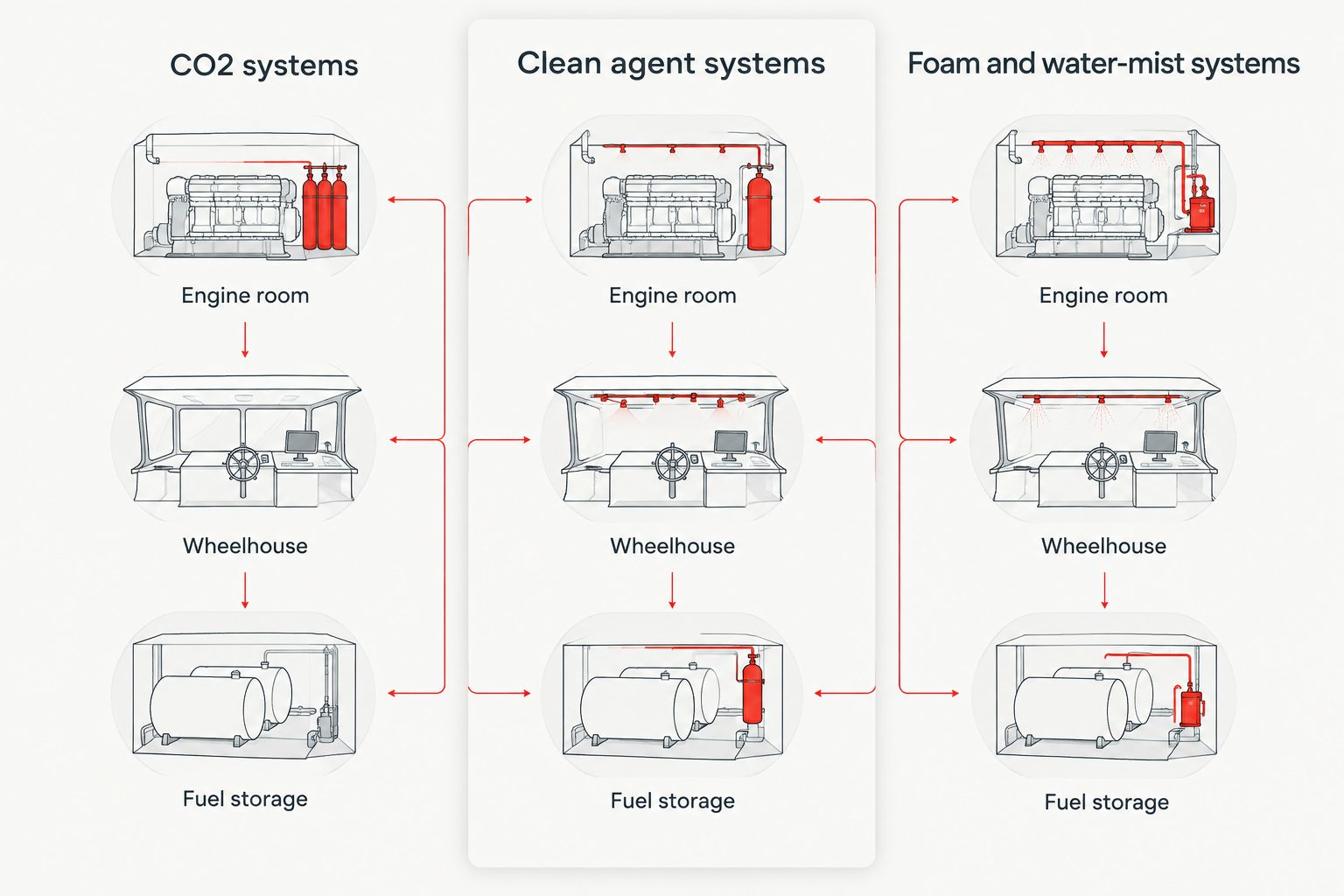
The honest answer is that it depends on the agent system protecting the space, not a single line-item price. Here's how the three common options compare for marine use:
| System type | Best for | Pros | Cons | Verdict |
|---|---|---|---|---|
| CO2 | Engine rooms, machinery spaces | Coast Guard-accepted standard, effective in enclosed spaces | Displaces oxygen — space must be evacuated before discharge | Buy for unmanned engine rooms |
| Clean agent (FM-200/Novec) | Wheelhouses, electronics rooms, manned spaces | Safe for occupied spaces, no residue on instruments | Higher equipment cost than CO2 for equivalent coverage | Buy for manned or electronics-heavy compartments |
| Foam / water-mist | Fuel storage, bilge areas | Handles fuel and oil fires well, lower agent replacement cost | Cleanup after discharge, less common on smaller vessels | Hold unless fuel exposure is the primary risk |
Fire suppression systems for marine vessels get compared in more depth by vessel type, but the table above covers the decision most operators actually face: what's in the room you're protecting.
CO2 Systems: The Engine Room Standard
CO2 is the default choice for unmanned engine rooms and machinery spaces on inspected vessels, and it's what most Coast Guard-classed towboats and barges run. The agent doesn't leave residue and works fast in enclosed compartments, but it displaces oxygen, so the space has to be clear and alarmed before discharge. CO2 is the buy for standard engine room protection where the compartment is unmanned during normal operation.
Clean Agent Systems: For Electronics and Manned Spaces
Clean agent systems (FM-200, Novec 1230) cost more per square foot of coverage than CO2, but they're rated safe for occupied spaces and won't damage navigation electronics or instrumentation on discharge. Wheelhouses, control rooms, and any manned compartment on the vessel are the right fit. Clean agent is the buy for spaces people work in or spaces full of gear you can't afford to coat in residue.
Foam and Water-Mist Systems: For Fuel and Bilge Areas
Foam and water-mist systems handle fuel and oil-based fires that CO2 and clean agent aren't built for, making them the fit for fuel storage compartments and bilge areas with persistent fuel exposure. They're less common as a primary system on smaller commercial vessels and require cleanup after discharge. Foam is a hold unless fuel exposure in that specific compartment is the dominant risk — most vessels don't need it as a standalone system.
Why marine fire suppression system cost varies
- Engine room volume — a larger enclosed compartment needs more agent and more discharge nozzles than a compact one, regardless of overall vessel length.
- Agent type selected — CO2, clean agent, and foam systems use different equipment, piping, and cylinder counts for the same cubic footage.
- Number of detection and discharge zones — a vessel with separate engine room, generator room, and fuel storage zones needs a system covering each independently.
- Retrofit versus new-build — fitting a system into an existing hull during a scheduled haul-out costs less in labor than adding it outside a drydock window.
- Vessel classification — towboats, barges, ferries, and private vessels fall under different Coast Guard inspection requirements that dictate what the system must meet.
- Access during install — in-water installs on a working vessel take longer and cost more in labor than work done during a planned drydock period.
Get a vessel-specific suppression quote
On-vessel assessment before any number gets attached to your fleet.
Is CO2 or clean agent better for a boat's engine room?
CO2 is the standard choice for unmanned engine rooms because it's Coast Guard-accepted and doesn't leave residue on machinery. Clean agent makes sense instead when the compartment is manned during operation or houses sensitive electronics that can't tolerate an oxygen-displacing discharge.
How often does a marine fire suppression system need inspection?
NFPA 2001 requires periodic visual checks and annual maintenance inspection for clean agent systems, and CO2 systems on inspected vessels follow a similar annual inspection cycle tied to Coast Guard requirements. Skipping that cycle is the fastest way to fail an inspection and lose coverage on a working vessel.
Does the Coast Guard require fire suppression on all vessels?
Coast Guard-inspected commercial vessels — towboats, barges, ferries, and passenger vessels above certain size thresholds — are required to carry fixed fire suppression in machinery spaces, while private recreational vessels face lighter requirements tied to portable extinguisher carriage. The vessel fire suppression to Coast Guard inspection workflow covers what inspectors check and when documentation is due.
FAQ
What's the best fire suppression system for a marine engine room?
CO2 is the standard for unmanned engine rooms on inspected vessels in 2026 because it's Coast Guard-accepted and leaves no residue on machinery. Clean agent is the better fit when the compartment is manned or holds sensitive electronics.
How much does marine fire suppression system installation cost?
Cost depends on engine room volume, agent type, and whether the install happens during a scheduled drydock, so there's no single figure that fits every vessel. Get an on-vessel assessment before budgeting rather than pricing off length alone.
Is clean agent better than CO2 for marine use?
Clean agent is better for manned spaces and electronics because it's safe to discharge around people and doesn't damage instrumentation, but CO2 remains the standard for unmanned engine rooms. The right answer depends on what's in the compartment, not a blanket preference.
Does a private boat need a fixed fire suppression system?
Private recreational vessels typically need portable extinguishers rather than a fixed suppression system, while Coast Guard-inspected commercial vessels above certain size thresholds require fixed systems in machinery spaces. Vessel classification determines which rule applies.
How often does a marine suppression system need to be inspected?
NFPA 2001 calls for annual maintenance inspection on clean agent systems, and Coast Guard-inspected vessels follow a comparable annual cycle for CO2 systems. Missing that cycle is the most common reason a vessel fails inspection.
Can foam systems replace CO2 in an engine room?
Foam systems are built for fuel and oil-based fires in fuel storage or bilge areas, not as a standalone replacement for CO2 in a machinery space. Most vessels run CO2 or clean agent in the engine room and reserve foam for fuel-specific compartments.
What drives marine fire suppression cost up the most?
Engine room volume and the number of separate detection zones drive cost more than overall vessel length. A vessel with a compact engine room can end up cheaper to protect than a longer vessel with a larger enclosed compartment.
One last thing
Vessel length is the number owners fixate on, but it's engine room volume that actually drives what a suppression vendor quotes. A 40-foot towboat with a tight engine compartment can end up cheaper to protect than a 30-foot vessel with a larger enclosed machinery space — ask for the compartment measurement before you compare quotes by hull length.


