
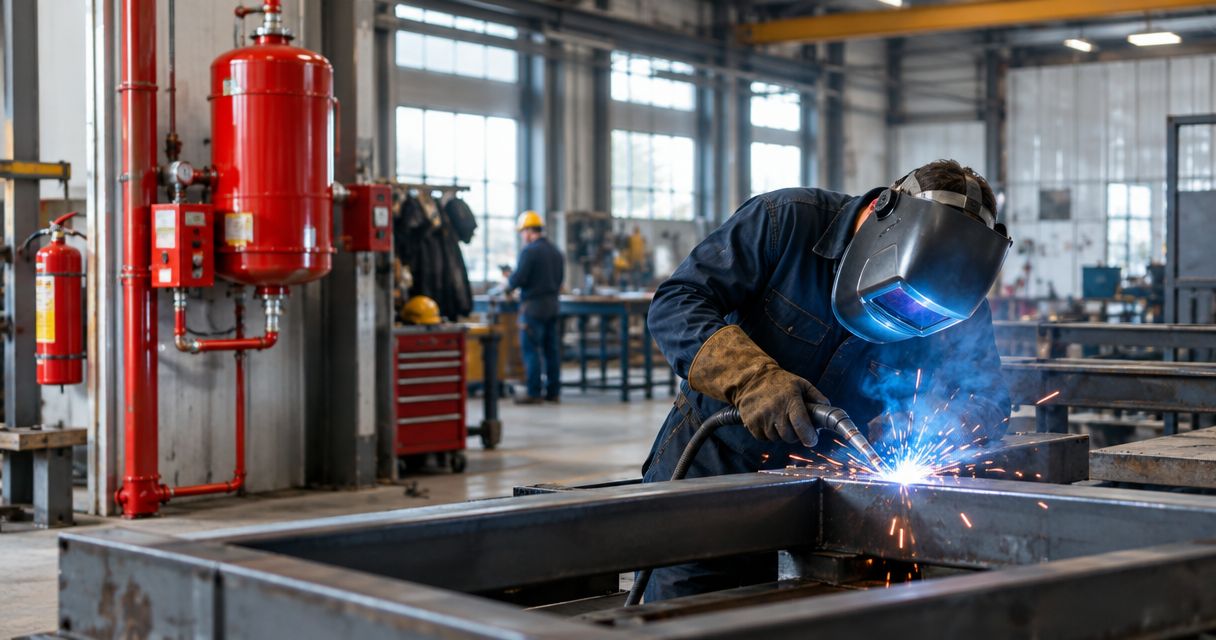
Metal fabrication shop fire protection is the control of ignition sources, combustible materials, and fire response with the aim of protecting workers and keeping production safe. Industrial fire protection for metal fabrication shops must account for welding sparks, cutting operations, combustible metal dust, flammable liquids, and changing floor layouts—not just extinguishers on the wall.
- Industrial fire protection for metal fabrication shops starts with hot-work controls, hazard-matched extinguishers, and clear evacuation duties.
- Firstlinefire suits industrial customers seeking extinguisher service, suppression systems, alarms, and safety training across its six-state service area.
- ABC extinguishers do not replace metal-specific Class D protection where combustible metal hazards exist.
- Review welding areas, dust collection, paint operations, and service records before adding equipment.
Why industrial fire protection matters for metal fabrication shops
A fabrication shop combines ignition sources with materials that behave differently in a fire. Steel stock, aluminum fines, oily rags, packaging, and paint solvents do not call for the same controls. Your 2026 plan needs to follow the work, not a generic building checklist.
Start with the material and process, then select the protection. The guide to fire extinguisher types for manufacturing plants provides a useful companion to that review.
A new grinder, a relocated welding station, or a different alloy changes the questions you need answered. An extinguisher inspection does not establish that a dust collector, spray booth, or hot-work area is adequately protected.
Assign responsibility before buying equipment. Your shop supervisor controls daily conditions; qualified service personnel inspect and maintain equipment within their scope; the local authority having jurisdiction determines applicable local requirements. None of those roles replaces the others.
Build your shop's fire protection plan
Map your materials and ignition sources
Walk the shop with a floor plan and the safety data sheets for materials actually used. Paper works. Mark where material arrives, gets cut or ground, moves through finishing, and leaves as scrap or waste.
Do not classify the whole building by its main product. A shop making steel frames can also have solvent cleaning, compressed gases, forklift charging, and combustible packaging. Record each process separately so the protection matches the hazard at that location.
For your 2026 review, include maintenance jobs and contractor work. Temporary work still needs controls. Ask operators what changes during rush orders, repairs, or a second shift; a clean daytime walkthrough does not capture every working condition.
- Mark welding, cutting, grinding, and heating stations.
- Identify metals, coatings, solvents, and combustible waste.
- Locate cylinders, charging areas, and electrical equipment.
- Mark dust collectors, ductwork, and scrap containers.
- Record exits, alarm devices, and existing protection.
Control hot work before sparks start
Use a documented pre-work check before welding or cutting outside a properly controlled area. Remove combustibles where practical; where removal is impractical, use appropriate safeguards. Stop work when the required precautions cannot be established.
For general-industry welding and cutting, OSHA 29 CFR 1910.252 identifies combustible materials within 35 feet as a condition requiring a fire watch. It also addresses openings, concealed spaces, and easily ignited materials beyond that distance. Distance alone does not make a welding area safe.
The same OSHA rule requires the fire watch to continue for at least 30 minutes after welding or cutting ends. Treat that as the federal minimum for the covered work, not permission to ignore longer requirements from your permit, insurer, or local authority.
- Remove packaging, oily rags, and other combustibles.
- Check wall openings and the opposite side of partitions.
- Protect nearby equipment from sparks and slag.
- Assign a fire watch when required.
- Confirm the post-work watch before releasing the area.
Match extinguishers to each fire hazard
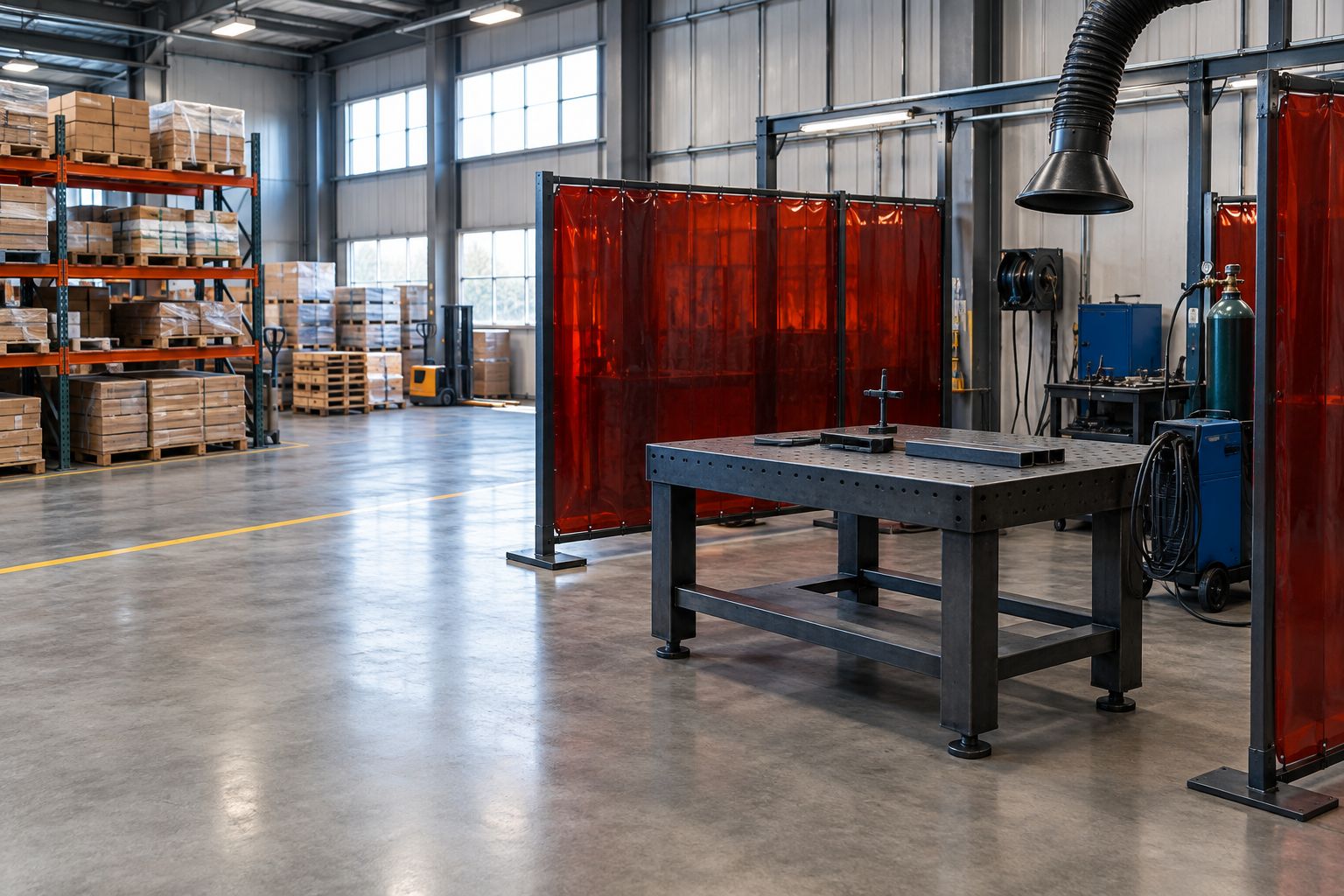
Start by recording every extinguisher's location, rating, agent, and condition. Compare that inventory with the hazards on your floor plan. Do not purchase identical units for every location simply because they are easy to order.
ABC dry chemical extinguishers cover their marked ordinary-combustible, flammable-liquid, and energized-electrical hazards. They are not Class D extinguishers. Where combustible metals are present, the extinguishing agent must suit the specific metal and its form. Fine particles and bulk stock do not present identical hazards.
Firstlinefire provides industrial fire protection services including extinguisher sales, inspection and service, hydro testing, suppression systems, fire alarms, and safety training. Professional service gives you a way to address equipment needs; you still need to identify your shop's materials and disclose process changes.
- Read each extinguisher's label and rating.
- Match Class D agents to the specific metal hazard.
- Check access along actual walking routes.
- Replace missing or damaged mounting hardware.
- Assign qualified personnel to maintenance and testing.
Assess dust collection and fixed suppression separately
Begin with the collector's documentation, the materials entering it, and the connected processes. Have a qualified specialist assess combustible dust hazards where applicable. A portable extinguisher beside a collector does not establish that the collector is protected.
Metal fines need particular attention. Do not assume that dust from different alloys belongs in the same collection system, or that a system suitable for one material is suitable for another. Cleaning methods also need review so they do not spread accumulated dust into the air.
For your 2026 equipment review, separate dust collection, paint finishing, and machine protection into distinct assessments. Fixed suppression must suit the protected equipment and hazard. It does not replace any required building sprinkler protection, explosion protection, housekeeping, or evacuation measures.
- Record every material entering the collection system.
- Review collector and ductwork documentation.
- Identify concealed dust accumulation areas.
- Check cleaning methods against the material hazard.
- Refer process changes for qualified review.
- Verify suppression requirements for finishing operations.
Check alarms against noise and occupancy
Walk the shop during normal production and review how workers receive an emergency warning. Hearing protection, machinery noise, partitions, and isolated work areas belong in that assessment. Do not judge notification performance from a quiet office.
Use existing drawings and inspection reports first. Then have qualified alarm personnel verify the system's design, condition, and notification coverage. Your 2026 review should also identify who receives signals after hours and what action follows.
Detection, occupant notification, and off-site monitoring perform different jobs. An alarm signal is not proof that everyone heard a warning or that emergency responders have been dispatched. Document the actual arrangement rather than relying on what someone remembers from installation.
- Identify occupied rooms and isolated work positions.
- Include noise and hearing protection in the review.
- Check visible notification needs with qualified personnel.
- Verify emergency contact information.
- Document alarm response and evacuation duties.
Train each shift on its actual duties
Start with a written decision: which employees evacuate, and which designated employees are expected to use extinguishers? Do not leave workers to decide their role during a fire. Training must match the emergency action plan and the hazards they encounter.
Where extinguishers are provided for employee use, OSHA 29 CFR 1910.157 requires education on extinguisher use principles and the hazards of incipient-stage firefighting. The rule calls for education at initial employment and at least annually. Put that recurring education on a 12-month schedule, and provide the required training for designated users.
Firstlinefire offers safety training, but training does not make an unsafe fire attack acceptable. Employees need clear instructions to raise the alarm, maintain an escape route, and leave when conditions exceed their role or training.
- Explain the alarm and reporting procedure.
- Identify evacuation routes and assembly locations.
- Define who is authorized to use extinguishers.
- Cover metal-specific extinguishing restrictions.
- Assign accountability duties for every shift.
- Record attendance and follow up with absent workers.
Close service findings and track changes
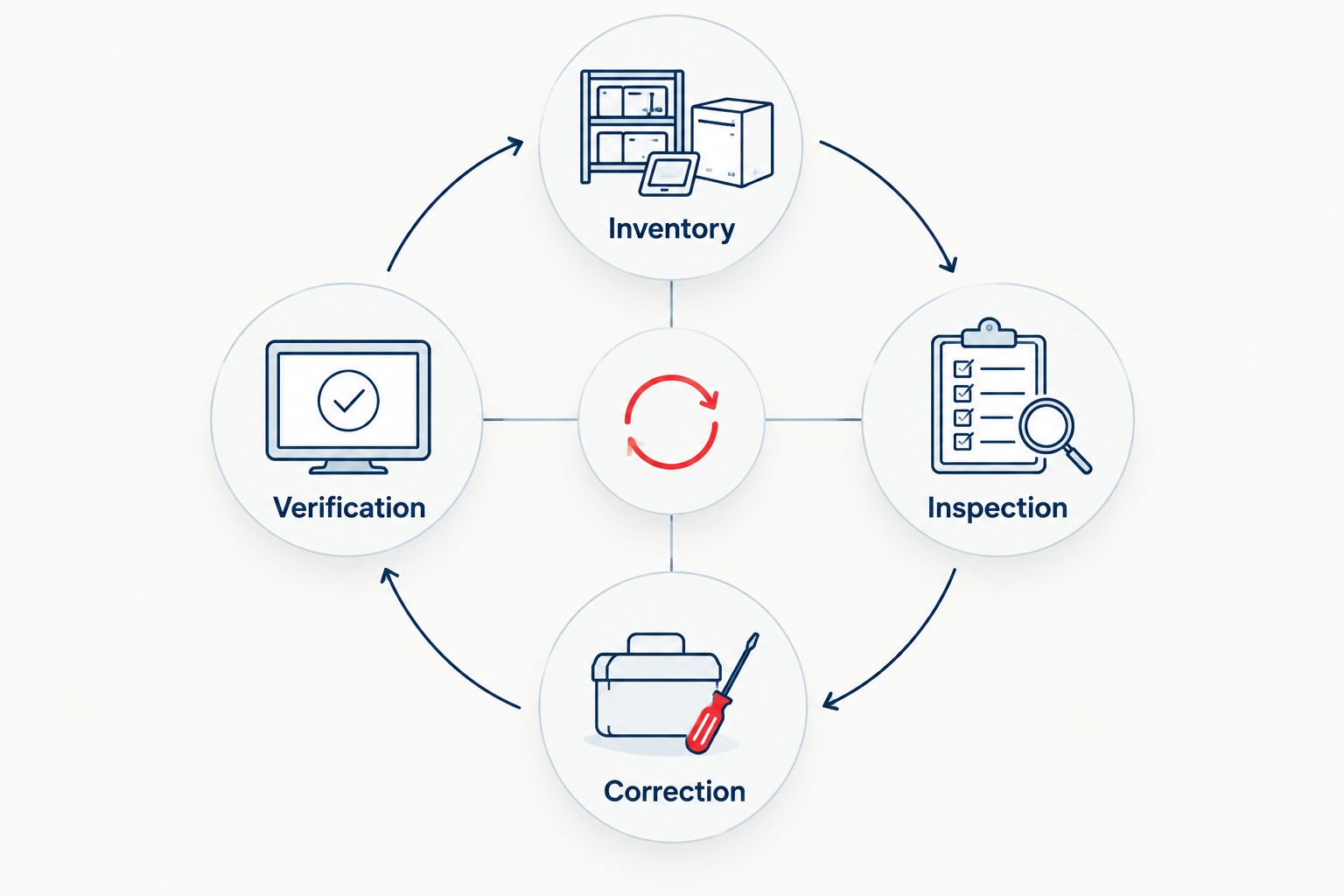
Use a spreadsheet or paper register before considering another system. Give each extinguisher and protected system a location reference. Record the inspection result, required correction, responsible person, and completion evidence in the same place.
OSHA 29 CFR 1910.157 requires monthly visual inspections and annual maintenance checks for covered portable extinguishers. Hydrostatic testing follows requirements that depend on extinguisher type. A current tag does not answer every service question, and a test date should not be guessed from appearance.
For your 2026 register, make unresolved findings visible until corrected. A service visit is not the end of the process when a unit remains missing, discharged, inaccessible, or unsuitable for its location. Keep the report and the correction together.
- Inventory: list equipment and exact locations.
- Inspection: record findings and service dates.
- Correction: assign each deficiency to an owner.
- Verification: retain evidence that the issue is closed.
This record cycle gives the next supervisor something usable. Repeat it when equipment moves or production changes, not just when an inspection is due.
Compare protection options for a fabrication shop
These options serve different purposes. Use daily controls, equipment service, and hazard-specific protection together—not as substitutes. Confirm the required scope with qualified personnel and the local authority before changing an existing system.
| Option | Best for | Main benefit | Key limitation |
|---|---|---|---|
| In-house inspections and records | Daily ownership of shop conditions | Keeps access, housekeeping, and changes visible | Does not replace qualified maintenance or system design |
| Firstlinefire service support | Industrial buyers needing its listed services in Kentucky, Illinois, Indiana, Tennessee, Missouri, or Alabama | Offers extinguisher service, hydro testing, suppression systems, alarms, and training | Each proposed service must be matched to the site's actual hazards |
| Hazard-specific fixed suppression | Equipment or processes requiring dedicated protection | Protects the defined hazard within its approved design | Does not automatically protect adjacent operations or the entire building |
| Fire alarms and monitoring | Occupant warning and defined signal response | Supports notification and response procedures | Does not extinguish a fire or replace evacuation planning |
Before requesting service, prepare your floor plan, material list, equipment inventory, and recent inspection reports. Ask the provider to distinguish inspection, maintenance, testing, design, and installation in the proposed scope. Those are different tasks.
Review your shop's fire protection
Discuss extinguisher service, suppression systems, fire alarms, and safety training for your operation.
Common mistakes metal fabrication shops make
Treating all metal work as the same hazard
A steel welding station and an operation producing combustible metal fines need different assessments. Review the material, particle form, and process before selecting an agent or changing dust collection. The word metal is not a fire classification.
Ending the fire watch when welding stops
A finished weld does not end the ignition risk. Assign the required post-work watch before work begins, and make the handoff explicit when shifts change. Do not let the welder's departure silently end the watch.
Moving machines without reviewing protection
A relocated brake, rack, or welding screen can block an extinguisher or change an evacuation route. It can also change the protected arrangement around a suppression system. Add fire protection review to the machine-move checklist before production resumes.
Confusing an inspection tag with hazard approval
An extinguisher tag records a service activity; it does not approve your alloy handling, paint process, or building layout. Keep equipment condition records separate from process assessments, and retain both. Ask what was inspected rather than assuming everything was covered.
Leaving second-shift response unwritten
Day-shift training does not establish night-shift readiness. Assign reporting, evacuation, head-count, and authorized extinguisher-use duties for each shift. Include contractors and temporary workers in the instructions that affect them.
FAQ
What's the best starting point for fire protection in a metal fabrication shop?
Start with a process and material inventory, then map ignition sources, combustibles, existing protection, and exits. Use that assessment to select controls and identify where qualified design or service is needed.
Is an ABC extinguisher enough for a metal fabrication shop?
An ABC extinguisher is not enough where combustible metal hazards require Class D protection. Select the agent for the specific metal and its form; do not assume every Class D agent suits every metal.
How long does a fire watch need to stay after welding?
OSHA's general-industry welding and cutting rule requires a fire watch for at least 30 minutes after welding or cutting ends. Follow longer requirements where the applicable permit, local authority, insurer, or site procedure requires them.
Does every metal shop need automatic suppression on its dust collector?
Dust collector protection must be determined from the material, process, equipment design, and applicable requirements. A qualified assessment must address fire and explosion hazards rather than assuming a portable extinguisher or one suppression approach is sufficient.
How often should shop fire extinguishers be inspected?
OSHA requires monthly visual inspections and annual maintenance checks for covered portable extinguishers. Hydrostatic testing and other service requirements depend on extinguisher type and condition.
Can production continue during fire protection service?
Production can continue only where the work and any protection impairment are managed safely under applicable requirements. Confirm affected equipment, temporary precautions, and any restrictions before service starts.
Does Firstlinefire serve industrial fabrication customers?
Firstlinefire serves industrial customers and provides extinguisher sales and service, hydro testing, suppression systems, fire alarms, and safety training. Its stated service area covers Kentucky, Illinois, Indiana, Tennessee, Missouri, and Alabama.
One last thing
Before your next hot-work job, check the other side of the wall—not just the welding bench. OSHA's welding precautions specifically address openings and heat transfer that can expose combustibles outside the immediate work area. A clean patch of floor does not establish a safe job.
Put that check on the permit. Then assign the person who verifies it before work starts.


