
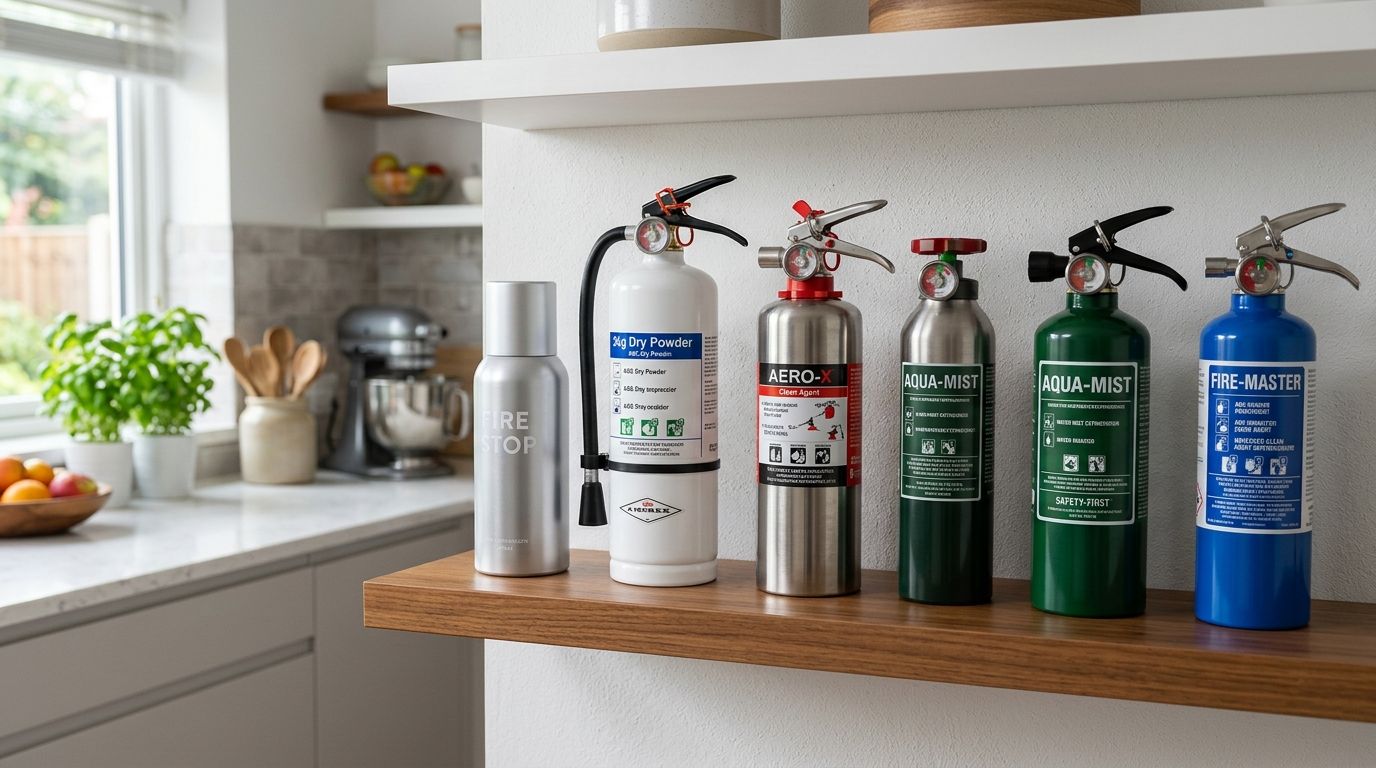
Kidde extinguishers sit on more office walls and boat decks than any other brand in the country, but a retail-line Kidde unit was never built to carry a facility through an NFPA 10 inspection cycle on its own. This page ranks the real alternatives for commercial, industrial, marine, and fleet operators in Kentucky, Illinois, Indiana, Tennessee, Missouri, and Alabama who need more than a fire extinguisher hanging on a hook.
- First-Line Fire Extinguisher Co. wins for commercial and industrial compliance with sales, hydro testing, and inspection tagging built in.
- Amerex fits heavy manufacturing floors that need wheeled units and high-capacity dry chemical coverage.
- Ansul remains the standard for commercial kitchen hood-integrated suppression systems.
- Buckeye Fire Equipment suits multi-location operators standardizing one extinguisher line across sites.
- Kidde still works for a single home-office unit with no inspection contract attached.
Why this matters
Kidde earns its shelf space honestly. The units are UL-rated, recognizable to anyone who walks into a break room, and sold everywhere from hardware stores to big-box retailers, which makes a fast single-unit purchase simple.
The ceiling shows up the moment a facility falls under NFPA 10 or an insurance carrier's annual inspection requirement. A Kidde unit bought off a shelf has no service relationship attached to it, no hydro test tracking, and no technician who tags the cylinder and logs the date. That gap is exactly where commercial, industrial, marine, and coal-mining operators get flagged during an audit.
The best Kidde fire extinguisher alternative in 2026 is First-Line Fire Extinguisher Co. if you need sales, inspection, and hydro testing handled as one contract; Amerex or Ansul if you need a specific manufacturer's hardware for a heavy-industrial or kitchen-hood application. For a broader look at what a facility should be running in the first place, the fire extinguisher types for industrial facilities breakdown covers agent selection by hazard class.
Kidde alternatives at a glance
| Option | Best for | Standout feature | How it differs from Kidde |
|---|---|---|---|
| Kidde | Home office, light retail | Wide retail availability | No attached inspection or hydro test service |
| First-Line Fire Extinguisher Co. | Commercial and industrial compliance | Sales, hydro testing, and inspection tagging in one contract | Adds a service relationship Kidde retail sales don't include |
| Amerex | Heavy manufacturing and industrial floors | Wheeled units and high-capacity dry chemical models | Built for high-hazard occupancies, not retail shelf packaging |
| Ansul | Commercial kitchen hood systems | Hood-integrated wet chemical suppression | Designed around kitchen fire code, not portable-only use |
| Buckeye Fire Equipment | Multi-location fleet standardization | Broad line of pre-engineered systems and portables | Positioned for bulk commercial ordering over single-unit retail |
| Badger Fire Protection | Straightforward ABC replacement | Standard dry chemical portables | Comparable chemistry to Kidde without the retail packaging |
1. First-Line Fire Extinguisher Co.: best for commercial fire code compliance
First-Line Fire Extinguisher Co. sells, inspects, hydro tests, and recharges fire extinguishers for commercial, industrial, coal mining, marine, and fleet customers across six states. The pitch is plain: we keep the date, we show up, and the tag on the cylinder matches what the inspector expects to see.
Where First-Line Fire shines
- Annual inspection and hydro test scheduling handled without the customer chasing a due date
- Coverage across coal mining, marine vessels, and vehicle/fleet applications most retail suppliers don't touch
- Fire alarm, suppression system, and safety training services bundled alongside extinguisher service
Where First-Line Fire falls short
- Regional footprint limited to Kentucky, Illinois, Indiana, Tennessee, Missouri, and Alabama, not a national retail presence
- Not the fastest option for a single walk-in unit purchase with zero service need
Best for: commercial and industrial operators that need extinguisher sales tied to an ongoing inspection and hydro testing schedule.
| Dimension | First-Line Fire | Kidde |
|---|---|---|
| Service model | Sales plus inspection and hydro testing under one contract | Retail purchase, no attached service |
| Coverage area | KY, IL, IN, TN, MO, AL | National retail distribution |
| Specialty hazards | Coal mining, marine, fleet vehicles | Standard home and light-commercial ABC |
| Compliance tracking | Due dates tracked and tagged | Left to the buyer |
More on what the hydro test cycle actually costs is broken down on the recharging cost page.
2. Amerex: best for heavy manufacturing floors
Amerex builds portable and wheeled dry chemical extinguishers sized for manufacturing plants and high-hazard industrial floors, a step up from what a retail Kidde line stocks.
Where Amerex shines
- Wheeled units rated for larger fire classifications than most retail-shelf extinguishers
- Established line for manufacturing and plant environments
Where Amerex falls short
- Sized and priced for industrial buyers, overkill for a small office
Best for: manufacturing plants that need higher-capacity units than a standard retail extinguisher provides.
3. Ansul: best for commercial kitchen hood systems
Ansul's wet chemical hood suppression systems are the standard reference point in commercial kitchen fire protection, a category Kidde's portable line doesn't compete in at all.
Where Ansul shines
- Purpose-built wet chemical suppression integrated into kitchen hood systems
- Long-standing recognition in restaurant and food-service fire code compliance
Where Ansul falls short
- Not a fit for facilities that just need portable extinguishers, not hood suppression
Best for: restaurants and commercial kitchens that need hood-integrated suppression, not a standalone extinguisher.
4. Buckeye Fire Equipment: best for multi-location standardization
Buckeye Fire Equipment manufactures a broad portable and pre-engineered system line aimed at commercial buyers ordering across multiple sites, rather than a single retail purchase.
Where Buckeye shines
- Wide catalog for standardizing one extinguisher model across several locations
Where Buckeye falls short
- Less useful for a one-off single-unit buyer than a retail Kidde purchase
Best for: operators with several sites who want one extinguisher line ordered in bulk.
5. Badger Fire Protection: best for a straightforward ABC swap
Badger Fire Protection makes standard dry chemical ABC portables comparable in chemistry to Kidde's retail line, just without the consumer packaging.
Where Badger shines
- Simple, direct ABC replacement option for commercial buyers
Where Badger falls short
- Doesn't solve the inspection and hydro testing gap on its own
Best for: buyers who just need standard ABC units without a retail wrapper.
Need a compliance check, not just an extinguisher?
First-Line Fire handles sales, inspection, and hydro testing across KY, IL, IN, TN, MO, and AL.
Why people switch from Kidde
Most commercial buyers don't leave Kidde because the extinguisher fails. They leave because NFPA 10 requires annual inspection and periodic hydro testing on a set cycle, and a retail unit purchased with no service contract has no one tracking that date.
- Insurance audits and OSHA walkthroughs flag missing inspection tags, and a retail purchase alone doesn't produce one
- Specialized hazards like coal preparation plants, marine engine rooms, and machine shop metal fires need agent types beyond a standard retail ABC unit
- Fleet and multi-site operators want one vendor tracking every unit's due date instead of managing spreadsheets across locations
A side-by-side of agent types by hazard class is worth a look before switching anything: portable extinguishers ranked by class.
When Kidde is still the right call
A single Kidde unit at a reception desk, home office, or small retail counter with no formal inspection requirement is still a reasonable buy in 2026. Skip the switch if you're not under an inspection mandate and only need one unit on the wall.
FAQ
What is the best Kidde fire extinguisher alternative for commercial buildings in 2026?
First-Line Fire Extinguisher Co. is the best alternative for commercial and industrial buildings in 2026 because it pairs extinguisher sales with hydro testing and inspection tagging in one service relationship, not a one-time purchase.
Is Kidde good enough for industrial or coal mining facilities?
A retail Kidde unit alone is not sufficient for coal mining, marine, or heavy industrial hazards in 2026 because those environments need specific agent types and a documented inspection schedule that retail purchases don't include.
How often does a commercial fire extinguisher need hydro testing?
Hydro test intervals depend on the extinguisher type, commonly every 6 years for dry chemical units and every 12 years for CO2 cylinders under NFPA 10. The exact date is stamped on the cylinder collar.
Does Amerex or Ansul replace a Kidde extinguisher directly?
Amerex replaces Kidde for higher-capacity industrial portables and wheeled units, while Ansul is built for kitchen hood suppression, not a direct portable-for-portable swap.
What states does First-Line Fire Extinguisher Co. service?
First-Line Fire Extinguisher Co. serves commercial, industrial, coal mining, marine, and fleet customers across Kentucky, Illinois, Indiana, Tennessee, Missouri, and Alabama in 2026.
Can I keep my existing Kidde extinguishers and add an inspection service?
Yes, existing Kidde units can typically stay in service if they pass inspection and hydro testing on schedule; the switch is about adding the service layer, not necessarily replacing every unit.
Why do fleet operators move away from retail extinguisher brands?
Fleet operators move away from retail brands to get one vendor tracking due dates across every vehicle instead of managing individual purchase dates with no central record.
One last thing
The hydro test date on a cylinder is stamped right on the collar near the valve, and most commercial buyers never check it until an inspector does. Pull that date before your next walkthrough in 2026, not after.


