Oil and gas facilities run flammable liquids, pressurized gas, and energized electrical gear in the same footprint, so no single fire extinguisher type covers every zone on site. This guide ranks the six extinguisher types that actually show up on NFPA 10 inspection tags across wellheads, tank farms, and control rooms in 2026, and tells you where each one belongs.
Best overall: Purple K dry chemical extinguishers for wellheads and gas processing units. Best for control rooms and instrumentation: clean agent (Halotron I) extinguishers. Best for general facility coverage: ABC multipurpose dry chemical extinguishers.
- Purple K dry chemical wins for wellheads and gas processing units — fastest knockdown on Class B/C fires.
- Clean agent (Halotron I) is the best fire extinguisher for oil and gas facilities' instrumentation and SCADA rooms.
- ABC multipurpose dry chemical covers mixed-hazard shops and warehouses on the same site.
- CO2 units protect electrical switchgear without leaving residue on live panels.
- Most sites across Kentucky, Illinois, Indiana, Tennessee, Missouri and Alabama need three or more extinguisher types, not one.
Why this matters
A wellhead fire behaves nothing like a control-room fire. One is a pressurized flammable gas or liquid release; the other is an energized electrical event where the wrong agent damages instrumentation worth more than the fire itself. Matching extinguisher type to hazard zone is what NFPA 10 and OSHA 1910.157 actually require — not a single extinguisher brand slapped on every wall.
Sites that get this wrong end up either under-protected on a Class B flammable liquid fire or over-spending on clean agent units in a machine shop that only needs ABC dry chemical. First-Line Fire Extinguisher Co. sees both mistakes across coal mining, marine, and industrial accounts, and the fix is the same: zone the facility first, then pick the extinguisher.
Getting the classification right also matters for industrial facility extinguisher types more broadly — oil and gas sites share hazard profiles with chemical plants and heavy manufacturing, and the same NFPA 10 logic applies.
What makes the best fire extinguisher for oil and gas facilities
- UL rating match — Class B (flammable liquid) and Class C (energized electrical) coverage, not just Class A
- Knockdown speed on flammable gas and liquid fires, since these spread faster than ordinary combustibles
- Hazardous location compliance for NFPA 70 Class I Division 1/2 areas near wellheads and vapor zones
- Capacity matched to risk size — a 20 lb wheeled unit for a tank farm, a 5 lb unit for an office trailer
- Corrosion resistance for outdoor, humid, or marine-adjacent equipment yards
- Service interval fit — 5-year hydro test for dry chemical, 12-year for CO2, tracked against NFPA 10
At a glance
| Extinguisher Type | Best For | Standout Feature | Key Limitation |
|---|---|---|---|
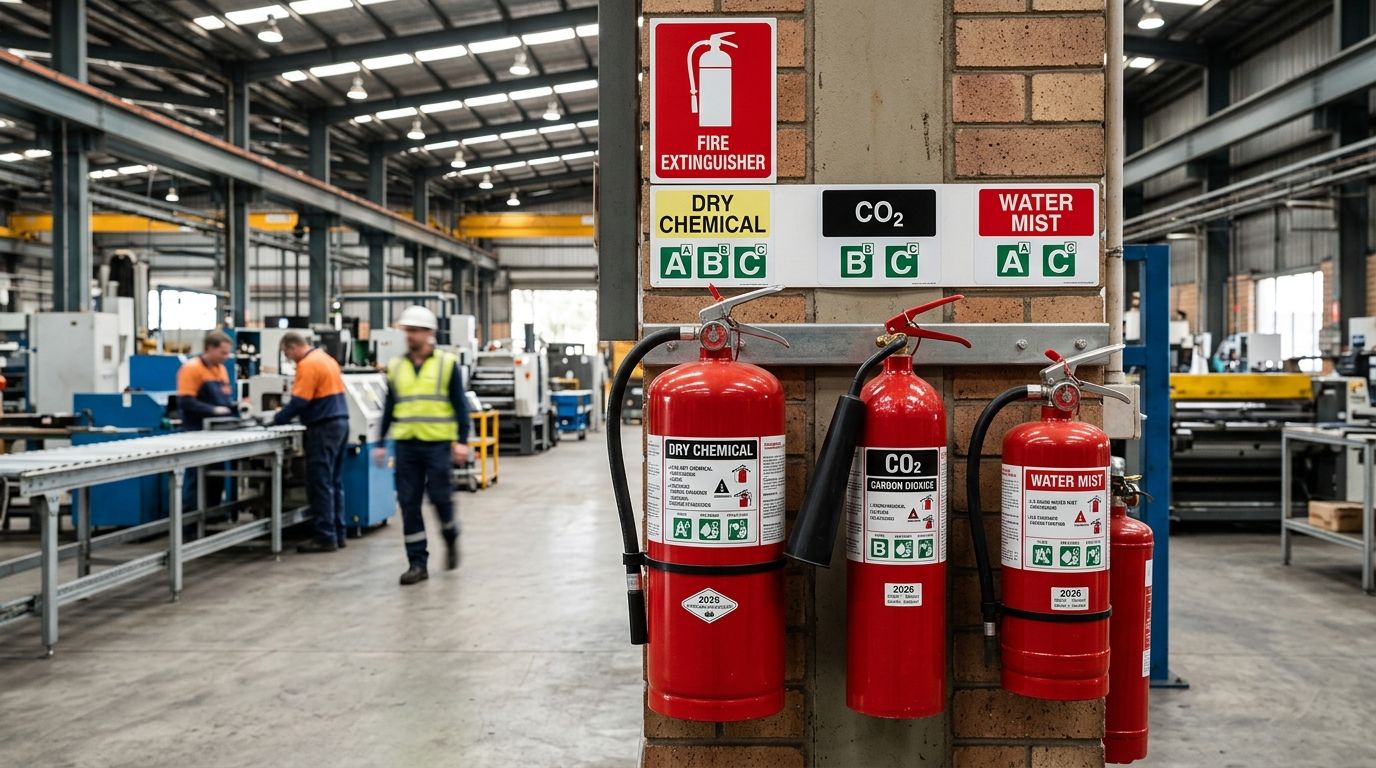
| Purple K Dry Chemical | Wellheads, gas processing units | Fastest Class B/C knockdown | Corrosive residue on electronics |
| ABC Multipurpose Dry Chemical | General facility coverage | Covers A, B, and C in one unit | Powder residue damages sensitive equipment |
| CO2 Extinguisher | Electrical switchgear, control panels | Leaves zero residue on live gear | Poor performance outdoors in wind |
| Clean Agent (Halotron I) | Instrumentation, SCADA rooms | Non-conductive, no cleanup | Lower capacity per unit weight |
| Wheeled Dry Chemical Units | Tank farms, loading racks | Large-volume agent discharge | Requires two-person handling |
| Water/Foam Extinguisher | Admin buildings, break rooms | Effective on Class A only | Unsafe on flammable liquid or gas fires |
1. Purple K Dry Chemical: best fire extinguisher for wellheads and gas processing units
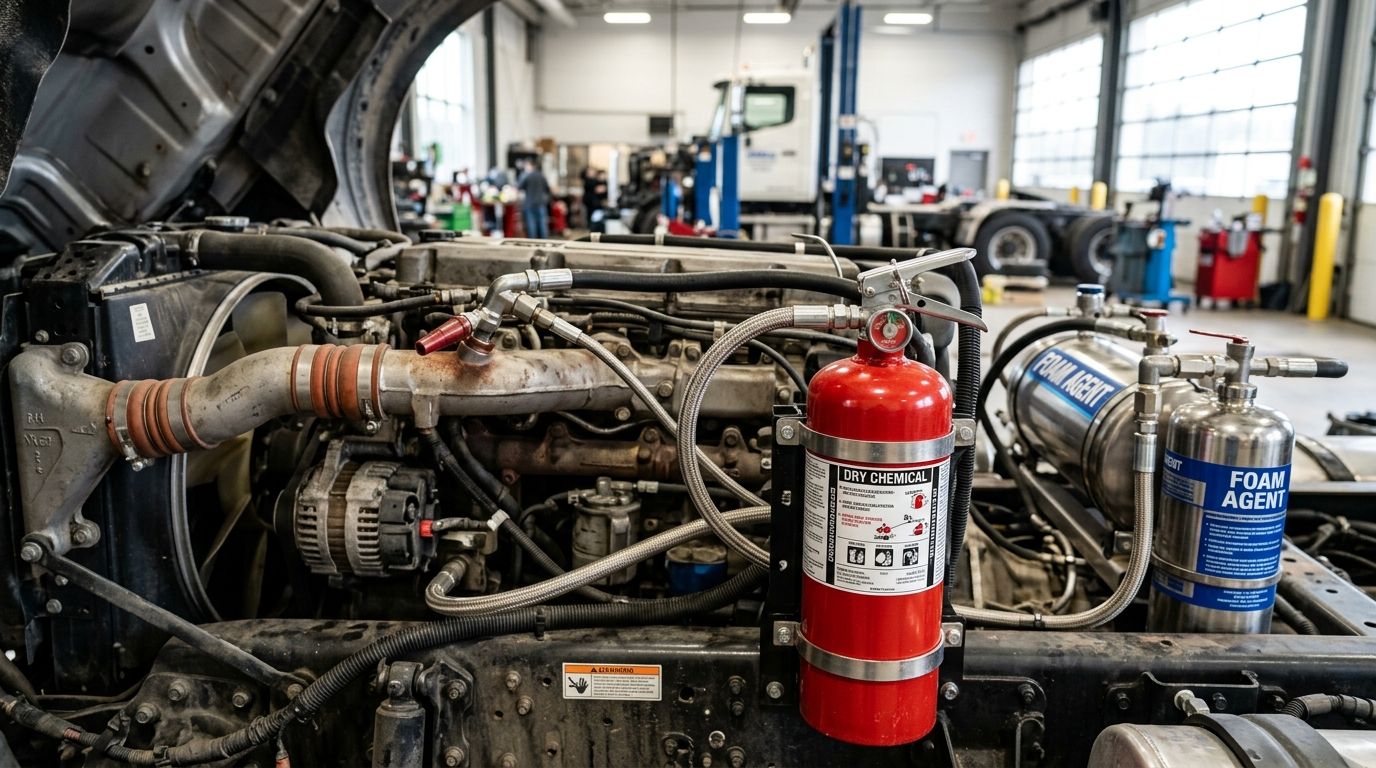
Purple K is a potassium bicarbonate agent built specifically for flammable liquid and gas fires, and it knocks down Class B fires faster per pound than standard ABC powder. It's the standard choice for wellheads, separators, and gas processing skids where a hydrocarbon release is the primary risk.
Purple K pros:
- Fastest flame knockdown on Class B fires among dry chemical agents
- Rated for Class C, so it works near energized wellhead controls
- Widely stocked and serviced across oil and gas regions
Purple K cons:
- Corrosive residue requires cleanup on sensitive equipment
- No Class A rating — useless on ordinary combustibles like wood pallets or paper
Purple K pricing: check current options with a fire protection provider serving your site.
Best for: wellheads, gas processing units, and any point-source flammable liquid or gas hazard. Verdict: Buy.
2. ABC Multipurpose Dry Chemical: best for general facility coverage
ABC dry chemical covers ordinary combustibles, flammable liquids, and energized electrical fires in one extinguisher, which makes it the default for maintenance shops, warehouses, and administrative areas on an oil and gas site that aren't sitting directly on a wellhead or tank.
ABC multipurpose pros:
- Single extinguisher covers three fire classes
- Lower training burden — one agent type for most of the facility
- Broad availability for recharge and hydro testing
ABC multipurpose cons:
- Slower knockdown on Class B fires compared with Purple K
- Powder residue can foul electronics and machinery
- Not ideal as the sole extinguisher near high-value instrumentation
Best for: shops, warehouses, and mixed-hazard general facility areas. Verdict: Buy.
3. CO2 Extinguisher: best for electrical switchgear and control panels
CO2 displaces oxygen and leaves no residue, which is exactly what a live switchgear panel or motor control center needs. It's non-conductive and safe to discharge directly onto energized equipment without frying it further.
CO2 pros:
- Zero residue — no cleanup on electrical panels
- Non-conductive, safe for energized equipment fires
- No corrosive agent to damage circuit boards
CO2 cons:
- Loses effectiveness outdoors or in windy conditions
- Limited Class A capability — not a general-purpose unit
- Discharge range is shorter than dry chemical
Best for: electrical rooms, switchgear, and motor control centers. Verdict: Buy.
4. Clean Agent (Halotron I): best for instrumentation and SCADA rooms
Halotron I is a non-conductive, no-residue agent designed for rooms full of sensitive electronics — SCADA systems, PLCs, and remote telemetry units that oil and gas operations depend on for monitoring. It's the option that protects the equipment as much as it fights the fire. See how it stacks up against other options in clean agent systems compared.
Clean agent pros:
- No residue, no cleanup on electronics after discharge
- Non-conductive and safe for energized instrumentation
- Preserves data and control equipment during a fire event
Clean agent cons:
- Lower agent capacity per unit weight than dry chemical
- Typically a higher-cost specialty option for smaller rooms only
Best for: SCADA rooms, server closets, and instrumentation panels. Verdict: Buy.
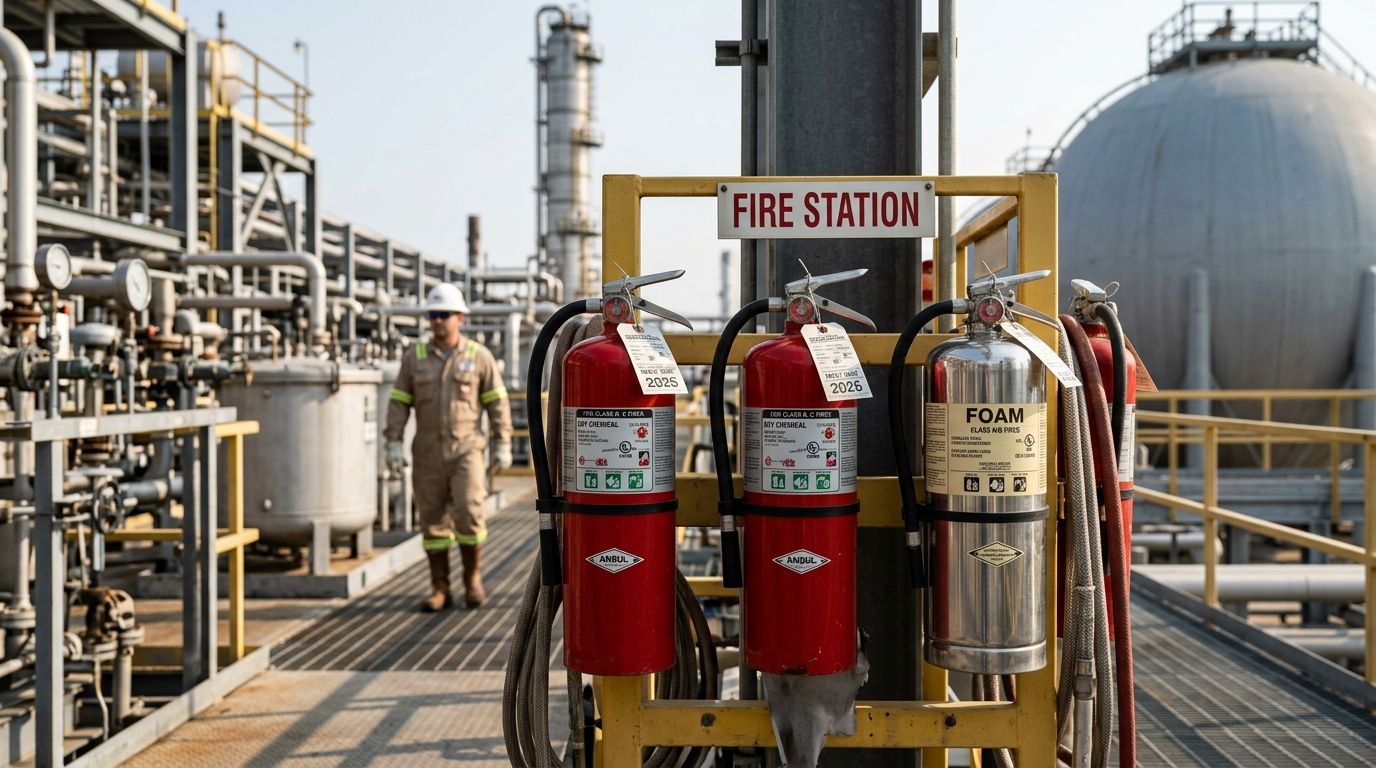
5. Wheeled/Large-Capacity Dry Chemical Units: best for tank farms and loading racks
Wheeled units hold far more agent than a handheld extinguisher and discharge it faster over a wider area, which matters at a tank farm or truck loading rack where a spill fire can spread across an open pad in seconds.
Wheeled unit pros:
- Large-volume discharge covers bigger fire areas
- Purple K or ABC agent options depending on hazard
- Positioned at fixed high-risk points like loading racks
Wheeled unit cons:
- Requires two-person handling in most cases
- Fixed placement means it's not portable to a moving incident
Best for: tank farms, loading racks, and fixed large-volume flammable liquid storage. Verdict: Buy.
6. Water/Foam Extinguisher: best for administrative buildings and break rooms
Water and foam extinguishers handle Class A fires — paper, wood, cloth — in office trailers, break rooms, and admin buildings on an oil and gas site. They're the wrong tool anywhere near flammable liquid or gas, but they belong in the low-hazard corners of the property.
Water/foam pros:
- Effective and simple for ordinary combustible fires
- Familiar to non-technical staff with minimal training
Water/foam cons:
- Unsafe on flammable liquid fires — can spread the fuel
- Conductive, so never use near energized electrical equipment
Best for: admin buildings, break rooms, and low-hazard office trailers. Verdict: Hold — install only where the zone is genuinely Class A only.
How we ranked
Each type was weighed against the six criteria above: UL rating match, knockdown speed on flammable gas and liquid fires, hazardous location compliance, capacity fit, corrosion resistance, and service interval. Purple K and clean agent ranked highest because they solve the two hazards that actually define oil and gas risk — flammable release and sensitive electronics — better than any multipurpose alternative.
Which fire extinguisher should you choose for oil and gas facilities?
If you're zoning a new site or auditing an existing one in 2026, default to Purple K at every wellhead and processing skid, clean agent in every SCADA or instrumentation room, and ABC dry chemical everywhere else. CO2 goes on switchgear specifically, and wheeled units go at tank farms and loading racks where volume matters more than portability. Skip water/foam anywhere a flammable liquid or gas is present, full stop.
Get your site zoned and inspected
First-Line Fire Extinguisher Co. covers oil and gas sites across KY, IL, IN, TN, MO and AL.
FAQ
What's the best fire extinguisher for oil and gas facilities?
Purple K dry chemical is the best fire extinguisher for oil and gas facilities at wellheads and gas processing units because it knocks down Class B/C flammable liquid and gas fires faster than ABC powder. Control rooms and instrumentation areas do better with clean agent units instead.
Is Purple K better than ABC dry chemical for oil and gas sites?
Purple K knocks down Class B flammable liquid and gas fires faster than ABC, but it has no Class A rating, so it can't cover ordinary combustible fires in shops or offices. Most sites need both agents in different zones.
How often do fire extinguishers need hydro testing at an oil and gas facility?
NFPA 10 requires a hydro test every 5 years for stored-pressure dry chemical extinguishers and every 12 years for CO2 units. Facilities that skip testing risk failed inspections and non-compliant tags.
Can I use CO2 extinguishers outdoors at a wellhead?
CO2 loses effectiveness in wind and open air, so it's a poor match for outdoor wellhead fires. It performs best indoors on electrical switchgear and control panels where there's no airflow to disperse the agent.
What extinguisher type is required near SCADA and instrumentation rooms?
Clean agent extinguishers like Halotron I are the standard for SCADA and instrumentation rooms because they leave no residue and won't damage sensitive electronics. Dry chemical agents are not recommended in these rooms due to cleanup and equipment damage risk.
How far can an extinguisher be from a flammable liquid hazard under OSHA rules?
OSHA 1910.157 caps travel distance at 50 feet for a Class B flammable liquid hazard, tighter than the 75-foot standard for ordinary Class A areas. Wellheads and tank farms need extinguishers placed accordingly.
Do oil and gas sites need more than one type of fire extinguisher?
Yes. A typical oil and gas site needs Purple K at wellheads, clean agent in instrumentation rooms, ABC in shops and warehouses, and CO2 on electrical switchgear — one extinguisher type never covers every zone.
One last thing
Most oil and gas sites don't fail inspection because they have the wrong extinguisher — they fail because the tags don't match the zone anymore after equipment changes. A skid that was flammable liquid storage in 2023 might be a control room by 2026, and the extinguisher never got swapped. Walk the site against current use, not the layout from the last audit.