Five system types cover nearly every fire hazard inside a coal preparation plant, and no single one does the whole job. Best overall: automatic dry chemical conveyor suppression for belt transfer points and load zones. Best for enclosed electrical rooms: CO2 total-flood systems. Best for control rooms and SCADA cabinets: clean agent systems. A prep plant built in 2026 with only one of these installed is still exposed on the other hazard zones.
- The best fire suppression systems for coal preparation plants in 2026 are matched to hazard zone, not picked as one plant-wide solution.
- Automatic dry chemical conveyor suppression wins for belt transfer points and load zones because it targets the most frequent ignition source in coal handling.
- CO2 total-flood systems protect switchgear and MCC rooms without damaging live electrical gear, but the room must be evacuated before discharge.
- Clean agent systems suit control rooms and PLC cabinets where you can't risk residue or oxygen displacement on running electronics.
Why this matters
A coal prep plant burns in more than one way. Friction at a stuck idler ignites coal dust on a belt, hydraulic oil pools under a crusher, a breaker arcs inside a switchgear cabinet — three different fires that need three different agents. NFPA 120, the standard for fire prevention and control in coal mines, and MSHA's conveyor belt fire requirements under 30 CFR Part 75 both assume zone-specific protection rather than a single building-wide system.
That's the real reason coal mining equipment fire suppression plans list multiple system types instead of ranking one winner. A plant running in 2026 without conveyor-line suppression is running the single highest-frequency ignition zone unprotected, no matter how good the rest of the site looks on paper.
What makes the best fire suppression system for a coal prep plant
- Detection matched to the hazard — linear heat detection for smoldering belt fires, flame detection for open flash fires, none of it interchangeable
- Agent compatible with the zone — water and foam near live electrical gear is a liability, not a safety measure
- NFPA 120 / MSHA compliance for conveyor belt protection, since this isn't optional in most jurisdictions
- Dust and vibration tolerance on nozzles, detectors, and valves — coal fines foul components that work fine in a clean warehouse
- Serviceability on a fixed schedule — deluge valves, foam concentrate, and CO2 cylinders all have different inspection intervals
- Recovery time after discharge — some systems need a full cylinder swap, others just a reset
At a glance
| System | Best For | Standout Feature | Key Limitation |
|---|---|---|---|
| Automatic dry chemical conveyor suppression | Belt transfer points & load zones | Heat/flame-triggered discharge along the belt line | Residue cleanup after every discharge |
| Water spray (deluge) | Crusher houses, screens, belt drives | Cools equipment after knockdown, stops re-ignition | Not usable near live switchgear |
| Foam-water systems | Hydraulic power units & oil reservoirs | Seals oxygen off pooled-oil fires | Ineffective on smoldering coal dust |
| CO2 total-flood | Switchgear & MCC rooms | No residue on live electrical gear | Displaces oxygen, room must be cleared |
| Clean agent systems | Control rooms & SCADA/PLC cabinets | Fast suppression without electronics damage | Limited coverage area vs. deluge |
1. Automatic dry chemical conveyor suppression: best fire suppression system for belt transfer points
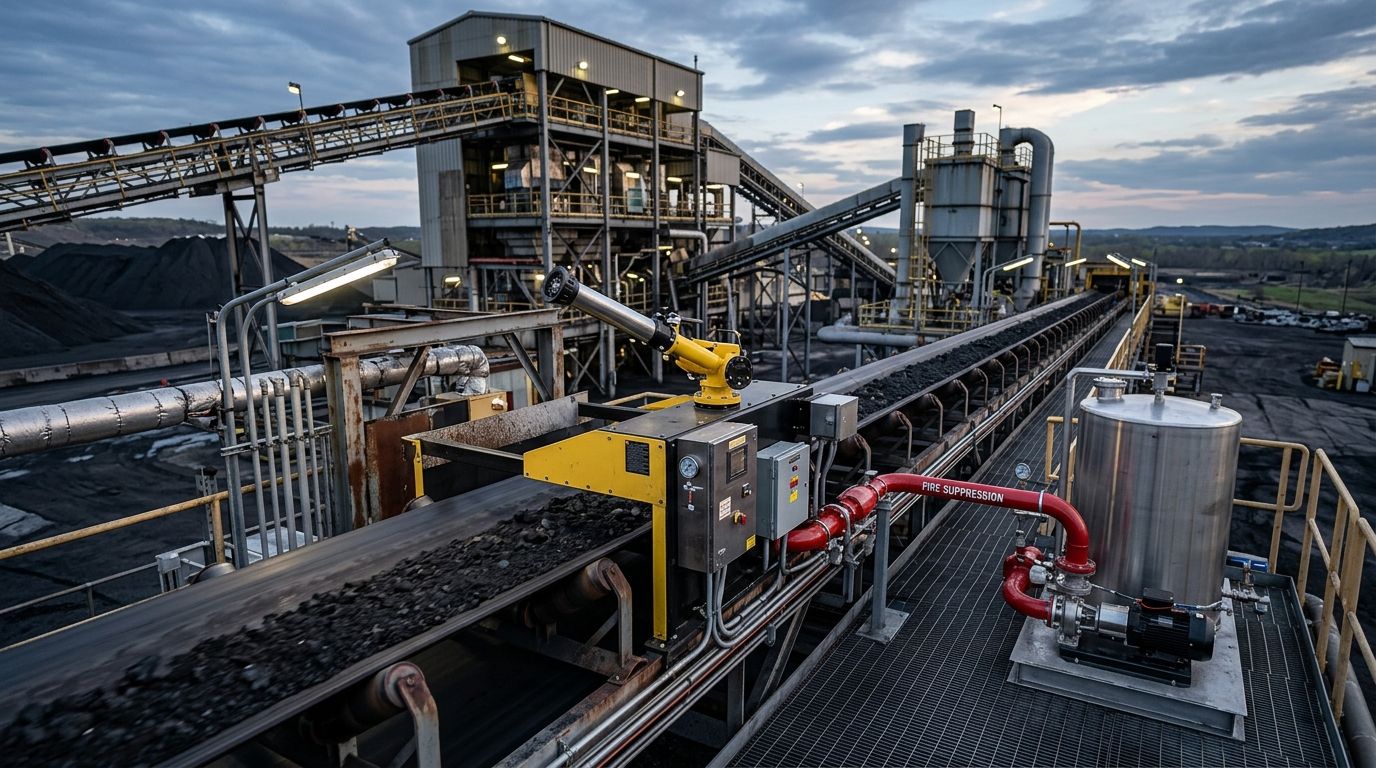
Linear heat or flame detectors run the length of the belt and trigger dry chemical nozzles positioned at transfer points, head pulleys, and load zones. It's built to catch a friction fire or dust ignition before it travels down the belt line, which is where most coal handling fires start.
Automatic dry chemical conveyor suppression pros:
- Fast knockdown on smoldering coal dust and belt friction fires
- Nozzles and detectors hold up in dusty, vibration-heavy environments
- Satisfies MSHA and NFPA 120 conveyor protection requirements
Automatic dry chemical conveyor suppression cons:
- Dry chemical residue requires cleanup after every discharge
- Detectors need periodic testing to avoid false trips from ambient dust
- Doesn't address fires inside sealed electrical enclosures
Best for: belt transfer points, head/tail pulleys, load zones. Verdict: Buy — this is the zone regulators look at first and the one with the highest ignition frequency in coal handling.
2. Water spray (deluge) systems: best fire suppression system for crusher houses and screen decks
Open-head nozzles fed by a deluge valve flood an entire mechanical bay on activation, cooling hot bearings and gearboxes where flammable dust and lubricant residue mix. The continuous water flow keeps working after the initial knockdown, which matters in areas that run hot around the clock.
Water spray pros:
- Covers large open bays in a single activation
- Keeps cooling equipment after knockdown, reducing re-ignition risk
- Deluge valves are simple for a crew to test on a fixed schedule
Water spray cons:
- Can't be used near energized switchgear
- Runoff at a coal prep plant carries fines into containment, adding cleanup
- Not suited to indoor electrical rooms
Best for: crusher houses, screen decks, belt drive gearboxes. Verdict: Buy for open mechanical bays where equipment, not electronics, is the exposure.
3. Foam-water systems: best fire suppression system for hydraulic power units and oil reservoirs
Foam concentrate blended into the water supply blankets a hydraulic reservoir or oil-filled gear reducer, sealing off the oxygen a pooled-oil fire needs. Plain water spray knocks flame down but doesn't hold a foam blanket over a liquid surface the way this does.
Foam-water pros:
- Seals flammable liquid surfaces effectively
- Fits the hydraulic power packs common on crushers and screens
- Works alongside existing sprinkler infrastructure
Foam-water cons:
- Foam concentrate needs periodic replacement and testing
- Not effective against smoldering coal dust
- Adds a maintenance line beyond a standard sprinkler system
Best for: hydraulic power units, oil-filled gear reducers, transformer vaults. Verdict: Buy for any zone with a standing pool of flammable oil.
4. CO2 total-flood systems: best fire suppression system for switchgear and MCC rooms
CO2 floods an enclosed switchgear or motor control center room, displacing oxygen to suppress fire without leaving residue on breakers, relays, or bus bar. Total flood means it reaches fire behind a panel that a point-source system would miss.
CO2 total-flood pros:
- No residue on live electrical components
- Safe to discharge on energized equipment
- Reaches hidden fire behind enclosures
CO2 total-flood cons:
- Displaces breathable oxygen, so evacuation alarms and lockout are required before discharge
- Not suited to open, ventilated areas like conveyor galleries
- Recharge after a full discharge means a scheduled cylinder swap
Best for: switchgear rooms, MCC rooms, enclosed electrical vaults. Verdict: Buy for any room where personnel access is controlled and equipment stays energized.
5. Clean agent systems: best fire suppression system for control rooms and SCADA/PLC cabinets
A clean, electrically non-conductive agent suppresses fire in seconds without damaging the electronics that run plant automation. It's the option built for a room where a CO2 discharge or water spray would take out the control system along with the fire — see how the agent types stack up on the clean agent suppression systems comparison.
Clean agent pros:
- Safe for occupied control rooms without the oxygen-displacement risk of CO2
- No residue on PLCs, servers, or HMI screens
- Fast discharge protects the room running the plant's automation
Clean agent cons:
- Coverage area is limited compared to a deluge system, so it's not a fit for open mechanical bays
- Agent cylinders need professional recharge after any discharge
Best for: control rooms, SCADA racks, PLC and instrumentation cabinets. Verdict: Buy for any room where the electronics are the asset worth protecting.
How we ranked
Each system is scored against the criteria above: does it match the hazard in its zone, does the agent avoid creating a second problem (water on live gear, residue on electronics), does it meet NFPA 120/MSHA expectations where applicable, and can a plant crew realistically keep it serviced. A system that scores well in one zone and poorly in another still earns its spot — it's ranked for that zone, not the whole plant.
Get your prep plant zones assessed
First-Line Fire walks the site and matches each zone to the right system.
Which fire suppression system should you choose for a coal preparation plant?
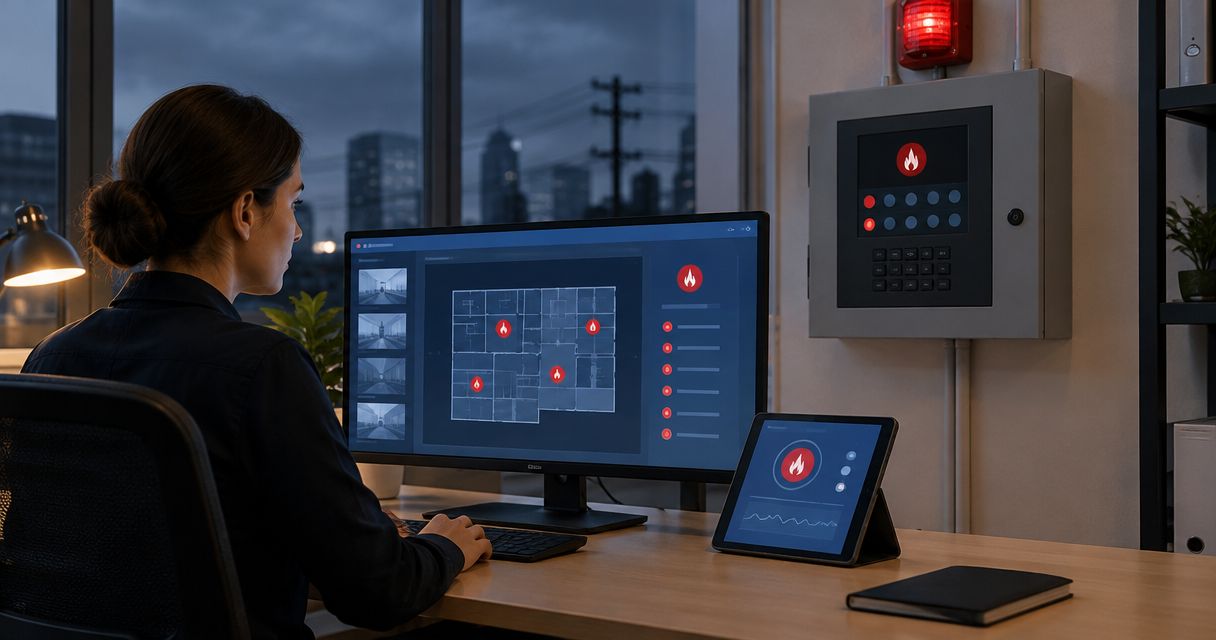
Most prep plants running in 2026 need all five zone types, not one winner. If you're starting from zero, install conveyor-line dry chemical suppression first — it's the mandated, highest-frequency zone. Layer in CO2 for switchgear rooms, clean agent for the control room, and deluge or foam-water for crusher and hydraulic areas as those zones come up for review. First-Line Fire services all five system types across coal operations in Kentucky, Illinois, Indiana, Tennessee, Missouri, and Alabama, along with the industrial fire alarm monitoring that ties detection back to a response plan.
FAQ
What is the best fire suppression system for a coal preparation plant in 2026?
There isn't one system for the whole plant. Automatic dry chemical suppression covers conveyor transfer points, CO2 total-flood covers switchgear rooms, and clean agent covers control rooms with electronics.
Do coal preparation plants need conveyor belt fire suppression by law?
MSHA requirements under 30 CFR Part 75 and NFPA 120 both address conveyor belt fire protection in coal operations. Requirements vary by configuration, so a site-specific review determines the exact scope.
Is water spray safe to use near electrical equipment in a coal prep plant?
No. Water spray and deluge systems are not used near energized switchgear or motor control centers. CO2 or clean agent systems are the standard choice for those rooms instead.
How often do dry chemical conveyor suppression systems need inspection?
Detectors and nozzles need periodic functional testing to catch false triggers from ambient dust and confirm the system will fire when it should. Intervals depend on the manufacturer and local requirements.
What's the difference between CO2 and clean agent suppression?
CO2 displaces oxygen and requires evacuation before discharge, which works for unoccupied switchgear rooms. Clean agent suppresses fire with less oxygen displacement, making it the better fit for occupied control rooms with running electronics.
Can foam-water systems replace a dry chemical conveyor system?
No. Foam-water is built for pooled-oil fires in hydraulic units and reservoirs, not for smoldering coal dust or belt friction fires. The two systems protect different hazards.
Why do coal prep plants need multiple suppression system types instead of one?
Belt fires, oil fires, and electrical fires each need a different agent. A single plant-wide system either fails on some hazards or actively makes another hazard worse, like water spray near live gear.
One last thing
The zone people skip most often is the hydraulic power unit next to the crusher — it doesn't look like a fire risk sitting quietly under a machine, but a ruptured line spraying hydraulic oil onto a hot surface is one of the faster-developing fires in a prep plant, and it sits right next to equipment protected only by conveyor-line dry chemical that never gets triggered by an oil fire ten feet away. Walk that zone specifically in your 2026 review, not just the belt line.